


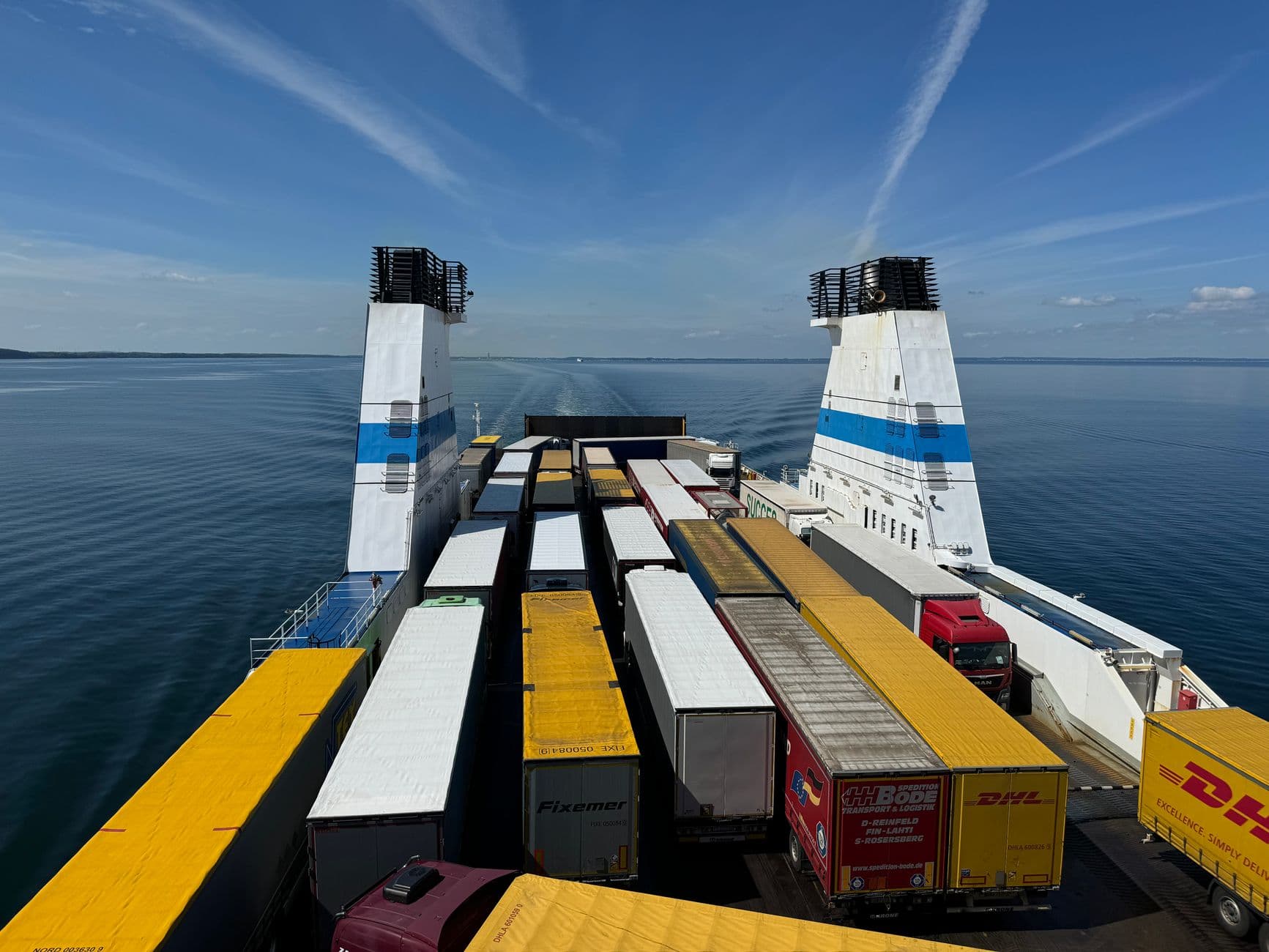

When a customer tells our freight desk they are moving a truck or a container from China or Central Asia to Europe along the Middle Corridor, the conversation always snags on the same stretch of water. The road and rail legs are predictable. The Caspian Sea crossing between Kazakhstan and Azerbaijan is where schedules go to die, not because the sailing is long, but because the wait for a berth is unpredictable. Search "Baku to Aktau ferry" and you get travel blogs written for backpackers with a rucksack. The freight version of that question, how to actually get a loaded truck or a railcar across, is barely covered. This guide is that version, with the 2026 capacity changes that are starting to ease the bottleneck.
GetTransport.com has matched carriers on Trans-Caspian routes since well before the corridor became fashionable, so the realities below come from watching loads move, not from a brochure. The Middle Corridor, formally the Trans-Caspian International Transport Route, matters because it is the route that avoids both Russian territory and the long sea voyage around Asia. The Caspian leg is its weakest link, and understanding it is the difference between a six-week plan that holds and one that slips.
The two ferry types, and why it matters which one you book
People say "the Caspian ferry" as if it were one service. There are two, and they carry completely different cargo.
- Roll-on roll-off vessels. Trucks and trailers drive straight on and off. This is the option for road freight, accompanied or unaccompanied, and it is what most shippers picture.
- Rail ferries. Loaded railway wagons are shunted directly onto the deck. This is how block trains and railcars stay on rails across the water, and it is the backbone of containerised corridor traffic.
The two main lanes run from Aktau and Kuryk in Kazakhstan to the Azerbaijani side. One detail trips up newcomers: most freight ferries now operate through Alat, the Port of Baku, around 70 kilometres south of the old city harbour that many shippers still picture. Kuryk was built specifically for RORO and rail ferries, so for a loaded truck it is usually the better Kazakh gateway, while Aktau handles a heavy share of containers and dry bulk. Picking the wrong port pair is a quiet way to add days, because a RORO truck routed to a container quay waits behind cargo that has nothing to do with it.
The crossing is short. The queue is the problem.
Here is the fact that reframes the whole route. The Kuryk to Baku sailing takes under 24 hours, and the older Baku to Turkmenbashi run is about 17 hours. The water is not the delay. The delay is the queue on either side, waiting for a vessel and a berth.
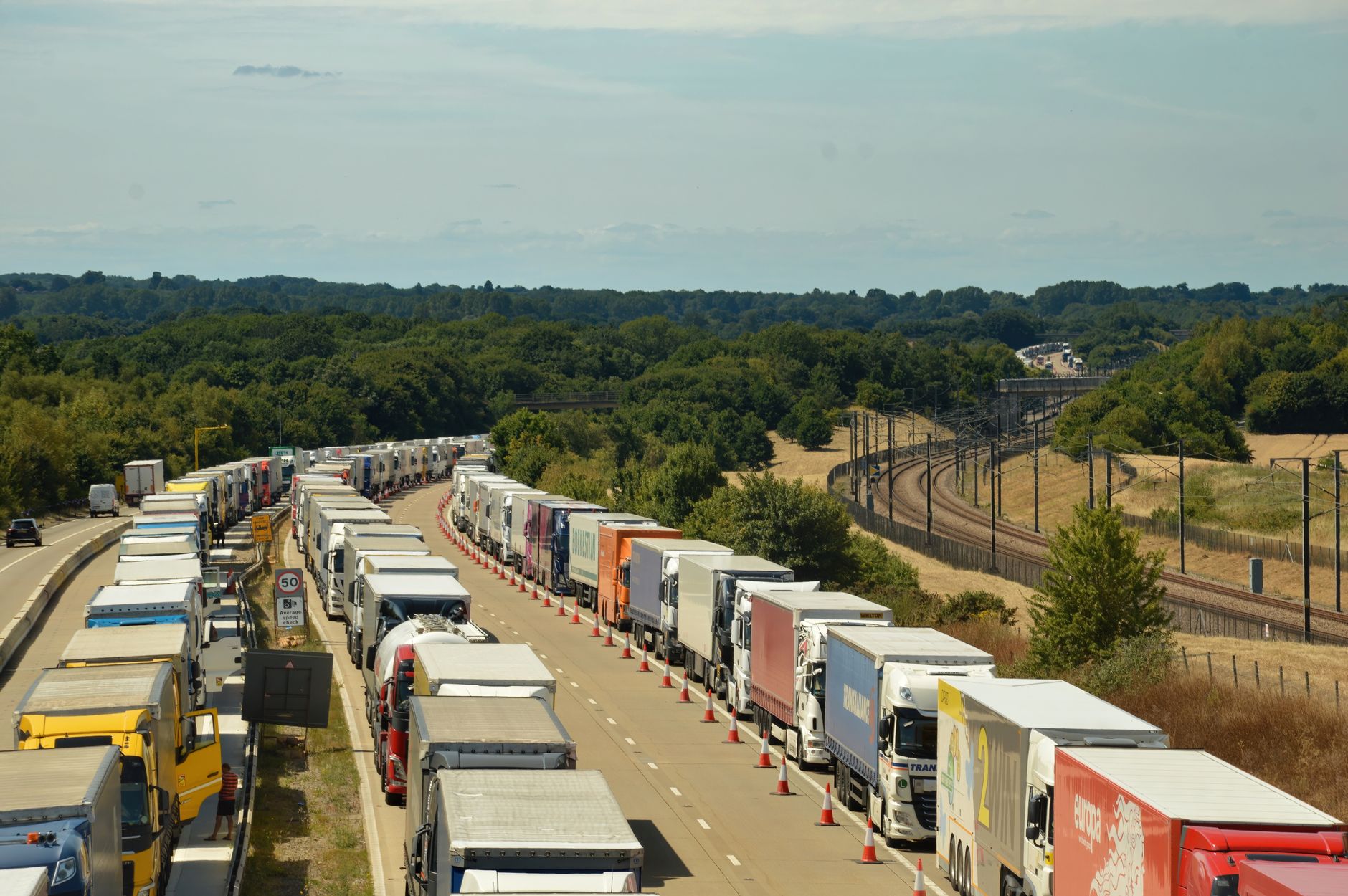
Waits of a day or two are normal, and longer waits of up to roughly a week have been reported when a port is congested. Industry reports in spring 2026 described truck queues stretching into the thousands during peak congestion. There is no published timetable you can set your watch by; departures depend on cargo volume, weather and how quickly the destination port can take the next vessel. So the honest planning rule is the one experienced operators use: treat the sailing as about a day, but build one to two weeks of schedule buffer around the Caspian leg to absorb berth and vessel delays.
This is exactly the kind of gap a marketplace view fills that a schedule cannot. Because GetTransport.com carries live offers from carriers who run the Caspian leg, you see which operators actually have capacity this week and the realistic transit spread they are quoting, rather than a published sailing time that assumes no queue at all.
What is changing in 2026
The good news is that the bottleneck is being attacked from the supply side. Several new ferries are entering service during 2026, including the first vessels from Kazakhstan's planned fleet expansion, with further capacity expected through 2028 as more ferries are delivered. On the Kazakh side, the container build-out at Aktau and Kuryk is targeting around 240,000 TEU of annual handling capacity by the end of 2026.
More hulls and more quay do not erase the queue overnight, because demand on the corridor has been climbing too, but the direction is right. A route that could only move a trickle two years ago is becoming a genuine option for regular freight, and that is why we now quote it seriously rather than treating it as a last resort.
Who runs the vessels
The fleet is largely state-owned rather than a crowd of private lines. The Azerbaijan Shipping Company, ASCo, operates the bulk of the RORO and rail ferries on the Azerbaijani side. Kaz Ferry runs RO-RO service from Kuryk to Baku on the Kazakh side. Slots on these vessels are finite, which is why booking through a carrier who already holds space beats turning up at the port and hoping.
Documents for the crossing sit on top of the corridor's wider customs paperwork, and the set is predictable:
- The CMR consignment note or the rail waybill for the cargo.
- The ferry booking confirmation from the operator or your forwarder.
- Customs transit documents for the corridor, since the cargo is crossing several borders.
- Driver documents and visas for an accompanied truck, which add their own lead time.
If the cargo is heading onward into the Eurasian Economic Union after the crossing, the import rules change again, and we cover that regime in our guide to the 2026 EAEU customs rules.
When the Caspian route is worth it, and when it is not
The Middle Corridor through the Caspian is not automatically the right answer. It earns its place when the alternatives are worse, and it does not when speed certainty matters more than routing.
It makes sense when you need to avoid Russian transit for commercial or compliance reasons, when the cargo suits rail and short-sea rather than a long ocean voyage, and when a transit of roughly three to five weeks China to Europe is acceptable. It makes less sense for a single urgent shipment on a hard deadline, because the queue variance can swallow a week without warning. For a steady flow of containers it is increasingly viable; for a one-off rush it remains a gamble.
A booking checklist for the Caspian leg
- Match the vessel to the cargo: RORO for trucks and trailers, a rail ferry for wagons and block trains.
- Choose the port pair deliberately, with Kuryk favoured for RORO and Aktau carrying more container volume.
- Book a slot through a carrier who holds space rather than arriving on spec.
- Plan the sailing as about a day, but build up to two weeks of queue tolerance into the schedule.
- Prepare the corridor transit documents and, for accompanied trucks, the driver visas in advance.
- Confirm the onward customs regime, especially if the cargo enters the EAEU after the crossing.
The Caspian crossing rewards planning and punishes optimism. The sailing is the easy part. The queue, the port pair and the slot are where a corridor move is won or lost, and with the 2026 capacity coming online the odds are finally tilting toward the shipper.
Frequently asked questions
How long does the Caspian Sea ferry crossing take?
The sailing itself is short. Kuryk to Baku runs under 24 hours, and the older Baku to Turkmenbashi service takes about 17 hours. The crossing as a whole is far less predictable because of the queue for a berth, which can add anything from a day to roughly a week, so experienced operators build one to two weeks of buffer around the leg.
Can I ship a loaded truck across the Caspian by ferry?
Yes. Roll-on roll-off vessels carry accompanied and unaccompanied trucks on the Aktau or Kuryk to Baku lanes, and Kuryk was built specifically for RORO traffic. Rail ferries carry loaded railway wagons for block-train and container corridor traffic. Match the vessel type to your cargo before you book, because the two serve different quays.
Why are Caspian ferry schedules so unreliable?
There is no fixed timetable. Departures depend on cargo volume, weather and berth availability at the receiving port, and congestion has produced waits from a day or two up to about a week, with industry reports in spring 2026 describing truck queues stretching into the thousands at peak. New vessels entering service through 2026 and beyond are expected to ease this, but variance remains the planning risk.
Is the Middle Corridor a good alternative for China to Europe freight?
It is increasingly viable for a steady flow of containers, especially where avoiding Russian transit matters, with a typical China to Europe transit of about three to five weeks. It is less suited to a single urgent shipment, because the Caspian queue can add an unplanned week. Capacity added from 2026 onward, including new ferries and expanded ports, is improving its reliability.
For the customs side of a corridor move into the Union, start with our 2026 EAEU customs rules guide, because the crossing is only half the journey and the clearance is the other.