




Every week our freight desk gets the same message in slightly different words. Someone has bought a car in one country and needs it in another, they typed "car shipping cost" into a search engine, and every calculator that answered assumed the vehicle was already sitting in Los Angeles or Houston. If the car is in Hamburg, Tbilisi or Almaty, those tools quietly stop being useful. International car shipping is a routine service, but most of the public guidance is written from a United States export angle, which leaves the bulk of cross-border moves inside Europe, into the Caucasus and across the CIS without a clear answer. This is the version I wish those searchers had found first: what the methods really are, what they cost in 2026, the documents customs actually stops the car for, and the lanes that genuinely run.
GetTransport.com has been matching vehicle owners with carriers since 2015, so the patterns below come from watching real bookings move rather than from a rate card. I will keep it practical and vendor neutral, because the choice that saves you money is usually about method and paperwork, not about which logo is on the truck.
The four ways to ship a car, and when each one fits
People talk about "shipping a car" as if it were a single product. It is really four, and picking the wrong one is the most common way to overpay or to get the vehicle rejected at the quay.
- Roll-on roll-off, or RORO. The car is driven onto a dedicated vehicle deck at origin and driven off at the destination port. It is the cheapest ocean option for a running vehicle and the one most people should default to.
- Sole-use container. The car is strapped inside its own 20-foot box. It costs more, but it suits a high-value, classic or non-running vehicle, and it lets you ship to ports that have no RORO service.
- Shared or consolidated container. Two to four cars share a 40-foot container, splitting the cost between owners. It is a middle path that keeps the enclosed protection while bringing the per-car price closer to RORO.
- Air freight. Fast and fully enclosed, used for race cars and rare collectibles where the value dwarfs the freight bill. For an ordinary car it almost never makes sense.
For a road-legal vehicle that runs and drives, RORO wins on price most of the time. The moment the car is worth protecting, cannot start, or is heading somewhere the car carriers do not call, a container earns its premium. Inside Europe there is a fifth option that the deep-sea guides forget entirely: short-sea ferries and plain road transport on a car trailer, which for a Lisbon to Lyon or a Warsaw to Vilnius move is faster and often cheaper than any ocean booking.
What it actually costs in 2026
Ranges are honest; a single number is not, because the price moves with distance, method, port pair, the season and the size of the vehicle. With that caveat, here are indicative market ranges on the major trade lanes, not firm quotes.
| Method | Indicative 2026 range per car | Best for |
| RORO (deep sea) | 900 to 2,000 USD | Running cars, the default choice |
| Shared container | 1,200 to 2,500 USD | Some protection at a split cost |
| Sole-use container | 1,800 to 3,500 USD | Classics, non-runners, no RORO port |
| Air freight | 5,000 USD and up | Race and exotic cars only |
Read these as indicative ranges rather than quotes. Sea freight has stayed volatile, and through 2026 tight capacity and rising insurance surcharges have pushed RORO above 3,000 USD on some disrupted lanes, so price your specific route and sailing date instead of anchoring on the table.
Within that, RORO usually lands 20 to 40 percent below a sole-use container on the same lane, which is the single biggest lever on the bill. A large SUV or a pickup costs more than a hatchback on every method, because pricing follows the cubic space the vehicle occupies on deck or in the box. Then there is the part the calculators hide: the freight is only half the landed cost. Duty, tax and port handling at the destination can add as much again. On a standard move into the European Union from outside it, a passenger car is usually subject to a 10 percent customs duty plus the local value-added tax, which ranges from 17 percent in Luxembourg to 27 percent in Hungary, although exemptions and special regimes can change that, from preferential trade agreements to returning-goods relief and relocation imports when you move your residence. Confirm your own case, and budget the clearance, not just the crossing.
This is where a marketplace view helps more than a static quote. Because GetTransport.com carries live offers from carriers who actually run a given lane, you see the real spread of prices and sailing dates side by side, rather than one number a broker is willing to commit to today. On thin lanes that spread is wide, and seeing it is what stops you overpaying.
How long it takes, and the lanes that genuinely run
Transit time confuses people because they hear the sailing time and forget the rest. A booking has three parts: the wait for a suitable sailing, the voyage itself, and clearance at the far end. Miss any one and the estimate falls apart.
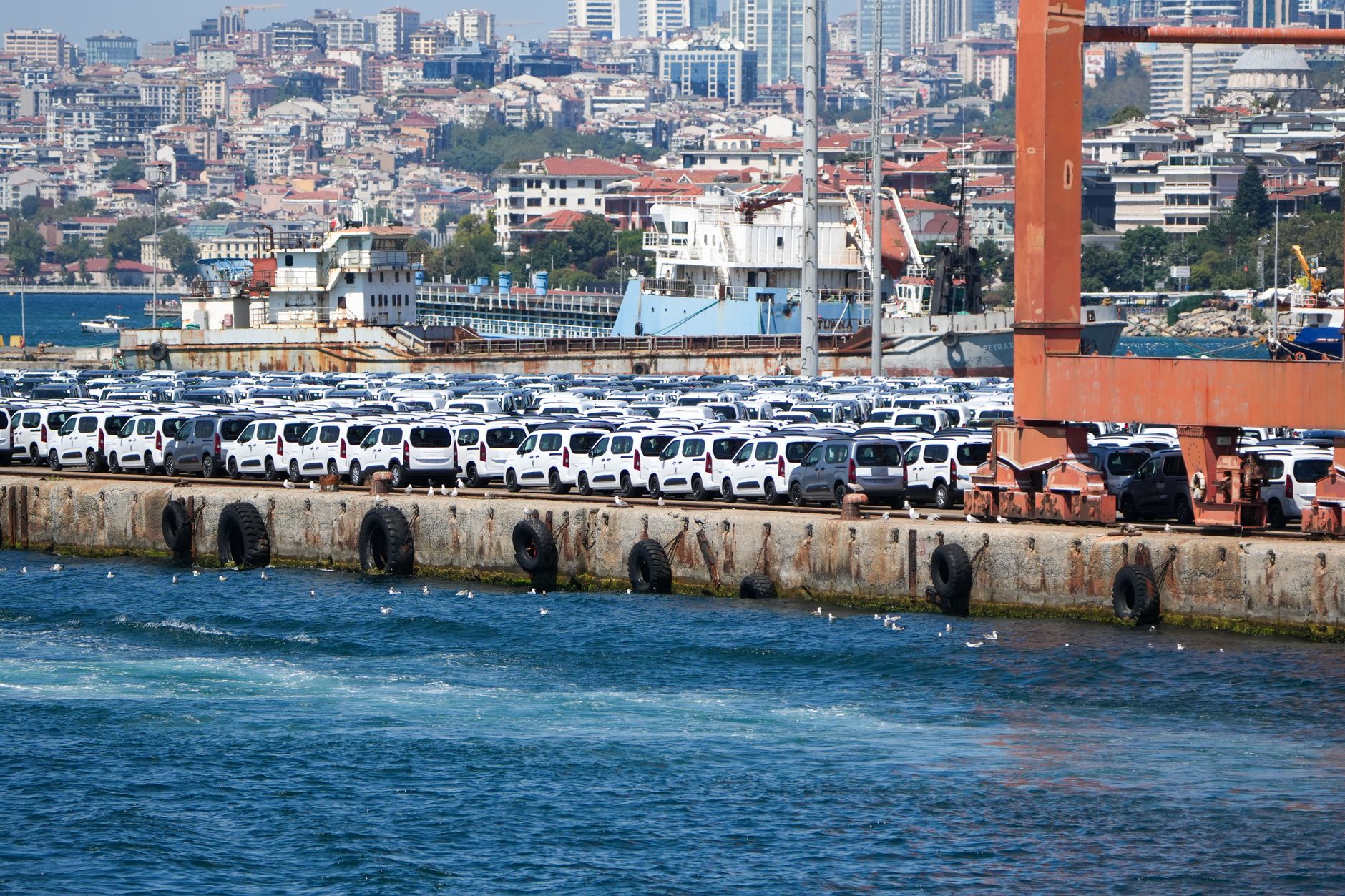
As rough markers, a deep-sea RORO crossing runs about 2 to 4 weeks door to port, a container move 3 to 6 weeks, and the full range across all ocean lanes sits between 10 and 45 days depending on how often vessels call. Air freight collapses that to 1 to 2 weeks. Inside Europe the picture is completely different: a car on a trailer from Germany to Poland is a two-day job, and a short-sea hop across the Baltic is measured in days, not weeks.
The lanes that actually have regular service matter more than a theoretical route. Deep-sea car traffic concentrates on a handful of hubs such as Bremerhaven, Zeebrugge and Southampton in Europe, Baltimore, Brunswick and other major vehicle ports on the United States east coast, and Jebel Ali for the Gulf. Moves into the CIS and Central Asia usually run through the Baltic ports of Klaipeda and Kotka, or through Poti on the Black Sea, then onward by road or rail. If your origin or destination is not near one of those gateways, the realistic plan is a road leg to the port plus the crossing, and that first mile is exactly what a United States cost calculator never models.
The documents customs actually gates on
A car does not clear on goodwill. It clears on a specific set of papers, and the fastest way to turn a two-week move into a two-month one is a mismatch between them. Treat this as the real checklist.
- Vehicle title or registration document. The proof of ownership, original rather than a copy, and free of any outstanding finance or lien.
- Bill of lading. The carrier's contract and receipt. The VIN, make, model and year on it have to match the title exactly, because customs reads the two against each other.
- Bill of sale or purchase invoice. This sets the declared value that duty and tax are calculated on, so a clean, trusted invoice protects the bill at both ends.
- Export declaration. Required when the car leaves the origin country. United States exports above 2,500 USD need an Electronic Export Information filing, and the European Union has its own export declaration.
- Certificate of conformity or emissions evidence. Many destinations want proof the car meets their technical and emissions standard before they will register it.
- Power of attorney and identification. If an agent clears the car for you, they need written authority, plus your passport or national identity document.
The single most common delay we see has nothing to do with the ship. It is a VIN on the bill of lading that does not match the title, or a missing export filing, caught after the vehicle has already sailed. Check the paper before the car moves, not after.
Where the United States calculators stop: cross-border and CIS lanes
Here is the gap that sent you searching. The well-known calculators are built around American export and import, and they assume a deep-sea voyage from a US port. They have nothing to say about a move from one European country to another, or from the European Union into Georgia, Armenia or Kazakhstan, which is where a large share of real demand sits.
Two things change on those lanes. First, duty: a car moving between EU member states is already in free circulation and pays no further customs duty, so an intra-EU move is a transport question, not a clearance one. A car crossing into the EAEU is a different matter, with its own duty and tax regime that we cover in our guide to the 2026 EAEU customs rules. Second, mode: many of these moves are best done by road or short-sea ferry rather than container, and the carriers who run them are regional hauliers, not the global ocean lines. That is precisely the fragmented supply a marketplace is built to surface, because no single broker covers the Tbilisi or Almaty leg the way a calculator covers Los Angeles to Rotterdam.
If your destination is the Gulf rather than the CIS, the rules are stricter still, with a model-year limit and a mandatory conformity certificate. We walk through that specific case in importing a used car into Saudi Arabia and the GCC.
Preparing the car so it sails on schedule
The vehicle itself has to be ready, and the requirements differ by method. For RORO the rule is firm: the car must be empty of personal belongings and carry no more than a quarter tank of fuel, because it sails on an open vehicle deck under fire rules. A container is more relaxed and can carry a properly declared inventory of goods, though anything inside still has to clear customs as cargo.
Beyond that, a short routine prevents most disputes. Wash the car so any existing scratch is visible, photograph it from every angle on the day it is handed over, remove or retract the aerial and fold the mirrors, and hand over a spare key rather than the only one. Make sure the battery holds charge and the alarm can be disabled, because a car that will not start or that shrieks on the deck becomes the carrier's problem and your delay.
A booking checklist
- Match the method to the car: RORO for a running vehicle, a container for a classic, non-runner or a port with no RORO call.
- Price the full landed cost, freight plus destination duty, tax and handling, not the sailing alone.
- Confirm there is regular service on your lane, and plan the road leg to the nearest car-shipping port.
- Assemble the document set and check the VIN matches across the title, bill of sale and bill of lading.
- File the export declaration before the car leaves, and confirm any conformity or emissions evidence the destination needs.
- Prepare the vehicle to the method's rules, photograph it at handover, and keep a quarter tank for RORO.
None of this is difficult once it is sequenced. The method sets the price, the lane sets the timeline, and the documents decide whether the car clears or sits. Settle all three at the quoting stage and an international car move is an ordinary booking rather than a gamble at the port.
Frequently asked questions
How much does it cost to ship a car internationally in 2026?
For a running car, RORO ocean shipping typically runs 900 to 2,000 USD, a shared container 1,200 to 2,500 USD, and a sole-use container 1,800 to 3,500 USD, with air freight starting around 5,000 USD. Larger vehicles cost more because price follows the space they take. Remember that destination duty, tax and handling can add as much again to the landed cost, so budget the clearance alongside the crossing.
How long does international car shipping take?
Deep-sea RORO usually takes about 2 to 4 weeks and a container 3 to 6 weeks, with the full ocean range between 10 and 45 days depending on how often vessels sail the lane. Air freight is 1 to 2 weeks. Moves inside Europe by road or short-sea ferry are far quicker, often just a few days, which is why they rarely need an ocean booking at all.
Is RORO or container shipping better for my car?
RORO is cheaper and the sensible default for an ordinary running vehicle, and it usually prices 20 to 40 percent below a sole-use container on the same lane. A container makes sense when the car is valuable, classic or cannot be driven on, or when the destination port has no RORO service. A shared container sits between the two, splitting an enclosed box across several owners.
Can I ship personal belongings inside the car?
Not on RORO. Vehicles sailing on an open RORO deck must be empty and carry no more than a quarter tank of fuel under maritime fire rules. A container can hold a declared inventory of goods, but everything inside still has to be listed and cleared as cargo, so it is not a way to move belongings without paperwork.
What documents do I need to ship a car abroad?
The core set is the vehicle title free of any lien, a bill of lading whose VIN matches the title, a bill of sale that sets the declared value, and an export declaration from the origin country. Many destinations also want a certificate of conformity or emissions evidence, and if an agent clears the car you will need to grant a power of attorney and supply photo identification.
If your move ends in the Gulf, read the model-year and conformity rules in our Saudi and GCC used-car import guide before you book, because a car that ships fine can still be refused registration on arrival.
Last updated June 2026. Ocean freight rates and customs rules shift through the year, so reconfirm the current figures for your route and destination before you book.