


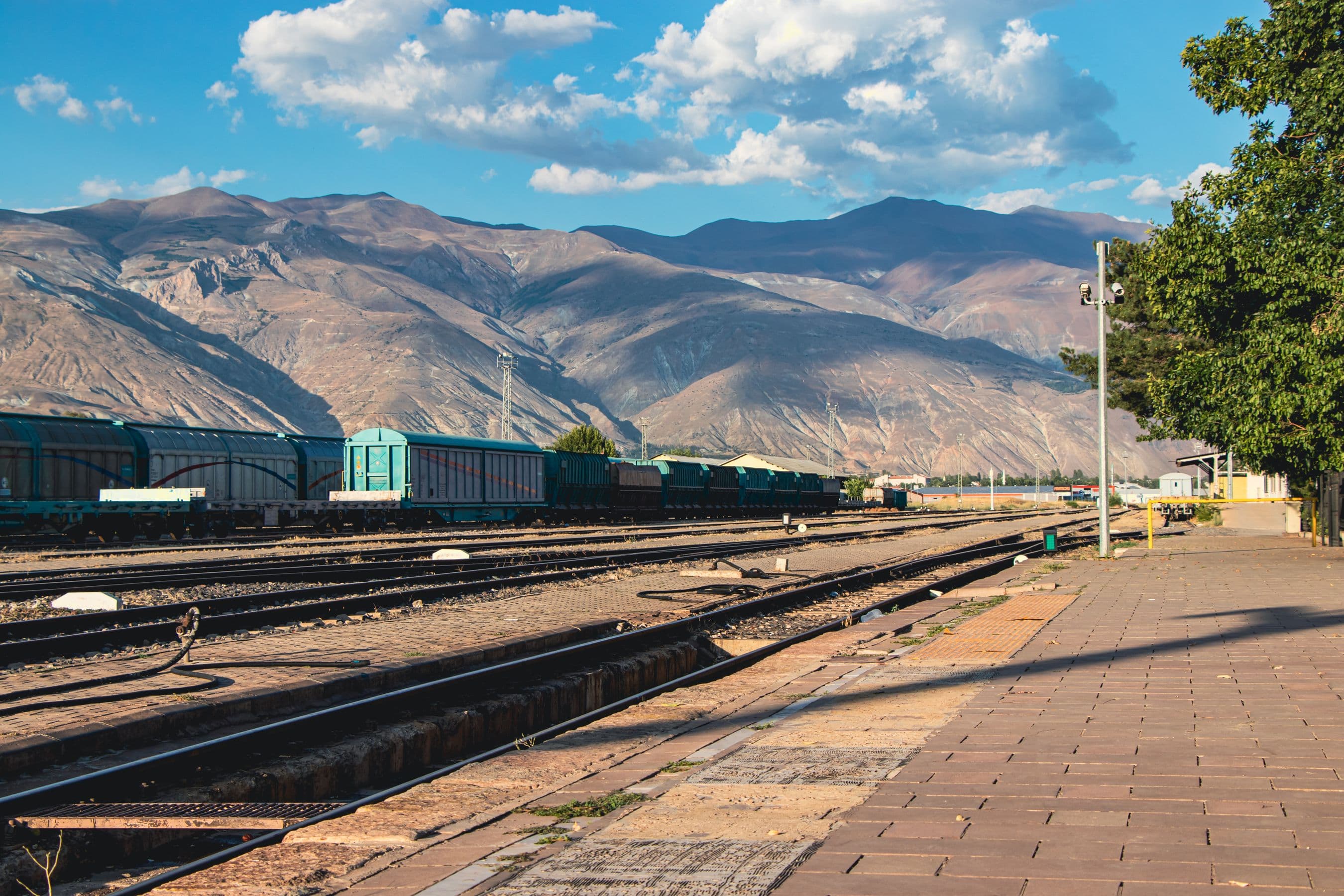

At GetTransport.com we field the same question from China-facing clients almost every week. Is there finally a way to move a container from western China toward Turkey or Europe without routing through Russia or gambling on a Caspian ferry slot? The China-Kyrgyzstan-Uzbekistan railway, usually shortened to CKU, is the answer taking shape on the ground. It is a 532 km line from Kashgar in China to Andijan in Uzbekistan, and its $4.7 billion financing was finalized in December 2025. In this guide we explain what the corridor is and how it differs from the Middle Corridor we already book cargo across. We also spell out what its 2030 target date means for the loads we plan today. The numbers here are real and the routing advice practical.
What the CKU corridor is
This line, also called the Kashgar-Andijan route, ties China's rail network directly into Central Asia and then onward toward Turkey, Iran, the Gulf and Europe. Kashgar sits in China's Xinjiang region. Andijan sits in Uzbekistan's Fergana Valley, where the line plugs into an existing network that already reaches Turkmenistan and the Iranian border. The idea is not new. Versions of a Kashgar to Fergana link have been discussed for decades, and it took a shift in regional trade politics to move it from a proposal into a construction site. Construction began with a launch ceremony on 27 December 2024 in Kyrgyzstan, and the project moved into active building through 2025 and 2026. When a client asks us why three governments spent years negotiating a mountain railway, the short version is diversification. The corridor gives China a southern land route into the region that does not lean on the Russia-transit Northern corridor. That single fact reshapes how we think about resilience for China-origin freight.
How it differs from the Middle Corridor
Our team already moves cargo on the Middle Corridor, so clients often assume this new line is just another name for it. It is not. That route runs north of the CKU line and crosses Kazakhstan, then makes a sea crossing over the Caspian by ferry before continuing through the South Caucasus. You can read our breakdown of that route in our guide to the Baku-Tbilisi-Kars line running at full capacity and our explainer on crossing the Caspian by Aktau-Baku ferry. CKU is different in one decisive way. It is a southern overland route. Cargo leaves Kashgar and reaches Andijan after climbing through the Kyrgyz mountains, without touching Kazakhstan or the Caspian at all. For a shipper that means one fewer maritime leg to schedule and one fewer transshipment risk to price.
Here is how we frame the two corridors when a client is choosing between them. We keep the comparison simple, because the trade-off usually comes down to whether the cargo can wait for a route that is still being built.
| Attribute | CKU railway | Middle Corridor |
| Core route | Kashgar (China) to Andijan (Uzbekistan) via Kyrgyzstan | China to Europe via Kazakhstan and a Caspian ferry into the South Caucasus |
| Sea crossing | None, fully overland | Yes, Caspian ferry from Aktau or Kuryk to Baku |
| Key new segment | 532 km of new line | Uses existing rail plus a ferry leg |
| Status in 2026 | Under construction, target 2028 to 2030 | Operational and carrying freight today |
| Reduces Russia transit | Yes | Yes |
| Best for | Future China to Iran and Turkey loads that avoid the Caspian | Cargo moving now that can absorb a ferry leg |
Route and build status
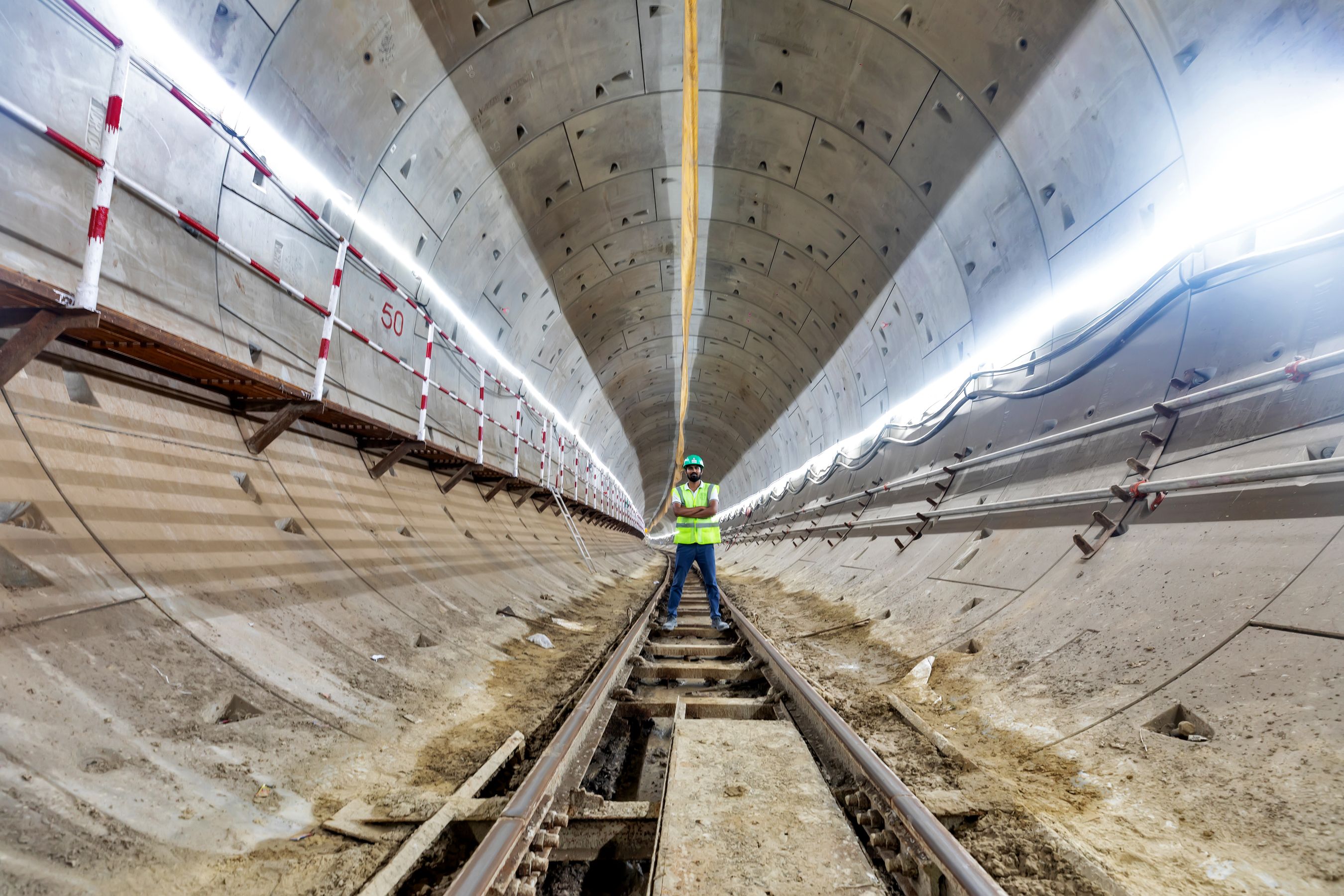
The line runs 532 km in total. Roughly 158 km sit inside China and about 305 km cross Kyrgyzstan. The final 69 km or so run through Uzbekistan into Andijan. The Kyrgyz middle section carries the hard engineering, with 50 bridges and 29 tunnels planned across steep mountain terrain. Three of those tunnels each run longer than 12 km, including the Kosh-Dobo tunnel at roughly 13.2 km. By mid-2026 the contractors reported more than 5,000 workers and around 5,600 units of specialized equipment on site, with earthworks past 3.5 million cubic meters. One detail we always flag is the gauge break. China runs 1,435 mm standard gauge while Kyrgyzstan and Uzbekistan run 1,520 mm gauge inherited from the Soviet network. That mismatch forces a transshipment or bogie-change point, so a container will not simply roll straight through without a handling step at the border. Kyrgyz officials have described building part of the line to Chinese standard gauge with a dedicated transshipment hub, which is the pragmatic way to bridge the two systems.
What it means for shippers
For the loads we plan at GetTransport.com, CKU reshapes the map in a handful of concrete ways. Here is how we brief clients today, before a single revenue train has moved.
- Treat it as a diversification option rather than a live lane. Commercial freight will not move before the 2028 to 2030 window.
- Distance is the headline win. The corridor trims the China to Europe run by roughly 1,000 km, and the operators say that can shave close to a week off transit against longer northern routings.
- Budget for the gauge break at the China border. A container meets a transshipment step there, so nobody should expect a smooth through-run.
- Onward links matter as much as the new track. Andijan reaches toward Turkmenistan and the Iranian frontier, opening China to Gulf and Turkey lanes that skip the Caspian entirely.
- Pair any CKU planning with customs reality. Clients moving e-commerce parcels across the region should review our guide to EAEU customs rules for 2026.
None of that requires action from a client this quarter. It shapes the two-year and three-year planning view, and that is exactly the horizon on which sourcing teams decide where to build inventory and which lanes to pre-book.
Timeline and risks
The money is now real. In December 2025 the three governments finalized about $4.7 billion in financing, and the agreement was signed in Bishkek. China provides roughly $2.3 billion as a 35-year loan to the joint project company and holds 51 percent of the equity, while Kyrgyzstan and Uzbekistan each hold 24.5 percent. The calendar is less settled. During Nawruz in late March 2026, Kyrgyz President Sadyr Japarov named 2030 as the completion target. Then on 23 June 2026 the TRACECA Secretary-General, who also serves as Uzbekistan's Deputy Transport Minister, said the line could open in 2028 or 2029, ahead of plan. Our planning stays conservative, anchored to the later date. Mountain tunneling tends to slip, and a 2030 assumption protects a client's schedule better than an optimistic 2028 one. The freight ambition is large, with projected volumes near 15 million tonnes a year by 2032 and 20 million tonnes by 2040. If even half of that materializes, the corridor becomes a serious third option next to the northern and Middle Corridor routes.
Frequently asked questions
When will the CKU railway open?
The official target is 2030, announced by Kyrgyz President Japarov in late March 2026. On 23 June 2026 a TRACECA and Uzbek transport official said it could open in 2028 or 2029 if work stays ahead of schedule. We plan around the later 2030 date to protect delivery windows, since the Kyrgyz section still involves 29 tunnels through hard terrain.
How long is the CKU railway and where does it run?
The line is about 532 km long, from Kashgar in China to Andijan in Uzbekistan. Around 158 km sit in China and about 305 km cross Kyrgyzstan, with the final 69 km or so inside Uzbekistan. Work began on 27 December 2024, and by mid-2026 more than 5,000 workers were on site.
How is CKU different from the Middle Corridor?
The older route crosses the Caspian Sea by ferry after passing through Kazakhstan. CKU is a fully overland southern route through Kyrgyzstan that avoids both Kazakhstan and the Caspian, and it links into Uzbekistan's network toward Turkey and Iran. In practice that removes one maritime leg from the plan.
Will CKU replace routes through Russia?
No. It reduces dependence on the Russia-transit Northern corridor by adding a southern option, yet it complements rather than replaces existing routes. With $4.7 billion in financing secured in December 2025 and more than 5,000 workers on site in 2026, we treat it as a diversification play worth tracking closely rather than a switch that flips overnight.