



The longest railway in the world is one of those facts that changes depending on whether you mean a single built line or a route a container can actually travel. The Trans-Siberian is the longest continuous railway line ever laid, but the longest journey freight makes by rail is longer still, assembled from several networks that meet at borders where the track gauge itself changes under the wheels. At GetTransport.com we book rail and intermodal freight across the Eurasian corridors, so we read the ranking through the one thing that decides cost and transit time on steel: where the train keeps rolling and where the cargo has to be lifted onto a different set of wagons. Here is the 2026 picture, with the figures from the railways and standard references, and what rail length really means for a shipper.
The longest lines, ranked
The table below ranks the longest continuous railway lines, using figures from the operating railways and standard references. These are single lines you could ride on one network, which is a different thing from the assembled freight routes we come to below.
| Rank | Railway line | Span | Length (per railways / references) |
|---|---|---|---|
| 1 | Trans-Siberian Railway | Moscow to Vladivostok, Russia | about 9,289 km |
| 2 | Trans-Canada (CN/CPKC networks) | Atlantic to Pacific across Canada | roughly 5,000-6,000 km per routing |
| 3 | Indian Pacific | Sydney to Perth, Australia | about 4,352 km (world's longest straight, 478 km) |
| 4 | Qinghai-Tibet Railway | Xining to Lhasa, China (highest line) | about 1,956 km |
The Trans-Siberian is the clear leader among single lines at about 9,289 km, and it is not close. What complicates the picture is that the longest distance freight actually covers by rail is not a line at all but a corridor, and by that measure the numbers climb well past 9,000 km.
The Trans-Siberian, the longest line and a freight backbone
The Trans-Siberian Railway runs about 9,289 km from Moscow to Vladivostok, and it is the longest railway line in the world by a wide margin. It is not a museum piece. The main line is double-tracked and fully electrified, built to the 1,520 mm Russian broad gauge, and it carries a heavy share of the freight moving overland between Europe and the Pacific on the northern route. For cargo that fits the corridor, it offers a genuine alternative to the sea lane, trading a higher rate for a much shorter transit than the ocean route around Asia.
The catch is the gauge. Because Russia runs on 1,520 mm track while China and most of Europe run on 1,435 mm standard gauge, freight crossing between them has to change bogies or transload at the frontier. That single fact shapes every long Eurasian rail quote we build, because the break, not the distance, is where the hours and the handling cost land.
The longest freight route versus the longest line
Here is the twist that the single-line ranking hides. The longest regular freight service by rail runs from Yiwu in China to Madrid in Spain, a journey of about 13,052 km across eight countries, longer than the Trans-Siberian line it partly uses. Push the idea to its theoretical limit and a route from Lagos in southern Portugal to Singapore would span roughly 18,670 km through 13 countries and take about 21 days, though that one is not pure rail, since parts of it rely on road or bus links rather than a continuous track. These are not single lines. They are corridors assembled from many networks.
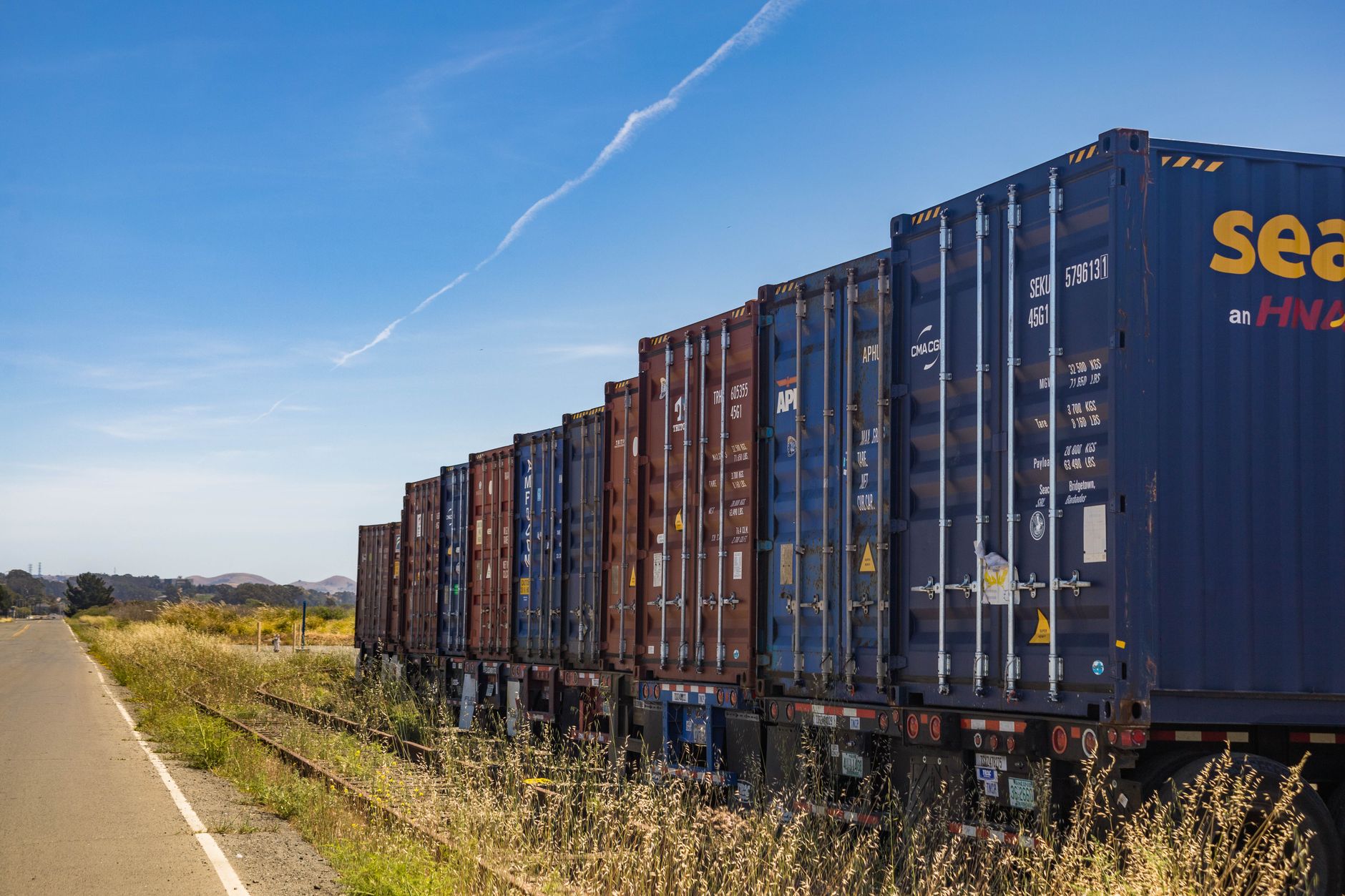
For a shipper this is the number that matters, because the China-Europe rail corridors are a working freight product, not a curiosity. They sit between air and ocean on both price and speed, and they have grown as buyers look for a middle option and a way to diversify away from a single sea lane. When we quote them, we are pricing a chain of networks and at least one gauge change, so the headline distance is only the starting point.
Gauge breaks and why they set the cost
Track gauge is the hidden tax on long rail freight. Russia and much of the former Soviet space use 1,520 mm broad gauge, Europe and China use 1,435 mm standard gauge, and India uses 1,676 mm broad gauge. Every time a corridor crosses between these systems, containers are either lifted onto compatible wagons or the wagons themselves get new bogies, and that transfer takes time, equipment and yard capacity at the border.
This is why we never read a rail corridor as one smooth line. A route that looks direct on a map can carry two or three gauge or network breaks, and each is a scheduled stop with real dwell. We plan those breaks the way we plan a transshipment at a port, and it is the same corridor logic we apply when we map the busiest shipping routes and trade lanes against their rail alternatives.
Two shifts are reshaping these corridors in 2026. As Red Sea disruption pushed freight off the ocean and onto rail, volumes surged, and countries on the route are building capacity to match: Poland is adding new transshipment terminals on its eastern border to speed the gauge change. At the same time the Middle Corridor, the Trans-Caspian route that skirts Russia through Kazakhstan, the Caspian and the South Caucasus, is growing fast, with traffic up around 78% year on year in the first half of 2026 as shippers diversify away from the northern route. For a shipper that means more than one long rail option now, each with its own gauge breaks to plan around.
What rail length means for your cargo
Read as an operating guide rather than a record book, the ranking shapes several calls we make on a shipper's behalf:
- We separate the longest line from the longest route, because the working China-Europe freight corridor runs longer than the Trans-Siberian line it uses in part.
- We price gauge and network breaks as scheduled dwell, since the transfer between 1,520 mm and 1,435 mm track is where hours and handling cost land.
- We position long rail corridors as the middle option between air and ocean, faster than the sea lane and cheaper than air for the right cargo.
- We treat the Trans-Siberian as a real northern-route backbone, not a novelty, for freight that fits its corridor and timing.
- We read distance as a rough guide to transit and cost, then let the border breaks decide the actual schedule.
None of this replaces a routed rail plan for a specific box. But it explains why the longest line and the longest freight route are two different answers, and why the corridor and its gauge breaks matter more than the raw kilometres, the same way the port in the middle shapes an ocean move to the busiest container ports.
Frequently asked questions
What is the longest railway line in the world in 2026?
The Trans-Siberian Railway is the longest continuous railway line at about 9,289 km, running from Moscow to Vladivostok. It is double-tracked, fully electrified and built to the 1,520 mm Russian broad gauge, and it carries a heavy share of overland freight between Europe and the Pacific.
Is any rail route longer than the Trans-Siberian?
Yes, as an assembled freight corridor rather than a single line. The regular Yiwu to Madrid rail service covers about 13,052 km across eight countries, and a theoretical Lagos (Portugal) to Singapore route would span roughly 18,670 km through 13 countries, though that journey relies on some road or bus links rather than continuous track. These combine several networks rather than running on one line.
Why do gauge breaks matter for rail freight?
Because Russia uses 1,520 mm broad gauge while China and Europe use 1,435 mm standard gauge, so freight crossing between them must change bogies or transload onto compatible wagons at the border. That transfer adds time, equipment and yard capacity, and it is usually where the real cost and dwell of a long rail move sit, not in the distance itself.