


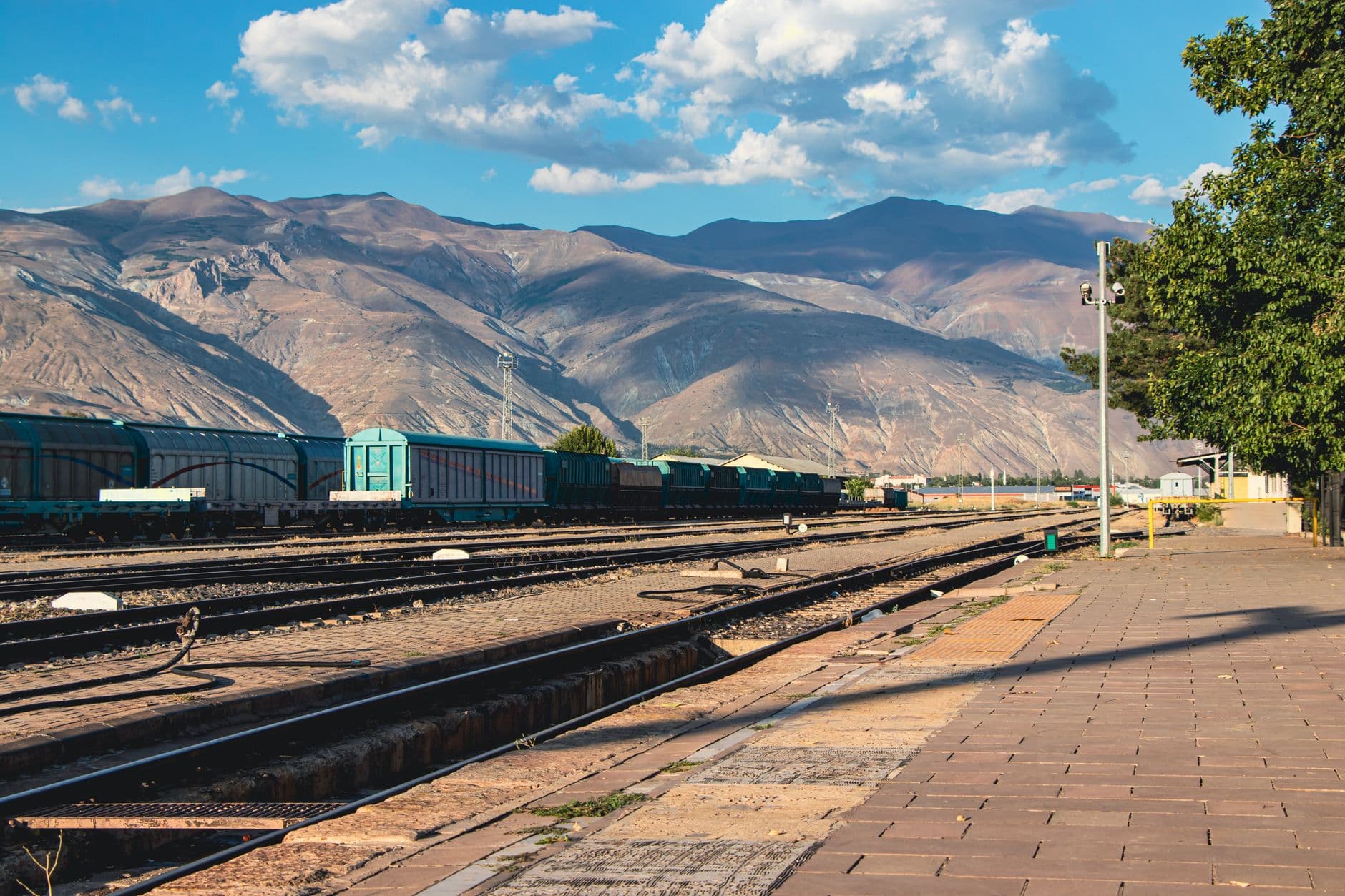

When a shipper asks our freight desk how to move a container or a truckload between Türkiye and the Caucasus, Central Asia or China without touching Russian territory, the answer now leans harder than ever on one railway. The Baku-Tbilisi-Kars line, usually shortened to BTK, reached full commercial operation on 2 June 2026, and its annual freight capacity jumped from about 1 million tonnes to 5 million tonnes. That is a fivefold change on a corridor that used to be treated as a curiosity, and it quietly rewrites the lane math for anyone routing Asia to Europe traffic across the Middle Corridor.
GetTransport.com has matched carriers on Trans-Caspian and Caucasus lanes since well before this route was fashionable, so what follows is the operational version of the BTK story, not the ribbon-cutting one. The geopolitics have been covered to death. What a cargo owner actually needs is the lane, the friction points, the documents and the honest question of when this railway beats the alternatives. That is what this guide covers, with the 2026 numbers that finally make BTK a serious option.
What actually changed in June 2026
BTK is not new. The line opened in October 2017 as the missing rail link joining the Azerbaijani and Georgian network to the Turkish one at Kars. For years it ran well below its potential because the track and the terminals could not handle real volume. The 2026 milestone is about throughput, not a new map. After the reconstruction programme, concentrated on the roughly 180 kilometre Georgian section, about 153 kilometres of existing track were rehabilitated and around 27 to 30 kilometres of new line were built to European technical standards, lifting the ceiling from that 1 million tonne trickle to 5 million tonnes a year.
Full capacity does not mean full trains overnight. It means the physical bottleneck has been removed, so the corridor can absorb the container and block-train growth that operators have been pushing onto it. For a shipper the practical read is simple. A route that could only take a thin flow two years ago can now carry a steady programme, which is why we have moved BTK from the "maybe" column to a lane we quote with a straight face.
The lane, end to end
The BTK section itself runs about 826 kilometres from Baku in Azerbaijan, through Tbilisi in Georgia, to Kars in eastern Türkiye. But the railway only earns its value as the middle of a longer chain, and it is worth seeing the whole thing.
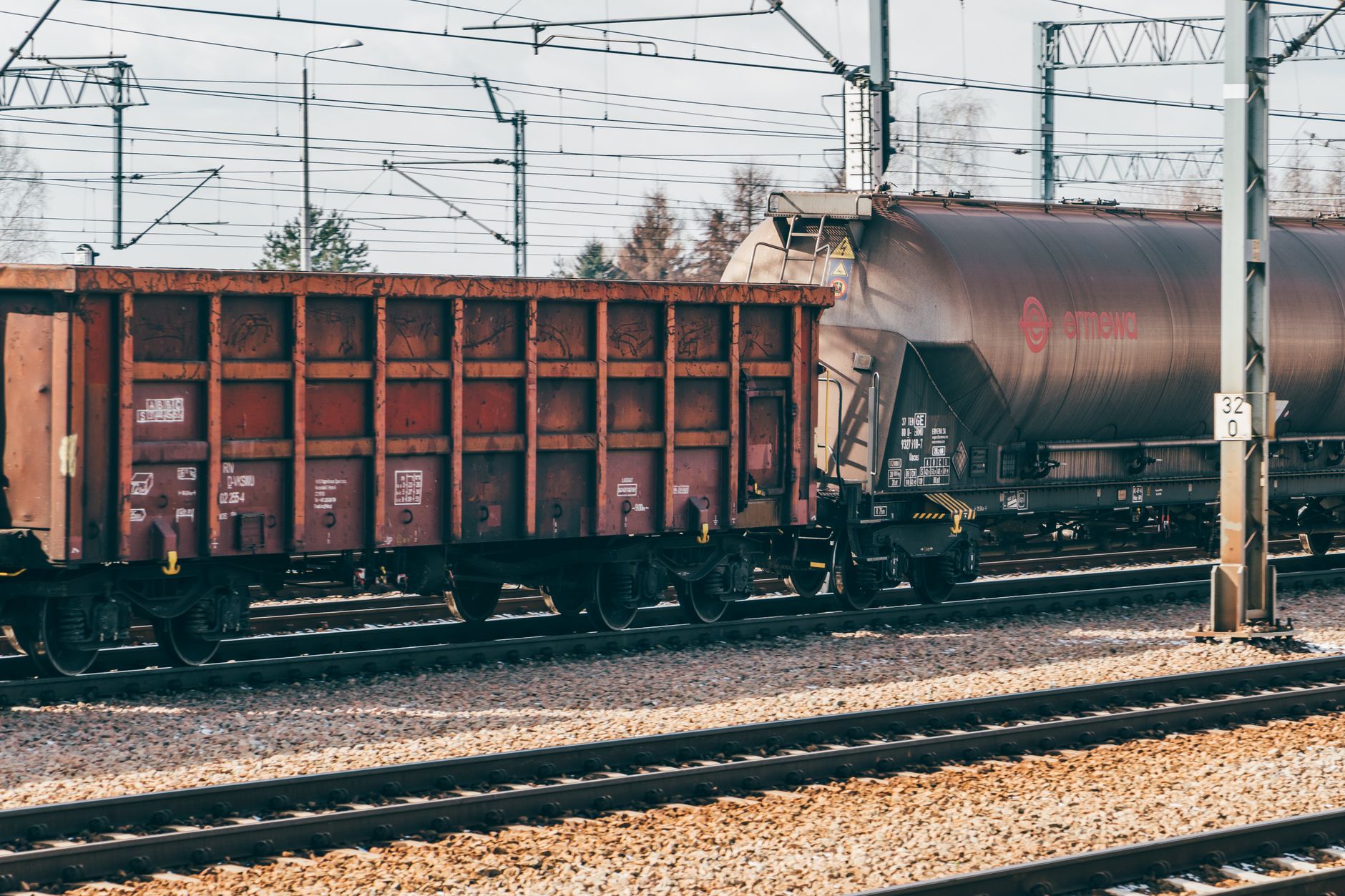
Heading west from Kars, the cargo joins the Turkish rail network and runs toward the Marmara region and on into Europe, with the Marmaray tunnel under the Bosphorus linking the Asian and European sides of Istanbul. Heading east from Baku, the line meets the Caspian Sea, where freight transfers to a ferry across to Aktau or Kuryk in Kazakhstan and then continues by rail toward China. That Caspian leg is the part most people underestimate, and we cover it in detail in our guide to crossing the Caspian in 2026. BTK and the Caspian crossing are two halves of the same journey, and a plan that gets one right and ignores the other still slips.
The gauge break is the friction nobody mentions
Here is the operational detail that catches first-time users. Azerbaijan and Georgia run on the 1520 millimetre broad gauge inherited from the Soviet network, while Türkiye runs on the 1435 millimetre standard gauge used across Europe. The two meet near Akhalkalaki in Georgia, and that is where the break of gauge happens.
At that point the cargo either has its wagons fitted with different bogies or, more commonly for containers, is transshipped from a broad-gauge wagon to a standard-gauge one. The facility was built for exactly this, so it is a managed step rather than a surprise, but it is not free. It adds handling time and a cost line, and it is one reason container moves can be smoother than wagonload freight, because lifting a box across is quicker than re-trucking a loaded wagon. When you compare a BTK quote against an all-sea routing, the gauge change is part of what you are paying for, and a carrier who runs the lane regularly will have the Akhalkalaki step priced and scheduled rather than treating it as an afterthought.
How BTK fits the Middle Corridor
The Middle Corridor, formally the Trans-Caspian International Transport Route, is the path that links China and Central Asia to Europe while avoiding both the long ocean voyage and Russian transit. BTK is its western rail anchor, the piece that drops corridor cargo onto Turkish and European rails instead of leaving it stranded in the Caucasus.
That matters because the corridor has been growing fast and its weak links have been capacity, not appetite. With BTK now able to move 5 million tonnes a year and the Caspian ports adding ferry and container capacity through 2026, the two historic chokepoints are easing at the same time. A China to Europe transit on this routing typically lands in the region of three to five weeks depending on the Caspian queue and border dwell, which is slower than a clean rail run through the north but faster than the sea, and the routing avoids the compliance questions that come with Russian transit.
Documents and customs along the chain
Because a BTK move crosses several borders, the paperwork is corridor paperwork, and it sits on top of the railway booking itself. The predictable set looks like this:
- The rail waybill, increasingly the CIM/SMGS common consignment note used where the two rail-law regimes meet.
- A TIR carnet or its digital eTIR equivalent for road legs feeding the railheads, where the operator is accredited.
- Customs transit declarations for each jurisdiction the cargo passes, since Azerbaijan, Georgia and Türkiye are separate customs territories.
- The ferry booking and manifest if the cargo continues east across the Caspian.
If the goods are heading into the Eurasian Economic Union after the corridor, the import regime changes again and the clearance becomes its own project. We set out that side in our 2026 EAEU customs rules guide, because moving the cargo and clearing it are two different problems and the second one is where deadlines die.
When BTK is worth it, and when it is not
The line is not automatically the right answer. It earns its place when avoiding Russian transit is a hard requirement, when the cargo suits rail and short-sea rather than a long ocean voyage, and when a transit measured in weeks rather than days is acceptable for the lane between Türkiye, the Caucasus, Central Asia and China.
It makes less sense for a single time-critical shipment, because the Caspian queue feeding the eastern end can still add an unplanned week, and the gauge change adds a fixed step that an all-road or all-sea routing avoids. For a regular programme of containers between Türkiye and Central Asia, or as the western exit for Middle Corridor traffic out of China, BTK at full capacity is now a genuine line on the quote sheet rather than a backup you reach for in a crisis.
A planning checklist for a BTK move
- Decide container versus wagonload early, because the Akhalkalaki gauge break is quicker for boxes than for loaded wagons.
- Plan the whole chain, not just the railway, especially the Caspian ferry leg if the cargo runs east of Baku.
- Book through a carrier who already runs BTK and holds the gauge-change and ferry slots, rather than assembling the legs yourself.
- Budget the break of gauge as a real cost and time line, not a rounding error.
- Prepare the corridor transit documents and any TIR or eTIR paperwork before the cargo moves.
- Confirm the destination customs regime, especially if the goods enter the EAEU after the corridor.
The headline number, 5 million tonnes from June 2026, is the easy part of the BTK story. The lane is won or lost in the gauge break, the Caspian queue and the slot, which is exactly where a marketplace view of who is actually running the route this month beats a map that shows a single unbroken line.
Frequently asked questions
What changed on the Baku-Tbilisi-Kars railway in 2026?
The line reached full commercial operation on 2 June 2026, and its annual freight capacity rose from about 1 million tonnes to 5 million tonnes. The increase came from reconstruction work on the roughly 180 kilometre Georgian section, which rehabilitated about 153 kilometres of existing track and added around 27 to 30 kilometres of new line built to European technical standards. The route map did not change, but the throughput ceiling did, which is what makes it a serious freight option now.
Why is there a gauge change on the BTK line?
Azerbaijan and Georgia use the 1520 millimetre broad gauge, while Türkiye uses the 1435 millimetre standard gauge common across Europe. The two systems meet near Akhalkalaki in Georgia, where cargo is either re-bogied or transshipped between broad-gauge and standard-gauge wagons. The facility is purpose-built, so it is a managed step, but it adds handling time and cost, and container moves usually clear it faster than loaded wagons.
How does BTK connect to China and the Middle Corridor?
BTK is the western rail anchor of the Middle Corridor, the Trans-Caspian International Transport Route. East of Baku, cargo crosses the Caspian Sea by ferry to Aktau or Kuryk in Kazakhstan and continues by rail toward China. West of Kars, it joins the Turkish network and runs on into Europe. A China to Europe transit on this routing typically takes about three to five weeks depending on the Caspian queue and border dwell.
Is the BTK railway a good alternative to Russian transit?
For many shippers, yes. The line is the core reason the Middle Corridor can move Asia to Europe freight without crossing Russian territory, which matters where compliance or commercial policy rules out the northern route. It is best suited to a steady programme of containers rather than a single urgent shipment, because the Caspian leg and the gauge change add variability that a hard deadline cannot always absorb.
If your cargo continues east of Baku, read it together with our guide to crossing the Caspian in 2026, because the railway and the ferry are two halves of one move and planning them as a single chain is what keeps the schedule honest.