



I have been reading Rail Baltica coverage for years, and almost all of it is about passengers. Tallinn to Riga in under 2 hours, Riga to Vilnius, a high-speed line finally connecting the Baltic capitals to the rest of Europe. That story is real. It is also not the story that decides whether the project matters to anyone shipping goods, and the freight version has changed direction in the past 2 years in a way almost nobody has reported.
The freight question has a specific shape in this region, and it is not about speed. Baltic railways run on 1,520 mm gauge, inherited from the Soviet network and still the standard in the three countries today. Continental Europe runs on 1,435 mm. Every wagon moving between the Baltics and Poland has to change gauge, and that transfer, not the distance, is what has kept north-south rail freight small while the east-west flows on the old gauge did the volume. Rail Baltica is a 1,435 mm line built to remove the break.
Two things have moved since the older analyses were written. The commercial ambition for freight has been revised upward and toward containers. And the delivery risk has got considerably worse. Those pull in opposite directions, which makes this an unusually awkward project to plan around.
The line, and what it has cost to get here
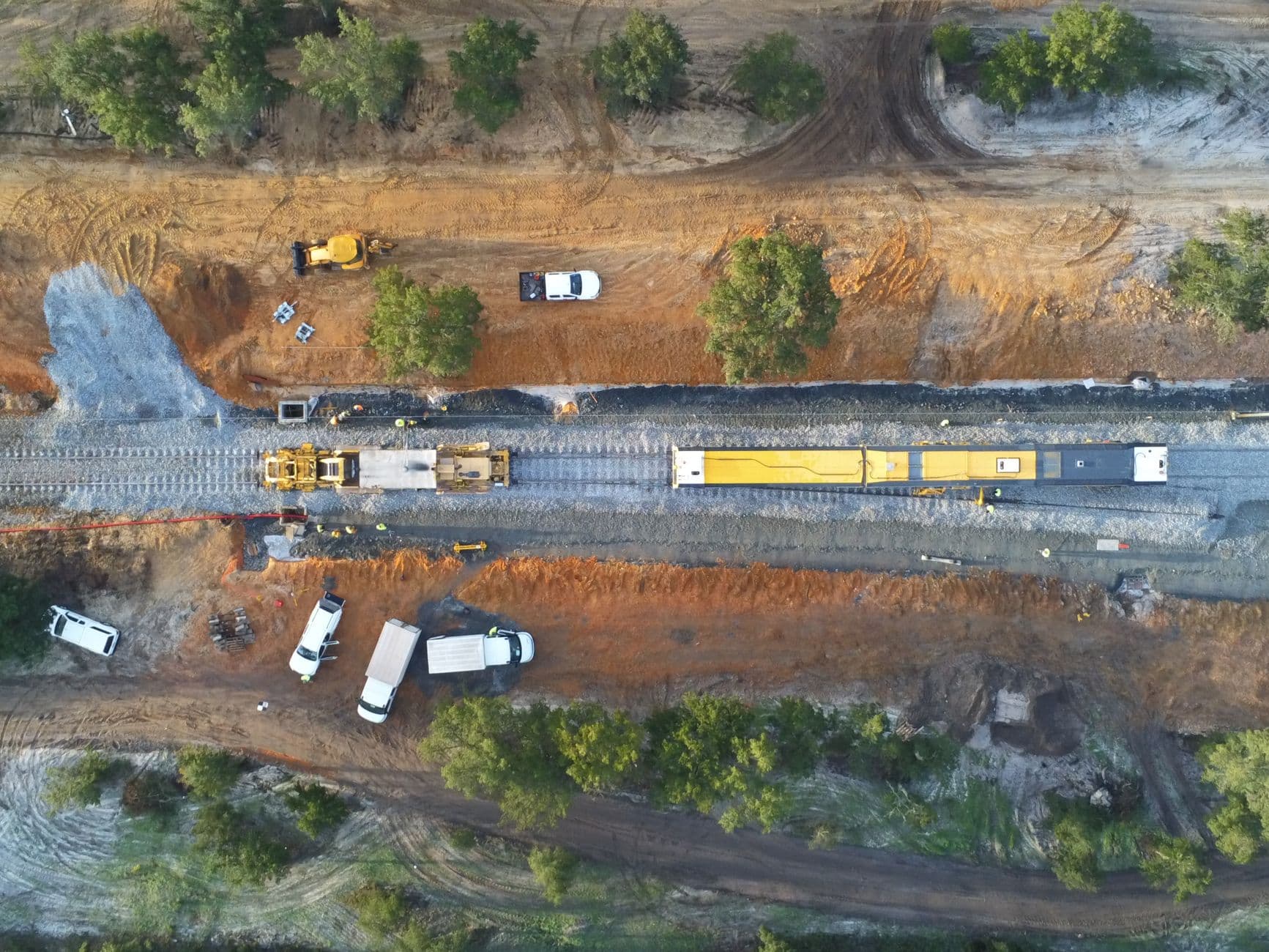
The planned standard-gauge route runs 870 km from the Polish border through Lithuania and Latvia to Estonia. Railway Gazette International About 43% of the first-phase main route was ready for construction as of 2026, and the southern end arrives first: Section 1, the roughly 110 km between Poland and Lithuania, is expected in the 2026 to 2028 window.
The cost history is the part to understand before anything else. The original estimate was €5.8 billion. The current figure is close to €24 billion, and it is expected to rise further. RB Rail That is not ordinary infrastructure inflation, it is a fourfold increase, and it has consequences that reach the freight case directly, because a project this far over budget gets built in the order that funding allows rather than in the order that commercial logic would choose.
The funding gap is immediate rather than theoretical. Estonia alone needs to find an additional €400 to €500 million simply to maintain the construction pace through 2027, with the next phase resting on hopes for the following EU funding period. The Latvian transport minister has publicly described the project as mired in problems, citing spiralling costs, slipping deadlines, and repeated changes of management. When a responsible minister says that on the record, the published completion dates deserve to be read as intentions.
On which: the original projected completion was 2026, which is now. The current target for phase one is 2030, and officials have begun openly discussing whether 2030 is achievable at all. Major budget decisions covering 2028 to 2030 have not been taken.
The operating parameters are genuinely built for freight
RB Rail's operational plan for 2026 to 2056 envisages 2 to 3 freight trains per hour, with trains up to 1,050 m long, a 25-tonne axle load, and a maximum speed of 120 km/h. Railway Gazette International
Read those as a freight planner. A 25-tonne axle load and 1,050 m train length are serious numbers, comparable to good European freight corridors, and they mean the line is built for cargo rather than merely tolerating it. The constraint is elsewhere: 2 to 3 paths per hour, shared with passenger service on a first phase that is single-track and electrified, is a capacity envelope with real limits once traffic builds.
The freight forecast has been rewritten, and toward containers
This is the part where most existing analysis, including the numbers I would have quoted a year ago, is out of date.
The figure in wide circulation is 9.2 million tonnes a year by 2046, of which about 7.3 million tonnes would be non-unitised cargo, meaning raw materials and bulk. That comes from an older cost-benefit analysis dating to 2017, and it is the source of the common conclusion that Rail Baltica is fundamentally a bulk railway with a container afterthought.
The more recent 2024 cost-benefit analysis works in different units, projecting around 55,000 tonnes of cargo per day on the line. RB Rail Annualise that arithmetic and you land near 20 million tonnes a year, which is more than double the older figure, though the two are not measured on the same basis and should not be compared as though they were. Treat the direction as the signal rather than the precise multiple.
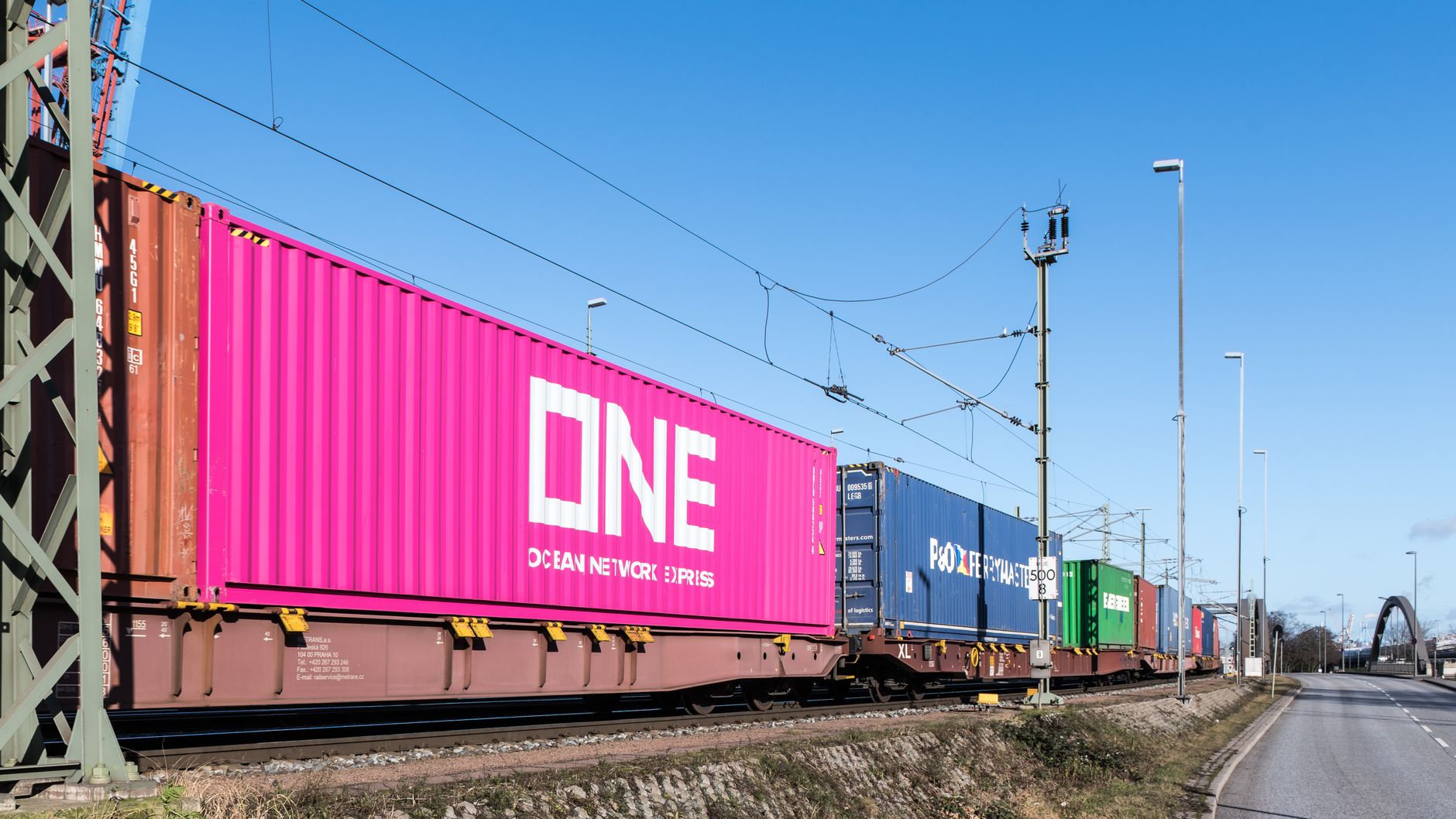
The strategic change matters more than either number. A 2025 report on the project's freight strategy states that 80% of freight trains on Rail Baltica are intended to be intermodal, moving containers and trucks on wagons. That is close to the inverse of what the 2017 forecast implied, and it means the promoters are now deliberately courting the container and road-freight markets rather than treating box traffic as incremental.
I want to be careful about how much weight that carries. A stated strategy is not demand. Intermodal traffic at that share requires terminals, service frequency, and shippers willing to move off road, and none of those are in place. But if you are a forwarder who wrote this corridor off as a bulk project, the people building it no longer agree with you, and the terminals now being designed reflect the container ambition rather than the bulk one. For comparison, the corridors we examined in the guides to the Qinghai to Dong Nai route and the Laos east-west rail corridor were box-led from the outset, and Rail Baltica has moved toward that model rather than away from it.
The terminals are the project, and one of them is in trouble
Three multimodal terminals are planned, one per country. Their status differs sharply, and the differences are where the near-term risk sits.
- Kaunas, Lithuania. European-gauge track reached Kaunas in 2021, and there is a working standard-gauge connection toward Poland. But the Kaunas node is not finished: the Palemonas terminal and the integration with the existing broad-gauge network in a dense urban area are still in design and development, with some work only commencing in April 2026. Call it a usable test segment rather than a completed facility.
- Salaspils, Latvia. Designed for container handling on both 1,435 mm and 1,520 mm gauges, plus road transfer and piggyback loading of trailers onto specialised wagons. The design intent is the most commercially interesting thing in the project. The problem is next door, and I come back to it below.
- Muuga, Estonia. A freight station at the Port of Tallinn's Muuga harbour, planned for up to 4.5 million tonnes a year. The port is marketing the site to investors as the only Baltic port with a Rail Baltica terminal planned on its premises, with the rail connection expected from 2030.
Salaspils handling both gauges is the whole thesis in one design decision. A terminal that can receive a 1,520 mm train from the east and transfer to a 1,435 mm train heading south turns the gauge break from a barrier into a service, which is a more realistic proposition than a through line, because the eastern network is not going to be regauged.
Which is why the current situation at the Daugava crossing deserves attention from anyone counting on that node. The planned dual-level road and rail bridge over the Daugava river near Salaspils has fallen behind: construction of the bridge piers has not started on time, the delay exceeds a year, and the European Commission is planning to terminate a €51.5 million military mobility grant as a result. European Commission A grant withdrawal on a structure that carries the corridor across the river is not a scheduling detail. It puts the timing, the funding, and potentially the design of the Latvian section's key freight node in question.
Why it gets built anyway
Rail Baltica has been discussed since the 1990s and has survived cost escalation that would have killed most infrastructure projects. The reason it continues is not primarily commercial, and pretending otherwise makes the timeline impossible to read.
The line is explicitly designed for dual use and built to NATO specifications, and military mobility has been a stated top priority since the invasion of Ukraine. RB Rail That does two things to the freight outlook. It makes completion of the core route considerably more likely than a purely commercial case would justify, because the funding rationale does not depend on tonnage forecasts. And it shapes the specification in freight's favour, since heavy axle loads and long trains are what military transport needs and what intermodal freight needs too.
The awkward corollary is visible in the Daugava bridge story. When military mobility money is the funding source, military mobility timetables are the condition attached to it, and missing them costs the grant rather than merely delaying the works.
The traffic this line was meant to inherit has gone
Any honest assessment has to account for the cargo that left. Baltic rail freight was built around east-west flows on 1,520 mm gauge, and those volumes fell sharply after 2022 as trade with Russia and Belarus was cut back. Latvian and Lithuanian railways lost a large share of their traditional business, and the ports lost transit cargo that had arrived by rail.
So Rail Baltica arrives into a market with surplus rail capacity, experienced operators, and no ready volume. That lowers the cost of standing up new services and removes the cargo base that would have filled them, which is part of why the commercial case now rests on winning traffic off the road rather than on capturing existing rail flows.
The corridor's southern continuation runs into everyone else's capacity problems as well. Rerouting freight through Germany during the current programme of corridor closures is its own exercise, covered in our guide to German rail corridor closures through 2027. A new line to the Polish border does not help much if the onward path is congested.
What a shipper should do about it now
My advice for the next 3 years is undramatic, with one change from what I would have said before the strategy shifted.
For time-sensitive goods between the Baltics and Poland or Germany, road remains the answer, and nothing about a 2030 target that officials are themselves questioning justifies restructuring a supply chain in 2026.
For intermodal and container shippers, the picture is more interesting than the old bulk-railway framing suggested. The stated goal of 80% intermodal trains means the project is actively seeking your business, and early commercial conversations are worth having, particularly with operators positioning around Muuga. What is not available is the infrastructure: the terminals and the complete line are years out, and the standard-gauge segment from the Polish border to Kaunas is a test track rather than a corridor service.
For bulk shippers, the flows behind the older forecast still exist and the terminals still serve them, but you are no longer the priority customer in the project's own plan.
Then watch 3 specific things rather than the project as a whole. The first is the Daugava bridge, because whether Latvia resolves the funding and design questions there determines the viability of the Salaspils node and the Latvian section's timeline. The second is Section 1 between Poland and Lithuania, whose completion in the 2026 to 2028 window is the first date on which the line does anything commercially useful. The third is whether any scheduled intermodal service is announced on the Kaunas to Poland segment, because that is the earliest real test of whether the 80% intermodal ambition has customers behind it.
For context on who would actually run these trains, our ranking of the largest rail freight operators covers the incumbents likely to bid for paths, and our look at the Lobito corridor in Angola is an instructive comparison: there the cargo arrived before the full build-out did, and the constraint turned out to be rolling stock rather than track. Here the track is the constraint and the cargo has yet to be won.
Project figures, cost estimates, and completion targets are drawn from RB Rail, the European Commission, and industry reporting current in 2026, and have been revised repeatedly over the project's history. Confirm current dates and budgets before relying on them for commercial planning.