


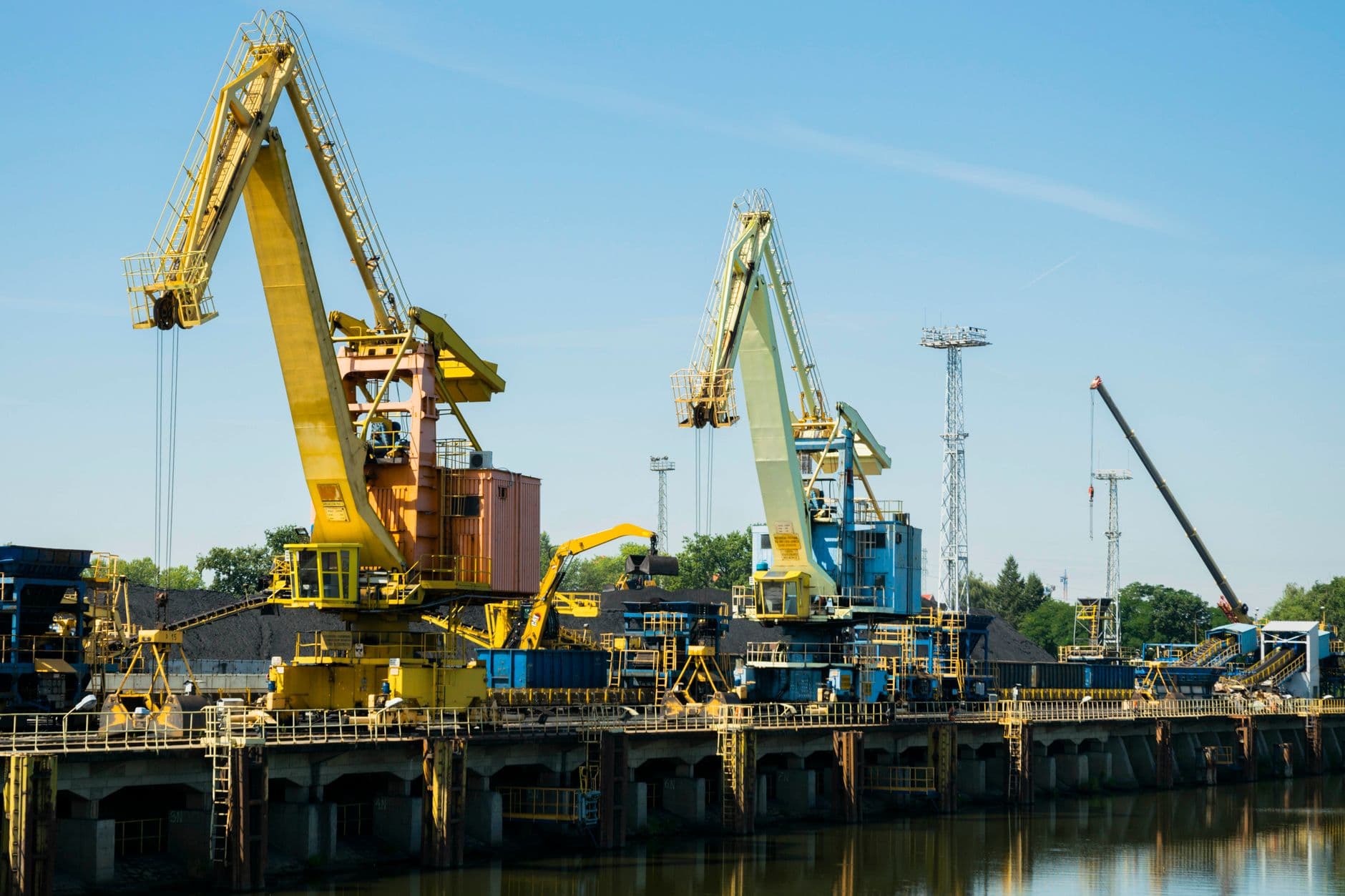
Mundra is India's biggest port by cargo, having crossed 200.7 million tonnes in FY 2024-25, while the 12 government-run major ports together handled a record 915.17 million tonnes in FY 2025-26, up 7.06 percent year on year. The tonnage leader and the container leader are not the same port, and that gap decides where your box should land.
India runs its port statistics on a fiscal year that starts in April, so FY 2025-26 closed at the end of March 2026 and the final figures are now published rather than provisional. I pulled the tonnage table and the container table side by side for this piece, because shippers who read only the first one keep routing containers to ports built for coal and crude. Installed capacity across Indian ports now stands near 2,762 million tonnes per annum, which means the constraint has moved from berths to inland connections.
The biggest ports in India in 2026, ranked by cargo
Figures are total cargo throughput in million metric tonnes. FY 2025-26 covers April 2025 to March 2026. Where a port's latest figure is still rounded in published summaries, the table says so rather than inventing precision.
| # | Port | State | FY 2025-26 (MMT) | FY 2024-25 (MMT) | Cargo profile |
|---|---|---|---|---|---|
| 1 | Mundra | Gujarat | 215 and above | 200.7 | Containers, coal, crude, general cargo |
| 2 | Deendayal (Kandla) | Gujarat | 160.11 | 150.16 | Petroleum, grain, fertiliser |
| 3 | Paradip | Odisha | 156.45 | 150.41 | Thermal coal, iron ore, crude |
| 4 | JNPA (Nhava Sheva) | Maharashtra | 102.01 | 92.12 | Containers, over half of national box traffic |
| 5 | Visakhapatnam | Andhra Pradesh | Around 88 | 82.62 | Iron ore, coal, general cargo |
| 6 | Mumbai | Maharashtra | Around 72 | Around 69 | Petroleum, general and break-bulk |
| 7 | Syama Prasad Mookerjee (Kolkata) | West Bengal | Around 70 | Around 64 | Fertiliser, coal, project cargo |
| 8 | Chennai | Tamil Nadu | Around 58 | Around 55 | Containers, cars, general cargo |
| 9 | Kamarajar (Ennore) | Tamil Nadu | Around 50 | 48.40 | Thermal coal, cars, LNG |
| 10 | New Mangalore | Karnataka | Around 48 | 46.01 | Crude, LPG, edible oil |
Two things stand out. Gujarat holds the top two places, and Mundra is privately operated while Deendayal sits inside the major-port system, so national totals published for "major ports" leave the country's largest port out of the count entirely. Paradip and Visakhapatnam rank high on a diet of coal and ore that never touches a container, which is why they matter to the operators covered in our look at the largest dry bulk shipping companies and barely at all to a forwarder moving finished goods.
Why the container ranking disagrees with the tonnage ranking
Containers reorder the table. JNPA closed FY 2025-26 at a record 8.17 million TEU, an 11.94 percent rise on the previous year's 7.30 million, alongside 102.01 million tonnes of total cargo, and it has now crossed the 10 million TEU capacity mark after its latest terminal expansion. On the tonnage list JNPA sits fourth. On the container list it is first, carrying more than half of India's box traffic on its own.
Mundra is the one closing that gap. Its combined container throughput reached 3.6 million TEU in the first half of 2026, and Adani is pushing to commission a fifth container terminal, CT5, with operations possibly starting as early as October 2026 to relieve capacity strain. Chennai, eighth or so on tonnage, moves roughly 1.82 million TEU. If you want the global frame for these numbers, the ranking of the busiest container ports in the world puts India's leaders in context against Shanghai and Singapore.
Mundra's mix also changes how congestion behaves there. A bulk berth queue and a container berth queue form for different reasons and clear on different schedules, so a port loading coal and crude next to boxes can be fluid on one side and blocked on the other in the same week.
Vizhinjam is the number that changed fastest
Vizhinjam in Kerala reached 2 million TEU by 31 May 2026, roughly 18 months into operations, the quickest any Indian port has hit both the 1 million and 2 million marks. May 2026 set its monthly record at 130,863 TEU. By February 2026 the port had climbed to 83rd globally on container handling, having taken 740 vessel calls and 1.57 million TEU in its first year, and it has already worked MSC Irina, one of the largest container ships afloat.
The reason it matters is draught. Vizhinjam offers depth of up to 24 metres, which places it among the deepest facilities anywhere, a category we cover in the list of the deepest ports in the world. Indian transshipment cargo has historically been relayed at Colombo, Singapore and Jebel Ali, and every box handled offshore carried a second handling charge plus schedule risk that no Indian terminal could compete away. Adani committed 1.2 billion dollars to the terminal, and the stated target is 5.7 million TEU by 2029.
The constraint now sits behind the gate rather than at the quay. Yard capacity is being stretched, and the road and rail connectivity projects are behind schedule. The Kerala Steamer Agents Association has pointed to road access, Customs facilities and ancillary services as the gating items before full EXIM operations, a phase expected around 2028. So the honest read is a transshipment success with an import-export business still waiting on infrastructure, and I would treat the 2029 target as an ambition rather than a plan to book against, because relay volume follows carrier network decisions rather than berth availability.
What Vadhavan adds, and when
Vadhavan in Maharashtra is the largest greenfield port project in the pipeline, estimated at 76,220 crore rupees, and it is designed to add about 298 million tonnes of annual capacity including 23.2 million TEU of container handling. Completion is targeted around 2034.
That number deserves a moment of arithmetic. India's entire major-port system moved 915.17 million tonnes in FY 2025-26, so Vadhavan alone represents close to a third of today's major-port throughput in added capacity, and its container design capacity is nearly three times what JNPA handles now. The project is also clearing its obstacles: the Bombay High Court has allowed mangrove felling for an eight-lane access road on public-utility grounds, which removes one of the environmental blocks that had held the land-side work back. Projects of that size still slip, and no current routing decision should depend on 2034. The near-term effect is on JNPA, which will eventually share Maharashtra volume with a deeper neighbour rather than absorb all of it.
How I read these numbers before a booking
Tonnage tells you what a port was built for. Here is the shortlist I work through when the ranking alone looks convincing:
- Check the cargo mix, not the total. Paradip at 156.45 million tonnes is a coal and ore port. A container arriving there is an exception, not a service.
- Separate private from major-port statistics. Mundra sits outside the 915.17 million tonne major-port figure, so any comparison that mixes the two double-counts or omits depending on which source you started from.
- Ask what the draught is at the berth you will actually use, not at the port's deepest point. Vizhinjam's 24 metres belongs to specific berths.
- Look at the inland leg. With capacity near 2,762 million tonnes per annum nationally, the queue has moved to rail and road connections behind the gate, which is exactly what is limiting Vizhinjam now.
- Treat capacity dates as ranges. Vadhavan around 2034, Vizhinjam's 5.7 million TEU by 2029 and Mundra's CT5 from October 2026 are all design or intent figures, and terminal operators covered in our review of the largest port operators routinely commission in phases.
- Watch month-level records rather than annual ones at new ports. Vizhinjam's 130,863 TEU in May 2026 says more about current ramp-up than its first-year total does.
Common questions
Which is the biggest port in India? Mundra, on cargo tonnage, at 200.7 million tonnes in FY 2024-25 and above 215 million in FY 2025-26. On containers, JNPA leads with a record 8.17 million TEU in FY 2025-26.
How many major ports does India have? Twelve government-run major ports, which together reported 915.17 million tonnes in FY 2025-26. Private ports such as Mundra and Vizhinjam operate outside that grouping, so national comparisons need to state which set they use.
Is India still dependent on foreign transshipment hubs? Less than before. Vizhinjam's 2 million TEU inside 18 months and its 24 metre draught give Indian cargo a domestic relay option, though Colombo, Singapore and Jebel Ali still carry a large share of the country's transshipment boxes while carriers rework their networks and Vizhinjam waits on road and rail links.
The honest summary for 2026 is that India's port ranking is stable at the top and volatile just below it. Mundra, Deendayal and Paradip are unlikely to move. The interesting movement is Vizhinjam climbing from nothing to 2 million TEU, JNPA passing 8 million TEU while already handling half the country's containers, Mundra adding a fifth container terminal, and a 23.2 million TEU project sitting on the far end of the decade.