


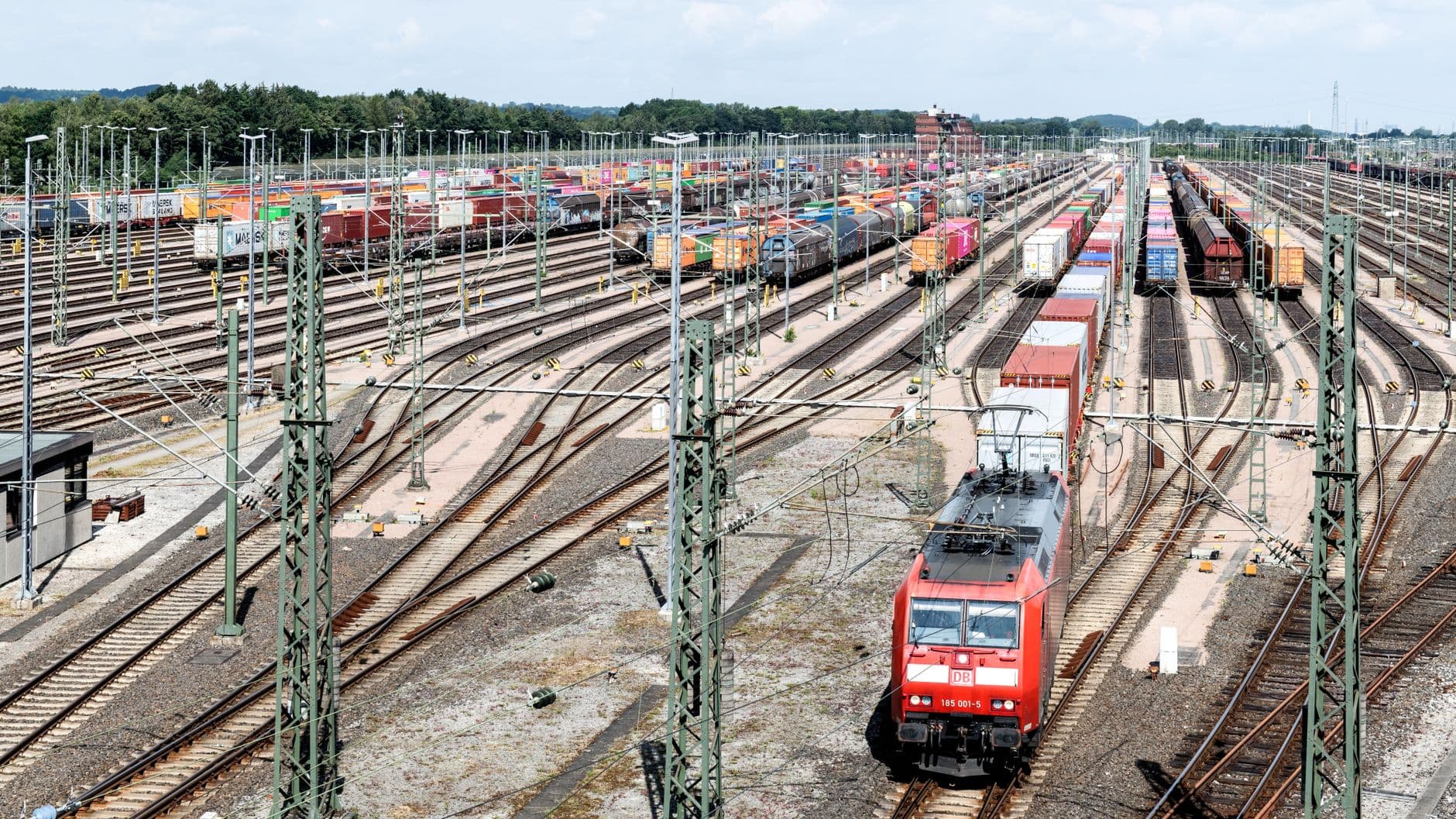

What we are watching on German rail in 2026 is no longer just a construction calendar — it is a fragile network failing under stress. According to the rail-freight association Die Güterbahnen, a one-hour GSM-R outage in June paralysed national freight for days, and a July heatwave buckled track. In our reading shippers must now plan for the unscheduled as much as the planned. Below is the corridor status and a reroute playbook.
The German railway network is undergoing a massive structural transformation that is creating significant bottlenecks for European freight logistics. Major rail corridors are facing prolonged closures and speed restrictions as Deutsche Bahn executes its long-delayed infrastructure modernization program. These disruptions are not temporary glitches but systemic shifts that will impact supply chains through 2027.
Shippers who rely on the central European rail spine must adapt their routing strategies immediately. The window for proactive planning is narrowing as construction schedules tighten. This article provides a detailed analysis of the current disruptions and offers a practical playbook for mitigating delays.
The Scope of the Rail Infrastructure Crisis
Deutsche Bahn has acknowledged that its rail infrastructure has fallen into a state of disrepair that requires urgent intervention. The company is allocating billions of euros to upgrade tracks, signaling systems, and stations across Germany. This effort is part of a broader national strategy to improve punctuality and capacity. However, the execution of these projects is causing widespread disruption. The scale of the work means that multiple key corridors are affected simultaneously. This creates a ripple effect that extends far beyond German borders.
The core issue lies in the aging infrastructure that has served as the backbone of European freight for decades. Many of the tracks were built in the mid-20th century and are no longer capable of handling modern freight volumes without significant upgrades. The modernization effort involves replacing old signaling systems with digital alternatives, which requires extensive track closures. These closures are not limited to minor branch lines but affect major trunk routes that connect key industrial hubs.
One of the most critical areas of concern is the reliability of the network during peak construction periods. Deutsche Bahn has warned that punctuality rates could drop significantly in the coming years. This is a stark contrast to previous years where the network was already struggling with reliability. The combination of aging infrastructure and aggressive construction schedules creates a perfect storm for logistical disruptions. Shippers must understand that this is not a short-term issue but a long-term structural challenge.
Beyond the Construction Schedule: the 2026 Reality
By mid-2026 it became clear that the disruption was no longer only about planned works — it was also about how fragile the existing network had become under stress. On the night of 23-24 June 2026 a nationwide outage of the GSM-R digital rail-radio system, which still runs on ageing 2G technology, brought freight movements across Germany to a halt. The outage lasted only about an hour, but the rail-freight association Die Güterbahnen warned its knock-on effects on logistics chains would be felt for days. Then July 2026 brought an extreme European heatwave that buckled rails, forced speed restrictions and even triggered fires on infrastructure, including on the Frankfurt-Gießen line. Disruption now comes from two directions at once: the scheduled construction, and the unscheduled failures of infrastructure being pushed beyond its limits.
The scale of the ambition has also been recalibrated. Deutsche Bahn has stretched its national renewal programme out toward 2036 and now concedes that its punctuality target of 70% for long-distance trains will not be met before 2029 — a signal that the period of instability will run years longer than the original schedule implied.
Key Corridors Under Construction
Several major corridors are currently undergoing significant work. The route between Hamburg and Berlin is seeing extensive upgrades to its signaling systems. This corridor is vital for north-south freight movements and connects major ports to the heart of Germany. Another critical area is the Rhine-Ruhr region, where multiple lines are being electrified and modernized. This region is one of the most densely populated and industrialized areas in Europe, making any disruption particularly impactful.
The connection between Munich and Nuremberg is also facing delays due to track renewal projects. This route is essential for east-west freight movements and connects southern Germany to the rest of the continent. Additionally, the line connecting Frankfurt to Cologne is undergoing major work to improve capacity and speed. These corridors are not isolated incidents but part of a broader pattern of infrastructure renewal that is affecting the entire network.
Several of these corridors have concrete 2026 status worth flagging. The right bank of the Rhine (Troisdorf-Wiesbaden), a critical freight artery on the Rotterdam-Genoa corridor, entered a full five-month closure from 10 July 2026 for a heavy rebuild of some 80 km of track and more than 120 switches — a diversion that shippers on the North Sea-to-Italy axis must plan around now. The Hamburg-Berlin line remains under a long reconstruction, but ETCS digital signalling is not yet being deployed at scale there because much of the rolling stock lacks the onboard equipment. On the Köln-Hagen corridor, new bridges were commissioned at Haan in June 2026 as part of the rebuild.
The cautionary tale is the Riedbahn (Frankfurt-Mannheim), the first pilot of the full-reconstruction model, completed in December 2024. Its results were mixed: an 80% reduction in disruptions was expected, but the actual figure was closer to 40%, and ETCS was only fully commissioned along the whole line on 29 April 2026, finally allowing speeds up to 200 km/h. If even the flagship pilot underdelivered on reliability, shippers should assume modernized corridors may not perform as promised for some time.
Shippers should note that the construction schedules are often subject to change. Weather conditions, supply chain issues for construction materials, and labor shortages can all impact the timeline. This uncertainty adds another layer of complexity to logistics planning. Companies must build flexibility into their supply chains to accommodate these potential changes.
Impact on European Freight Networks
Germany’s rail network serves as the central hub for European freight transportation. Any disruption in Germany has immediate effects on the broader European logistics landscape. Countries such as France, the Netherlands, Belgium, and Poland rely heavily on German rail connections for their import and export operations. When German corridors close, these countries face immediate bottlenecks and increased transit times.
The instability is also compounding with disruptions further east. On 1 July 2026 Russia temporarily suspended some border crossings, forcing the rerouting of freight trains out of Estonia and adding fresh uncertainty to international flows that already lean on the German network as their western backbone.
The ripple effect is particularly pronounced in the automotive and manufacturing sectors. These industries depend on just-in-time delivery systems that require high reliability and predictability. Rail disruptions force companies to seek alternative transportation modes, which are often more expensive and less environmentally friendly. The shift from rail to road transport increases congestion on highways and raises carbon emissions. This undermines the environmental benefits that rail transportation is supposed to provide.
Furthermore, the uncertainty surrounding rail schedules makes it difficult for companies to plan their inventory levels. Just-in-time systems rely on precise timing, and any delay can lead to production stoppages. Companies are forced to hold larger safety stocks, which ties up capital and increases warehousing costs. This shift in inventory management practices has significant financial implications for businesses across Europe.
Comparative Analysis of Transport Modes
To understand the impact of rail disruptions, it is useful to compare rail with other transport modes. Rail is generally more cost-effective for long-distance freight movements, especially for heavy goods. However, road transport offers greater flexibility and faster delivery times for shorter distances. When rail is unavailable, companies often turn to road transport, which can be up to 30% more expensive for long-haul routes. Air freight is another option, but it is significantly more costly and is typically reserved for high-value, time-sensitive goods.
Consider a shipment of automotive parts from Stuttgart to Rotterdam. By rail, this journey might cost EUR 450 and take 24 hours. By road, the same shipment could cost EUR 600 and take 18 hours. The cost difference is substantial, especially for companies that make frequent shipments. The time savings are marginal and may not justify the additional expense. This cost-benefit analysis highlights the importance of maintaining reliable rail connections.
Another factor to consider is the environmental impact. Rail transport produces significantly lower carbon emissions per ton-kilometer compared to road transport. A single freight train can carry the equivalent of 300 trucks. Shifting this volume to road transport increases traffic congestion and pollution. Companies with sustainability goals are particularly affected by this shift, as it undermines their efforts to reduce their carbon footprint.
Reroute Playbook for Shippers
Shippers must adopt a proactive approach to managing rail disruptions. This involves identifying alternative routes, diversifying transport modes, and building flexibility into their supply chains. The following playbook provides practical steps for navigating the current landscape.
- Identify alternative rail routes that bypass major construction zones. For example, routes through Austria or Switzerland may offer viable alternatives, though they may involve additional border crossings and customs procedures.
- Diversify transport modes by incorporating road and sea transport into your logistics strategy. This reduces dependency on rail and provides options when rail disruptions occur.
- Build buffer time into your delivery schedules. Adding 10-15% extra time to your transit estimates can help accommodate unexpected delays without disrupting downstream operations.
- Monitor construction schedules and weather forecasts regularly. This allows you to anticipate disruptions and adjust your plans accordingly.
- Treat weather and system-failure risk as first-class planning inputs, not afterthoughts: the July 2026 heatwave and the June GSM-R outage showed that unscheduled disruptions can be as damaging as planned closures.
- Prioritise contingency planning for the right-bank Rhine closure (Troisdorf-Wiesbaden) that began on 10 July 2026, since it affects the Rotterdam-Genoa freight axis for a full five months.
One effective strategy is to use intermodal transport, which combines rail and road transport. This approach allows companies to use rail for the long-haul portion of the journey and road for the first and last mile. This flexibility can help mitigate the impact of rail disruptions while still leveraging the cost advantages of rail for long distances.
Another important consideration is the use of digital tools to optimize logistics planning. Modern rail-freight optimization and visibility platforms can help companies identify the most efficient routes and transport modes, using real-time data to provide accurate transit times and cost estimates. This information is crucial for making informed decisions in a dynamic logistics environment.
Collaboration with logistics partners is also essential. Companies should work closely with their freight forwarders and carriers to develop contingency plans. Regular communication and shared visibility into supply chain data can help identify potential issues early and develop solutions quickly.
Long-Term Implications and Strategic Adaptation
The rail overhaul in Germany is not a temporary inconvenience but a long-term structural change. Companies must adapt their logistics strategies to accommodate this new reality. This involves rethinking supply chain designs, investing in digital tools, and building resilience into their operations.
One key implication is the need for greater supply chain visibility. Companies must have real-time data on the status of their shipments, including location, estimated arrival times, and potential disruptions. This visibility allows companies to make proactive decisions and minimize the impact of delays. Investing in digital tools and platforms that provide this visibility is a critical step in adapting to the new logistics landscape.
Another implication is the need for greater flexibility in supply chain design. Companies should consider diversifying their supplier base and sourcing materials from closer locations. This reduces the distance that goods need to travel and minimizes the impact of long-distance rail disruptions. Additionally, companies should consider nearshoring or reshoring production to reduce dependency on long-haul freight.
Investing in Digital Logistics Solutions
Digital logistics solutions are becoming increasingly important for managing complex supply chains. These solutions include transportation management systems (TMS), warehouse management systems (WMS), and supply chain visibility platforms. These tools help companies optimize their logistics operations, reduce costs, and improve service levels.
For example, a TMS can help companies plan and execute their freight movements more efficiently. It can identify the most cost-effective routes and transport modes, optimize load planning, and provide real-time tracking of shipments. This information is crucial for making informed decisions in a dynamic logistics environment. Companies that invest in these tools are better positioned to manage the challenges posed by rail disruptions.
Another important digital tool is supply chain visibility platforms. These platforms provide real-time data on the status of shipments, including location, estimated arrival times, and potential disruptions. This visibility allows companies to make proactive decisions and minimize the impact of delays. For instance, if a rail disruption is predicted, companies can reroute shipments to alternative routes or transport modes before the disruption occurs.
Regulatory and Environmental Considerations
The rail overhaul in Germany has significant regulatory and environmental implications. The European Union has set ambitious targets for reducing carbon emissions from transportation, and rail is a key component of this strategy. Disruptions to rail services make it more difficult for companies to meet these targets, as they are forced to rely on more polluting transport modes.
Regulators are also paying close attention to the impact of rail disruptions on competition and market access. Companies that are unable to access reliable rail services may face competitive disadvantages, particularly in markets where rail is the preferred mode of transport. This could lead to calls for regulatory intervention to ensure fair access to transportation infrastructure.
From an environmental perspective, the shift from rail to road transport has significant consequences. Road transport produces higher levels of carbon emissions, noise pollution, and air pollution. This undermines the environmental benefits of rail transport and contributes to climate change. Companies with sustainability goals are particularly affected by this shift, as it undermines their efforts to reduce their carbon footprint.
Policy Responses and Infrastructure Investment
In response to these challenges, policymakers are considering various measures to support the rail industry and mitigate the impact of disruptions. These measures include increased funding for infrastructure investment, regulatory reforms to improve efficiency, and incentives for companies to use rail transport.
Increased funding for infrastructure investment is crucial for accelerating the modernization of the rail network. This includes funding for track upgrades, signaling system improvements, and station renovations. By accelerating these projects, policymakers can reduce the duration of disruptions and improve the overall reliability of the network.
Regulatory reforms can also help improve the efficiency of the rail industry. This includes simplifying administrative procedures, improving coordination between different rail operators, and enhancing competition in the rail market. These reforms can help reduce costs and improve service levels, making rail a more attractive option for shippers.
Frequently Asked Questions
How long will the rail disruptions last?
The rail disruptions are expected to last until at least 2027, as Deutsche Bahn completes its major infrastructure modernization projects. Some corridors may experience intermittent disruptions beyond this date as maintenance and upgrades continue.
Which European countries are most affected by German rail disruptions?
Countries that rely heavily on German rail connections, such as France, the Netherlands, Belgium, Poland, and the Czech Republic, are most affected. These countries use German rail corridors for significant volumes of their import and export freight.
What are the best alternative transport modes during rail disruptions?
Road transport is the most common alternative, offering greater flexibility and faster delivery times for shorter distances. For longer distances, intermodal transport (combining rail and road) or sea transport may be viable options, depending on the origin and destination of the shipment.
How can shippers minimize the cost impact of rail disruptions?
Shippers can minimize costs by diversifying transport modes, building buffer time into delivery schedules, and using digital tools to optimize logistics planning. Collaborating with logistics partners to develop contingency plans is also essential for managing costs effectively.
Are there any environmental incentives for using rail transport?
Yes, many European countries offer environmental incentives for using rail transport, such as tax breaks and subsidies. These incentives are designed to encourage companies to choose rail over road transport, which has a lower carbon footprint.
Conclusion
The ongoing rail overhaul in Germany presents significant challenges for European freight logistics. However, by adopting a proactive approach and leveraging digital tools, shippers can mitigate the impact of these disruptions. The key is to build flexibility and resilience into your supply chain, allowing you to adapt to changing conditions quickly and efficiently. Monitor construction schedules closely and maintain open communication with your logistics partners to stay ahead of potential issues. Start by identifying one alternative route for your most critical shipments today.