


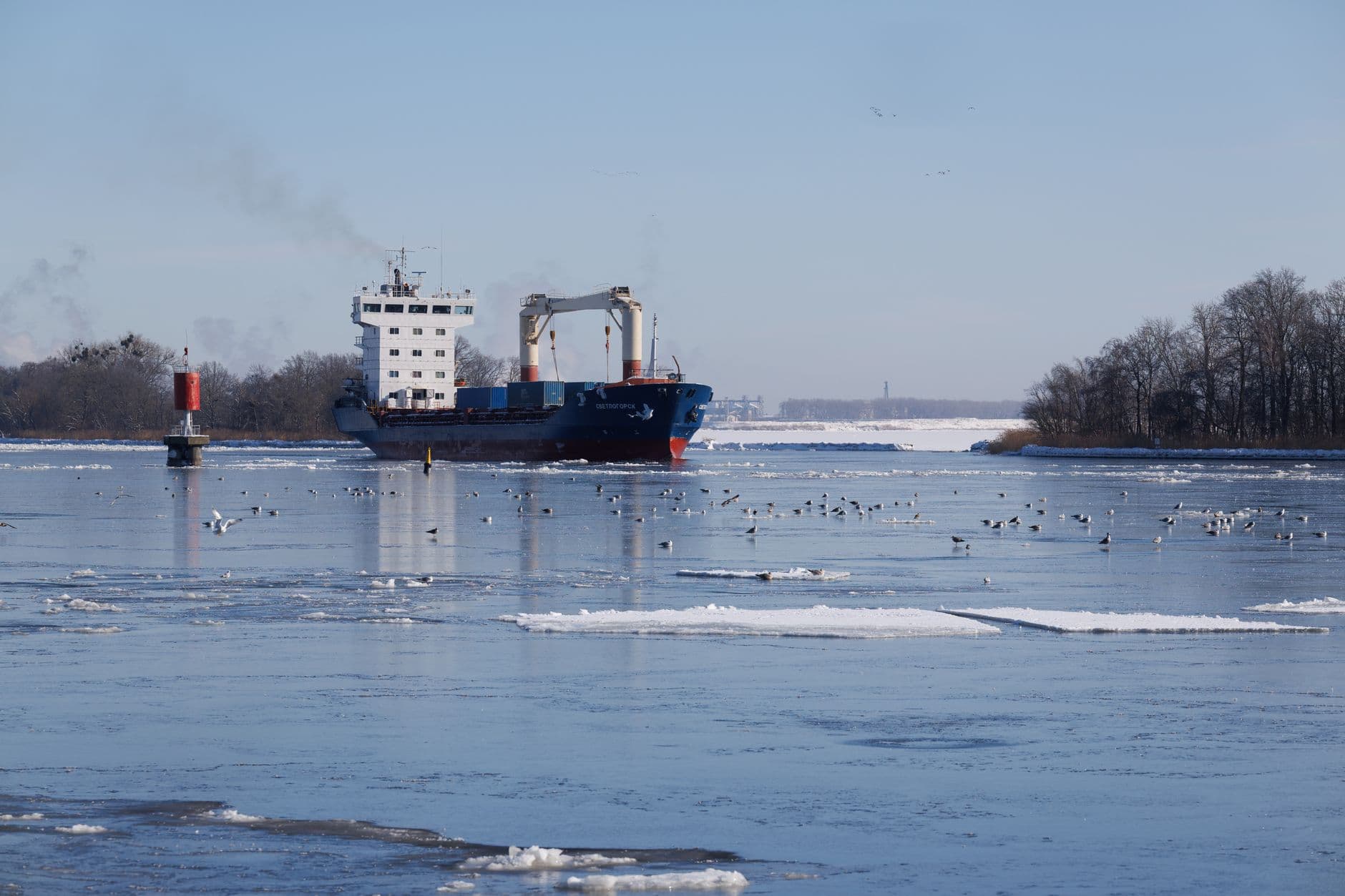
China's Sea Legend Shipping opened the first scheduled weekly container service across the Northern Sea Route on 15 August 2026, marketed as the China-Europe Arctic Express. The programme runs 8 fixed sailings to 3 October, uses 7 small and medium boxships, and advertises 20 to 22 days to northern Europe.
A weekly schedule is a genuine first for this route, and it deserves a straight answer rather than either the boosterism or the dismissal it usually attracts. My read after going through the sailing list, the 2025 transit record plus the insurance position: this is a 7-week seasonal window with real time savings and risks that most shippers cannot underwrite.
The 2026 Arctic container programme
| Item | Detail |
|---|---|
| Operator | Sea Legend Shipping, China |
| Service name | China-Europe Arctic Express, branded CAX |
| Sailings | 8 fixed weekly departures, 15 August to 3 October 2026 |
| Vessels | 7 small and medium container ships, with Dubai Tower running 2 voyages |
| Lead vessel | Dubai Tower, 1,740 TEU, departing Ningbo 15 August |
| First European arrival | Felixstowe 5 September, onward European delivery from 8 September |
| Advertised transit | 20 to 22 days to northern Europe |
| Comparison | 30 to 40 days via Suez, up to 50 days around the Cape of Good Hope |
Note the vessel size. At 1,740 TEU the lead ship holds roughly a tenth of the slot capacity of a modern Asia-Europe mainliner. The Arctic option is a niche parallel service, not a substitute for the trunk route, and the schedule tells you so before any of the geopolitics does.
What 20 to 22 days actually buys
Against a 30 to 40 day Suez transit the saving is real but narrower than the headline gap suggests, because the comparison must include feeder legs plus the seasonal nature of the service. Cargo booked for 3 October is the last of the year on this rotation, so a supply chain that uses the Arctic in September has to plan a different routing for November. Against the Cape of Good Hope routing, currently the fallback for carriers avoiding the Red Sea, up to 50 days makes the Arctic look dramatic on paper.
Freight that suits it is time-sensitive, high-value and shippable in small parcels: exactly the profile that has been paying premiums for air-sea combinations since Red Sea diversions began. If your decision framework for that trade is not yet written down, our Suez and Red Sea routing guide sets out the comparison we use.
The volume reality behind the announcement
The 2025 season recorded 103 transit voyages carrying roughly 3.2 million tonnes, mostly crude oil, LNG plus bulk commodities. Container cargo reached about 400,000 tonnes, which Rosatom called a record. The container transit count has climbed steadily: 7 voyages in 2023, 14 in 2024, 24 in 2025, with more than 30 expected across 2026.
Scale is where enthusiasm meets arithmetic. One weekly CAX sailing represents under 0.5 percent of normal Asia to North Europe container flow, and the entire 8-sailing programme amounts to less than 0.1 percent of annual volume on that trade. Rosatom issued transit permits for the 7 Sea Legend vessels, and its head Alexey Likhachev tied the launch to conditions in the Gulf, where the Strait of Hormuz was officially closed to commercial traffic 4 times in the 2 months to mid-August 2026. The Arctic service is a hedge against a specific chokepoint, not a structural shift in Asia to Europe capacity.
Set that against total Northern Sea Route traffic of 37.02 million tonnes in 2025, down from 37.9 million in 2024 and falling for a second consecutive year. Transit voyages, meaning ships passing through rather than serving Russian Arctic projects, are therefore under 9 percent of route volume. Rosatom targets a record 40 million tonnes in 2026 and reported traffic running 15 percent above 2025 as of April. Even if that target lands, the route remains overwhelmingly a domestic energy-export corridor with a container service attached to its margins.
Insurance, ice class and the sanctions question
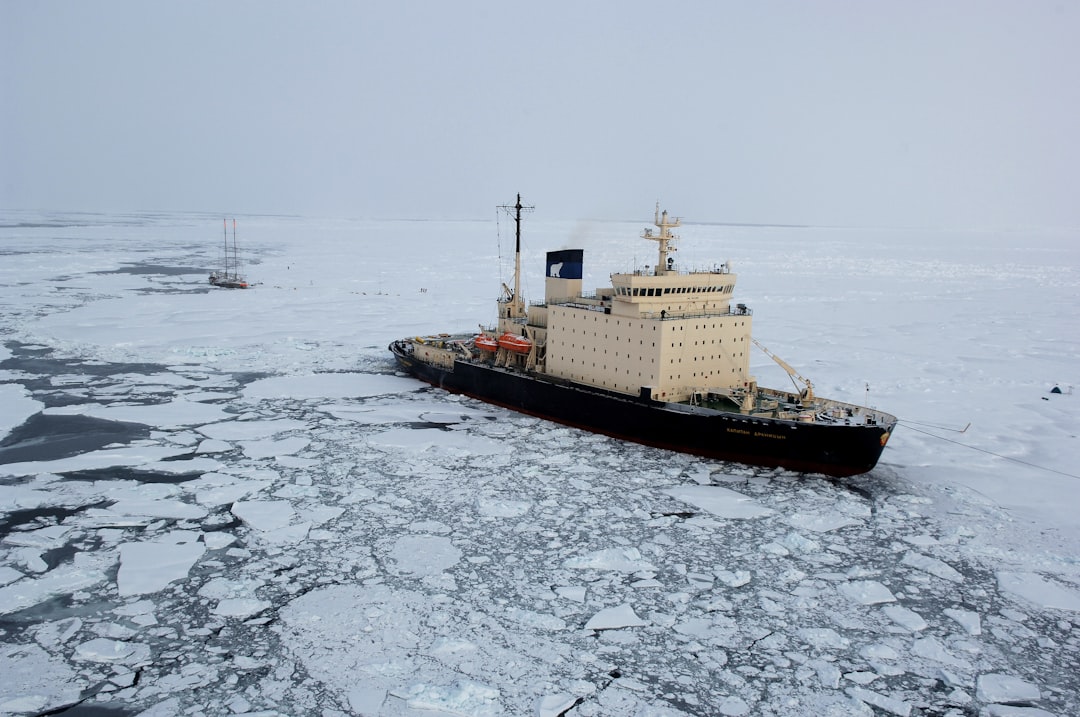
Insurance is the constraint I would examine before schedule reliability. Premiums for Arctic transits run 5 to 10 times higher than for comparable voyages on conventional routes, which erodes the economics of a service whose main selling point is time. Western carriers have stayed out of mainstream Arctic container operations for a combination of sanctions exposure, reputational risk, insurance cost plus regulatory uncertainty.
The vessel quality picture reinforces the caution. Monitoring groups have documented cargo ships working the route with no ice class at all, hulls over 15 years old, sailing under the Panamanian flag, many of them carrying Russian oil to China plus India, with several added to Western sanctions lists during 2025. Sanctions relief does not automatically restore commercial access either: after the European Union removed several Arc4 ice-class gas carriers from its lists in July 2025, no international operator would charter them, because fear of secondary sanctions outweighed the earnings.
Then there is the physical exposure. Infrastructure along the route is thin, and a ship that suffers machinery damage between the Kara and East Siberian seas cannot expect timely assistance. Escort and support capability is the real bottleneck, which is why the fleet position matters more here than in any other trade; we cover it in the ranking of the most powerful icebreakers.
Who is actually using the route
The operator list is short and regionally concentrated. Sea Legend, New New Shipping plus OVP Shipping are Chinese; New New Shipping launched a service from Tianjin to Murmansk, Russia's largest Arctic port. Korean carrier PanStar has joined them, adding capacity toward north Europe plus Baltic Russia. No European or American container line runs a comparable service.
That concentration is itself a piece of commercial information. A trade lane served by 4 carriers with overlapping political exposure has no competitive fallback if one withdraws mid-season, and cargo interests carrying goods for EU customers should assume questions about carrier choice from their own compliance teams. European arrival ports are ordinary commercial gateways, and volumes still land alongside mainline cargo at hubs listed in our overview of the biggest ports in Europe.
When the Arctic option makes sense
- Your cargo ships between mid-August and early October. Outside that window in 2026 the service does not exist.
- Time saving beats premium. Compare the landed cost against air-sea, not only against Suez, because that is the alternative for the same freight profile.
- Your sanctions counsel has cleared the carrier plus the vessel. Flag, ownership as well as listing history all need checking per voyage.
- Your insurer has priced the transit in writing. A quote of 5 to 10 times the normal premium changes the business case, and a refusal ends it.
- You can absorb a schedule failure. Ice conditions were challenging in 2025 even for a stable transit count, and there is no second sailing next week once 3 October passes.
Common questions
Is there a regular container service on the Northern Sea Route in 2026? Yes, for the first time. Sea Legend Shipping runs 8 fixed weekly sailings from 15 August to 3 October 2026 with 7 vessels, branded the China-Europe Arctic Express.
How long does the Arctic transit take to Europe? The operator advertises 20 to 22 days to northern Europe. The lead vessel Dubai Tower departs Ningbo on 15 August for arrival at Felixstowe on 5 September, with onward European delivery from 8 September.
How much cargo actually moves through the route? Total traffic was 37.02 million tonnes in 2025, down from 37.9 million in 2024, of which transit voyages carried about 3.2 million tonnes across 103 passages. Container cargo was roughly 400,000 tonnes, and container transits went from 7 in 2023 to 24 in 2025.
Can the Arctic route replace Suez for Asia to Europe cargo? No. A single weekly CAX sailing is under 0.5 percent of normal Asia to North Europe container flow, and all 8 sailings together come to less than 0.1 percent of annual volume on that trade. It is a seasonal hedge against Gulf disruption, which is how Rosatom itself framed the launch.
Why do Western carriers avoid it? Sanctions exposure, reputational risk, insurance premiums running 5 to 10 times higher plus limited rescue infrastructure. The 2025 delisting of several Arc4 gas carriers is the clearest illustration: the legal barrier lifted and the commercial one did not.
Where do the conflicting figures come from? Each source counts a different thing. One reports total route volume including Russian project cargo, another counts transit voyages only, and a third counts container tonnage. I have labelled which basis every number above uses.
Sources: Sea Legend service announcements as reported by gCaptain, Maritime Executive plus Container News, Centre for High North Logistics transit records for the 2025 season, Rosatom volume statements via TASS, and Paris MoU flag performance data on vessels operating the route. Schedules plus transit times are operator estimates and depend on ice conditions.