


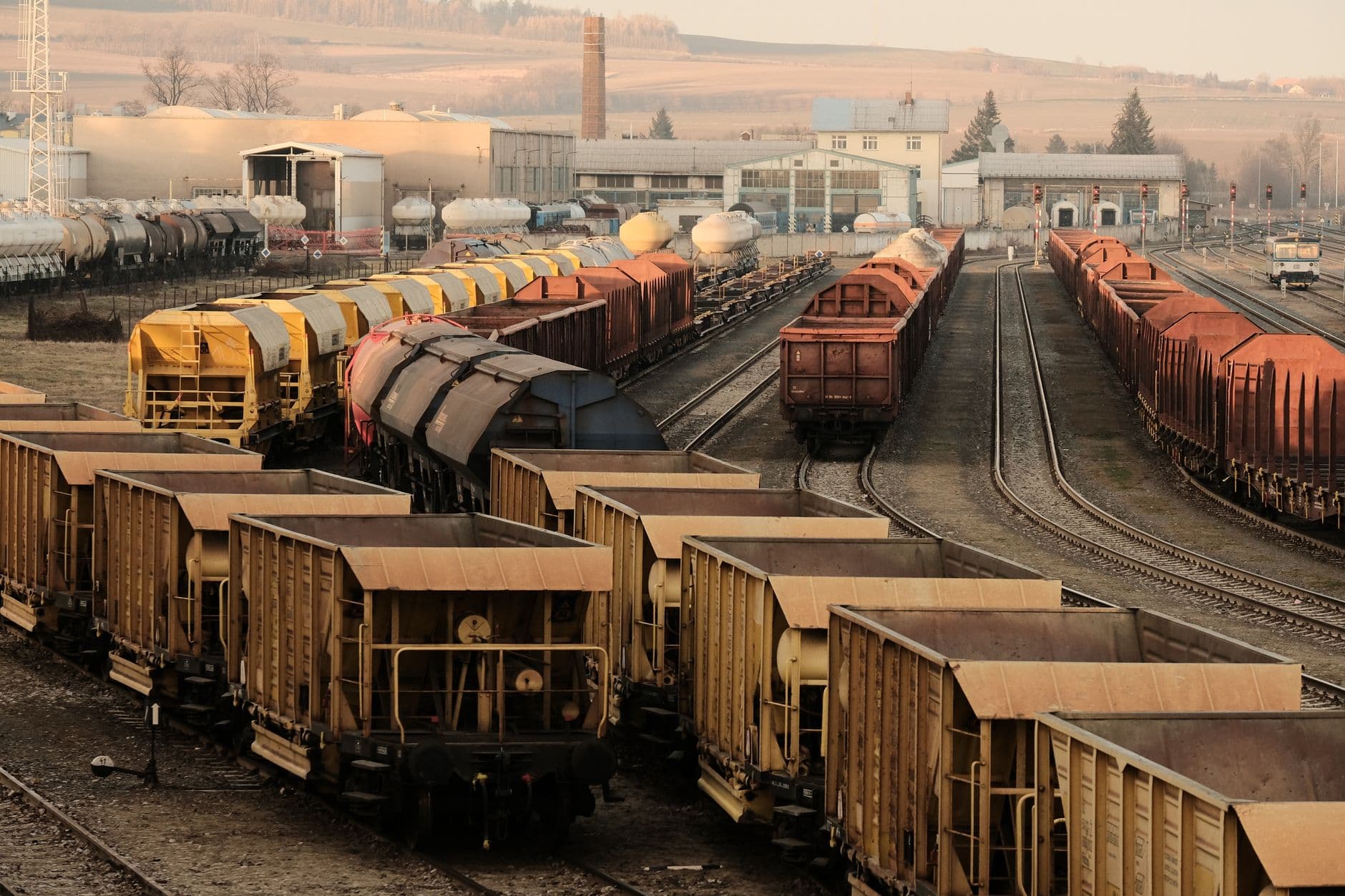

Alashankou is the busiest rail gateway on the China to Europe network: 8,165 trains in 2025, up 6.3 percent, with a single-day peak of 30. Khorgos, 400 kilometres south, passed 8,730 trains in 2024. But the crossing that decides your transit time is neither of them. Between 85 and 90 percent of these trains enter the European Union at one Polish terminal.
I have watched shippers pick a corridor by looking at the Chinese departure city and the European arrival city, then treat everything in between as a single line on a schedule. The line has four gauge breaks, two customs unions and one crossing that carries almost the entire volume. Ranking the crossings by trains handled tells you where capacity was built. Ranking them by what happens when one closes tells you where your cargo is actually at risk.
The busiest China to Europe rail crossings, ranked
| # | Crossing | Corridor | Trains | Function |
|---|---|---|---|---|
| 1 | Alashankou to Dostyk | Western, China to Kazakhstan | 8,165 in 2025, up 6.3% | Original Eurasian gateway, 124 routes to 21 countries |
| 2 | Khorgos to Altynkol | Western, China to Kazakhstan | 8,730 in 2024 | Newer gateway, 89 routes to 18 countries |
| 3 | Manzhouli, Suifenhe, Tongjiang | Eastern, China to Russia | 5,166 in 2025 across the three | Trans-Siberian feed |
| 4 | Erenhot to Zamyn-Uud | Central, China to Mongolia | Over 3,900 in 2025 | Shortest route to Moscow, 74 routes |
| 5 | Malaszewicze and Brest | Belarus to Poland | 85 to 90% of all EU entries | The 1,520 to 1,435 mm gauge break into the EU |
A note on the arithmetic, because the numbers do not add up in an obvious way. China ran 20,022 China to Europe train trips in 2025, yet the port-level figures sum to more than that. Border stations count every train they handle, including China to Central Asia services that never reach Europe, and a single Europe-bound train is counted at both its Chinese exit and its European entry. Treat crossing totals as throughput at that station, not as a share of the Europe-bound total.
The network the crossings serve
China to Europe services ran 20,022 trips in 2025, up 3.2 percent, from 1,702 in 2016. Cumulative trips passed 130,000 by July 2026, carrying goods worth more than 520 billion dollars, and the loaded container ratio has held at 100 percent for 46 consecutive months as of June 2026. The detail I find most telling from 2025 is directional: 9,898 services ran outbound from China against 10,124 return trips, so for the first time in recent years the trains coming back outnumbered those going out.
That balance matters commercially. Backhaul used to be the weak leg of Eurasian rail, which pushed westbound rates up because operators priced in empty returns. A network where return volume matches outbound volume can quote both directions on their own merits. Growth carried into 2026 as well, with volumes up 25.2 percent year on year across the first two months and 3,501 trips recorded.
Alashankou and Khorgos: two doors, one wall
Alashankou now hosts 124 China to Europe routes reaching 21 countries and hit 30 trains in a single day at its 2025 peak. Khorgos operates 89 routes to 18 countries. Together, the two Xinjiang crossings handle over half the national Europe-bound total, which makes the Kazakh side of the pair the real constraint.
Kazakhstan is addressing it with capacity rather than software. Throughput at Altynkol and Dostyk is being lifted from 18 to 33 daily trains, with completion scheduled in 2026, five new sidings, eight existing sidings extended and 32 kilometres of double track between Altynkol and Zhetygen. The freight is already there: rail traffic between Kazakhstan and China reached 18.7 million tonnes in the first half of 2026, up 9 percent, with Dostyk moving 10.6 million tonnes, up 15 percent, and Altynkol 8.1 million, where exports surged 29 percent to 3.1 million tonnes. The wider programme behind those works is set out in our review of Kazakhstan's 2026 rail overhaul.
Erenhot and the eastern corridor: shorter and thinner
Erenhot handled more than 3,900 China to Europe trains in 2025 with total cargo above 4.5 million tonnes, running about 12 trains a day across 74 routes. It is the shortest of the three routings to Moscow, and it has been the beneficiary of green TIR lanes on the road side, which we reported when China opened new corridors at the Erenhot border.
The eastern corridor through Manzhouli, Suifenhe and Tongjiang carried 5,166 trains in 2025. Manzhouli is China's largest land port by volume and passed 30,000 cumulative China to Europe trips, a milestone we covered when it was reached. Both corridors share one characteristic that belongs in a risk assessment rather than a ranking: they run through Russia for most of their length, which for many European consignees is a compliance question before it is a transit time question.
Malaszewicze: where a ranking becomes a single point of failure
Between 85 and 90 percent of China to Europe trains enter the EU at Malaszewicze in eastern Poland, opposite Brest in Belarus, and some estimates of the flow on the main container service run as high as 95 percent. This is where 1,520 mm broad gauge meets 1,435 mm standard gauge, so every box is either transshipped or every wagon has its bogies changed. A new multimodal terminal designed for exactly this transfer is scheduled for completion in June 2026.
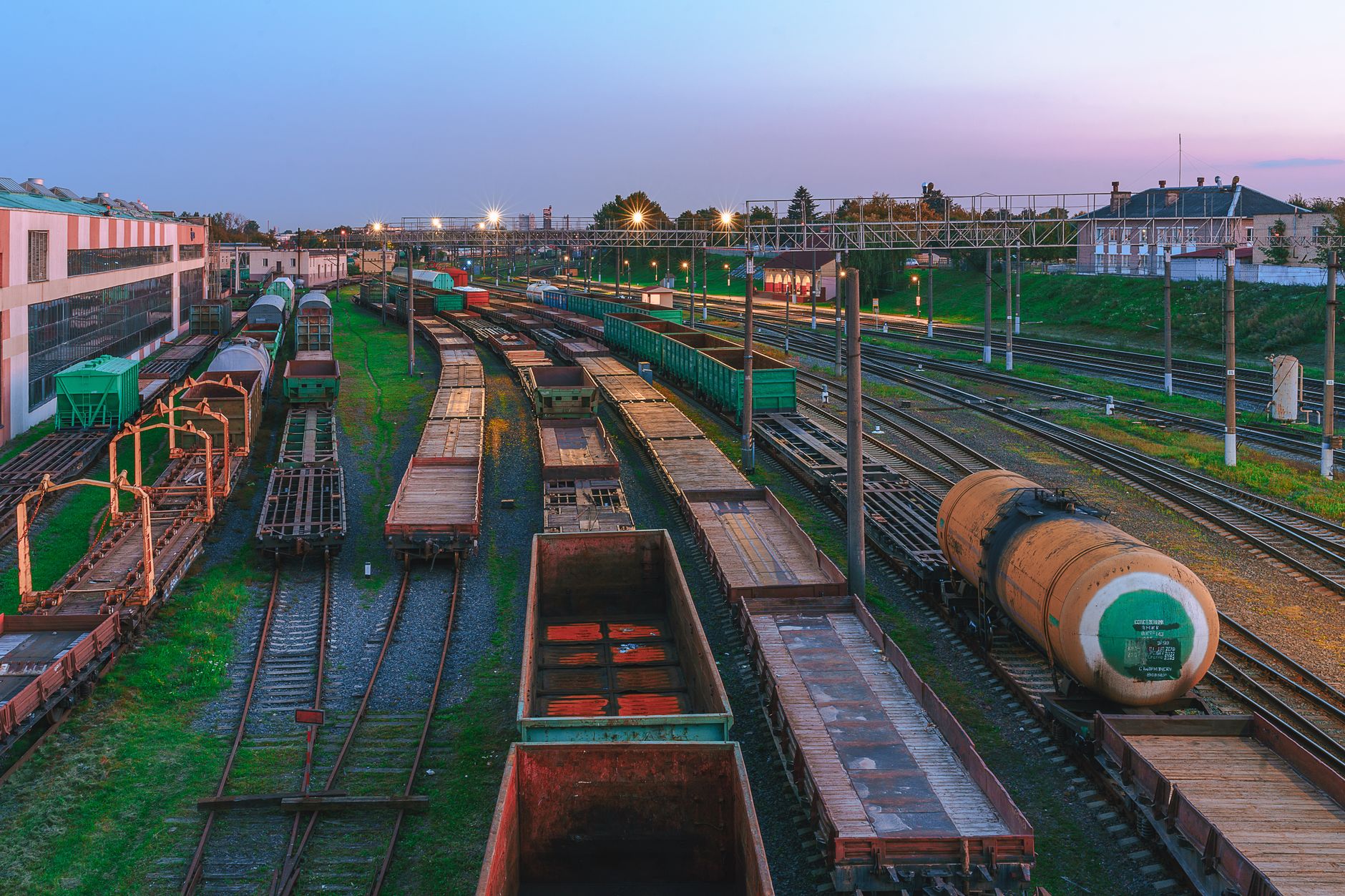
Concentration of that order behaves in a predictable way. When Poland closed its border crossings with Belarus in autumn 2025, trains kept moving under sanctions and paperwork constraints, and reopening the crossings did not immediately clear the backlog that had formed. A terminal handling nine in ten trains has no meaningful failover, and the alternatives, including Kaliningrad routings and the Middle Corridor, absorb single-digit percentages of the flow rather than replacing it.
What this means for a booking
- Ask which crossing your service uses, by name. Two trains from the same origin city to the same German terminal can take different gauge breaks with different dwell profiles.
- Budget dwell at the gauge break, not the border. Customs is rarely the delay. Transshipment capacity is, and it is fixed by cranes and reach stackers at one Polish site.
- Treat the Kazakh side as the western constraint. The step from 18 to 33 daily trains at Altynkol and Dostyk is the single largest capacity change on the route in 2026.
- Price the Middle Corridor as a hedge, not a replacement. Its capacity is limited and still developing, which is why Baku-Tbilisi-Kars reaching full capacity matters more as optionality than as volume.
- Use the 100 percent loaded ratio as a rate signal. Fully loaded trains for 46 straight months means operators are not selling spare slots cheaply, so late bookings will not find soft pricing.
- Check the sanctions path of your specific routing. Eastern and central corridors transit Russia; the western corridor transits Kazakhstan and Belarus. The compliance profile differs even when the transit time does not.
Where the ranking is heading
Capacity expansions on the Kazakh border and the new Polish terminal land in the same year, which should ease the two chokepoints that have defined Eurasian rail since 2016. My expectation is that the ranking order holds, with Alashankou and Khorgos alternating at the top, while the interesting movement happens in resilience rather than volume: more routes bypassing single crossings, and more cargo willing to pay for a corridor that avoids Russia entirely.
Compared with the road and sea frontiers in our ranking of the world's busiest border crossings, rail gateways concentrate volume far more tightly, because a rail crossing needs matched gauge, matched signalling and a transshipment yard rather than just a road and a customs booth. For the carriers running these trains, see the largest rail freight operators.
Frequently asked questions
Which is the busiest China to Europe rail border crossing?
Alashankou, on the China to Kazakhstan frontier, handled 8,165 trains in 2025, up 6.3 percent, with 124 routes serving 21 countries. Khorgos handled 8,730 trains in 2024 and the two Xinjiang crossings together account for over half of China's Europe-bound rail volume.
Why is Malaszewicze called a bottleneck?
Because 85 to 90 percent of China to Europe trains enter the EU there, and it is the point where 1,520 mm gauge meets 1,435 mm gauge, so cargo must be transshipped or bogies exchanged. A new multimodal terminal is due for completion in June 2026.
How many China to Europe trains ran in 2025?
20,022 trips, up 3.2 percent, split into 9,898 outbound and 10,124 return services. Cumulative trips passed 130,000 by July 2026 with cargo value above 520 billion dollars.
Is the Middle Corridor a viable alternative?
As a hedge rather than a substitute. Its capacity remains limited relative to the northern route, though Kazakh border upgrades from 18 to 33 daily trains and Caspian ferry improvements are steadily raising what it can absorb.
Train counts come from Chinese state media reporting of border station data, Chinese railway operator releases, Kazakhstan's rail statistics as reported by national news agencies, and Polish and European rail sector reporting on Malaszewicze. Border stations count all trains handled, including China to Central Asia services, so station totals are not directly comparable with the national China to Europe trip count. Shares of EU entry volume at Malaszewicze are estimates and vary between sources from 85 to 95 percent. Sanctions and border policy on these corridors changed several times between 2022 and 2026: confirm the current position for your commodity and consignee before booking.