


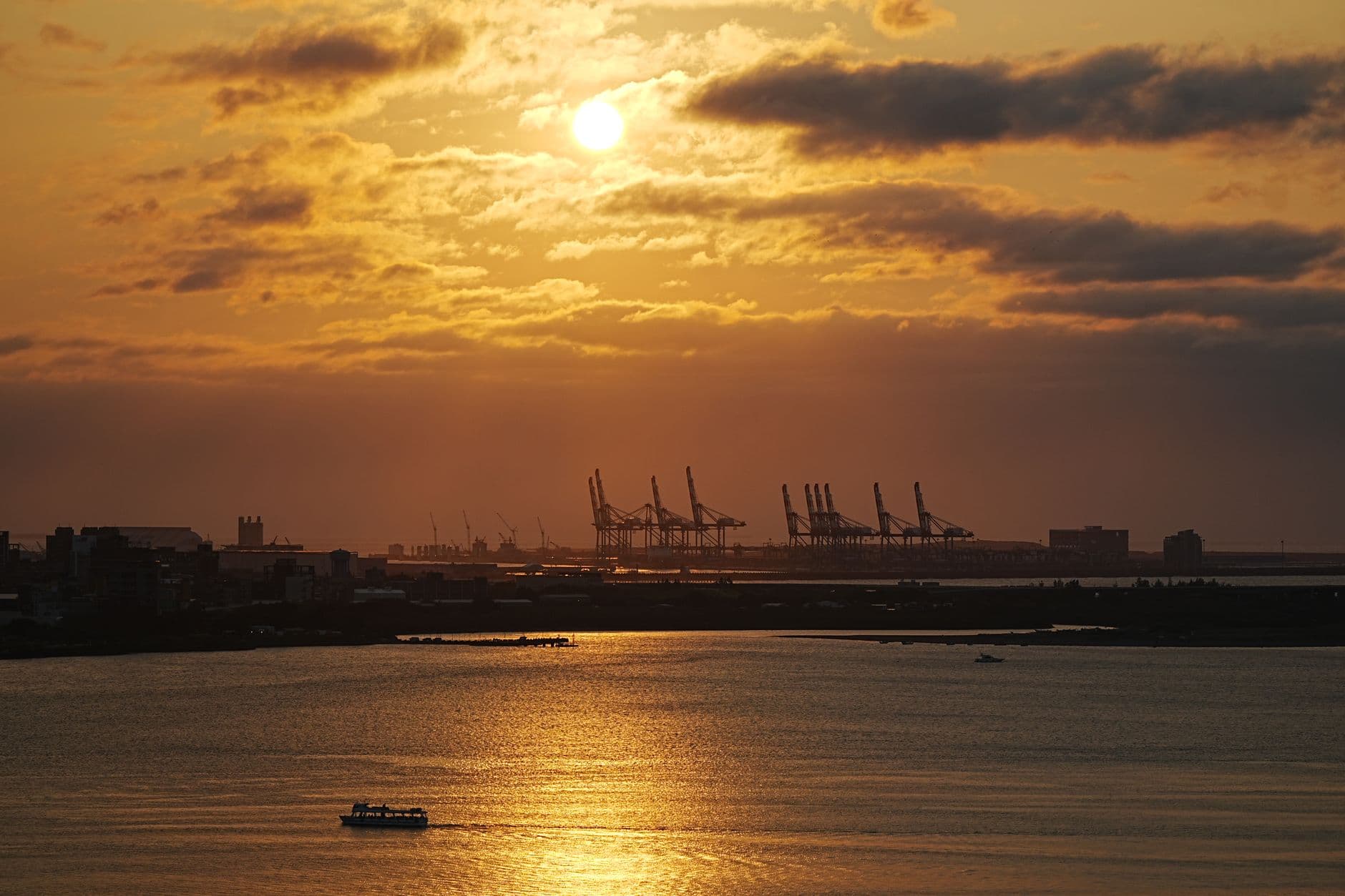
For the first time since 2023 there is no traffic at all on Ukraine's Black Sea shipping corridor. No foreign cargo vessel has entered a Greater Odesa port since around 20 July 2026, and about 90 percent of operators have suspended calls. Any ranking of Black Sea ports written this month has to describe two things: size, and whether the berth is reachable.
I have ordered the ports by cargo turnover, then set out what changed in 2026. The regional hierarchy that held for two years is being rewritten by security rather than by commerce, and the tonnage tables have not caught up.
The biggest Black Sea ports in 2026
| # | Port | Country | Volume and current status |
|---|---|---|---|
| 1 | Constanta | Romania | 67 million tonnes in 2025, after 77.5 million in 2024 and a record 92.6 million in 2023. Operating normally |
| 2 | Novorossiysk | Russia | 36.8 million tonnes in the first quarter of 2026, down 6.5 percent, and 4 percent lower across January to April. Sheskharis crude loadings halted in late July |
| 3 | Pivdennyi | Ukraine | 35.55 million tonnes on 2024 figures, the largest Ukrainian port. Calls suspended since around 20 July 2026 |
| 4 | Chornomorsk | Ukraine | 26.04 million tonnes on 2024 figures. Calls suspended |
| 5 | Odesa | Ukraine | 18.3 million tonnes on 2024 figures. Calls suspended |
| 6 | Batumi | Georgia | 1.8 million tonnes in the first quarter of 2026. Operating normally |
| 7 | Varna | Bulgaria | 48,500 TEU through state terminals in the first quarter of 2026. Operating normally |
Ukrainian volumes in that table are 2024 figures because they are the last full-year set published on a comparable basis, and they still describe the largest single cluster on the sea. Greater Odesa, meaning Pivdennyi plus Chornomorsk and Odesa together, handles more than 90 percent of Ukrainian seaborne exports. Across all Ukrainian ports, more than 42 million tonnes of cargo moved in 2026 to date, of which nearly 24 million tonnes was agricultural.
The corridor stopped in July, and the numbers show why
Escalation through July 2026 reached the ships themselves. By early August there had been 57 strikes on vessels plus 67 on port infrastructure, and seafarers had been killed. Operators withdrew rather than wait for insurers: no foreign cargo vessel has entered the Odesa region since roughly 20 July, and roughly 90 percent of carriers stopped calling. On 14 August 2026 Russia dismissed a Ukrainian proposal for a Black Sea truce, with foreign ministry spokeswoman Maria Zakharova calling such steps half measures, which removed the nearest path back to normal sailings.
The commercial arithmetic is brutal. Ports handling 80 to 90 percent of Ukrainian exports by weight are frozen, against annual flows valued at about 27 billion dollars, with agriculture alone facing 1.5 to 3 billion dollars of losses by year end. The 2026 to 2027 grain export forecast has been cut to 29.6 million tonnes from 64.4 million, a halving that follows directly from berth access rather than from harvest size.
One counterintuitive detail sits inside the collapse. Ukrainian ports handled 21.1 million tonnes in the first quarter of 2026, and containers were the fastest growing segment before the July halt, up 43.3 percent year on year at more than 63,000 TEU, with MSC treating Pivdennyi as a candidate regional hub and terminal operators bidding for Chornomorsk concessions. Box volumes were being rebuilt while bulk was still contested, which is why I expect the recovery, when it comes, to start with containers rather than with grain.
Constanta is the substitute, and it is shrinking too
Constanta has been the default alternative for Ukrainian cargo since 2022, taking grain by barge down the Danube plus by rail, then feedering it onward to Piraeus, Gdansk and elsewhere so that large vessels never need to call at a war-risk berth. Maersk redirected its own boxes out of Chornomorsk to Constanta, and I treat a carrier moving its own equipment as a firmer signal than any advisory: it shows where liner cargo actually goes when a corridor closes. The Danube leg is covered in our review of the busiest inland waterways and river ports.
The substitution is fading fast. Constanta's turnover fell to 67 million tonnes in 2025 from 77.5 million in 2024, and grain transhipment dropped to 18.3 million tonnes from 26.9 million in 2024 and 36 million in 2023. Ukrainian grain specifically fell off a cliff: 226,000 tonnes moved through Constanta in the first two months of 2026 against 1.33 million tonnes in the same two months of 2024, and first-half Ukrainian grain volumes were down 43.5 percent. In August 2026 Kyiv began seeking to re-establish a grain route through Moldova to reach Constanta by land.
So the port that absorbed the first blockade has less Ukrainian cargo now than when the corridor was working. That sounds contradictory until you separate the two channels: sea corridor exports were cheaper, so as long as ships could sail, cargo left Ukraine directly. Constanta gains volume only when Ukrainian berths are unreachable and when the land routes into Romania have capacity, and right now the second condition is the harder one.
Russian and Georgian ports in 2026
Novorossiysk remains the largest Russian port on this coast, at 36.8 million tonnes in the first quarter of 2026, a decline of 6.5 percent, and the January to April figures extended the slide at 4 percent below the same months of 2025. Russian seaports overall edged above 210 million tonnes in that first quarter, so the Black Sea share is falling within a broadly flat national total. Three grain terminals at Novorossiysk, namely KSK, NZT plus NKHP, account for 24.6 million tonnes of annual capacity, around 75 percent of Russian Black Sea grain handling, which makes them a concentrated point of exposure for wheat buyers.
Sheskharis, the crude terminal in the same port, stopped loading tankers in late July 2026 after drone attacks, and facilities at the nearby Caspian Pipeline Consortium complex were also damaged. Kazakh crude moves through that terminal, so the disruption crossed a border immediately.
Georgia is the quiet winner in relative terms. Batumi handled 1.8 million tonnes in the first quarter of 2026, and Georgian Black Sea ports together moved 188,149 TEU in that quarter, well above Bulgarian state terminal volumes at Varna of 48,500 TEU. Georgian berths are the eastern anchor of the Middle Corridor, and in my reading every disruption on the northern shore strengthens the case for that routing, which is why I watch Poti and Batumi rail bookings as a proxy for how long operators expect the closure to last.
- Do not compare 2024 Ukrainian tonnage to 2026 tonnage elsewhere. The Ukrainian figures describe a corridor that is currently closed.
- Check whether a Constanta figure is total turnover or grain transhipment. The two moved in the same direction but at different speeds.
- Watch container volumes for the restart signal. Boxes grew 43.3 percent before the halt and will likely lead the recovery.
- Treat Novorossiysk grain terminals as one dependency. Three quays hold about 75 percent of Russian Black Sea grain capacity.
- Price war risk separately from freight. Since July the availability of cover, not the rate, decides whether a fixture happens.
A source conflict worth naming: Constanta is widely described as a 92 million tonne port, and that figure is real, but it belongs to 2023, when the port set a record of 92.6 million tonnes on peak Ukrainian transit. Turnover then fell to 77.5 million in 2024 and 67 million in 2025, so the port has shed about a quarter of its throughput in two years while its published profile still quotes the peak. Where a ranking looks strangely favourable to one port, I check whether its number came from a record year while everyone else contributed last year. European volumes on a consistent basis are set out in our ranking of the biggest ports in Europe.
Common questions
What is the biggest port on the Black Sea? Constanta in Romania, at 67 million tonnes in 2025, down from a record 92.6 million in 2023. Pivdennyi in Ukraine was the largest by a different measure before the war on a 35.55 million tonne base, and Novorossiysk in Russia recorded 36.8 million tonnes in the first quarter of 2026 alone.
Is the Ukrainian grain corridor operating in August 2026? No. No foreign cargo vessel has entered Greater Odesa ports since around 20 July 2026, and about 90 percent of operators have suspended calls after 57 strikes on vessels plus 67 on port infrastructure.
How much Ukrainian grain now moves through Constanta? Far less than during the first blockade. Ukrainian grain through Constanta was 226,000 tonnes in the first two months of 2026 against 1.33 million tonnes in the same period of 2024, with first-half volumes down 43.5 percent.
Which Black Sea ports are operating normally? Constanta, Varna, Burgas plus the Georgian ports of Batumi and Poti. Georgian terminals handled 188,149 TEU in the first quarter of 2026, and they carry the eastern leg of Middle Corridor traffic.
Sources: Romanian port authority and Ukrainian Shipping Magazine reporting on Constanta turnover for 2024 and 2025, Center for Transport Strategies figures for Pivdennyi, Chornomorsk and Odesa, IAA PortNews first quarter 2026 Russian seaport data, Maritime Executive and Washington Times reporting on the July 2026 corridor suspension, Ukrainian port container statistics for the first quarter of 2026, Georgian and Bulgarian terminal quarterly figures, plus grain export forecasts revised in August 2026. Status descriptions reflect mid-August 2026 and can change within days.