


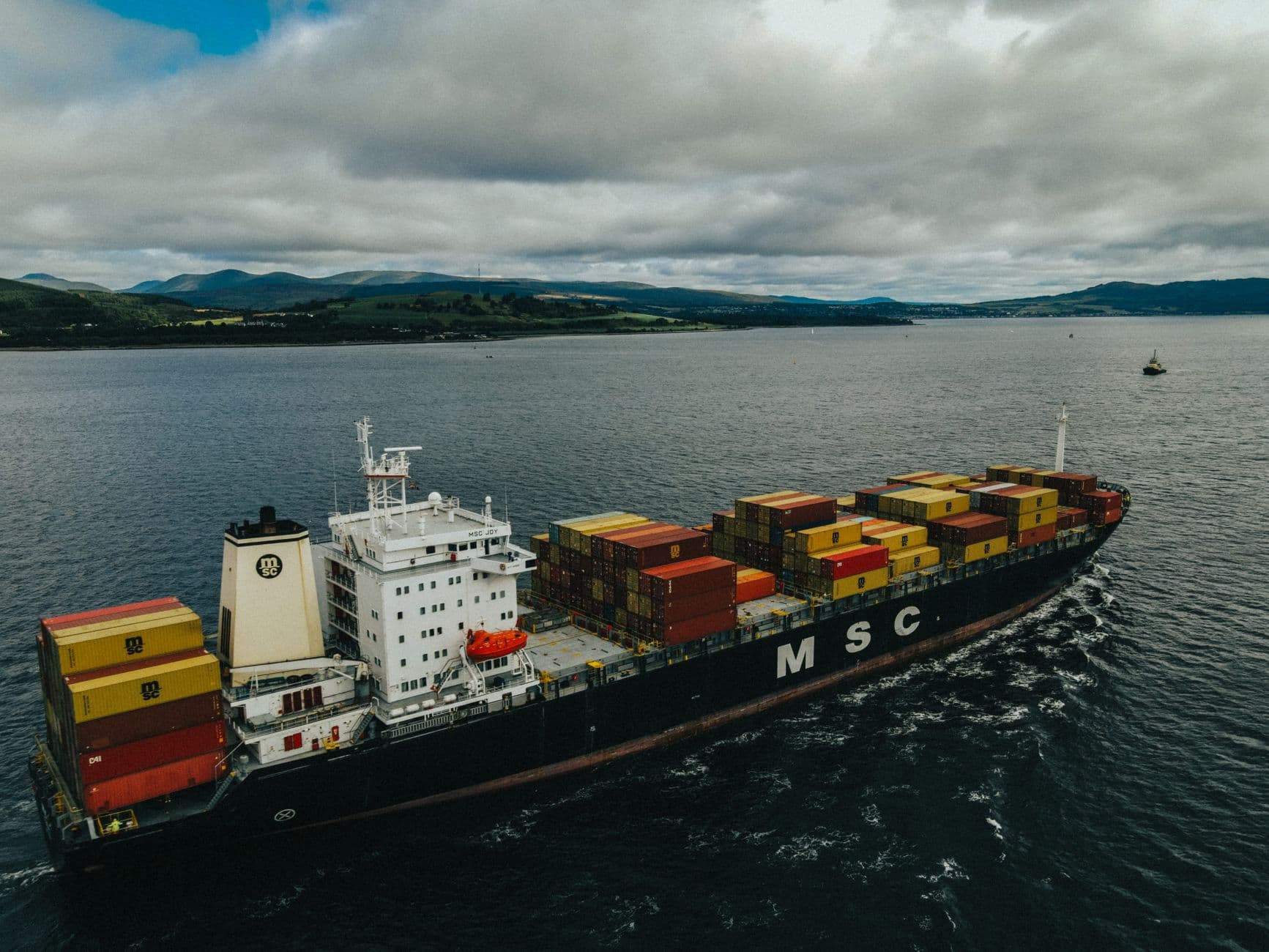

When a single ship can carry more than 24,000 twenty-foot containers, the vessel stops being a detail on a booking confirmation and starts shaping the whole route your cargo takes. The largest container ships afloat in 2026 now cluster around 24,000 TEU, led by the MSC Irina at roughly 24,346 TEU, and the carriers that run them have consolidated into a handful of giants. We book ocean freight for shippers every week, and we see the downstream effect of that scale far more often than customers expect: a box moving between two mid-size ports can have its schedule set by a megaship it will never touch. This guide ranks the biggest vessels and the biggest shipping lines as they stand in mid-2026, then explains, from the booking side, what all that capacity actually means for the container you are trying to move.
The largest container ships in 2026, ranked by capacity
The record for nominal capacity has crept upward slowly since the first 24,000-TEU ships entered service. According to public vessel lists (including Wikipedia's list of largest container ships and the fleet trackers the industry relies on), the top tier is remarkably tight. The gap between the world's largest ship and the sixth-largest is under 600 TEU, which tells you these designs have converged near the practical ceiling for vessels that still need to fit the deep-water terminals and berths that can handle them. New 2026 deliveries keep joining this top tier, including MSC's Tessa at about 24,116 TEU and CMA CGM's Seine at roughly 23,876 TEU, and different trackers cite these classes within a few hundred TEU of one another, so we round the figures and treat the ordering as indicative rather than exact.
| Vessel class | Operator | Nominal capacity (approx. TEU) |
|---|---|---|
| MSC Irina class | MSC | 24,346 |
| MSC Tessa class | MSC | ~24,116 |
| Ever Alot (Evergreen A-class) | Evergreen | ~24,004 |
| OOCL Spain class | OOCL | ~24,000 |
| CMA CGM Seine | CMA CGM | ~23,876 |
| HMM Algeciras class | HMM | ~23,800 |
A note on how to read these figures: nominal TEU is a theoretical count that assumes every slot holds a standard, lightly loaded 20-foot box. Real payload is lower once weight limits, reefer plugs and the mix of 40-foot units come into play. So the MSC Irina does not actually sail with 24,346 laden containers on board. The number is a headline that ranks ships fairly against each other, not a promise of what any voyage carries. We flag that because shippers sometimes assume a bigger ship means guaranteed space, and the two are not the same thing.
The biggest shipping lines by fleet capacity
Vessels make the headlines; carriers control the market. The ranking that matters for pricing and service reliability is total fleet capacity, and here the numbers are far less evenly spaced than the ship list. Alphaliner, the reference source most freight desks watch, put MSC at the top in mid-2026 with about 7.33 million TEU of capacity and roughly a 21.6% share of the global fleet, a record high. That lead over second-placed Maersk, on around 4.65 million TEU, runs to more than 2.6 million TEU, an unusually wide margin for a market that used to trade its number-one slot back and forth. In 2026 MSC also became the first carrier in the industry to operate a fleet of 1,000 ships, a scale milestone no rival has matched.
| Rank | Carrier | Approx. capacity / share (Alphaliner, mid-2026) |
|---|---|---|
| 1 | MSC | ~7.33M TEU / ~21.6% |
| 2 | Maersk | ~4.65M TEU |
| 3 | CMA CGM | ~4.29M TEU |
| 4 | COSCO | Rank order per Alphaliner |
| 5 | Hapag-Lloyd | Rank order per Alphaliner |
| 6 | ONE (Ocean Network Express) | Rank order per Alphaliner |
| 7 | Evergreen | Rank order per Alphaliner |
| 8-10 | HMM, Yang Ming, ZIM | Rank order per Alphaliner |
We give firm figures for the top three, where Alphaliner's numbers are well established, and rank order below that, because carrier capacity shifts month to month as newbuildings deliver and charters roll off. Every figure here is approximate and moves with each monthly update. If you need an exact number for a tender, pull the live Alphaliner Top 100 rather than any static list.
How the 2026 alliances are drawn
Fleet size is only half the picture. What a shipper actually buys is a service string, and most strings are jointly operated through an alliance where several carriers pool vessels and swap slots. The map redrew itself in early 2025, and by 2026 it settled into three groupings plus one very large outlier.
- Gemini Cooperation: Maersk and Hapag-Lloyd, built around a hub-and-spoke model that promises tighter schedule reliability by limiting direct port calls.
- Ocean Alliance: CMA CGM, COSCO, Evergreen and OOCL, the largest bloc by combined capacity, with dense east-west coverage.
- Premier Alliance: ONE, HMM and Yang Ming, the successor to THE Alliance, running with some Gemini slot cooperation on certain lanes.
- MSC: operating largely standalone off the back of its own fleet, filling gaps with partner slot deals rather than a formal alliance.
Alliance choice is not an abstraction to the person booking a box. It sets which ports your service calls direct and how many transshipments your cargo takes before it reaches you. It also decides whose customer service you deal with when a vessel rolls. Two carriers can sell you the same nominal transit time on paper while one routes you through a single hub and the other feeds you through two. On the lanes we book, the alliance behind the string often predicts on-time performance better than the headline transit does. Early-2026 schedule data backs that up: the Gemini Cooperation posted on-time reliability near 89.5%, well ahead of the other groupings, according to industry tracking.
Cascading: the megaship you never board still moves your cargo
Here is the mechanism most shippers miss. When a carrier takes delivery of a 24,000-TEU ship, it does not create a brand-new route for it. The giant goes onto the busiest deep-water corridor, usually Asia to North Europe, and displaces the 14,000-TEU tonnage that used to run there. That displaced ship cascades down to a secondary lane, bumping a smaller vessel again, and the ripple carries all the way to regional feeder services. The industry calls this cascading, and it is why a shipper on a modest intra-regional trade can suddenly find a much larger ship on a route that never needed one.
We watched exactly this on a secondary string last year. A service that had reliably run mid-size ships was quietly upgraded to tonnage cascaded down from a mainline, and for a few months bookings got easier and rates softened. Then the carrier rationalized the string because the bigger ships were sailing half-empty, and the space we counted on evaporated. Cascading giveth and cascading taketh away. The takeaway for shippers is that vessel size on your route is a symptom of decisions made two or three lanes up the chain, not a stable feature you can plan around.
Why more slots on a lane is not the same as your slot
Carriers talk about capacity in terms of a whole string: so many sailings a week, so many thousand TEU deployed. A shipper cares about one thing, whether there is space for a specific box on a specific sailing. Those two measures come apart constantly. A lane can be structurally oversupplied while your preferred sailing is fully booked, because allocation is carved up in advance between the alliance partners, then between contract customers and the spot market. If your cargo sits at the end of that queue during a demand spike, the abundance of slots on the lane does you no good at all.
The sharpest version of this is the blank sailing. When demand dips, carriers cancel a scheduled departure outright to keep ships full and defend freight rates rather than sail with empty slots and let prices fall. From the booking side it looks like this: a string we quoted on a Monday shows a hole three weeks out, and every box that was meant to load on the cancelled vessel gets rolled onto the next one, which then overflows. A blank sailing is a rate-defense tool for the carrier and a schedule shock for the shipper. We plan around them by holding buffer time and, where cargo is time-critical, by spreading bookings across more than one string so a single cancellation does not strand a shipment.
What a mega-ship discharge does to a port and your inland pickup
Scale concentrates. Because only a limited set of deep-water hubs can berth a 24,000-TEU ship and work it fast, ultra-large vessels pile their calls onto those few terminals. When one of them discharges, it can drop several thousand containers into a single yard over a day or two, and that surge does not clear instantly. Terminal density spikes, container dwell time stretches, and the trucking and rail capacity that moves boxes inland gets rationed by appointment.
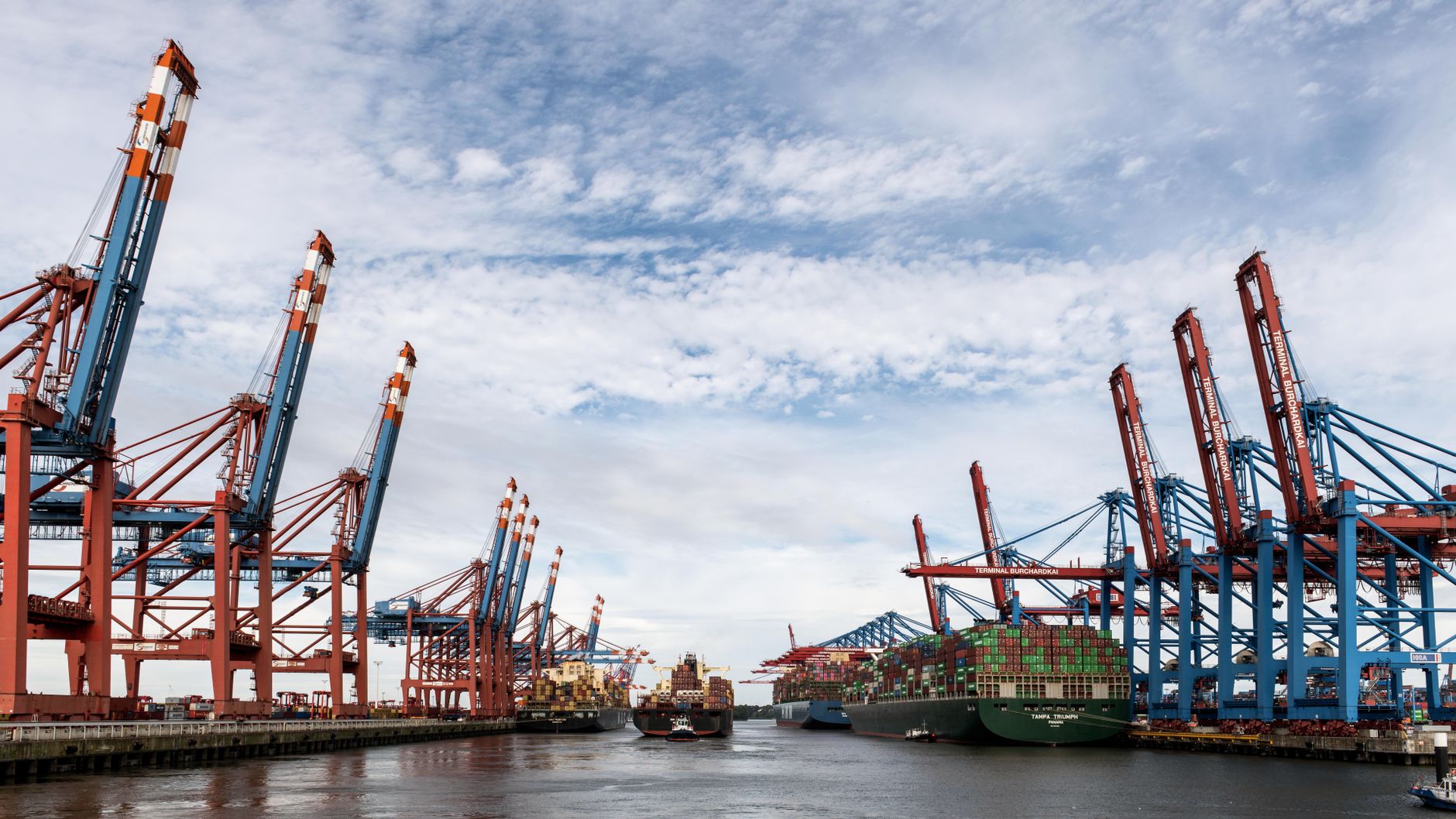
We see the inland effect most clearly at pickup. After a big discharge, driver appointment slots at the terminal get scarce, and a container that would normally gate out in two days can sit for four or five while the yard digests the wave. That delay is invisible on the ocean schedule, which shows the ship arriving on time, yet it is very real to the consignee waiting on goods. If you want the mechanics of how these hubs and inland connections fit together, our guide to ports and container shipping walks through the full chain, and our overview of the busiest shipping routes and trade lanes shows where the biggest ships actually sail.
What all this scale means when you book with us
Put the pieces together and a clear picture emerges for the shipper. The record ship list matters less than the carrier ranking, and the carrier ranking matters less than which alliance runs the string you are quoted on. A 21.5% market leader with 7.3 million TEU does not automatically give you the best sailing; a smaller carrier with a tightly run hub service sometimes will. Bigger ships have lowered the cost per box on the mainlanes over the past decade, and that saving is real, but it comes bundled with fewer direct port calls and sharper exposure to blank sailings. Add the inland congestion that follows every big discharge and the trade-off gets real.
Our job as a marketplace is to translate that structure into a booking that actually holds. We look at the alliance and the string, not just the price, and we build in the buffer that mega-ship logistics demands. Scale is a fact of the ocean now. Whether it works for your cargo or against it comes down to how the string is chosen and how much slack you leave in the plan.
Frequently asked questions
What is the biggest container ship in the world in 2026?
By nominal capacity, the MSC Irina and its sister ships lead at roughly 24,346 TEU, according to public vessel lists. A cluster of classes sits just behind around 24,000 TEU, including the Ever Alot at about 24,004 TEU and the OOCL Spain near 24,000 TEU, with new 2026 deliveries such as the MSC Tessa joining the top tier. Nominal TEU is a theoretical slot count, so no voyage actually loads that many laden boxes.
Which shipping line is the largest by fleet capacity?
MSC, by a wide margin. Alphaliner ranked it first in mid-2026 with about 7.33 million TEU and roughly a 21.6% share of global capacity, more than 2.6 million TEU ahead of Maersk in second. CMA CGM, COSCO and Hapag-Lloyd round out the leading positions, followed by ONE, Evergreen and then HMM, Yang Ming and ZIM.
Does booking with a carrier that runs the biggest ships get my cargo there faster?
Not on its own. Ship size mainly affects cost per container on the busiest lanes, not the transit time on your specific route. What shapes your service more is the alliance behind the string and how many transshipments your cargo takes. Whether the carrier blanks sailings when demand softens matters too. We weigh the string and the alliance rather than the headline ship size when we book.