



Most shippers we talk to are chasing the same thing Zara solved decades ago: how to move the right goods fast enough that they never rot into markdowns. Zara's parent, Inditex, turns a sketch into a garment on a shelf in roughly 2 weeks while much of the apparel trade still runs on a 4 to 8 week clock. That gap is not a fashion story. It is a freight and inventory story, and the levers behind it (air over ocean when speed pays, sourcing close to demand, tiny frequent shipments) transfer straight to anyone moving physical product. At our booking desk we quote these same trade-offs every week on the Iberia, Morocco, and Turkey lanes that feed European retail, so the Inditex model is worth reading as an operations blueprint rather than a branding case.
The 2-week clock that reset an industry
Zara opened in 1975 in A Coruña, in the Galician northwest of Spain, founded by Amancio Ortega. It sits inside Inditex alongside sister brands Bershka, Pull&Bear, Massimo Dutti, and Stradivarius. The number everyone cites, drawn from Inditex's own reporting and from the business-school case studies of Zara taught for years at places like Harvard Business School, is the design-to-shelf cycle of about 2 weeks. The wider industry, according to that same case literature, typically needs 4 to 8 weeks because design, sourcing, and distribution are strung across separate companies and continents.
A 2-week turn versus a month or two sounds like a merchandising brag. Read it as a logistics metric and it changes meaning. A shorter cycle means the company commits inventory closer to the moment of actual demand, so it guesses less and discounts less. For a freight buyer, that is the whole game. The cost of being wrong about what customers want shows up later as clearance racks, and clearance is just freight you paid to move twice and sold below cost.
Vertical integration is a logistics decision
The apparel trade's default operating model is near-total outsourcing. A brand designs, then hands manufacturing, warehousing, and shipping to contractors, usually in Asia, chasing the lowest unit cost. Inditex went the other way. Per its own disclosures, it keeps design, a large share of manufacturing, distribution, and retail under one roof. That vertical control is what lets the two-week clock exist, because no handoff between separate firms sits in the critical path.
We see the flip side of this daily. When a shipper outsources every link, each partner optimizes locally and nobody owns the end-to-end lead time. Orders wait for a full container because the factory is paid by the box, not by the calendar. Inditex removed that friction by owning the calendar. It is the same logic we admire in IKEA's supply-chain playbook, where flat-pack design and controlled flow exist to serve a distribution goal, not the other way around. In both cases the company treats logistics as the product's core, not as a cost center bolted on at the end.
Proximity sourcing: buying lead time, not the lowest unit price
Here is the split that most people miss. Inditex does not make everything near home, and it does not chase Asia for everything either. It sorts its supply base by how predictable demand is. Fast-moving, trend-sensitive items, the pieces that could be dead stock in six weeks, are made close to Europe: Spain, Portugal, Morocco, and Turkey. Basics with stable, forecastable demand, such as plain tees and staple knits, are sourced from Asia where unit cost wins and speed matters less.
That single decision rule is the most transferable idea in the whole model. You do not choose a sourcing region for the whole catalogue. You choose it per product, based on how badly you would get hurt if you guessed wrong. On the lanes we move from Tangier and Izmir into Zaragoza and Barcelona, this is exactly why a fashion shipper will pay our higher per-kilo rate for a trend run and then book slow ocean for the replenishment basics the next month. Same buyer, two completely different freight strategies, chosen by demand-predictability rather than by habit.
| Factor | Proximity sourcing (near Europe) | Low-cost Asian outsourcing |
|---|---|---|
| Typical goods | Trend items, short shelf life, hard to forecast | Basics, stable demand, easy to forecast |
| Lead time | Days to about 2 weeks | Weeks, plus ocean transit |
| Unit cost | Higher labour and material cost | Lowest unit cost |
| Freight mode | Air and short-haul road, premium paid on purpose | Ocean container, cost-optimised |
| Main risk it manages | Markdowns and stockouts on trends | Working capital tied up in transit |
Why Zara pays for air freight on purpose
Air freight is expensive, and Inditex uses it anyway, shipping out of airports near Zaragoza and A Coruña to reach stores fast. European stores are served in roughly 24 to 48 hours, and other regions within about 48 hours by air, according to reporting and case studies on the company. Most cost-led shippers treat air as an emergency they failed into. Inditex treats it as a deliberate line item that buys a shorter cycle.
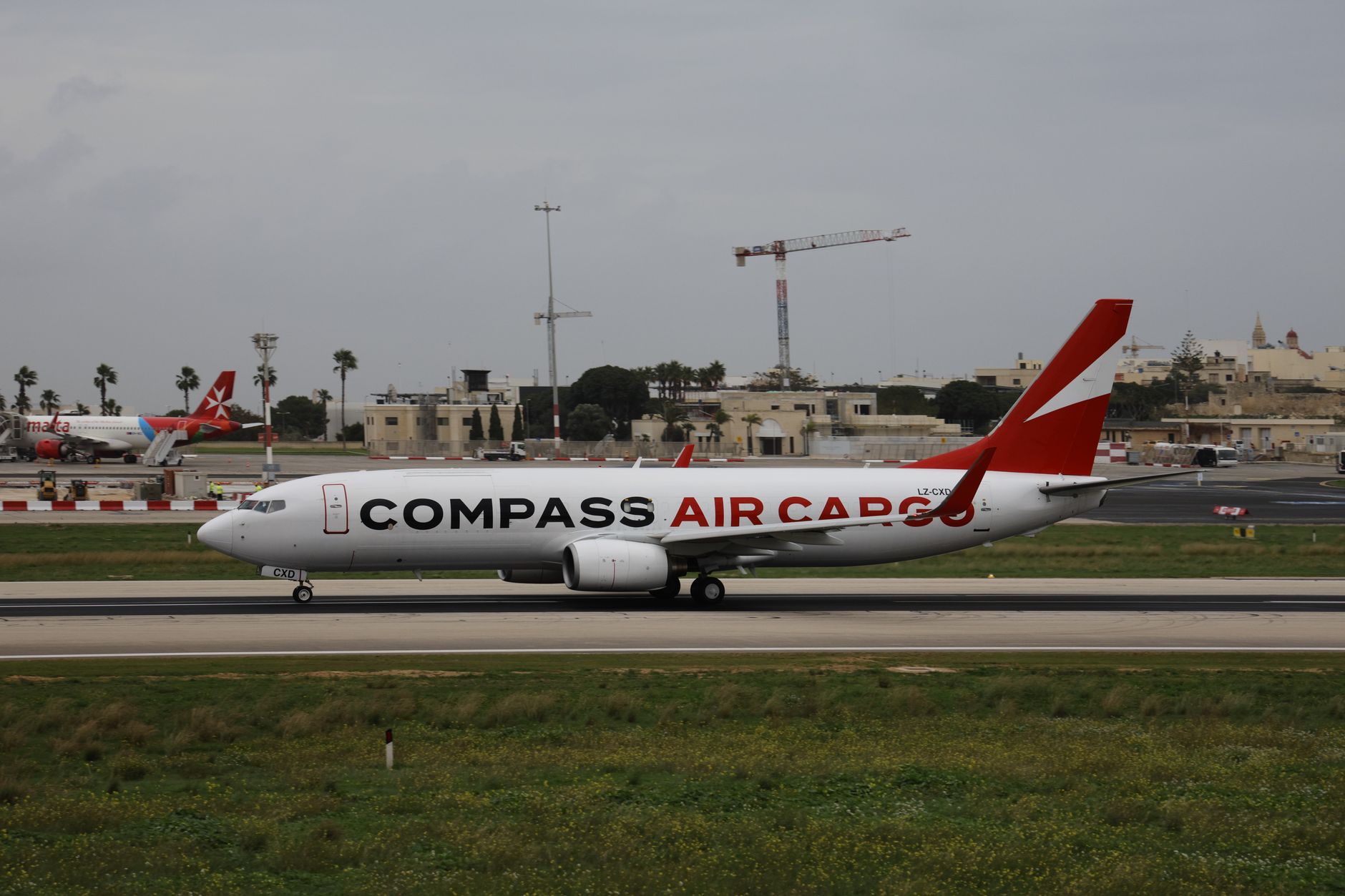
The math is not mysterious once you frame it the way a merchandiser does. A garment that sells at full price funds a large air-freight premium many times over. A garment that misses its window and gets marked down destroys the margin the cheap ocean slot was protecting. So the question is never "is air cheaper than ocean." It is "does faster delivery lift sell-through enough to cover the premium." For high-turn trend goods the answer is often yes, and that is a calculation we run with clients constantly. If you want to see why the ocean alternative still dominates for stable, low-margin cargo, our rundown of the world's busiest shipping routes shows where the cost-optimised volume actually flows.
Arteixo: the machine behind twice-a-week replenishment
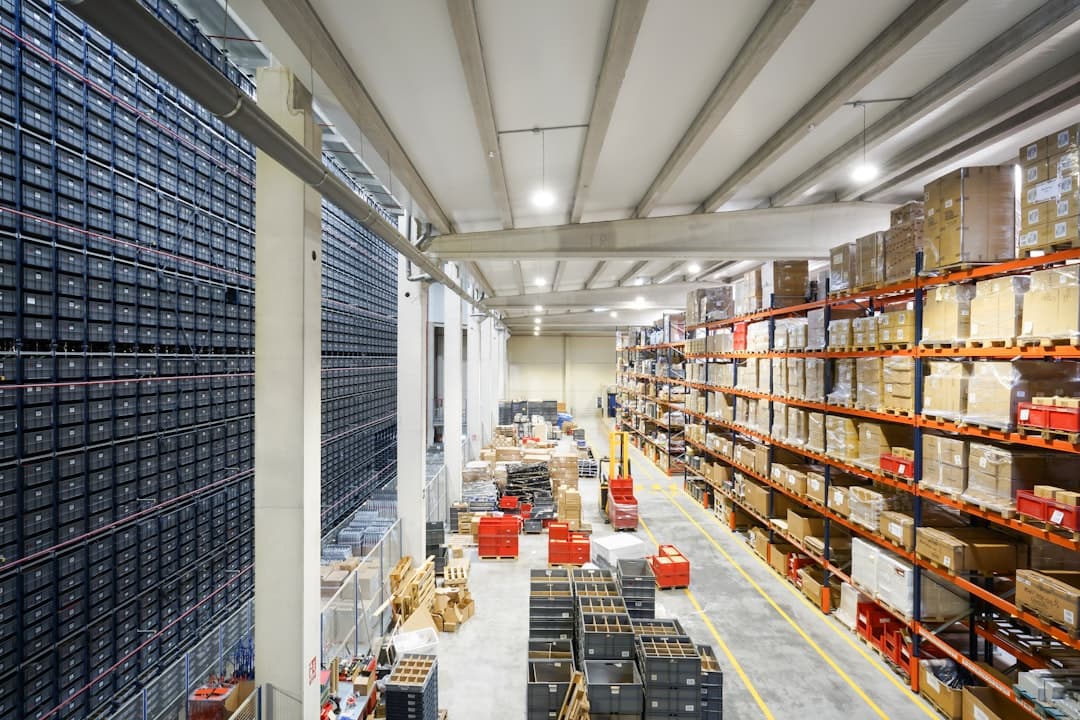
Speed on paper needs iron on the ground. Inditex runs roughly 11 highly automated logistics centres, concentrated in Spain, and the flagship sits at Arteixo in Galicia, close to A Coruña where the company started. In peak periods Arteixo alone handles over 2.5 million garments and items a week, per the reporting and case studies on the group. Stores are replenished about twice a week, and shipments are small and frequent rather than large and occasional.
Twice-a-week replenishment is the detail freight managers should sit with. It means shipping little and often, which raises handling cost per unit and demands a warehouse that can pick, sort, and dispatch continuously without buffering weeks of stock. The payoff is that stores hold thin inventory and refresh constantly, so capital is not frozen on shelves and shoppers keep seeing new pieces. It is the physical-goods version of a low-latency system: small packets, high frequency, tight routing.
The pull system: real-time data as the real product
Underneath the trucks and the planes is an information loop. Point-of-sale data flows from stores back to headquarters, where it triggers production and replenishment. This is a pull system. The company largely makes and moves what has just sold rather than what a forecast predicted months earlier. Batch sizes stay small on purpose, and a degree of scarcity is engineered in, so a shopper who likes an item learns to buy it now because it may not return.
Scarcity as a feature is a merchandising trick, but the logistics consequence is what matters to us. Small, demand-triggered batches keep the whole network responsive and keep unsold inventory low. Compare that with the push model, where a buyer commits a huge order eight weeks out, ships it cheap, and then prays the trend held. When it does not hold, the freight was the easy part. The write-down is the bill. Inditex spends more per unit to move goods and earns it back by rarely holding the wrong ones. For scale, the group reported FY2024 net sales of about EUR 38.6 billion, up 7.5% year on year, with gross profit near EUR 22.3 billion at a 57.8% margin, per Inditex results, so this is not a boutique experiment. It is a proven operating system at the top of global retail.
The 2024-2026 build-out: Inditex is doubling down on logistics
The model is not sitting still, which is the part that should interest a freight planner most. Inditex committed an extraordinary logistics investment of about EUR 900 million a year across 2024 and 2025, on top of its normal capital spending, aimed squarely at widening distribution capacity. The centrepiece is a second Zaragoza hub, a facility of roughly 2.4 million square feet carrying about EUR 600 million of investment at full capacity. It is already operational and slated for full completion by June 2026, and it is built to run almost autonomously, with robotic silos handling storage and sorting rather than people. New centres are also going up in Valencia for the Bershka brand and for Tempe, the group's footwear maker.
Two things stand out for anyone moving goods. Inditex is extending the network beyond Spain, with plans for a regional hub in Kazakhstan to serve Central Asia, a signal that the twice-a-week replenishment logic is being pushed toward markets far from Galicia. The information loop has also been supercharged: the company now leans on AI demand forecasting that reads signals like search behaviour, social sentiment, and even local weather to decide what to make and where to send it, while RFID tags and IoT sensors give it close to full visibility of every garment from the store rail back to the design floor. The pull system described above is now a tighter data system than it was even a few years ago.
Speed still costs, and Inditex still pays for it. Reporting indicates the group has ramped air freight out of factories in India to dodge shipping delays, which fits the pattern of buying lead time where it protects margin. To offset the carbon side of that speed, it has also shifted a meaningful share of its ocean cargo onto vessels running greener fuels through a partnership with Maersk, using green methanol and second-generation biodiesel. Fast and clean are being engineered to coexist rather than treated as opposites.
What a shipper can actually copy
You are probably not building 11 automated centres this quarter. You do not have to. The Inditex model breaks down into moves that scale to any freight budget, and the shippers we work with adopt them piece by piece.
- Segment your catalogue by demand-predictability, then pick a sourcing region and freight mode per segment instead of one policy for everything.
- Treat air freight as a margin tool for high-turn goods, not as a failure. Run the sell-through math before defaulting to ocean.
- Shorten the order-to-shelf cycle even slightly. Every week you cut is a week of demand you no longer have to guess.
- Ship smaller and more often for volatile lines so unsold stock and markdown risk stay low, and accept the higher handling cost as the price of responsiveness.
- Wire point-of-sale or usage data back into your replenishment triggers so you are pulling to real demand rather than pushing to a stale forecast.
None of this requires being Zara. It requires deciding, product by product, what speed is worth to you. That is a conversation our booking desk has every day, and it is the real lesson hiding inside the two-week clock.
Frequently asked questions
Is Zara's supply chain actually faster than everyone else's?
On design-to-shelf speed, yes, by the widely reported numbers. Inditex's own reporting and long-running business-school cases put Zara's cycle at roughly 2 weeks against a typical industry range of 4 to 8 weeks. The advantage comes less from any single warehouse and more from vertical integration and sourcing trend goods close to Europe, which removes the handoffs that slow a fully outsourced chain.
Why would any company pay for air freight when ocean is far cheaper?
Because for fast-moving, trend-sensitive goods the cost of arriving late, in lost full-price sales and forced markdowns, is usually larger than the air premium. Inditex ships from airports near Zaragoza and A Coruña to reach European stores in about 24 to 48 hours precisely because speed protects margin. For stable basics with predictable demand, the same company still uses cheaper, slower ocean freight from Asia.
Can a smaller shipper realistically apply the Zara model?
The full vertical setup, roughly 11 automated centres processing over 2.5 million items a week at Arteixo, is not copyable at small scale. The decision logic is. Split your products by how predictable their demand is, source and ship each group accordingly, replenish in small frequent batches for volatile lines, and feed real sales data back into what you reorder. Those moves lower markdown and stockout risk at any size.