


 Ελληνικά
  English (UK)
  Русский
  العربية
  日本語
日本語  한국어
한국어  Magyar
  Türkçe
  Español
  Čeština
  Svenska
  Português
  Suomi
Suomi  Nederlands
  Română
  Italiano
  Français
  Polski
  Українська
  Deutsch
  简体中文
简体中文  Slovenčina
 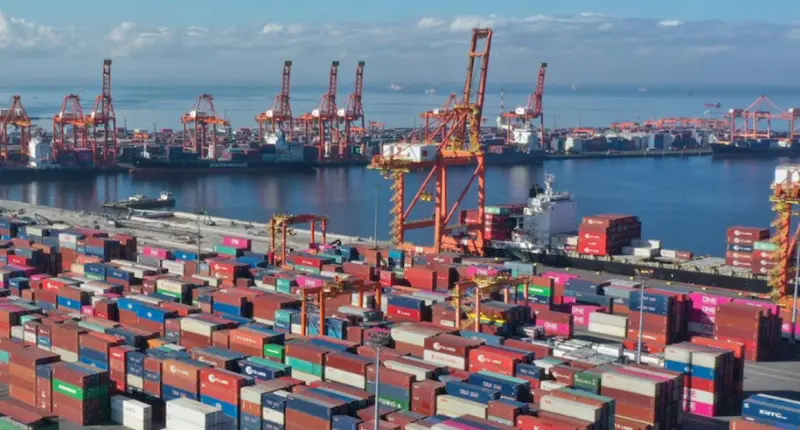 Major Growth in Philippine Sea Cargo Volume January to September 2025 Sparks Logistics Momentum">

Steady Climb in Philippine Sea Cargo Volume
The volume of sea cargo passing through Philippine ports jumped notably by 6.6% during the first nine months of 2025 compared to the same period last year. This surge signals a positive trend for the country’s import and export activities with increased shipments both domestically and internationally. The Philippine Ports Authority (PPA) reported a handling volume of approximately 232.578 million metric tons in cargo over this period, marking a healthy rise from 218.088 million metric tons recorded previously.
Breakdown of Cargo Growth
The growth in cargo volume was supported by the expansion of both foreign και domestic shipments. Foreign cargo still dominates with 63.1% of the total tonnage, while domestic cargo makes up the remaining 36.9%. Domestic cargo volume grew a robust 9.8%, reaching 85.772 million metric tons, while foreign cargo increased by 4.9% to 146.807 million metric tons.
| Κατηγορία | Volume (Million Metric Tons) | Ρυθμός ανάπτυξης (%) |
|---|---|---|
| Domestic Cargo | 85.772 | 9.8 |
| Foreign Cargo | 146.807 | 4.9 |
| Total Cargo | 232.578 | 6.6 |
Import and Export Insights
Imports enjoyed a moderate increase of 3.8%, tallying up to 83.147 million metric tons, while exports showed a more vigorous rise of 6.3%, matching 63.66 million metric tons. This pattern emphasizes a balanced boost in trade flows, paving the way for stronger economic activity.
Regional Contributions and Key Ports Performance
Breaking down the regional data, Luzon ports accounted for just over half of the handled cargo, 52.5% to be precise, posting a 10.7% increase to 122.154 million metric tons. Meanwhile, ports in the Visayas region noted a 3.9% bump, while Mindanao ports recorded a smaller but steady 1.6% gain.
Top Base Ports by Volume Handled
- Manila International Container Terminal (MICT) – 21.82 million metric tons
- North Harbor – 13.164 million metric tons
- South Harbor – 6.771 million metric tons
- Cagayan de Oro Port – 5.312 million metric tons
- Iloilo Port – 2.769 million metric tons
Container Traffic Soars with Double-Digit Growth
Container shipments, measured in twenty-foot equivalent units (TEUs), also jumped sharply by 11.3%, totalling 6.378 million TEUs handled at PPA-managed ports. Both domestic and foreign container traffic saw impressive double-digit expansions.
| Container Traffic | Volume (Million TEUs) | Percentage of Total | Ρυθμός ανάπτυξης (%) |
|---|---|---|---|
| Domestic Containers | 2.227 | 35% | 12.4 |
| Foreign Containers | 4.151 | 65% | 10.8 |
Import container traffic grew 9.7%, while exports climbed nearly 12%, illustrating an upbeat shipping climate.
Container Volume by Region
- Luzon – 4.864 million TEUs (76.3% of total container traffic), +12.3%
- Visayas – 341,094 TEUs, +1.7%
- Mindanao – 1.173 million TEUs, +10.4%
Leading Container-Handling Ports
- Manila International Container Terminal (MICT) – 2.298 million TEUs
- South Harbor – 1.099 million TEUs
- North Harbor – 1.052 million TEUs
- Batangas Port – 248,849 TEUs
- Cagayan de Oro Port – 225,498 TEUs
Roll-on/Roll-off and Passenger Traffic
The roll-on/roll-off sector, which primarily handles vehicle shipments, experienced an 11.4% surge reaching 9.617 million vehicle units. Passenger traffic also moved upward, with a 4.3% increase totaling 63.061 million passengers. Notably, cruise ship passengers soared by a staggering 83.3%, pointing to revitalized travel trends.
Maritime Activity in Vessel Calls
Ship calls rose by 7.13%, amassing 502,654 port calls. Domestic vessels dominate the scene with 494,099 calls, a 7.3% growth, while foreign ship calls remained relatively steady, with a slight 0.4% increase to 8,555.
Logistical Significance and Outlook
This growth in volumes demonstrates not just expanding trade activity but also presents evolving challenges and opportunities for the logistics sector. From cargo forwarders to haulage services, these upward trends necessitate more efficient shipping, better distribution networks, and advanced forwarding solutions to handle the increasing movement of freight and bulky goods.
How This Impacts Logistics Providers
- Demand for reliable container handling and storage facilities rises sharply.
- Greater need for streamlined operations in ports like MICT, North, and South Harbor.
- Enhanced coordination between transport modes—sea, road, and rail—to foster quicker deliveries and relocations.
- Opportunities to upgrade freight services for oversized and heavy cargo, including vehicles.
For those planning international shipments, house moves, or relocating offices, platforms like GetTransport.com offer a smart, cost-effective way to access a global network of transport providers. Whether hauling containers, pallets, bulky materials, or even vehicles, GetTransport.com delivers transparency and convenience—making complex logistics manageable.
Experience and Informed Decision-Making in Cargo Transport
While data and reviews offer valuable insights into port and shipping performance, there’s no substitute for firsthand experience. Through GetTransport.com, customers gain access to competitive rates and a wide selection of freight and courier options worldwide. This empowers them to make well-informed transport decisions without overpaying or running into surprises.
The platform’s transparent approach brings convenience and affordability to the forefront, bridging gaps between customers and trusted logistics providers within the sea freight and haulage ecosystem. Κάντε κράτηση για τη διαδρομή σας στο GetTransport.com.
Forecasting the Trend’s Impact on Global Logistics
While the Philippines represents a regional hub with strong port activity growth, the global logistics impact is more modest. However, these developments remain crucial for stakeholders operating in Southeast Asia’s bustling trade corridor. Staying informed about such trends ensures smoother operations and readiness for the evolving demands of cargo handling and shipping.
Ξεκινήστε να σχεδιάζετε την επόμενη παράδοσή σας και εξασφαλίστε το φορτίο σας με την GetTransport.com.
Wrapping Up: What the Figures Tell Us
The first nine months of 2025 reflect a healthy boost in Philippine sea cargo volumes across domestic and foreign shipments, container traffic, vehicle units, and passenger counts. This growth story highlights the thriving activity in ports such as Manila International Container Terminal and other key hubs, with ripple effects on the associated logistics and forwarder sectors. Importantly, platforms like GetTransport.com are perfectly positioned to support the increasing transport demands by offering flexible, affordable, and reliable freight and shipment solutions globally.
Whether moving large bulky goods, shipping parcels, pallets, or vehicles, efficient cargo distribution and smooth forwarder services are essential. Keeping pace with dynamic shipping trends and utilizing comprehensive logistic services makes a marked difference in today’s fast-paced market. As volumes swell and shipments become more complex, leveraging smart transportation solutions remains a key driver for successful freight management.