




Implement a demand-driven replenishment plan, with real-time inventory data and a streamlined workflow, to cut delays by up to 30% in the first quarter.
Utilize historical data to forecast demand and design adaptive slotting, alongside live visibility from sensors. This integral approach aligns inventory with picking routes, reduces travel flow, and boosts order throughput across the day.
Alongside energy-saving upgrades, install solar-powered lighting and HVAC controls in warehouses. Expect roughly 18-25% annual reduction in energy costs and improved uptime during demanding shifts, supporting steadier flow for high-demand periods.
Coordinate with suppliers to minimize supply delays and keep inventory aligned with actual demand, using cross-docking and vendor-managed inventory alongside internal replenishment rules. Real-time data feeds and SLAs ensure the supply stream remains steady and predictable, reducing stockouts.
Establish a quarterly review of historical performance, map development milestones, and set a future roadmap. Treat the workflow as an integral part of the supply chain, identify vulnerable points, and add redundancy where needed. Track metrics such as order accuracy, cycle time, and inventory velocity to guide concrete improvements.
Warehouse Performance Boost through Digital Automation
Implement an integrated automation stack now: connect WMS, voice-directed picking, sensors, and cloud technology, and replace spreadsheets with a centralized data hub where fast operating decisions land in real time. This approach here accelerates what operators experience daily and keeps everything aligned.
Types of automation should target three layers: inbound receiving, internal movement, and outbound packing, while AI-driven forecasting smooths the movement of goods. Without automation, tasks are harder, errors rise, and everything slows.
Measure improvement with concrete metrics: target 15-25% faster cycle times, 2-3% error-rate reduction, and 20% increase in dock-to-stock speed. The experience improves as operators gain confidence; improving results comes from weekly reviews of data and rapid coaching.
Build a unified data flow: real-time feeds from WMS, TMS, ERP, and automation devices; land data in a single analytics layer and move away from spreadsheets toward live dashboards.
Leadership commitment matters: allocate budget, set 12-week sprints, provide hands-on coaching, and support changing roles; this needs sustained supporting actions.
Start with three high-impact workflows: inbound receipt with automated data capture, put-away optimization, and picking with voice or wand. whats the best path for scale? Launch a 4-week pilot, collect data on throughput and accuracy, then expand to full operation.
Technology alone cannot succeed; they need people who trust automation; provide training, hands-on coaching, and supporting roles to cover exceptions and maintain performance.
As you scale, monitor what matters: unit-level throughput, task-level efficiency, and system reliability. Regular reviews keep improvements on track and ensure the movement toward higher operating standards remains steady.
Strategies for Peak Performance in Modern Warehouses
Implement real-time visibility protocols across all stock points and switch to a kanban-driven replenishment model to curb stockouts and align orders with actual consumption. Set a 90-day target to reduce stockouts by 30% for core SKUs and by 15% for long-tail items, based on current service levels.
Aggregate data from WMS, ERP, and supplier feeds into a unified, real-time dashboard. This intelligence supports rapid decision-making, reduces vulnerability of vulnerable items, and shortens response times when demand shifts. Replace outdated SOPs with dynamic governance to keep processes aligned with current conditions.
Leverage forecasting models that blend seasonality, promotions, and lead-time variability to determine optimal order sizes and reorder points. Align replenishment with demand signals to minimize carrying costs while preserving service levels.
Define safety stock by item size and risk, and diversify sourcing to cover vulnerable items. For high-velocity items, keep a buffer for 60 days of anticipated demand; for slow movers, 15–20 days. Update management rules monthly as data grows and operating conditions change.
Managing operational challenges around peak periods benefits from capacity planning, cross-docking, and flexible working teams. Massively enhanced visibility lets teams shift resources quickly and keep operational throughput steady even when inbound flows spike.
Near-term optimization links inventory strategy to the economy. Track carrier capacity, lead times, and supplier performance to protect margins and avoid disruptions that ripple through operations.
To standardize exchanges with suppliers, introduce protocols for data formats, units, and lead times. This reduces variance in orders and helps keep stock levels aligned with demand.
| SKU category | Reorder point (units) | Kanban size (units) | Safety stock (days of demand) | Target service level |
|---|---|---|---|---|
| Core | 150 | 300 | 60 | 95% |
| Active | 60 | 120 | 30 | 92% |
| Non-core | 20 | 50 | 15 | 88% |
Real-time Inventory Tracking with IoT and RFID
Install RFID tags on all products and implement fixed readers at receiving, put-away, and packing stations to achieve real-time visibility across plant levels. Tag pallets with UHF labels and attach item-level tags to multipack bundles; configure readers along the main aisles and near dock doors to minimize blind spots. Expect updates within one second of movement for most SKUs.
The processing architecture combines edge sensors and centralized processing: edge readers filter noisy reads, aggregate counts, and push events to a digital dashboard that feeds the WMS and ERP. For typical mid-size plants, peak read rates reach several thousand tags per second in busy zones, with latency under 500 ms after a movement is detected. A key factor in success is maintaining data quality and tag integrity across the network.
What to track: item-level location, SKU, batch or lot, and zone. Use multiple reader points near receiving, put-away, and picking to resolve conflicts when items move across shelves. The system should support level-by-level reconciliation and preserve product history for decades of data in the archive, while keeping active data in rolling windows to optimize processing.
Concern about stockouts, shrinkage, and misplacements declines when scanning moves are captured instantly. The commitment to data quality must cover tag maintenance, reader calibration, and routine reconciliation against physical counts. Establish a clear owner for data accuracy and set a quarterly audit that compares live counts to cycle counts and physical checks.
With real-time visibility, downtime due to manual counting and reconciliation drops by 30–50 percent in pilot zones, and overall warehouse throughput improves as handlers locate items faster. In peak operations, automated alerts for stock discrepancies reduce unplanned stops and keep lines operating at 85–95 percent of target capacity.
To implement effectively, start with a 90-day pilot in a single receiving and picking corridor. Define standards for tags, readers, and data formats; map RFID reads to WMS stock locations; calibrate readers to account for metal shelving and pallet height. Monitor metrics like read-rate, accuracy, and alert response time; scale to additional zones after achieving 98% read accuracy in pilot. This involves optimizing tag placement and reader density to maximize coverage and reduce false reads.
Over time, the system supports multiple functions: near-real-time stock updates, automated replenishment triggers, and product-level traceability. The approach requires ongoing training for operators and an IT commitment to uptime, security, and privacy across the plant, but the payoff is steady improvements in processing speed and inventory control.
Automated Picking and Routing to Cut Travel Time
Adopt a zone-based picking layout with an adaptive routing engine that uses real-time data to cut travel time by 20-40% in warehousing operations. Configure the system to guide pickers along the whole route for each order, adjusting paths as stock moves or orders change. There is room to meet changing demand while ensuring every picker follows optimized paths to minimize backtracking and idle time; this approach also optimizes everything from travel time to throughput.
Key actions to implement now:
- Define zones by velocity and item size, placing frequently picked items in outer or closer zones to achieve less walking for teams. Use a simple table of zones and standard routes to accelerate training and meet expectations.
- Install a sophisticated routing engine that continuously analyzes item locations, order priorities, and dock constraints. The engine should recompute routes within seconds and assign picks to the same or adjacent zones to reduce movement across warehouses.
- Capture accurate location and time data with lightweight handheld scanners or voice-picking devices. Frequent updates improve indicators for route efficiency and picker utilization.
- Coordinate with labor and operations teams to align shifts with peak picking windows. Cross-train staff on routing logic and exception handling to meet changing demand without compromising accuracy.
- Maintain a table of performance indicators: travel time per order, total distance, pick rate, accuracy, utilization, and dock turnover. Review daily to detect trends and adjust layout or rules.
- Run pilots in high-volume aisles, then scale to the whole operation. Monitor price per pick and cost per order, and compare against baseline before full rollout.
Ongoing practices to sustain gains:
- Analyzing movement data to tighten routes and shrink total travel time; refresh zones every quarter based on item velocity and seasonality.
- Use digital dashboards to display real-time status for warehousing teams, with alerts when KPIs drift outside targets.
- Share lessons across warehouses to standardize effective picking patterns, while adapting to unique layouts and product assortments.
Smart Slotting and Layout Optimization
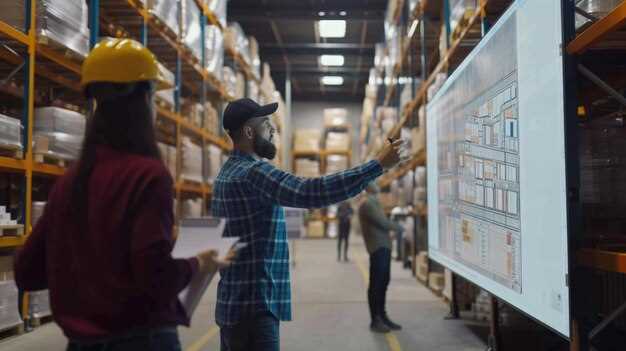
Prioritize fast-moving items in the most accessible locations to optimize travel time and boost fulfillment accuracy; keep the top 20% of SKUs within a 15–20 meter radius of the pick zone entrance and minimize dead aisles.
Slot around turnover with demand signals: classify items into A, B, and C, placing A slots near packing and staging areas, B slots mid-aisles, and C slots farther back. This approach reduces travel and supports faster cycles around peak periods.
Equip the operation with tools: slotting software, handheld scanners, and real-time inventory dashboards; run a quarterly review to compare pick rate, dwell time, and distance against the current layout, and regularly adjust.
Address risk by separating high-risk items and fragile goods, creating dedicated lanes to reduce cross-traffic while maintaining accuracy; manage the process during peak periods against surges and ensure safety.
Just-in-time replenishment alignment: coordinate restock timing with order cadence; slot changes should occur when demand shifts by more than 10% month over month; maintain buffers to prevent stockouts.
Between zones, plan cross-docking opportunities and packing corridors to minimize travel and power up operation efficiency; assign clear roles so each team member can play a role in the slotting logic and stay aligned with the business fulfillment goals.
WMS and TMS Integration for End-to-End Visibility
Implement a single data hub that connects WMS and TMS, using real-time event feeds via API and EDI to synchronize orders, inventory, and carrier movements. This affect back-office reporting and on-floor task execution, and it is integral to visibility across the facility alongside the core systems.
Define the top metrics: dock-to-ship time, pick accuracy, and load consolidation. Data shows that pairing WMS with TMS minimizes delays, reduces manual touches by 30-40%, and accelerates exception handling. For limited size facilities, this still improves throughput by 15-25% and helps land more orders on schedule.
Architecture should rely on a middleware layer that maps data fields (order_id, item_sku, qty, facility_id, location, carrier_code, status) and streams events for real-time updates. This approach makes functions of both systems cohesive and speeds decision cycles, while ensuring error handling and audit trails alongside.
In climate-controlled facilities, sensors for temperature and humidity link with inventory and pick-rate data to show where changes matter. Integrate solar-energy data to align power usage with peak move times, reducing facility energy costs and improving climate stability.
Operational best practices include mobile dashboards for frontline staff and drivers, enabling task re- assignments on the fly. Align task sequences with conveyor schedules and chosen routes; this alongside route optimization reduces idle time and speeds task completion. The leading company uses this approach to maintain service levels during changing demand patterns.
Security and governance cover role-based access, secure data transport, and a clear audit trail. Use configurable alerts to flag mismatches between WMS orders and TMS shipments, and set limits for data refresh rates to match facility size and network constraints.
Results show faster resolutions, higher accuracy, and better customer perception due to accurate status and next-step visibility in real time, enabling teams to act faster rather than react.