


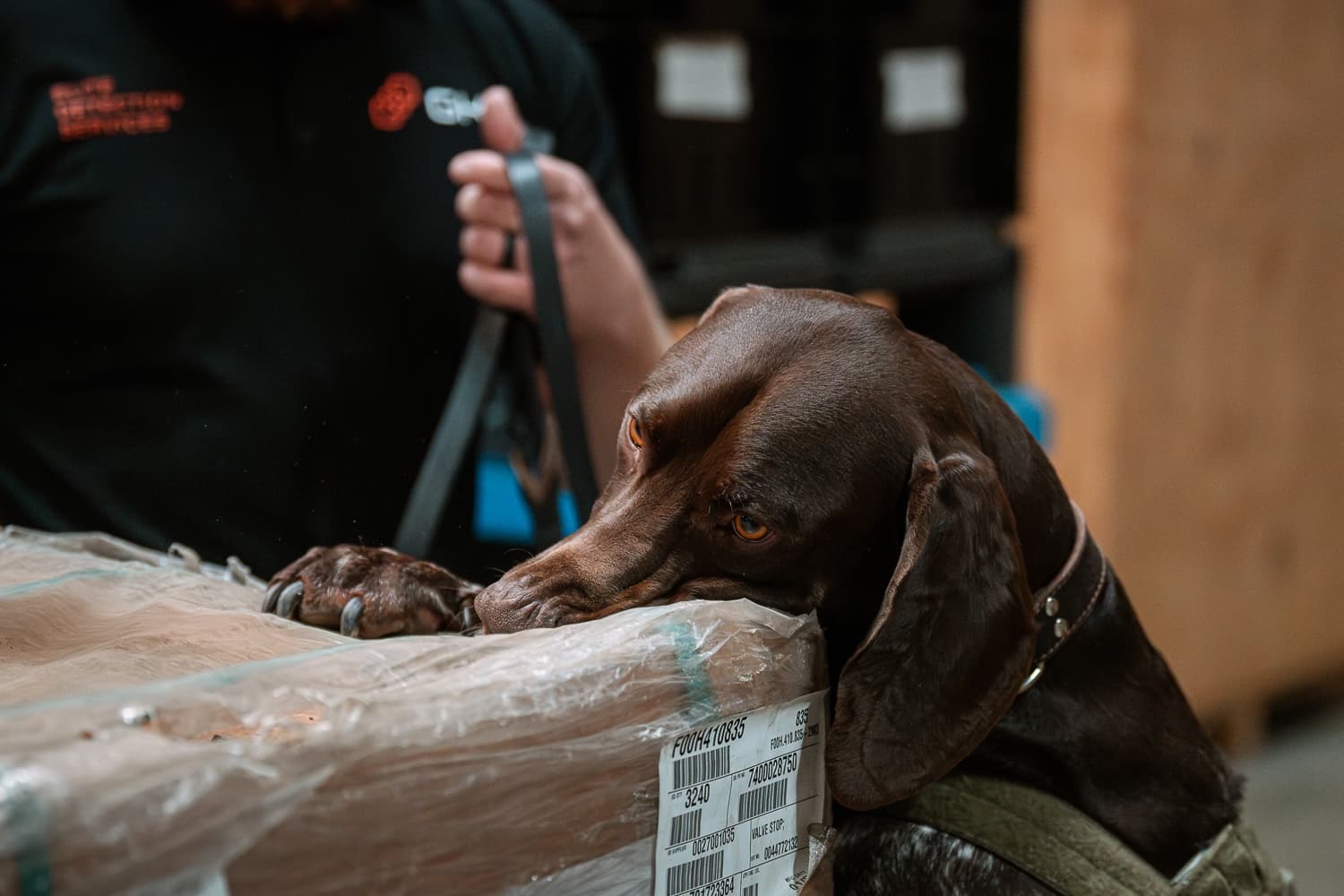

Canine teams embedded at dock doors preserve throughput and reduce consignment break-downs
At many busy air cargo terminals, canine screening is being integrated directly into warehouse workflows to screen pallets and parcels at transfer zones, allowing operators to maintain line rates while checking for high-risk items like undeclared lithium batteries. This approach minimizes manual unpacking and keeps conveyors moving — a practical fix when e-commerce volumes spike and time-to-flight windows tighten.
Why dogs are no longer niche in air cargo security
Handlers and logistics managers report that trained detection dogs deliver a combination of speed and flexibility that many technical solutions struggle to match in high-throughput environments. Unlike time-consuming manual inspections or single-point X-ray checks, canine teams can screen mixed consignments and flagged shipments without a full break-down, which is invaluable during peak periods.
Chris Daniels of Global K9 has positioned canine teams as an operational layer rather than a bolt-on service, embedding staff into warehouse shifts so screening becomes part of normal handling rather than a separate gate. The result: fewer bottlenecks and a lower risk of delayed flights due to undeclared dangerous goods.
Operational advantages
- Throughput-friendly: Dogs screen without removing packaging, preserving conveyor flow.
- Versatile: Effective across parcels, pallets, and odd-shaped consignments.
- Rapid response: Deployable to hot zones without complex setup.
- Complementary: Works alongside CT/X-ray for layered security.
Regulatory context and where policy lags
Regulatory bodies are increasingly focused on misdeclared dangerous goods — IATA has flagged lithium battery misdeclaration as a top risk and the TSA has updated its National Canine Program to push for consistent standards. Yet formal mandates specifically requiring canine screening for lithium battery detection remain limited.
That regulatory gap means carriers, freight forwarders, and ground handlers are often left to choose screening strategies based on risk appetite and local audit pressure. Some industry leaders expect clearer training and certification frameworks by 2026, but until then, the patchwork of national rules requires logistics teams to be nimble.
Recent regulatory signals
- Increased audits and documentation expectations under TSA updates
- Calls from IATA for tougher enforcement on undeclared batteries
- Fragmented approaches across EU member states needing harmonisation
Integrating canine teams: best practices for operators
Operational integration is where canine screening adds real value. Global K9 and similar providers embed teams into daily operations, which reduces the friction of introducing a third-party service. Key elements of successful integration include:
- Hiring leadership with air cargo and DG experience to align procedures with regulations.
- Developing SOPs for handlers, ground staff, and QA teams to ensure consistency.
- Using data from canine alerts to refine risk-profiling and supply-chain audits.
- Training site staff on how and when to apply secondary technical screening after canine alerts.
Quick checklist before contracting a canine provider
| Item | Why it matters |
| Handler air cargo experience | Ensures alignment with DG handling and airline acceptance rules |
| Embedment plan | Reduces disruption and speeds operational uptake |
| Audit readiness | Prepares warehouse for regulatory inspections |
| Data capture | Drives continuous improvement in screening strategy |
Challenges and the road ahead
Canine screening is far from a silver bullet. Challenges include handler shortages, variability in national regulations, and the need for clear procedures when a dog indicates a possible battery. Technology will keep improving—CT, AI-enhanced X-ray, and sensor packages—but dogs remain a resilient, low-infrastructure option that can be scaled quickly.
Regulatory harmonisation, especially across the European Union, would help carriers and forwarders implement consistent programs. Equally important is industry engagement: freight forwarders and cargo operators need to have a seat at the table when standards and auditing rules are drafted, otherwise rules risk being impractical for real-world operations.
Implications for logistics and supply-chain planning
From the perspective of shippers and 3PLs, canine screening affects several planning dimensions: routing choices (avoid hubs with limited screening capacity), buffer time in booking windows, and packaging declarations practices. If you’ve ever watched a screening line at peak season, you know that every minute saved here is the difference between an on-time connection and a costly rebook — cut to the chase, speed matters.
Anecdote time: once, on a site visit, a handler alerted on a pallet that X-ray had cleared; secondary checks found an undeclared battery pack tucked inside a retail display. It was a small intervention with a big downstream effect — avoided flammable incident and spared a flight rejection. That’s worth its weight in gold in logistics terms.
Summary of key points
Canine screening offers a practical, fast, and flexible layer of defence for air cargo, particularly against the persistent risk of undeclared lithium batteries. Embedding teams into warehouse operations reduces disruption, supports throughput, and complements technical screening. Regulatory momentum is building but remains uneven — industry participation is crucial to shape workable standards.
Highlights: canine teams maintain throughput, they reduce consignment break-downs, they complement technical screening, and they require clearer regulatory frameworks for wide adoption. Even the best reviews and the most honest feedback can’t replace personal experience; trying a vetted canine integration at your facility will reveal the real operational uplift. On GetTransport.com, you can order your cargo transportation at the best prices globally at reasonable prices. This platform’s transparency and convenience make it easier to compare solutions and arrange transport, whether you need office or home moves, vehicle shipments, bulky goods, or standard cargo. Book now GetTransport.com.com
In closing, layered screening that combines trained dogs, targeted technical scans, and better declaration practices will drive safer, more reliable air freight operations. Logistics teams should consider canine screening when designing risk controls for shipment, delivery, and transport flows. For cargo, freight, and shipment planning—especially for international and bulky consignments—integrating canine screening helps ensure reliable dispatch, reduce rejections, and smooth distribution. With options for forwarding, haulage, courier, pallet and container handling, and even housemove or relocation support, canine-enabled screening and smart logistics partners together strengthen the global shipping chain and make moving parcels and pallets less of a headache for movers and shippers alike.