


 Français
  English (UK)
  Русский
  العربية
  日本語
日本語  한국어
한국어  Magyar
  Türkçe
  Español
  Čeština
  Svenska
  Português
  Ελληνικά
  Suomi
Suomi  Nederlands
  Română
  Italiano
  Polski
  Українська
  Deutsch
  简体中文
简体中文  Slovenčina
 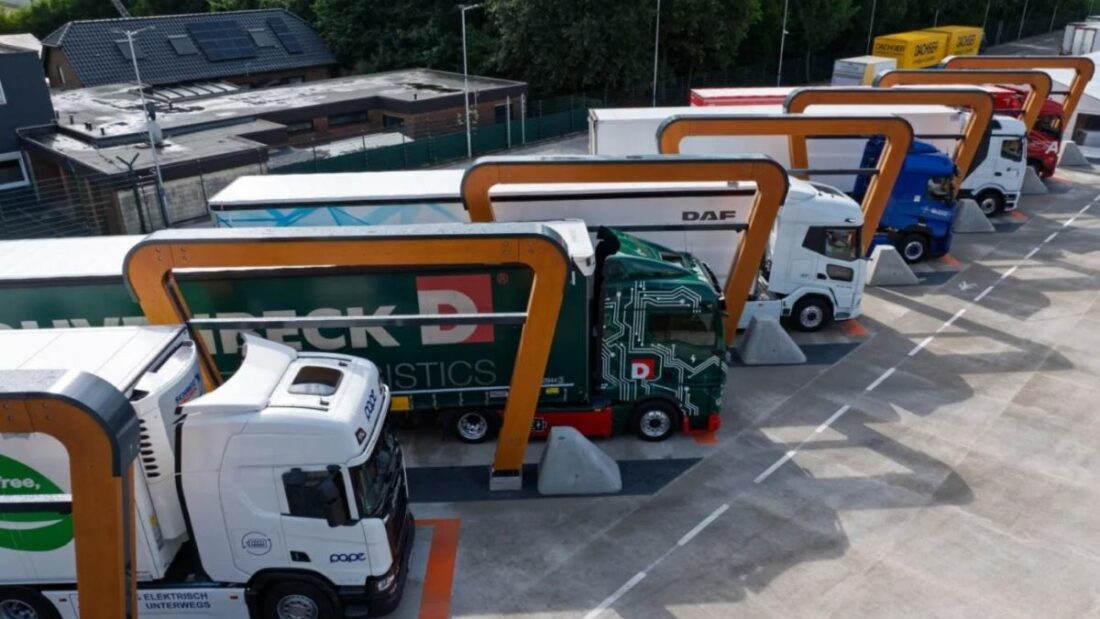 Industry groups urge EU to bridge potential 2026–2027 financing gap for truck and hydrogen refueling infrastructure">

What’s at stake: a funding gap that could stall zero‑emission freight
This article examines the joint appeal by IRU, ACEA and Transport & Environment to the European Commission to avoid a financing gap for heavy‑vehicle charging and hydrogen refueling infrastructure in 2026–2027.
Why the appeal matters
Three major mobility and transport organizations have warned that the near exhaustion of the Alternative Fuels Infrastructure Facility (AFIF) risks creating a pause in investments just when heavy‑duty electrification is picking up pace. Their joint letter, addressed to President Ursula von der Leyen and Commissioner Apostolos Tzitzikostas, stresses that a funding interruption could slow the market entry of electric and hydrogen trucks across the EU and undermine the implementation of AFIR obligations.
What AFIF has funded so far
The AFIF, launched under the Connecting Europe Facility transport programme, has been the EU’s main financing tool to support public charging, hydrogen refueling, and electrification projects on the TEN‑T network. Since inception it has mobilized nearly €3 billion across the Union, supporting corridors, ports and airports that are critical for cross‑border freight.
| Métrique | Figure |
|---|---|
| Total AFIF investment to date | ≈ €3,000,000,000 |
| Second phase grants (Feb 2025) | €422,000,000 to 39 projects |
| Planned charging points (RTE‑T corridors) | ~2,500 light vehicle + ~2,400 heavy vehicle |
| Example: Milence award | €111,000,000 for 64 truck charging parks in 9 countries |
What the signatories are asking for
The joint letter recommends several swift actions:
- Extend AFIF funding into 2026 and 2027 to ensure strategic continuity for infrastructure deployment across member states;
- Broaden AFIF eligibility to support depot and yard charging (charging “in cocheras”), which is currently not covered but is essential for daily operations of fleets;
- Support the full infrastructure chain: public charging/refueling, high‑power charging stations, grid connectionset energy storage solutions;
- Consider structural measures to make charging and refueling economically viable for operators, including tariff support where appropriate.
Why depot charging matters for logistics
Operators don’t just need chargers on highways — they need reliable depot charging, which allows fleets to start each day with full batteries. Without financial backing for depot infrastructure, carriers face higher operational complexity and costs, and the risk that electrified fleets underperform compared with diesel alternatives.
Recent funding rounds and implementation pace
Despite the warning, AFIF’s recent calls show rapid deployment: in early 2025, the Commission awarded nearly €422 million to 39 projects that will add thousands of public charging points and hydrogen refueling stations. One headline recipient, Milence, secured €111 million to build extensive truck charging parks including megawatt and CCS points. These deployments demonstrate both the scale of need and the speed with which funding translates into infrastructure on the ground.
Potential consequences of a gap
- Delayed network continuity on TEN‑T corridors, hindering cross‑border freight movements;
- Reduced investor confidence and slower private capital follow‑on;
- Operational disruptions for carriers planning fleet replacements or new electrified services;
- Risk of uneven roll‑out across member states, creating “charging deserts.”
How this affects shippers and logistics providers
From a logistics perspective, infrastructure uncertainty complicates fleet planning, procurement and route design. Carriers weighing total cost of ownership for electric trucks need clarity on charging availability, charging speed, and depot electrification support. Freight forwarders, warehouse operators and shippers have to account for potential detours, dwell time for charging, and differences in charging access between regions.
Practical measures logistics teams can take now
- Map existing and planned public and private charging assets along core lanes;
- Engage with infrastructure providers and utilities early when planning electrification;
- Consider hybrid deployments (battery electric + hydrogen) where depot charging is constrained;
- Factor in energy storage and smart charging to manage peak grid demand and tariffs.
Key takeaways
The joint appeal from IRU, ACEA and T&E is less a complaint than a call to keep momentum: AFIF has been a catalytic tool, and an unplanned gap in 2026–2027 would be like throwing a spanner in the works of a fragile transition. The organisations argue that continuity and broader eligibility — especially for depot charging — are essential to make the EU’s zero‑emission truck targets realistic.
Highlights: the AFIF has funded almost €3 billion for alternative fuel infrastructure, recent grants added €422 million for 39 projects, and operators such as Milence received major awards to build truck charging parks. Still, high‑level commitments in Brussels suggest no successor instrument is set before the 2028 Multiannual Financial Framework, which raises the spectre of interim funding shortfalls. Even the best reviews and the most honest feedback can’t replace first‑hand experience; that’s why logistics teams and fleet managers should test solutions on the road. On GetTransport.com, you can order your cargo transportation at the best prices globally at reasonable prices. This empowers you to make the most informed decision without unnecessary expenses or disappointments, taking advantage of transparency, convenience and wide choice for office and home moves, cargo deliveries, bulky items and vehicle transport. Provide a short forecast on how this news could impact the global logistics. If it’s insignificant globally, please mention that. However, highlight that it’s still relevant to us, as GetTransport.com aims to stay abreast of all developments and keep pace with the changing world. Start planning your next delivery and secure your cargo with GetTransport.com. Book now GetTransport.com.com
In short, the message is clear: sustained financing and smart policy design are required to keep heavy‑duty charging and hydrogen refueling deployment on track. For carriers, forwarders and shippers, that means planning now — route analysis, depot upgrades, and partnerships with charging providers will reduce risk. For policymakers, it means ensuring continuity of strategic support to avoid bottlenecks.
Summary: The joint call from IRU, ACEA and T&E urges the EU to extend and expand AFIF funding to avoid a 2026–2027 shortfall that could slow roll‑out of chargers and hydrogen refueling across TEN‑T corridors. Continued investment in public chargers, depot charging, grid upgrades and energy storage is essential to support the arrival of zero‑emission trucks. Aligning policy and funding will help carriers and logistics providers manage cargo, freight and shipment planning, ensure reliable delivery and transport services, and keep international shipping, forwarding and haulage operations moving. In a sector where timing and connections matter, transparent, affordable platforms and dependable transport options make the difference between smooth distribution and disruptive delays.