


 Français
  English (UK)
  Русский
  العربية
  日本語
日本語  한국어
한국어  Magyar
  Türkçe
  Español
  Čeština
  Svenska
  Português
  Ελληνικά
  Suomi
Suomi  Nederlands
  Română
  Italiano
  Polski
  Українська
  Deutsch
  简体中文
简体中文  Slovenčina
 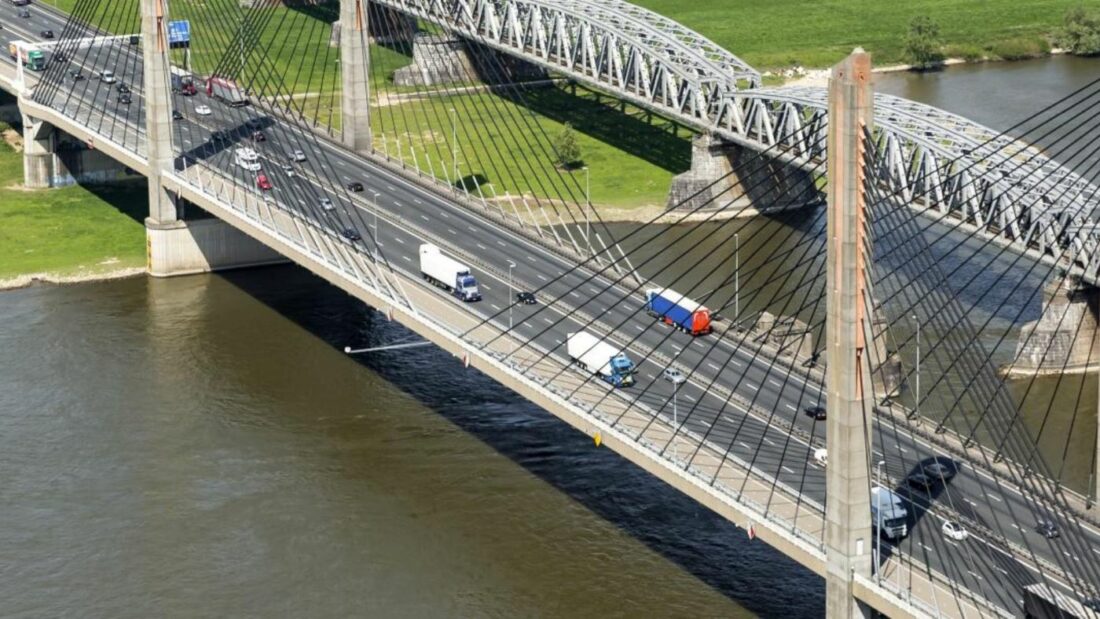 IRU, ACEA and T&E urge the European Commission to guarantee AFIF funding continuity for truck charging">

The EU faces a potential funding cliff for heavy-duty vehicle charging and hydrogen refuelling infrastructure, with industry groups calling for urgent continuity to keep the zero-emission truck transition on track.
What the appeal to the European Commission says
A coalition made up of the IRU, le ACEA et T&E has asked the European Commission to ensure uninterrupted financing for infrastructure that supports heavy-duty electric and hydrogen vehicles. They sounded the alarm that a break in funding around 2026–2027—when the current AFIF support runs out—could severely slow the deployment of zero-emission trucks just as these vehicles begin to enter the market in meaningful numbers.
Why the timing matters
Le AFIF (Infrastructure Fund for Alternative Fuels), created under the EU’s CEF Transport programme, has enabled nearly €3 billion of investment across member states, helping to extend public and depot charging, hydrogen refuelling points, grid connections and energy storage installations. With projects just gaining momentum, a gap between AFIF ending and any successor framework could create uncertainty for investors and operators alike.
The operational angle—why hauliers care
Operators are not just chasing green credentials; they need reliable, predictable charging infrastructure in depots and on routes to plan operations, control costs, and keep margins from slipping. In plain language: a truck is only as good as where you can plug it in, and for many fleets the depot charger will remain the backbone of daily operations for the foreseeable future.
Potential impacts on logistics and industry competitiveness
If funding falters, several knock-on effects could ripple through the logistics chain:
- Slower vehicle uptake — Fleets may postpone buying higher-cost zero-emission trucks if charging access is uncertain.
- Supply chain delays — Manufacturers and suppliers may slow investments along the value chain, weakening industrial momentum.
- Regional disparities — Some countries could pull ahead while others lag, fragmenting the single market for freight transport.
- Operational headaches — Limited public charging and weak depot roll-out increase range anxiety and complexity for dispatchers and planners.
Quote-style summary (neutral)
Industry leaders stress that continuity is needed now—what’s required is not hesitation but accelerated, reliable funding that covers the whole infrastructure chain: public chargers, depot connectors, grid upgrades and energy storage.
What stakeholders are asking for
The joint appeal suggests several remedial actions the Commission could take to avoid a funding gap:
- Extend AFIF or create a dedicated successor instrument ahead of the next Multiannual Financial Framework (2028).
- Mobilise alternative EU financing tools in coordination with member states to maintain momentum.
- Ensure funding covers public and depot chargers, hydrogen refuelling, grid connections and energy storage.
- Prioritise investments that align with fleet deployment cycles to avoid mismatches between infrastructure and vehicle roll-out.
Simple table: AFIF impact at a glance
| Zone | AFIF role | Risk if funding stops |
|---|---|---|
| Public charging | Co-finance station roll-out | Uneven coverage across routes |
| Depot charging | Support operator installations | Fleet investment delayed |
| Hydrogen refuelling | Seed larger stations | Slower adoption for long-haul H2 trucks |
| Grid & storage | Enable reliable daily operations | Capacity bottlenecks, higher costs |
Practical recommendations for logistics planners
If you’re running a fleet or arranging freight and dispatch, here are pragmatic steps to stay resilient:
- Map local and national infrastructure plans and match them to your route network.
- Prioritise depot electrification where you control charging schedules and costs.
- Engage with manufacturers and infrastructure providers to align purchase and construction timelines.
- Factor potential transitional costs into tendering and freight rates—some growing pains are inevitable.
Anecdote and real-talk
Anyone who’s ever scheduled a housemove or a big pallet delivery knows the pain of last-minute hiccups—now multiply that by a whole fleet and a continent, and you get the scale of the challenge. As the saying goes, “don’t put the cart before the horse”—deploy the chargers to match the trucks, not the other way around.
Forecast for logistics and final action call
On balance, the immediate global impact might be moderate: many national schemes and private investors will continue projects, but the lack of EU-level continuity risks fragmented progress and slower harmonisation across borders. That fragmentation matters for international haulage and cross-border dispatch, where consistent refuelling and charging options are vital. This issue is relevant to logistics providers and freight planners because investment certainty underpins procurement, routing and cost models. Start planning your next delivery and secure your cargo. On GetTransport.com, you can order your cargo transportation at the best prices globally at reasonable prices. Book now GetTransport.com.com
Key takeaways: industry-wide coordination and continuous funding are essential to keep the zero-emission truck transition from stalling; depot charging must be prioritised to sustain daily operations; and policy certainty will protect Europe’s freight competitiveness.
To wrap up, maintaining momentum in charging and hydrogen refuelling infrastructure is not just a political box to tick — it matters for real-world cargaison movements, daily fret operations, timely transports and predictable livraison schedules. Reliable transport infrastructure supports efficient la logistique, expédition et forwarding, reduces the risk of disrupted dispatch and enhances transport competitiveness. Platforms like GetTransport.com simplify choices for movers, couriers and freight managers by offering affordable, global solutions for office and home moves, cargo deliveries and bulky items such as furniture, vehicles and pallets—helping to translate policy and infrastructure into workable, day-to-day distribution and relocation services.