


 Français
  English (UK)
  Русский
  العربية
  日本語
日本語  한국어
한국어  Magyar
  Türkçe
  Español
  Čeština
  Svenska
  Português
  Ελληνικά
  Suomi
Suomi  Nederlands
  Română
  Italiano
  Polski
  Українська
  Deutsch
  简体中文
简体中文  Slovenčina
 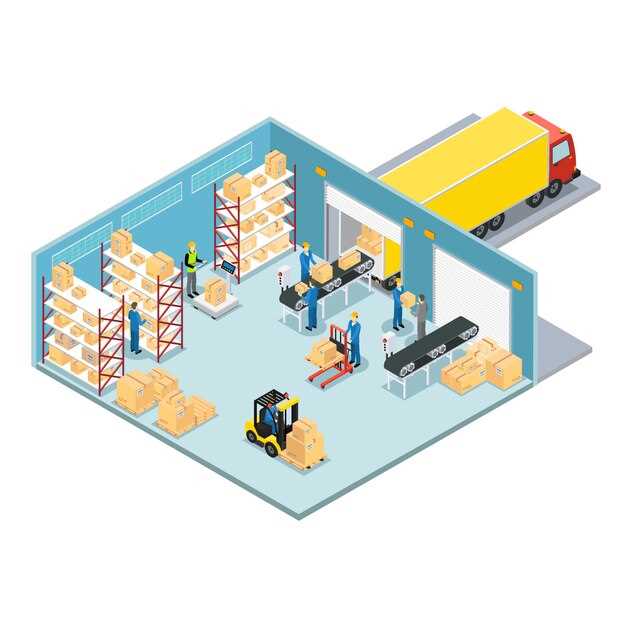 Optimisation de l'agencement des entrepôts pour les centres de distribution">

Run an 8- to 12-week pilot in one location to validate a recommended layout and confirm gains before an enterprise-wide rollout. This pilot reconfigures picking corridors, dock layouts, and storage zoning to cut travel flow by 15-25% and improve on-time picks across each shift in that site. Use a data-driven plan and capture models that you will reuse later across locations to support optimizing space and throughput.
L'effet de levier models et tech to quantify material flow and labor strain. Combine data from WMS, TMS, and ERP to generate enterprise-wide layouts that adapt to every location and seasonal demand. By simulating cycles, you can compare solutions that balance space, coûts and service levels.
Each site benefits from a mature approach that treats the layout as a living model rather than a one-off change. For every facility, map inbound and outbound flows, slotting, and cross-dock points, then test whether to combiner high-velocity SKUs with low-velocity items to reduce bottlenecks. The result: a scalable solution that grows with demand and avoids strain on workers and equipment.
Where manual routines still exist, rework standard operating procedures to orchestrate tasks across zones. Automate where feasible to reduce repetitive motion and coûts associated with errors. A well-balanced mix of manual picking with automated storage or conveyors can improve flow and free up capacity for peak periods, lowering coûts par unité.
To scale beyond a single site, treat the program as a companys-wide initiative. Align layouts with safety, labeling, and routing standards across locations. Use standardized tools and solutions that can be deployed across locations with minimal rework. This ensures repeatable results and faster learning from mature sites to newer locations.
Define a tight metric set: dock-to-stock time, pick rate per hour per zone, travel distance, and total coûts per fulfilled order. Establish a baseline, then track improvements after each iteration. The promise is clear: 10-20% faster throughput in pilot sites and 5-10% cost reductions enterprise-wide over 12 months if the program is executed with discipline.
Practical steps for layout decisions and WMS capabilities that support scalable operations
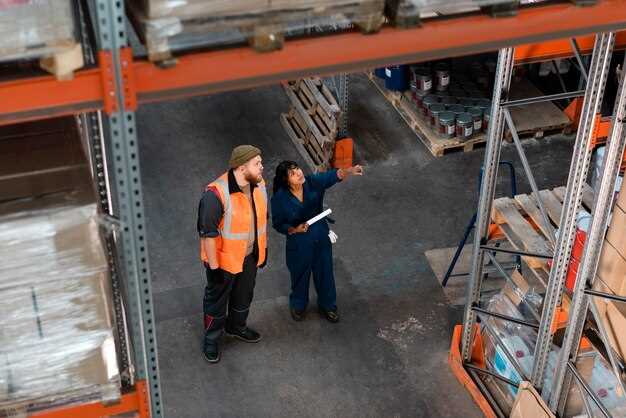
Define a zone-based layout and data-driven WMS settings that scale with throughput. Place receiving, storage, and shipping into dedicated areas with direct routes that minimize travel time for all tasks. Within each zone, set density targets and implement smarter put-away, replenishment, and cycle-checks to keep flow stable across multiple shifts.
- Layout decisions: map receiving, put-away, storage, picking, packing, and shipping as primary zones, and design routes that avoid cross-traffic. Place inbound docks outside the main picking lanes and stage parts near the point of use. Within each zone, apply density targets and dynamic slotting to support fast replenishment and high fill rates.
- WMS capabilities: choose a system with scalable workflows, support for wave and zone picking, sortation, and direct conveyorrobot control. Use grippers and automation that can connect with ames- or compatible components, to reduce manual touches and boost throughput. Ensure outside docks feed inbound and outbound flows without bottlenecks.
- Data and learning: monitor throughput, cycle times, dwell times, and route efficiency. Use simulations to test changes before implementation and institute learning loops that mature the process network across warehouses.
- Equipment and automation: specify grippers suited to your parts mix, motorized conveyors, and the conveyorrobot backbone that moves totes between zones. Validate that ames-branded or compatible grippers are compatible with your parts and that maintenance windows align with peak loads. Plan for receiving and outbound handling that minimizes wait at the dock outside.
- Implementation plan: run a phased rollout starting with a pilot in one warehouse, then expand to others. Define success metrics for each site, including target throughput uplift, cost reductions per move, and the time-to-ROI. Use this as the baseline to compare results across times and seasons.
- Governance and standards: codify standard workflows and exception handling in the WMS, maintain clean data, and run continuous training.heres the rationale: a single source of truth and disciplined change control keep the system mature as the network grows, thats how we sustain reliability.
- Operational tips: maximize density with vertical storage, use dynamic routing, and separate inbound from outbound flows. Leverage sorting with sortation capabilities to reduce handling; move items efficiently using grippers and conveyors, and keep the working surface clear of clutter so the density impact stays positive across warehouses.
Slotting by velocity, product size, and handling time
Slot by velocity, product size, and handling time to cut travel and pick times. Place high-velocity pallets on floor-level slots near the direct path to the packing area and outbound dock. Use automated sorters to pull items from floor slots toward the shipping lane, while slower, bulky items move to islands or remote bays. Maintain a higher-level view of slotting to balance workload across locations and prevent bottlenecks in the warehouse.
In software, compute a three-criteria score for each SKU: velocity based on order frequency, size class from container footprint, and average handling time from pick cycles. According to this score, assign locations: floor slots for top velocity, higher-level mid shelves for mid velocity, and islands for slow movers. Place pallets of fast items in palletizing areas near the dock to shorten cycle times; use the fleet of forklifts and automated equipment to move items along direct routes toward pack and shipping.
Layout rules and zone logic: reserve 12–15% of locations for high-velocity SKUs, with floor-level access within 12–18 meters of the pack station. Allocate 40–50% of locations to mid-velocity items on mid-level racks. Use islands for the remaining 35–40% of SKUs to minimize congestion while keeping palletizing throughput steady. Maintain clear separation between zones to reduce strain on operators and maintain smooth flow through the warehouse.
Management and performance: engage companys management to review quarterly changes and adjust slotting as demand shifts. Align with warehouse management and software analytics to optimize the slotting plan, and ensure the floor plan supports a steady ready-to-pick pace across the entire fleet. Track key metrics: times to pick, average travel distance, dock-to-palletizing time, and dock-to-ship times. By aligning slotting to velocity, product size, and handling time, the warehouse gains higher throughput and more predictable service to customers.
Dock-in and dock-out scheduling to reduce congestion
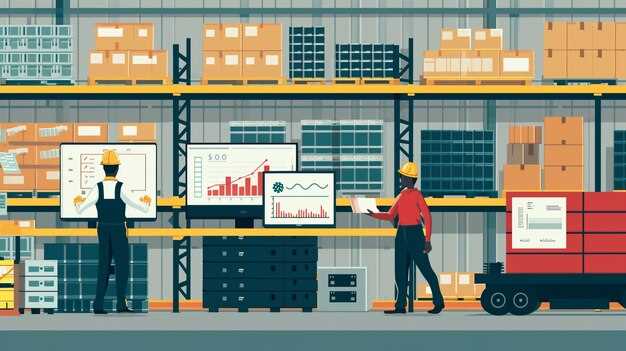
Implement fixed 15-minute dock-in and 15-minute dock-out slots, synchronized to a single master clock, with inbound and outbound work allocated to separate docks and lanes to prevent overlap and streamline the flow.
In a pilot at a 4-dock facility, queue length decreased by 40% and dock dwell time per pallet fell from 28 minutes to 16 minutes; peak-hour idling dropped about 30%, and overall cost saved around 12% due to faster turns and easier scheduling.
To implement, map current processes, define slot rules, and tie the schedule to the WMS. mecalux solutions module can push slot assignments to operators, robots, and shuttles, dynamically adjusting during the day as arrivals shift; pre-notification of 30 minutes helps planners stay ahead and saves time.
Assign inbound to docks A and B, outbound to docks C and D, and use shuttles to move material from the door to staging. Grippers on machines handle pallets efficiently, while humans supervise and adjust plans when a late arrival occurs. The same pallet flow stays continuous, reducing bottlenecks and the extra work for humans.
Key metrics include dock utilization rate, time from entry to loading/unloading, number of moves per hour, and cost per pallet. Target: achieve 20-25% more throughput per hour and cut dock dwell time by half within the first quarter after rollout. Use shuttles to cut travel distance, and make the change easy to train for operators through clear guides and simple dashboards. Focusing on human-machine collaboration yields fast gains. This plan delivers the best balance between speed and predictability.
Industry journalist coverage will highlight the company’s shift to slot-based docking and the mecalux solutions, with scalable modules for year over year growth for the company. The plan will be monitored by the operations team and reviewed annually to guide future expansions; the format will be suitable for similar centers and can be deployed with minimal disruption.
Route planning: optimized pick paths with batch and zone strategies
Implement a distinct zone-based route plan that uses batch picks to minimize travel and maximize throughput. Use a real-time routing engine that recalculates paths as orders arrive, ensuring active adjustments with minimal disruption to execution.
Key approach: batch picks in high-density zones with 4-6-item batches; this reduces walk time per item and increases value per labor hour. Most efficient path uses one or two passes per batch, moving from zone to zone with minimal backtracking. The design leverages tech that tracks picks, density, and space usage, enabling faster moves and better throughput.
Learning from previous cycles, set dynamic batch sizes by zone load. When market demand shifts, adjust batch size within 3-6 picks; this keeps density balanced and avoids congestion in boot devices or scanners. The company gains value by reducing handling steps and improving labor utilization. Vendors can use real-time dashboards to compare actual throughput against targets, and to identify bottlenecks in design and execution.
To implement: map fixed zones with boundaries; set batch sizes per zone; configure route logic to prefer shortest-path plus batch synergy; monitor real-time metrics and adjust on the fly; train labor to speed picks and reduce errors; test with pilot SKUs, then scale across market.
| Zone | Density (picks/m2) | Batch size (min-max) | Avg path length (m) | Throughput target (picks/hr) | Notes |
|---|---|---|---|---|---|
| A | 0,92 | 4-6 | 40-50 | 420 | Les personnes dynamiques sont prioritaires ; prend en charge le recalcul d'itinéraire en temps réel. |
| B | 0.78 | 3-5 | 60-70 | 360 | Densité modérée ; taille de lot ajustée pour éviter la congestion. |
| C | 0,65 | 3-5 | 75-85 | 320 | Articles en gros ; exploiter les limites de zone pour une efficacité spatiale |
Les boucles de réapprovisionnement et le réapprovisionnement continu pour maintenir le flux
Mettre en œuvre un rythme de réapprovisionnement fixe basé sur un signal piloté par les données qui déclenche le réapprovisionnement dans les zones de picking toutes les 2 à 4 heures. Cela maintient une densité élevée dans les zones de préparation, réduit les goulets d'étranglement près des couloirs d'expédition et maintient un flux régulier sur l'ensemble du réseau.
Actions clés à entreprendre dès aujourd'hui :
- Définir les déclencheurs : fixer des seuils min/max par SKU, lier le réapprovisionnement à la vélocité de la demande, aux ETA d'entrée et à la disponibilité actuelle du quai. Utiliser une vue d'ensemble pour aligner les boucles avec l'agencement afin que les palettes se déplacent vers les zones à forte demande sans s'entasser dans les allées croisées.
- Configurer la cadence et la quantité : cibler les quantités de réapprovisionnement en fonction de l’erreur de prévision et du stock de sécurité, éviter le surstock des articles lourds et diviser les réapprovisionnements en plusieurs prélèvements plus petits afin de prévenir les congestions.
- Alignement des lignes et des équipements : réapprovisionnement des itinéraires vers les voies avec des navettes et des convoyeurs ; prévoir un espace de réserve près de l'emballage et de l'expédition ; s'assurer que le rôle des machines prend en charge le déplacement rapide des palettes et des articles lourds.
- Sources de données et intégration : connectez les systèmes WMS, ERP et de cour afin d'alimenter les décisions basées sur les données ; incluez les expéditions entrantes, les vagues de commandes et la densité de prélèvement afin de réduire le gaspillage d'espace dans les allées.
- Choisir entre les options internes et externes : évaluer l'externalisation pour les périodes de pointe ; tester l'automatisation Mecalux et d'autres plateformes ; sélectionner des solutions qui minimisent les étapes de manutention et maximisent la vitesse du port à stock.
- Mesure et ajustement : suivez le taux de remplissage, la précision des stocks, le délai de réapprovisionnement et la fréquence des goulets d'étranglement ; ajustez la cadence et les quantités pour maintenir un équilibre idéal entre vitesse et utilisation de l'espace.
Dans les opérations d'aujourd'hui, la réapprovisionnement conscient de la densité réduit le temps de trajet entre les zones de préparation, de rangement et d'expédition, tout en maintenant les palettes prêtes pour les préparateurs de commandes. Des études de cas provenant d'entreprises utilisant des boucles de réapprovisionnement basées sur les données montrent des gains mesurables : moins de ruptures de stock, des passations de poste plus fluides et une meilleure utilisation des équipements lourds tels que les navettes et les convoyeurs automatisés. Les solutions Mecalux, intégrées à des systèmes tiers, ont aidé plusieurs entreprises à rationaliser les flux de réapprovisionnement et à maintenir une poussée continue des marchandises vers le chemin d'expédition idéal.
Signaux de maturité WMS : visibilité en temps réel, intégrations API et entrelacement des tâches.
Recommandez une visibilité en temps réel comme base : déployez un cockpit en direct qui extrait les données des systèmes WMS, ERP et des contrôleurs d'appareils, puis affichez des tableaux de bord qui montrent l'état des commandes, les flux de quais et l'état de santé des équipements pour les opérations d'aujourd'hui. Assurez-vous que la vue couvre l'écoulement entre les zones et utilise des indicateurs clairs pour les goulets d'étranglement afin de soutenir des décisions rapides dans l'ensemble du réseau de distribution.
Intégrations API : connecter WMS avec des robots convoyeurs et d'autres robots via REST ou des flux d'événements, permettant de sélectionner des tâches avec le contexte actuel. La création de modèles de données standardisés et d'une couche de liaison qui transmet les tâches, les statuts et les exceptions en temps réel fournit une source unique de vérité qui réduit les transferts de main et accélère les choix d'automatisation. Il devient possible de fournir une rétroaction aux boucles de contrôle, au lieu de s'appuyer sur le routage manuel, afin d'optimiser la création et la répartition des tâches dans la flotte.
Task interleaving : concevoir des règles qui mélangent les tâches humaines et robotiques afin d’optimiser l’espace et le flux. Utiliser la coordination à droite pour guider les transferts entre les opérateurs et les robots, y compris les segments convoyeur-robot et autres actifs. Cette approche permet d’optimiser la double manipulation, d’éviter les temps d’inactivité de la flotte et de maintenir un débit de distribution élevé. La configuration idéale relie les zones de sorte que lorsque l’une d’elles ralentit, le travail se redistribue dans d’autres zones, avec un minimum de perturbations et une responsabilisation claire.
Conseils opérationnels : commencez par un projet pilote dans un seul centre de distribution, mesurez la réduction des temps de cycle et les taux d'erreur, puis étendez progressivement l'adoption à l'ensemble de l'organisation. Fournir des données accessibles via API, des tableaux de bord et des alertes afin que les équipes d'aujourd'hui puissent surveiller les performances et réagir rapidement. L'endroit où vous placez les capteurs et les robots est important ; positionnez la flotte près des zones chaudes et testez une empreinte double pour valider les gains avant de passer à une mise à l'échelle. Une petite équipe ne devrait posséder le projet pilote, afin d'assurer la concentration et de réduire les risques.