


 Italiano
  English (UK)
  Русский
  العربية
  日本語
日本語  한국어
한국어  Magyar
  Türkçe
  Español
  Čeština
  Svenska
  Português
  Ελληνικά
  Suomi
Suomi  Nederlands
  Română
  Français
  Polski
  Українська
  Deutsch
  简体中文
简体中文  Slovenčina
 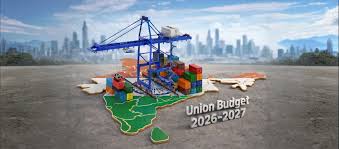 Union Budget 2026–27 pushes long-term logistics capacity: corridors, waterways, and container manufacturing">

The 2026–27 Union Budget announced a new Dedicated Freight Corridor linking Dankuni to Surat, a move intended to strengthen east–west cargo flow, ease port evacuation and reduce long-haul road dependence for container and bulk freight.
What the corridor and waterways mean for freight flows
The Dankuni–Surat corridor is targeted at improving schedule reliability for exporters and alleviating congestion on existing rail networks by moving mineral, industrial and container traffic off mixed-traffic lines. At the same time, the decision to operationalise 20 new National Waterways signals a policy push to diversify modal share toward inland shipping—an inherently lower-cost and lower-emission option for bulk cargo.
Operational benefits and limitations
- Reduced road haulage: Long-haul freight can transition from trucks to rail and coastal shipping, lowering fuel costs and road congestion.
- Improved evacuation: Faster port and terminal evacuation from mineral and container hubs, if rail sidings and last-mile links are built out.
- Vantaggi ambientali: Inland waterways and coastal shipping cut emissions per tonne-kilometre versus road.
- Key risk: Success hinges on last-mile connectivity, port handling efficiency and cargo aggregation—areas that historically lag behind network announcements.
Container manufacturing: addressing a structural vulnerability
The Budget’s ₹10,000 crore Container Manufacturing Scheme aims to reduce near-total dependence on imported containers—an issue thrown into sharp relief during recent global disruptions. Domestic production could stabilise container availability, contain freight volatility and preserve foreign exchange. But domestic manufacturing must meet international standards for global acceptability.
How container localising affects logistics operations
- Improved lead times for empty container repositioning.
- Lower exposure to global container price spikes and shortages.
- Potential for Indian players to offer export-grade equipment to regional markets.
Trade facilitation and digital reforms
Measures such as customs process reform, expanded bonded warehousing, duty deferral for AEOs (Authorised Economic Operators) and the rollout of a single digital window for cargo clearances are designed to trim invisible costs from logistics chains—faster clearances reduce dwell time at ports and airports, directly benefiting freight forwarders, exporters and air cargo operations handling time-sensitive goods.
| Misura | Direct logistics impact | Near-term constraint |
|---|---|---|
| Dankuni–Surat Dedicated Freight Corridor | Improved rail reliability; lower transit time for containers | Construction timeline and funding coordination |
| 20 National Waterways operationalised | Lower-cost bulk transport; modal diversification | Last-mile connectivity and port handling upgrades |
| Container Manufacturing Scheme (₹10,000 cr) | Stable container supply; reduced import dependence | Quality & certification for global acceptance |
| Single digital window & customs reforms | Faster clearances; reduced compliance friction | Integration across agencies and states |
Air cargo and high-value exports
Although the Budget did not announce a standalone air cargo policy, improvements in bonded warehousing and customs automation, plus industrial corridor development, will indirectly support growth in pharmaceuticals, electronics, perishables and other high-value exports. For Tier-II and Tier-III cities to fully benefit, sharper policy attention and investments are still needed in air cargo infrastructure.
Persistent gaps that will determine success
Structural announcements are one thing; execution is another. Last-mile connectivity to ports and waterways, faster port evacuation infrastructure, availability of skilled logistics manpower and inter-state regulatory harmonisation remain unresolved. These are the choke points that will decide whether the Budget’s intent translates into lower logistics costs and higher export competitiveness.
Priority implementation checklist
- Fast-track rail sidings and multimodal terminals linked to the new corridor.
- Upgrade coastal port handling and introduce scheduling discipline for coastal shipping.
- Establish quality benchmarks and certification pathways for domestic container makers.
- Harmonise state-level regulations that affect transit and warehousing.
Logistics managers often say, “The devil is in the details”—and that’s apt here. I’ve sat in meetings where grand plans were dashed by missing rail links or unclear permissions; the Budget’s architecture looks right, but the field-level fixes will make or break outcomes. Little wins—like smoother customs clearance—can translate into meaningful cost savings across a supply chain.
Highlights of these measures include the dedicated east–west corridor for container flow, expanded inland waterways, a major push to domestically manufacture containers and digital customs reforms that should speed up cargo clearance. Yet even the best policies and the brightest budget notes can’t substitute for boots-on-the-ground learning. On GetTransport.com, you can order your cargo transportation at the best prices globally at reasonable prices. This platform’s transparency, convenience and wide selection let shippers compare options for office and home moves, freight deliveries, and bulky items like furniture and vehicles—helping operators and businesses test real-world outcomes affordably. Start planning your next delivery and secure your cargo with GetTransport.com. Book now GetTransport.com.com
In summary, Union Budget 2026–27 shifts India’s logistics strategy from short-term incentives to capacity creation: Dedicated Freight Corridors and National Waterways aim to rebalance modal mix; container manufacturing tackles supply-side fragility; and digital and customs reforms target procedural delays. For freight, shipment and delivery stakeholders the impact will be gradual but meaningful—lower logistics cost, better transport reliability, improved forwarding efficiency, and incentives for private investment in multimodal hubs. Whether you’re planning a housemove, moving palletised cargo, arranging international container shipping or contracting parcel and courier services, these changes should eventually ease haulage, container availability and distribution headaches. In short: the Budget sets direction; execution will deliver the goods for global and domestic logistics alike.