


 Italiano
  English (UK)
  Русский
  العربية
  日本語
日本語  한국어
한국어  Magyar
  Türkçe
  Español
  Čeština
  Svenska
  Português
  Ελληνικά
  Suomi
Suomi  Nederlands
  Română
  Français
  Polski
  Українська
  Deutsch
  简体中文
简体中文  Slovenčina
 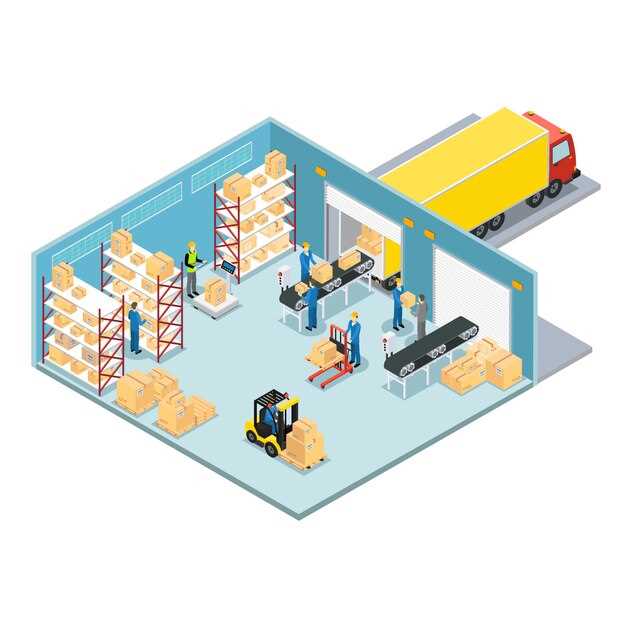 Ottimizzazione della disposizione del magazzino per centri di distribuzione">

Run an 8- to 12-week pilot in one location to validate a recommended layout and confirm gains before an enterprise-wide rollout. This pilot reconfigures picking corridors, dock layouts, and storage zoning to cut travel flow by 15-25% and improve on-time picks across each shift in that site. Use a data-driven plan and capture models that you will reuse later across locations to support optimizing space and throughput.
Leva models e tech to quantify material flow and labor strain. Combine data from WMS, TMS, and ERP to generate enterprise-wide layouts that adapt to every location and seasonal demand. By simulating cycles, you can compare soluzioni that balance space, costi and service levels.
Each site benefits from a mature approach that treats the layout as a living model rather than a one-off change. For every facility, map inbound and outbound flows, slotting, and cross-dock points, then test whether to combine high-velocity SKUs with low-velocity items to reduce bottlenecks. The result: a scalable solution that grows with demand and avoids strain on workers and equipment.
Where manual routines still exist, rework standard operating procedures to orchestrate tasks across zones. Automate where feasible to reduce repetitive motion and costi associated with errors. A well-balanced mix of manual picking with automated storage or conveyors can improve flow and free up capacity for peak periods, lowering costi per unità.
To scale beyond a single site, treat the program as a companys-wide initiative. Align layouts with safety, labeling, and routing standards across locations. Use standardized tools and soluzioni that can be deployed across locations with minimal rework. This ensures repeatable results and faster learning from mature sites to newer locations.
Define a tight metric set: dock-to-stock time, pick rate per hour per zone, travel distance, and total costi per fulfilled order. Establish a baseline, then track improvements after each iteration. The promise is clear: 10-20% faster throughput in pilot sites and 5-10% cost reductions enterprise-wide over 12 months if the program is executed with discipline.
Practical steps for layout decisions and WMS capabilities that support scalable operations
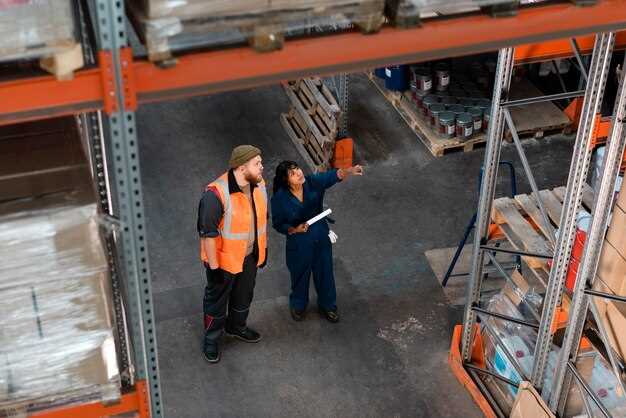
Define a zone-based layout and data-driven WMS settings that scale with throughput. Place receiving, storage, and shipping into dedicated areas with direct routes that minimize travel time for all tasks. Within each zone, set density targets and implement smarter put-away, replenishment, and cycle-checks to keep flow stable across multiple shifts.
- Layout decisions: map receiving, put-away, storage, picking, packing, and shipping as primary zones, and design routes that avoid cross-traffic. Place inbound docks outside the main picking lanes and stage parts near the point of use. Within each zone, apply density targets and dynamic slotting to support fast replenishment and high fill rates.
- WMS capabilities: choose a system with scalable workflows, support for wave and zone picking, sortation, and direct conveyorrobot control. Use grippers and automation that can connect with ames- or compatible components, to reduce manual touches and boost throughput. Ensure outside docks feed inbound and outbound flows without bottlenecks.
- Data and learning: monitor throughput, cycle times, dwell times, and route efficiency. Use simulations to test changes before implementation and institute learning loops that mature the process network across warehouses.
- Equipment and automation: specify grippers suited to your parts mix, motorized conveyors, and the conveyorrobot backbone that moves totes between zones. Validate that ames-branded or compatible grippers are compatible with your parts and that maintenance windows align with peak loads. Plan for receiving and outbound handling that minimizes wait at the dock outside.
- Implementation plan: run a phased rollout starting with a pilot in one warehouse, then expand to others. Define success metrics for each site, including target throughput uplift, cost reductions per move, and the time-to-ROI. Use this as the baseline to compare results across times and seasons.
- Governance and standards: codify standard workflows and exception handling in the WMS, maintain clean data, and run continuous training.heres the rationale: a single source of truth and disciplined change control keep the system mature as the network grows, thats how we sustain reliability.
- Operational tips: maximize density with vertical storage, use dynamic routing, and separate inbound from outbound flows. Leverage sorting with sortation capabilities to reduce handling; move items efficiently using grippers and conveyors, and keep the working surface clear of clutter so the density impact stays positive across warehouses.
Slotting by velocity, product size, and handling time
Slot by velocity, product size, and handling time to cut travel and pick times. Place high-velocity pallets on floor-level slots near the direct path to the packing area and outbound dock. Use automated sorters to pull items from floor slots toward the shipping lane, while slower, bulky items move to islands or remote bays. Maintain a higher-level view of slotting to balance workload across locations and prevent bottlenecks in the warehouse.
In software, compute a three-criteria score for each SKU: velocity based on order frequency, size class from container footprint, and average handling time from pick cycles. According to this score, assign locations: floor slots for top velocity, higher-level mid shelves for mid velocity, and islands for slow movers. Place pallets of fast items in palletizing areas near the dock to shorten cycle times; use the fleet of forklifts and automated equipment to move items along direct routes toward pack and shipping.
Layout rules and zone logic: reserve 12–15% of locations for high-velocity SKUs, with floor-level access within 12–18 meters of the pack station. Allocate 40–50% of locations to mid-velocity items on mid-level racks. Use islands for the remaining 35–40% of SKUs to minimize congestion while keeping palletizing throughput steady. Maintain clear separation between zones to reduce strain on operators and maintain smooth flow through the warehouse.
Management and performance: engage companys management to review quarterly changes and adjust slotting as demand shifts. Align with warehouse management and software analytics to optimize the slotting plan, and ensure the floor plan supports a steady ready-to-pick pace across the entire fleet. Track key metrics: times to pick, average travel distance, dock-to-palletizing time, and dock-to-ship times. By aligning slotting to velocity, product size, and handling time, the warehouse gains higher throughput and more predictable service to customers.
Dock-in and dock-out scheduling to reduce congestion

Implement fixed 15-minute dock-in and 15-minute dock-out slots, synchronized to a single master clock, with inbound and outbound work allocated to separate docks and lanes to prevent overlap and streamline the flow.
In a pilot at a 4-dock facility, queue length decreased by 40% and dock dwell time per pallet fell from 28 minutes to 16 minutes; peak-hour idling dropped about 30%, and overall cost saved around 12% due to faster turns and easier scheduling.
To implement, map current processes, define slot rules, and tie the schedule to the WMS. mecalux solutions module can push slot assignments to operators, robots, and shuttles, dynamically adjusting during the day as arrivals shift; pre-notification of 30 minutes helps planners stay ahead and saves time.
Assign inbound to docks A and B, outbound to docks C and D, and use shuttles to move material from the door to staging. Grippers on machines handle pallets efficiently, while humans supervise and adjust plans when a late arrival occurs. The same pallet flow stays continuous, reducing bottlenecks and the extra work for humans.
Key metrics include dock utilization rate, time from entry to loading/unloading, number of moves per hour, and cost per pallet. Target: achieve 20-25% more throughput per hour and cut dock dwell time by half within the first quarter after rollout. Use shuttles to cut travel distance, and make the change easy to train for operators through clear guides and simple dashboards. Focusing on human-machine collaboration yields fast gains. This plan delivers the best balance between speed and predictability.
Industry journalist coverage will highlight the company’s shift to slot-based docking and the mecalux solutions, with scalable modules for year over year growth for the company. The plan will be monitored by the operations team and reviewed annually to guide future expansions; the format will be suitable for similar centers and can be deployed with minimal disruption.
Route planning: optimized pick paths with batch and zone strategies
Implement a distinct zone-based route plan that uses batch picks to minimize travel and maximize throughput. Use a real-time routing engine that recalculates paths as orders arrive, ensuring active adjustments with minimal disruption to execution.
Key approach: batch picks in high-density zones with 4-6-item batches; this reduces walk time per item and increases value per labor hour. Most efficient path uses one or two passes per batch, moving from zone to zone with minimal backtracking. The design leverages tech that tracks picks, density, and space usage, enabling faster moves and better throughput.
Learning from previous cycles, set dynamic batch sizes by zone load. When market demand shifts, adjust batch size within 3-6 picks; this keeps density balanced and avoids congestion in boot devices or scanners. The company gains value by reducing handling steps and improving labor utilization. Vendors can use real-time dashboards to compare actual throughput against targets, and to identify bottlenecks in design and execution.
To implement: map fixed zones with boundaries; set batch sizes per zone; configure route logic to prefer shortest-path plus batch synergy; monitor real-time metrics and adjust on the fly; train labor to speed picks and reduce errors; test with pilot SKUs, then scale across market.
| Zone | Density (picks/m2) | Batch size (min-max) | Avg path length (m) | Throughput target (picks/hr) | Note |
|---|---|---|---|---|---|
| A | 0.92 | 4-6 | 40-50 | 420 | Movimenti rapidi prioritari; supporta il ricalcolo in tempo reale. |
| B | 0.78 | 3-5 | 60-70 | 360 | Densità moderata; dimensione del batch ottimizzata per evitare congestioni |
| C | 0.65 | 3-5 | 75-85 | 320 | Articoli all'ingrosso; sfruttare i confini delle zone per l'efficienza dello spazio. |
Cicli di reintegrazione e reintegrazione continua per sostenere il flusso
Implementa un ciclo di rifornimento fisso basato su un segnale guidato dai dati che attiva il riassortimento nelle zone di prelievo ogni 2–4 ore. Questo mantiene alta la densità nelle aree di preparazione, riduce i colli di bottiglia vicino alle corsie di spedizione e mantiene un flusso costante attraverso la rete.
Azioni chiave per iniziare oggi:
- Definisci i trigger: imposta le soglie min/max per SKU, collega il riassortimento alla velocità della domanda, ETA in entrata e disponibilità attuale del magazzino. Utilizza una visione di livello superiore per allineare i cicli con il layout in modo che i pallet si muovano verso le zone ad alta domanda senza accumularsi negli attraversamenti.
- Configura cadenza e quantità: definisci le quantità di reintegro in base all'errore di previsione e alle scorte di sicurezza, evita l'eccessivo stoccaggio di articoli pesanti e suddividi i reintegri in più prelievi più piccoli per prevenire la congestione.
- Allineamento di linee e attrezzature: rifornimento del percorso verso corsie con navette e nastri trasportatori; prevedere spazio di riserva vicino all'imballaggio e alla spedizione; assicurare che il ruolo delle macchine supporti il rapido movimento di pallet e articoli pesanti.
- Fonti dati e integrazione: connetti sistemi WMS, ERP e del piazzale per alimentare decisioni basate sui dati; includi spedizioni in entrata, ondate di ordini e densità di prelievo per ridurre lo spazio sprecato nei corridoi.
- Scegliere tra opzioni interne e di terze parti: valutare l'outsourcing per i periodi di picco; testare l'automazione Mecalux e altre piattaforme; selezionare soluzioni che minimizzino i passaggi di manipolazione e massimizzino la velocità dal dock allo stock.
- Misurazione e messa a punto: traccia fill rate, accuratezza delle scorte, tempo di ciclo di rifornimento e frequenza dei colli di bottiglia; regola cadenza e quantità per mantenere un equilibrio ideale tra velocità e utilizzo dello spazio.
Nelle operazioni odierne, il rifornimento consapevole della densità riduce i tempi di percorrenza tra le zone di stoccaggio, deposito e spedizione, mantenendo al contempo i pallet pronti per i prelevatori. Studi di caso di aziende che utilizzano cicli di rifornimento basati sui dati mostrano guadagni misurabili: meno rotture di stock, passaggi di turno più fluidi e un migliore utilizzo di attrezzature pesanti come navette e nastri trasportatori automatizzati. Le soluzioni Mecalux, integrate con sistemi di terze parti, hanno aiutato diverse aziende a semplificare i flussi di rifornimento e a sostenere una spinta continua di merci verso il percorso di spedizione ideale.
Segnali di maturità WMS: visibilità in tempo reale, integrazioni API e intercalazione delle attività
Raccomanda la visibilità in tempo reale come baseline: implementa una dashboard dal vivo che estrae dati da WMS, ERP e controller dei dispositivi, quindi visualizza dashboard che mostrano lo stato degli ordini, i flussi di carico e la salute delle attrezzature per le operazioni odierne. Assicura che la visualizzazione copra il flusso attraverso le zone e utilizzi indicatori chiari per i colli di bottiglia per supportare decisioni rapide attraverso la rete di distribuzione.
Integrazioni API: connetti WMS con robot per nastri trasportatori e altri robot tramite REST o flussi di eventi, consentendo la selezione di attività con il contesto corrente. La creazione di modelli di dati standardizzati e un livello di collegamento che passa attività, stati ed eccezioni in tempo reale fornisce un'unica fonte di verità che riduce i passaggi di consegne e accelera le scelte di automazione. Rendere possibile il feedback ai circuiti di controllo, invece di affidarsi all'instradamento manuale, in modo da poter ottimizzare le decisioni di creazione e instradamento delle attività su tutta la flotta.
Task interleaving: definire regole che mescolino i compiti umani e robotici per ottimizzare lo spazio e il flusso. Utilizzare il coordinamento con la mano destra per guidare le consegne tra operatori e robot, inclusi segmenti di robot trasportatori e altri asset. Questo approccio supporta l'ottimizzazione della doppia movimentazione, l'evitamento dei tempi di inattività della flotta e il mantenimento di un'elevata produttività della distribuzione. La configurazione ideale collega le zone in modo che, quando un'area rallenta, il lavoro rifluisce in altre zone, con una minima interruzione e una chiara responsabilità.
Linee guida operative: iniziare con un progetto pilota in un singolo centro di distribuzione, misurare la riduzione dei tempi di ciclo e i tassi di errore, e quindi espandere gradualmente all'adozione a livello aziendale. Fornire dati accessibili tramite API, dashboard e avvisi in modo che i team odierni possano monitorare le prestazioni e reagire rapidamente. Dove si posizionano sensori e robot è importante; collocare la flotta vicino alle aree ad alta intensità di lavoro e testare un'impronta doppiamente grande per convalidare i guadagni prima di passare al ridimensionamento. Solo un piccolo team dovrebbe possedere il progetto pilota, garantendo attenzione e riducendo i rischi.