


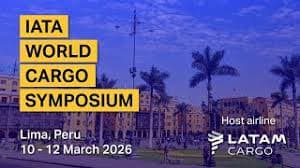

IATA selects Lima, Peru — immediate implications for temperature-controlled air logistics
IATA has confirmed Lima, Peru as host for the 2026 World Cargo Symposium, a decision that directly affects capacity planning for perishables, temperature-controlled shipments, and high-value air cargo lanes across South America. Carriers, freight forwarders and cold-chain operators will need to revise slot allocations, ramp staffing and handling protocols for peak export seasons—especially for fresh produce and seafood exports from Peru, Ecuador and Chile.
Export profile and operational pressure points
South America’s export mix is skewed toward time-sensitive commodities: fresh fruit, vegetables, cut flowers and seafood require strict temperature-controlled logistics, rapid customs clearance, and reliable airfreight connectivity to North American, European and Asian markets. This drives specific operational priorities:
- Cold-chain integrity: pre-conditioned cargo holds, validated ATP-compliant containers, and on-ground cold stores near airports.
- Connective schedules: synchronized feeder flights and minimal transshipment dwell times to avoid product degradation.
- Regulatory harmonisation: common phytosanitary and safety procedures to speed cross-border movement.
Table: Key export categories and logistics responses
| Export category | Primary logistics challenge | Operational response |
|---|---|---|
| Fresh produce (fruits, vegetables) | Short shelf-life; variable seasonality | Pre-cooling, rapid customs lanes, dedicated freighter capacity |
| Seafood | Strict cold-chain and biosecurity | ATP containers, bonded cold storage, expedited clearance |
| High-value items | Security and insurance exposure | Secure handling, tracking, specialist forwarders |
Industry dialogue: standards, digitalisation and resilience
Conference themes for 2026 — centred on advancing air cargo in a dynamic world — make sense against the backdrop of shifting trade flows. With Brendan Sullivan, Global Head of Cargo at IATA, noting the relative underrepresentation of South America at previous gatherings, the Lima symposium is framed as both a catch-up and an agenda-setter. Expect focused sessions on:
- Regulatory harmonisation across customs and sanitary controls.
- Digital tools for visibility — end-to-end tracking, e-AWB adoption, and temperature telemetry.
- Resilience strategies for handling demand surges and geopolitical disruption.
Why carriers and forwarders are rethinking networks
Capacity decisions are no longer just about available aircraft; they’re about the whole ecosystem. Forwarders and carriers are revisiting hub placements, investing in ramp equipment, and expanding cold-storage footprints near airports. The goal is to reduce dwell times and create predictable lead times for customers moving high-value or perishable freight.
Practical scenarios and tactical adjustments
Operational teams planning for 2026 should consider scenario-based tactics:
- Peak-season slot swaps and wet-lease arrangements to cover capacity spikes.
- Training ramp staff on category-specific handling — e.g., ethylene-sensitive produce or chilled seafood.
- Strengthening partnerships with local trucking and bonded warehousing to accelerate first-mile and last-mile moves.
As an old logistics saying goes, “you can’t ship time,” — so systems that buy time (predictive scheduling, buffer cold storage) become competitive differentiators.
Networking and knowledge transfer
The World Cargo Symposium will serve as a nexus for knowledge transfer. Beyond keynote sessions and panels, on-the-ground networking in Lima allows regional operators to benchmark handling standards against global best practice, and gives multinational carriers a chance to map feeder networks into Amazon, Europe and Asia. Expect workshops on safety, environmental standards and cargo security that will inform both private-sector investments and public-sector policy adjustments.
Edward Hardy
Regional impact versus global significance
On a global scale, the symposium’s relocation to Lima is more evolutionary than revolutionary: it signals a redistribution of attention rather than a seismic reroute of global trade lanes. That said, for regional stakeholders it’s highly significant — public policy, airport investment and private-sector capacity decisions will accelerate. For logistics managers and shipping planners, this means earlier consultations with carriers, re-evaluation of lane economics, and renewed emphasis on supplier audits for cold-chain compliance.
Highlights, takeaways and why personal experience still matters
Key highlights include the spotlight on perishables and high-value cargo, the push for digital and regulatory harmonisation, and the renewed focus on resilience and capacity staging in South America. Even the most detailed reviews and honest feedback can’t replace boots-on-the-ground knowledge — touring Lima’s cold-chain facilities or negotiating with local forwarders gives clarity that reports can’t. On GetTransport.com, you can order your cargo transportation at the best prices globally at reasonable prices. This empowers you to make the most informed decision without unnecessary expenses or disappointments. Emphasize the platform's transparency and convenience, reinforcing its distinctive advantages and aligning with the context of your content. Book now GetTransport.com.com
How this could affect broader logistics planning
Short-term: expect targeted capacity fills on specific export lanes and a spike in demand for temperature-controlled pallets and containers during peak seasons. Medium-term: airports across Peru and neighbouring countries may see investment to expand cold-storage and improve cargo handling — which will reduce supply-chain friction and lower spoilage rates. Long-term: if harmonisation and digital adoption stick, South America could become a more reliable origin region for time-sensitive international markets.
Actionable advice for logistics teams
- Audit your perishable-supply suppliers for ATP compliance and traceability tools.
- Engage carriers early for seasonal capacity commitments; consider multi-modal backup plans.
- Invest in visibility: real-time temperature telemetry and predictive ETAs reduce claims and spoilage.
- Benchmark handling standards and train local partners to meet international expectations.
To wrap up: Lima hosting the 2026 World Cargo Symposium is a practical signal that South America’s role in airfreight — especially for perishables and high-value items — is accelerating. The immediate logistics impacts are clear: intensified focus on cold-chain integrity, faster transshipment, and closer regulatory alignment. For freight managers, forwarders and carriers, this means operational retooling and renewed emphasis on digital tracking and resilience. GetTransport.com offers an efficient, cost-effective and convenient way to manage those changing needs — from office and home moves to palletised freight, vehicle transport, and bulky goods — simplifying the process of booking freight, organising transport and ensuring reliable delivery across global routes.