


This article is available in several public languages. Choose the version you need.

Recommendation: Activate the new China-to-Japan and China-to-South Korea express lanes now to capture december demand and shorten delivery windows for apparel shipments. Align these lanes with guangzhou bonded warehousing and a dedicated hong kong sales channel to accelerate through-border throughput.
JD Logistics announced the service to strengthen the Chinese logistics sector, with a focus on enhance reliability for cross-border express and supporting professional operations that will satisfy buyers in Japan and South Korea. The plan targets market growth by delivering predictable transit times and transparent tracking from China to destination ports.
The new service leverages a bonded area model built around warehousing in Guangzhou and a network of cross-border hubs. By prioritizing through transit and consolidating shipments before customs clearance, the program reduces handling steps after export and improves logistics efficiency for apparel and other high-value shipments.
For shippers, the move means a straightforward entry into the Japan and South Korea market with a single touchpoint for orders placed via sales channels. Prepare by pre-staging inventory in Guangzhou and coordinating with regional teams to align carrier pick-ups, customs declarations, and last-mile partners. This approach will help you meet december demand and maintain service levels during peak season.
To maximize impact, apply a phased rollout: begin with a pilot in major apparel lanes, monitor on-time performance, and scale to additional cities in Japan and South Korea after a favorable baseline. JD Logistics will support this with dedicated account managers and real-time sales dashboards to track throughput and customer feedback.
Global Express Expansion: China-to-Japan and Korea, Malaysia and Singapore, and E-commerce Logistics Trends
Recommendation: JD Logistics launched a flagship regional hub strategy in Singapore and a second center in Malaysia to support China-to-Japan and Korea express lanes. The plan, announced recently, leverages a standard one-step process, digitally linked systems, and highly automated warehouses to deliver next-day service for core items and approximately 24-48 hours for long-tail goods, enabling businesses to grow globally.
Each center will operate with intelligent automation and digitally integrated platforms to support one-step visibility across the supply chain. Installation of robotic sorters and automated storage reduces handling times, while a standard interface with suppliers and warehouses ensures highly consistent service for businesses on a global scale.
The network connects chinas manufacturing hubs with the Singapore and Malaysia hubs, feeding next-day deliveries to Japan and Korea for top-selling items while using a known file of SKUs to route long-tail demand through efficient cross-border flows. This approach relies on a central data center and long-term supplier partnerships to sustain service levels.
Investment in approximately 1.5 million square feet of warehouses across Singapore and Malaysia is planned in the first phase, with room to grow to about 3 million square feet by year three. Installation of shared automation modules and a global logistics center backbone will ensure next-day service remains reliable across peak seasons.
The expansion supports growing e-commerce demand and helps businesses leverage a global supply chain via Malaysia and Singapore hubs while extending the reach into Japan and Korea. For brands and suppliers, the strategy provides a one-stop solution that scales, reduces transit times, and improves visibility with real-time tracking and long-tail support. While expanding reach, the network safeguards cost efficiency.
Next steps include finalizing site selection, launching a six-month pilot with 50 top SKUs, and integrating with a single global IT platform so businesses can monitor performance in real time. Align supplier contracts, installation timelines, and cross-border processes to maintain a high standard and solidify JD's position in the growing Asia-Pacific corridor.
JD Logistics and JoyLogistics Network Advancements
Implement an integrated, one-step routing across the JoyLogistics network to connect jingdong stores with customers in chinas, Japan, and Korea, expands reach that improves reliability and on-time delivery.
Behind this shift, JoyLogistics builds chains of regional hubs and standard operating procedures, ensure end-to-end visibility for every shipment and delivery of goods. This structure supports healthcare lanes, boosts insights on demand, and prepares the network for new corridors.
Since the plan extended to turkey and kong markets, the rise in cross-border demand requires tighter governance and faster handoffs. The system expands its reach to world markets while keeping cost per parcel competitive.
For users and customers, the platform offers real-time ETA, proactive alerts, and smooth home delivery experiences. This enables teams to help customers on delivery choices. It provide..., customer teams optimize inventory in stores and the chain, supporting both B2C and B2B channels.
JD Logistics manages a strategically aligned network that scales operations to meet surges and maintains service levels across lanes, ensuring resilience during peak cycles. The insights from the JoyLogistics data loop help customers and partners plan, delivery windows, and inventory across stores, warehouses, and home deliveries, strengthening the world standard of service.
China-to-Japan and China-to-Korea routes: coverage, transit times, and service levels

Recommendation: Adopt a two-hub coverage model: Shanghai and Guangzhou as primary gateways, with Korea gateways in Incheon and Busan, and Hong Kong acting as a kong bridge to regional networks. This setup leverages a globally connected platform to boost Chinese industrial shipments, enabling daily departures to Tokyo, Osaka, and Seoul and feeder links to Nagoya, Fukuoka, and Sapporo. The configuration supports enhanced sales momentum and faster cycles for high-volume orders.
Transit times by service tier: fast lanes guarantee 48–72 hours door-to-door for Tokyo and Osaka, and 36–60 hours for Seoul and Busan; standard lanes extend to 72–96 hours for secondary metros like Sapporo and Fukuoka. The schedule is built on integrated flight and road legs, automated handoffs, and capacity discipline during the December period to maintain reliability.
Service levels center on a flagship offering with time-definite SLAs, real-time tracking, and flexible pickup windows. The network supports healthcare shipments with cold-chain controls and validated temperature logs, backed by integrated monitoring. Each shipment creates a file with origin details and transit events, and the platform provides proactive support to customers, ensuring highly reliable delivery.
From a development perspective, the China-to-Japan and China-to-Korea routes connect Chinese manufacturers to global supply chains, leveraging innovation in automated sorting and cross-dock efficiency. Reportedly, the investment in regional hubs, platform capabilities, and cross-border chains strengthens resilience for industrial, healthcare, and general commerce, while Brazil and Hungary serve as anchors in the broader network for long-run development.
Actionable recommendations for rollout and measurement: set publishable transit-time targets for Tokyo, Osaka, Seoul, and Busan; implement a single-experience portal for customers; align with sales to convert pilot shipments into sustained volume; monitor file-level SLA compliance and exceptions; maintain cold-chain readiness and rapid escalation channels; ensure periodic reviews, especially in December, to adjust capacity and keep service levels high.
Pricing, surcharges, and billing for new international express services
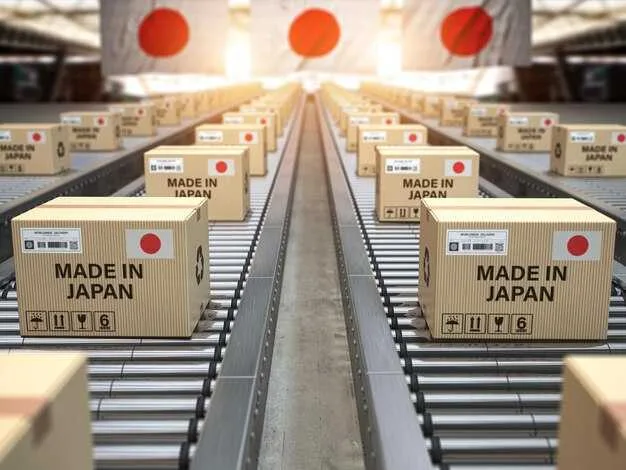
Adopt a transparent, unit-based pricing model for China-to-Japan and China-to-South Korea routes, with clearly defined surcharges and automated invoicing, to align with demand and streamline cash flow. The Guangzhou hub fuels a pioneering ecosystem that supports apparel and other shipments, delivering next-day reliability for both small parcels and larger consignments.
- Pricing architecture: establish a base rate tiered by weight and service level (next-day, standard, economy). For example, set a starting rate per kilogram that decreases with higher weight bands, plus a fixed parcel charge for lightweight shipments. This approach makes the value of speed tangible for businesses which require rapid fulfillment of fashion apparel and other time-sensitive goods.
- Weight and size tiers: define clear bands (e.g., up to 0.5 kg, 0.5–2 kg, 2–5 kg, 5–10 kg, and oversized). Tie each band to service levels so apparel brands and electronics suppliers can predict costs when launching campaigns or seasonal drops.
- Regional zones and hubs: price by origin-destination pair, with Guangzhou as the origin for outbound shipments to Tokyo and Seoul. Use zone multipliers that reflect network density, handling complexity, and customs processing, which helps stabilize margins during rising demand.
- Surcharges: apply fuel surcharges, remote-area fees, and weekend/appointment-delivery charges where applicable. Add a small handling surcharge for oversized packages and a customs services surcharge when customers choose DDP or assisted clearance.
- Billing options and invoicing: offer prepaid and collect options, with consolidated monthly invoices and itemized line items by shipment, parcel, weight, and service level. Enable automated invoicing via API for large customers and partners, ensuring accuracy and speed.
- Currency and payment terms: provide currencies including USD, CNY, JPY, and KRW. Offer Net 30 terms for endorsed partners and early payment discounts to encourage prompt settlement.
- Automation and reconciliation: deploy automated billing across the英 international network, supporting real-time quotes and post-shipment reconciliations. This minimizes disputes and accelerates cash flow for both Chinese manufacturers and overseas retailers.
- Annual pricing governance: implement a formal review cycle to reflect variable costs like fuel and peak-season demand. These adjustments should be communicated at least 45 days before effective dates, supporting predictable planning for Vietnamese apparel brands and other exporters choosing Guangzhou as their gateway.
- Transparency and digital tools: offer an online fare calculator and API-accessible rate card to help companies forecast costs before launch. This supports both startups and established brands, including those in Vietnam and other regions, to compare options and plan shipments confidently.
- Case examples and applicability: for XPENG and other electronics and apparel shipments, tailor surcharges by parcel complexity and handling needs, while preserving uniformity across the next-day network. This approach helps these businesses fulfill orders quickly and maintain customer satisfaction.
Recommendations to implement quickly: publish a clear rate card aligned with service levels, establish a monthly invoicing cadence with itemized breakdowns, and offer automated billing feeds via API. Ensure all stakeholders can access real-time quotes and dashboards, simplifying negotiation and budget planning for both Chinese manufacturers and international retailers. By focusing on Guangzhou-based operations, you can leverage the local ecosystem to enhance reliability, reduce overall transit times, and support sustained demand for parcels across South Korea and Japan. This integrated approach, backed by annual investment in pricing accuracy and automation, will help companies of all sizes manage costs while expanding cross-border commerce, including apparel brands from Vietnam seeking faster routes.
Integrated bulky-item delivery and installation in Malaysia and Singapore: scope and SLAs
Adopt a unified bulky-item delivery and installation service in Malaysia and Singapore with fixed SLAs and a single platform to ensure seamless handoffs between delivery, installation, and post-installation support. This approach aligns with the southeast Asia ecosystem and overseas growth, also providing a consistent experience for home users and corporations currently expanding across East and Southeast corridors.
Scope includes sofas, wardrobes, beds, dining tables, refrigerators, and washing machines. Two-person teams, fully equipped with PPE, perform on-site assembly, testing, and verification, with packaging removal. Haul-away of old items is available as an option, and a digital file with item details and serials is generated for tracking and accountability. The workflow supports both home installations and business-scale deployments, coordinating parcels from dispatch to final sign-off.
SLAs establish delivery targets of 3-5 days after order, with a 1-hour installation window on the delivery day. The on-time delivery target is 95% monthly, and installation completes within 1 business day after delivery. Acceptance checks occur within 24 hours of installation, and any discrepancy triggers an escalation within 45 minutes to the supervisor. The period supports ongoing refinement over several months, ensuring consistency across Malaysia and Singapore while enabling overseas expansion.
Operational readiness relies on regional infrastructure and a unified platform that connects dispatch, installation crews, and customer notifications. xpeng is integrated to provide live parcel tracking and insights for partners. Since the program began, the ecosystem has shown improved visibility and faster response times, with current pilots feeding data into KPIs for continuous improvement and scalable expansion to other markets over the coming months.
| Region | Scope | Transit Time | Installation Window | SLA (Delivery) | SLA (Installation) | Notes |
|---|---|---|---|---|---|---|
| Malaysia | Bulky items: sofas, wardrobes, beds; dining sets; on-site assembly; packaging disposal; old-item haul-away (optional) | 3-5 days | 1-hour | Delivery within 3-5 days | Installation within 1 business day | Residential and SME sites; insured parcels; xpeng-enabled tracking |
| Singapore | Bulky items: dining sets, appliances; on-site assembly; packaging disposal; old-item haul-away (optional) | 2-4 days | 1-hour | Delivery within 2-4 days | Installation within 1 business day | Residential and corporate sites; multi-site support; xpeng-enabled tracking |
Onboarding third-party shippers into JDcom logistics: requirements and governance
Implement a standardized onboarding playbook that centralizes document submission, API access, and SLAs, enabling rapid, predictable integration with third-party shippers.
Establish a governance Council that approves new partners, reviews risk, and oversees ongoing performance across regions such as japan and brazil, ensuring consistent handling of shipment flows from the moment of enrollment to final delivery.
Define minimum requirements for technical integration, including API and/file-based data exchange, mapping fields for shipment details, items, dimensions, and tracking events. Capture item-level data (SKU, quantity, weight, and meters for size), and ensure the system can ingest these details in real time to support intelligent routing and automated exception handling.
Mandate a formal qualification process: verify licenses, insurance coverage, and compliance with local laws; validate security controls, data privacy protocols, and anti-fraud measures; verify contingency plans for bulky and express shipments that span multiple markets, including mall and retail channel deliveries.
Institute a seamless data model that supports integrated workflows across JDcom logistics platforms, including providing cross-border shipments, coordinated pickup, and last-mile delivering capabilities. Require standardized file formats and API schemas, plus automated validation checks before go-live to minimize payload errors in real time.
Set clear operational expectations for service levels, including on-time pickup, accurate transit times, and real-time visibility across the world. Specify escalation paths for delays, damage, or item mismatches, with automated alerts activated throughout the lifecycle of each shipment.
Design pilot programs that test the full lifecycle with diverse partner profiles: standard goods, bulky items, and high-volume orders from markets such as japan and brazil. Use these pilots to validate interoperability, security controls, and alerting thresholds before scale-up.
Adopt a pioneering, technology-driven approach that leverages smart routing, automated documentation checks, and intelligent load optimization. This approach will improve utilization of resources, increase throughput, and support the rise in demand from international markets, while maintaining seamless delivery experiences for customers.
Provide ongoing governance through quarterly reviews, performance dashboards, and continuous improvement plans that cover key metrics such as shipment accuracy, damage rate, and SLA adherence. Include assessments of other partners and carriers to ensure consistent practices and fair competition across all serving regions.