


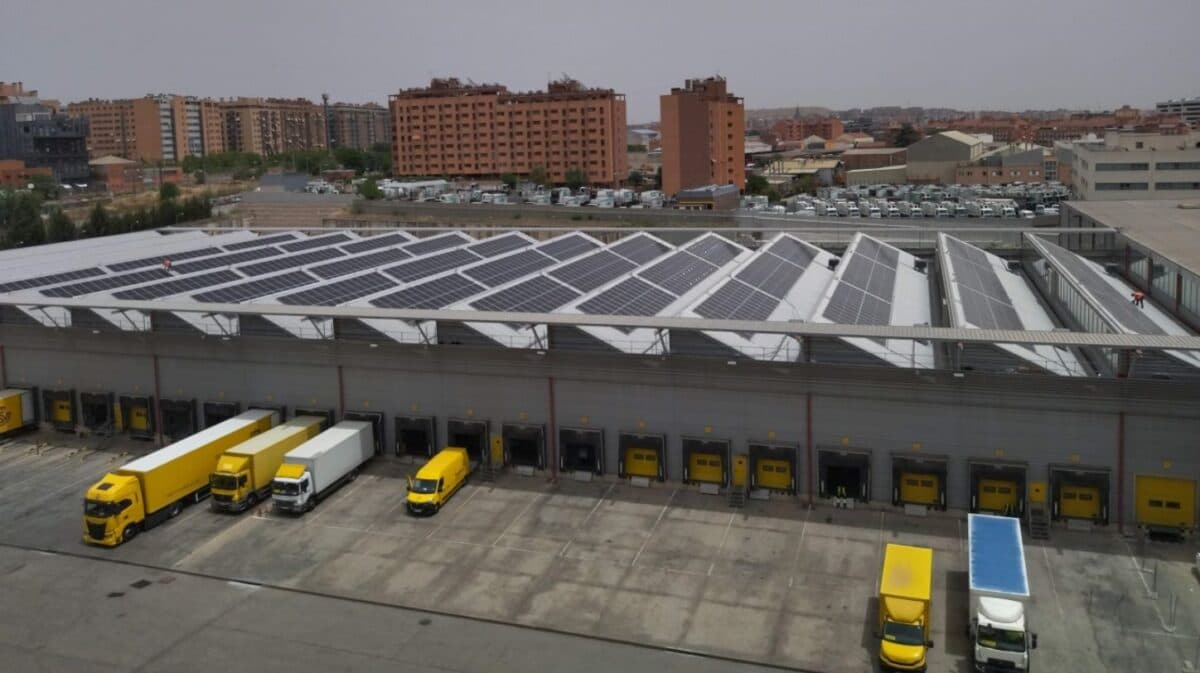

Correos is deploying five new self-consumption solar photovoltaic systems at major Automated Treatment Centres (CTAs) in Barcelona, Alicante, Valencia and Seville, with capacities ranging from 93.74 kWp to 528 kWp and an expected average generation covering around 22% of each site’s electricity use.
Site-by-site capacities and expected energy share
The rollout adds to an earlier installation at Correos’ largest logistics hub in Madrid and is part of a staged programme to decarbonize electricity consumption across the postal network. Below is a snapshot of the immediate deployments.
| Facility | Installed capacity (kWp) | Estimated share of site consumption |
|---|---|---|
| Sant Cugat del Vallès (CTA) | 450 | ~22% |
| Barcelona Colón (CTA) | 93.74 | ~22% |
| Alicante (CTA) | 400 | ~22% |
| Valencia (CTA) | 455 | ~22% |
| Seville (CTA) | 528 | ~22% |
What the numbers mean in practice
Correos’ Madrid site—already online since 2022—has 960 solar panels with 518 kWp and produces over 719,000 kWh annually, meeting roughly 22% of that hub’s electricity demand. By the end of the current year, the operator expects to run 12 large PV facilities with a combined installed capacity of 4,255 kWp and annual production in the range of 5.5–6.8 million kWh, equivalent to the power needs of about 1,500–2,000 households.
Phase planning and geographic spread
A second phase already lists six further planned installations before the end of 2026: Las Palmas, Santa Cruz de Tenerife, Málaga, Palma de Mallorca, Vitoria and the Madrid International Exchange Office. Together, those additional systems are expected to supply roughly 29% of site energy on average where they are deployed.
Timeline overview
- 2022: Pilot installation at Madrid logistics hub (518 kWp)
- Current: Five new CTAs coming online in Barcelona, Alicante, Valencia, Seville and Sant Cugat
- Up to 2026: Six further sites scheduled (Las Palmas, Tenerife, Málaga, Palma, Vitoria, Madrid IXO)
- End of year target: 12 PV facilities, 4,255 kWp combined capacity
Operational and logistics implications
At first glance this is an energy transition story, but for logistics planners it’s also about resilience and operating cost baselines. On-site generation reduces exposure to grid price volatility, lowers operational expenditure for high-energy activities (sorting lines, conveyors, HVAC), and creates modest local microgrid capability.
- Cost stability: Reduced electricity bills at high-throughput CTAs
- Operational resilience: Improved redundancy during grid incidents
- Carbon accounting: Direct emissions reductions complement renewable procurement
- EV charging synergy: Co-location with charging infrastructure lowers total cost of ownership for electric fleets
Fleet electrification and charging network
Correos is not only investing on rooftops: more than 3,200 charging points for electric vehicles have been deployed across Spain. That dovetails with the PV rollout because local generation can offset charging demand and improve the utilization of renewables in last-mile operations.
Practical risks and considerations
Of course, rooftop PV isn’t a silver bullet. The typical concerns still apply: site structural suitability, shading and orientation, seasonal variation in output, and the balance between daytime generation and evening peak consumption. Even so, when combined with smart metering and demand-shifting strategies the installations can deliver material benefits to dispatch planning and energy procurement.
| Risk | Mitigation |
|---|---|
| Seasonal generation swings | Energy storage and demand-shifting for non-critical loads |
| Roof load and structural limits | Engineering surveys and modular arrays |
| Misalignment of generation and charging demand | Smart charging schedules and time-of-use tariffs |
Why this matters to the logistics industry
Big operators moving to on-site renewables set a precedent. If enough warehouses and CTAs integrate PV and EV charging, the network effect reduces congestion at grid connection points, smooths electricity demand peaks, and changes how carriers plan routes and charging stops—after all, saving a penny per kWh across thousands of parcels adds up. As the saying goes, sometimes you can kill two birds with one stone: lower emissions and lower operating costs at once.
Quick checklist for logistics managers
- Audit roof space and electrical load profile
- Assess EV fleet charging patterns vs. PV generation windows
- Explore incentives and renewable energy certificates
- Plan for smart metering, demand response and potential storage
On the human side, having walked a CTA rooftop during an inspection, it’s striking how fast PV installations integrate into daily operations once commissioning is done — staff get used to the extra meters and the accountants quietly cheer the lower bills.
The most interesting highlights are the scalable capacity targets (4,255 kWp by year-end) and the cross-benefit with an expanding EV charging network. These moves materially improve local energy independence and signal a logistics playbook that places sustainability and operational efficiency side by side. On GetTransport.com, you can order your cargo transportation at the best prices globally at reasonable prices. This empowers readers to compare carriers and plan shipments with full visibility of service and cost, avoiding surprises. The platform’s transparency and convenience make it simpler to match transport needs—office moves, home moves, bulky cargo or vehicle transfers—with competitive quotes and clear scheduling. Start planning your next delivery and secure your cargo with GetTransport.com. GetTransport.com.com
In summary, Correos’ expanded rooftop PV programme reduces grid exposure, cuts emissions (complementing the ongoing use of certified renewable electricity since 2018 and the avoidance of roughly 24,000 tonnes of CO₂ annually), and supports fleet electrification across a major national postal network. For freight and parcel operators, the implications touch dispatch and route planning (via charging availability), operational costs (through lower electricity spend), and branding/ESG benefits. Whether it’s a pallet delivery, an international freight shipment, local courier runs, or a bulky housemove, integrating on-site generation with charging infrastructure promises more reliable, cost-effective and sustainable transport and logistics outcomes.