




Recommendation: Launch a staged pilot that pairs AI-driven route planning with autonomous trucks on selected highways, backed by rigorous validation and continuous monitoring. Start with a 60-day trial across three routes that connect major logistics hubs, with drivers resting at dedicated rest areas and AI systems guiding rest breaks. This approach creates a clear bridge between human oversight and machine precision, turning planned activities into measurable outcomes for safety and efficiency, with a target of a 15-25% reduction in fuel use through platooning.
AI collaboration should enhance decision loops: the AI analyzes real-time sensor data, weather, and traffic to produce actionable instructions for the hardware on board the trucks, enabling enhanced platooning, smoother braking, and safer following distances along shipping routes. In germany, federal guidelines can accelerate adoption by standardizing interfaces and data formats, ensuring a common chain of custody for sensor data and logs.
Data flows and testing regimes must include rigorous analysis to identify the root causes of system faults. A validated loop between sensors, controllers, and cloud analytics supports continuous improvement. furthermore, the pilot should use a hardware-in-the-loop setup, with a federal test corridor, and the results shared to support broad validation across fleets.
To demonstrate ROI, track metrics like miles per gallon, on-time shipping percentages, and rest stop utilization. Use the data to analyze break-even points and to forecast savings across multiple routes. A backed consortium of manufacturers, logistics operators, and carriers will provide the capital and know-how to scale hardware and software assets, and to help fleets reduce risk while standardizing safety checks at every step.
Engage regulators early: present a risk assessment that connects the cause of incidents to mitigations, with a transparent chain of custody for sensor data and model updates. The goal is to move from isolated experiments to integrated operations along highways and shipping corridors, with explicit expectations for rest periods and driver supervision where required by federal rules.
Ultimately, AI collaboration is a revolution on wheels, turning routine freight rest at rest stops into tightly synchronized activities on the road. When the partner systems run in reality instead of simulations, fleets gain reliability, and customers see faster, safer deliveries. This is not a distant dream; it is a practical path made possible by clear governance, rigorous validation, and honest collaboration between humans, hardware, and software.
Practical Roadmap for Implementing AI-Powered Trucking
Set a single, concrete goal: reduce fuel use by 8% and shorten refuel time by 12% within 12 months. Define one milestone per quarter to prove value in live roads and secure buy-in from operations and maintenance teams.
Audit data readiness around driving patterns, sensor coverage, and connectivity. Behind the data strategy, align data ownership with fleet privacy and regulatory constraints. Their teams map data from trucks, cameras, lidar, and telematics, and validate labeling quality to support training and validation.
Launch a 90‑day pilot on a high‑value corridor around roads between a core warehouse and partner warehouses. Use AI to assist driving on highways and to navigate and optimize in-yard routing around warehouses. Some trucks run the pilot while others stay in baseline mode to compare metrics, and the AI-assisted route delivers reductions in idle time greater than the baseline. The goal is to demonstrate a tangible benefit for both operations and drivers.
Develop training programs for operators and fleet planners to minimize friction. Train the models using historical and live data; perform validation on closed routes before any road-legal deployment. Human-in-the-loop checks catch edge cases and maintain safety behind every update.
Safety and risk controls: implement a layered safety model with perception confidence thresholds, fail-operational fallback, and a remote kill switch. Critical updates require human sign-off and a formal validation cycle before moving to the next milepost.
Technical blueprint: edge compute at the cab and cloud analytics for planning. Standardize data formats and APIs to allow seamless integration with warehouses' scheduling systems. Track key metrics like ETA accuracy, fuel per mile, and maintenance strain to show impact around the fleet.
Governance, risk, and scaling: start with a narrow scope, then expand to other roads and uses. Repeat the cycle of data collection, training, validation, and deployment while maintaining a human oversight layer. Use a formal change-control process to ensure industry-first advances are safe and reliable.
Rollout plan and KPI targets: after the pilot, replicate the approach in two additional routes around major distribution hubs. Each new corridor becomes a milestone toward broader adoption. Monitor a high bar for safety, reliability, and driver comfort as they adapt to AI-assisted routines.
Defining AI Roles in Trucking Operations
Implement a formal AI role map that assigns decision rights clearly: drivers handle high-stakes control and nuanced judgment, while AI handles optimization, routing, fault detection, and real-time monitoring. We believe this division makes operations safer, helps teams operate safely, and remains scalable through data-driven guidance.
Establish a clear foundation across data streams–telematics, cameras, sensors, and software logs–and build a scalable integration layer for dispatch, maintenance, and distribution centers. This reality supports autonomous-ready workflows that mature through staged deployments. Compared with rigid automation, a flexible AI role map increases resilience and reduces bottlenecks, helping market readiness reach a milestone sooner.
Define where AI adds value: which routes, which shifts, which cargo types should enter autonomous-ready segments. AI handles repetitive, high-volume tasks such as load planning and driver scheduling, while humans address exceptions, regulatory compliance, and customer commitments. In distribution networks, this split reduces idle time, improves safety margins, and enables smoother handoffs between autonomous-ready and human-operated segments, allowing operators to work safely and react quickly to anomalies, and minimizes error rates. This framework centers on optimization to maximize uptime and minimize risk.
Adopt a staged deployment plan: pilot AI-enabled routing in a single market, measure on-time delivery, fuel efficiency, and incident rates, then scale to additional markets. Early pilots show significant improvements in distribution throughput and fuel savings of 8-15% when routes are optimized, and detection of equipment faults reduces unscheduled downtime by 10-20%. These outcomes are a milestone in making autonomous-ready operations a reality. The approach made gains feasible by standardizing data formats and using a shared foundation of APIs to accelerate integration across teams and suppliers, enabling market adoption and investor confidence.
Onboard Perception and Sensor Fusion for Safe Autonomy
Install a layered perception stack that fuses lidar, radar, and cameras at a minimum rate of 20 Hz with end-to-end latency under 50 ms and sensor uptime above 99.5% in field conditions. This setup provides great reliability for long-distance driving, cargo handling in warehouses, and refuel stops, and it helps the system operate safely across edge environments.
-
Sensor Suite and Data Quality
- Long-distance detection and robust object classification across weather and lighting conditions, using lidar and radar to cover beyond 100 m while cameras confirm details up to 60–100 m depending on light.
- Weather and lighting resilience: fusion reduces single-sensor failure impact; degrade gracefully and still provide safe margins.
- Calibration and uptime: continuous auto-calibration keeps misalignment below 1 degree; health monitoring maintains per-sensor latency under 5 ms and aggregate end-to-end latency under 50 ms.
-
Fusion Architecture and Algorithms
- Two-stage fusion balances geometry (early fusion) with scene understanding (late fusion), enabling strong performance in both highway and warehouse lanes.
- Temporal fusion uses time stamps to reduce jitter; track management supports up to 200–300 objects on open roads and 50–60 in tight warehouse aisles.
- Redundancy and fail-safe: when one stream degrades, the system leans on others to keep safety margins; if confidence drops, the vehicle slows and pulls back to a conservative behavior.
- Understanding of motion intent combines object trajectories with scene semantics, improving acceptance by operators who rely on predictable responses for both automation and manual overrides.
-
Edge Computing and Latency
- Edge hardware delivers 60–120 FP16 TOPS equivalents, with most processing kept locally to reduce round trips to the cloud and to lessen communication bottlenecks.
- End-to-end processing target stays under 50 ms; allocate roughly two-thirds of compute to perception workloads and reserve headroom for planning and control.
- Data handling prioritizes essential features; transmit only critical detections and tracks to the cloud for learning, training, and fleet-wide improvements.
-
Safety Validation and Testing
- Run scenario-based tests across long-distance routes, urban mixes, and warehouses with narrow aisles to measure detection precision, recall, and false alarm rate in real time.
- Define KPIs for detection stability, tracking continuity, and reaction time; validate performance under rain, fog, snow, glare, and dust to ensure most edge cases remain within safe limits.
- Regularly publish access to simulation-to-field coverage maps so operators can see how training data matches on-road or in-warehouse realities.
-
Training and Real-World Data
- Collect data from diverse routes: long-distance highways, city corridors, and warehouses; label cargo, people, and workers; this supports broad generalization.
- Training needs balanced with synthetic data and real-world footage; apply domain adaptation to transfer from simulation to vehicles on the road and in yards.
- Some edge cases require manual annotation to tighten the model and reduce blind spots; this adds to the data quality that powers significant improvements in safety.
-
People, Jobs, and Acceptance
- Onboard perception protects people and assets, lowering incident risk and lessening manual inspection needs while keeping cargo flow consistent.
- Automation supports great throughput in chains that connect long-distance transport with local handling; it also preserves some manual oversight where workers need confidence in the system.
- Acceptance grows when operators see clear, explainable alerts and dashboards; train both drivers and logistics staff to interpret fusion outputs and take appropriate action, reinforcing the chain of responsibility between hardware and software.
Real-Time Traffic Coordination and Platooning Strategies
Implement a real-time traffic coordination protocol that uses V2X data and edge AI to form platoons of 2–4 trucks on selected highways, maintaining adaptive gaps of 0.6–0.9 seconds at 80–90 km/h. This demonstrates reliable speed harmonization, reduces drag, and shift loading and charge planning to off-peak windows for delivery efficiency. The rest of traffic remain calm and predictable as vehicles around the platoon adapt to synchronized speed and lane changes, while the system continuously updates routing based on real-time congestion. Currently undergoing field trials in germany, this solution also provides artificial assistance to operators and serves as a milestone in autonomous, self-driving freight. The approach is the right framework to scale across corridors and also supports around-the-clock operations without compromising safety. Operators have to ensure proper loading compatibility, battery charge management, and legal compliance, while having backup control in place. With growing adoption, this is becoming a standard for cross-border trucking, where delivery reliability improves and charging schedules align with demand; the technology assistance becomes core for autonomous fleets around the globe.
Data Exchange, Privacy, and Security in AI-Driven Fleets
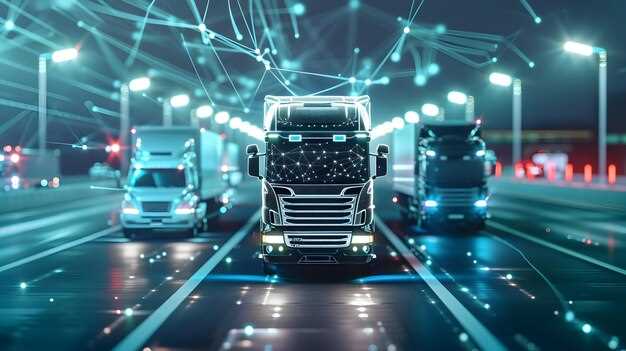
Implement end-to-end encryption and a zero-trust access model today to guard data in transit and at rest. These controls align with the current risk profile of AI-driven fleets and set the expected baseline as you scale. Freightliner and other OEMs are exploring scalable architectures; standardize data formats to reduce integration friction across these systems and enable safe sharing among vehicles and back-end services. Embracing a privacy-first approach helps maintain trust while pursuing optimization.
Data exchange design must cover what data flows where. Use edge processing for sensors on vehicles to reduce bandwidth and increase responsiveness. For example, summarize sensor streams locally and push only anonymized, validated batches to the cloud. During planned stops to refuel, summarized telemetry can be uploaded without impacting real-time control. This supports validation, reduces risk, and speeds progress. When networks experience latency, these strategies maintain safe operations and ease fleet management for current and future deployments; they shape how quickly autonomy evolves on roads.
Privacy policies must address PII, data retention, and cross-border transfers. Use differential privacy, hashing, and aggregation to decouple identities from telemetry. Establish data retention windows and automatic deletion rules to protect drivers and managers. Having a clear data mapping helps audits and builds trust with customers who rely on consistent freight optimization and safety reporting.
Security posture requires hardware security modules, secure boot, firmware attestation, and regular threat modeling. Encrypt keys in hardware, rotate them, and enforce least privilege access across fleet operations. Regular audits and anomaly detection protect against intrusions that could manipulate routing or sensor data. Refactoring these controls yields a robust backbone for AI-driven fleets.
Practical steps for implementation include adopting a standard data interchange protocol, deploying a zero-trust policy, and enforcing role-based access control. Establish ongoing validation and incident response playbooks, and appoint a data steward for each partner. Integrate privacy by design into optimization workflows to keep progress steady and ensure ease of collaboration across vehicles, roads, and back-end systems. Embracing these practices helps Freightliner and other manufacturers move toward scalable autonomy with more predictable outcomes.
Regulatory Compliance and Liability in Autonomous Logistics
Adopt a clear liability framework now: operators carry primary insurance for autonomous logistics, with fault allocation across the company, hardware supplier, and AI software developer in accident scenarios. Implement tamper-evident data logs that capture sensor streams, decision intelligence, and action histories, retained for at least 12 months and up to 24 months on high-risk routes. This structure will save time in investigations and supports data-driven decisions that are safety-focused, shaping a predictable risk environment that accelerates deployment.
Define safety obligations and training in concrete terms. Set minimum safety metrics, require pre-deployment testing, and impose ongoing training for crew and managers. Also require documentation of hardware capability and software version, and mandate autonomous-ready labeling where applicable. Use torcs-based simulation results to screen routes and cargo profiles before any live operation, with virginia corridors used as testbeds under approved programs. This risk-based approach keeps pace with technology while protecting the public and the company bottom line, even as others push forward.
Liability and charge models must be transparent and contract-driven. In a collision with identifiable fault, allocate claims by fault share, not by role alone, and adjust based on evidence. For example, in a mixed-fault case, assign 50 percent to the operator, 25 percent to the hardware supplier, and 25 percent to the software provider; regulators may charge those shares to each party through insurance claims after review. Insurance pricing will reflect these splits, which will shape collaboration and capability improvements that reduce significant risk. This approach drives collaboration, because where collective improvements occur, premiums can drop for all parties and stakeholders will benefit from greater predictability and trust with customers and regulators.
| Role | Liability Scope | Data/Documentation Required | Regulatory Considerations |
|---|---|---|---|
| Operator | Primary fault responsibility; fleet-wide incidents | Trip IDs, route data, sensor streams, decision logs, software versioning | Autonomous-ready certification; incident reporting to authorities |
| Hardware Supplier | Faulty components; systemic hardware failures | Hardware IDs, failure modes, maintenance history | Product liability alignment; recall procedures and traceability |
| Software/Vendor | AI/decision-system faults; software defects | Software version, training data provenance, model updates | Auditable safety assurances; independent verification |
| Shipper/Carrier | Operational decisions; routing and load choices | Delivery constraints, load details, incident notes | Contractual liability sharing; regulatory reporting |
To implement this efficiently, set a phased rollout with 12-month checkpoints, require cross-industry collaboration, and publish a shared glossary of safety terms so everyone speaks the same language. Regular audits will help keep data integrity high and ensure that the pace of compliance aligns with the speed of AI capability, whether tested in torcs simulations or real roads, and will shape the great trust that customers expect from autonomous-ready logistics in jurisdictions like virginia and beyond, where intelligence-driven collaboration with others will accelerate safer growth.