


 한국어
한국어  English (UK)
  Русский
  العربية
  日本語
日本語  Magyar
  Türkçe
  Español
  Čeština
  Svenska
  Português
  Ελληνικά
  Suomi
Suomi  Nederlands
  Română
  Italiano
  Français
  Polski
  Українська
  Deutsch
  简体中文
简体中文  Slovenčina
  Top 10 Trends Shaping the Future of Supply Chain Management">

Recommendation: Start by standardizing data across suppliers, plants, and logistics partners and equip frontline teams with live dashboards. This entire setup–unified data, cloud analytics, and edge-enabled sensors–will shorten decision cycles, keep stock levels aligned, and improve service across the network while you monitor performance in real time.
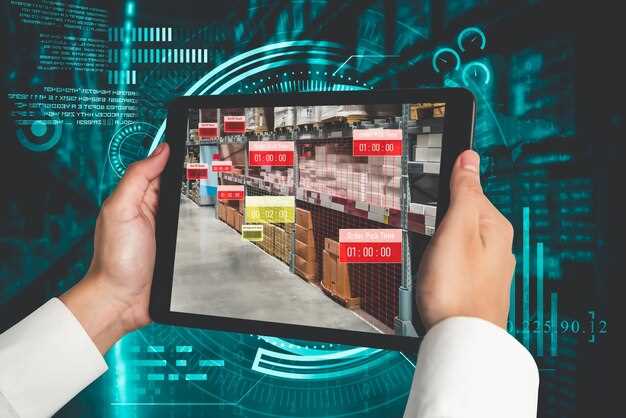
Trend 1: Real-time visibility becomes a must as sensors feed every node of the network, enabling a transition from reactive to proactive decision-making. Early pilots report 15–25% fewer stockouts and 10–20% faster responses during disruption events.
Trend 2: Resilience and risk management embed planning. Aside from cost-control goals, concerns about supplier concentration prompt scenario-based buffers and diversified sourcing, helping you absorb shocks without crippling operations. The difficult part is prioritizing where buffers matter most.
Trend 3: Automation and AI lift operations by handling routine tasks, increasing order-promising accuracy, and freeing ones on the floor to handle exceptions. In inbound logistics, accuracy gains a quarter or more and data-entry effort drops by about 60%.
Trend 4: Advanced analytics and demand sensing fuse internal data with external signals to improve reach and forecast quality. Built-in guardrails ensure you avoid overfitting and maintain good governance over models and decisions.
Trend 5: Sustainability and responsible logistics drive cost savings and risk reduction. Improved route optimization cuts fuel use and idle time, while sensors verify conditions for sensitive goods and help meet new regulatory requirements.
Resilient Supplier Networks: Multi-sourcing strategies; supplier risk scoring
Adopt a multi-sourcing framework for critical components: secure 2–3 interchangeable suppliers per item and implement a supplier risk scoring process with quarterly reviews. This approach directly reduces lack of supply during disruptions and improves deal terms on upcoming orders.
Frame a practical risk scoring model for the core network with five criteria: financial health, capacity, 납기 신뢰성, 품질및 준수. Assign weights, set a clear threshold, and trigger supplier development when scores dip below the line. A robust score helps you choose the right suppliers and reduce exposure across the supply chain.
Organizational alignment matters. Create a governance cadence about performance metrics that includes procurement, operations, risk, and finance ownership; integrate ERP and supplier portals; and publish monthly dashboards showing risk scores, spend concentration, and time-to-activate alternates. This structure lets the organization respond quickly and manage performance across the entire network.
Negotiate 맞춤형 terms that balance cost and resilience: flexible SLAs, price collars, and capacity buffers; verify environmentally standards and require ESG data as part of supplier scorecards. Identify niche suppliers, each of which provides specialized capabilities and is prevalent in the market to fill gaps when risk spikes. Build an additional deal stream for upcoming contracts so you can secure capacity without interrupting existing supply.
Market intelligence and continuous improvement: maintain ongoing 연구 about suppliers, monitor upcoming regulatory changes and supplier financials; maintain an entire risk register; use scenario planning to model supply shocks; and capture opportunities to re-balance spend toward diverse sources. This approach strengthens supply resilience and creates value across the industry supply 연쇄.
Digitalization for End-to-End Visibility: Digital twins; real-time dashboards; predictive analytics
Start by deploying a digital twin for a particular product family to gain end-to-end visibility within 90 days. Connect live data from ERP, WMS, TMS, and supplier portals; the twin models inventory, production, and transport flows and updates with events such as demand spikes, supplier delays, and quality faults to stay well-suited for real-world use. This approach makes teams less behind in decision making and builds transparency that customers can trust. We believe this approach delivers benefits across organizational and organisation levels; test cases like adblue inventory validate forecasting accuracy and demonstrate real value. Teams found that coupling the twin with live dashboards reduces blind spots and speeds the turn from insight to action. Mindfully, keep the focus on value creation and measurable improvements across the chain.
Real-time dashboards surface metrics across organisational and organisation boundaries, integrating data from suppliers, manufacturing, logistics, and customers. They highlight forecast accuracy, on-time delivery, inventory coverage, and delivery reliability, helping management see where to act. The dashboards also support understanding of the links between planning, execution, and customer service, enabling actions that reduce waste and improve profits. These uses enable mutually transparent relationships with customers and suppliers, reinforcing trust and collaboration.
Predictive analytics turn historical patterns into forward-looking insight. Models assess demand volatility, lead-time variability, and disruption probability, then simulate events to compare response options. The outputs turn into concrete actions, guiding inventory buffers, supplier agreements, and transportation choices. This collaboration between human teams and machines boosts transparency and trust, making it easier to act on the next disturbance with confidence and minimize societal impact.
Implementation steps
- Define scope and governance with management; assign data owners; set cross-functional rules to ensure mutual accountability. Ensure data quality and alignment with organisational and organisation goals.
- Build the digital twin by connecting top data streams (ERP, WMS, TMS, supplier portals) and calibrating against a handful of events; ensure the model remains scalable and well-suited for changes in demand.
- Deploy real-time dashboards that surface critical KPIs across the entire chain; train teams and ensure users have access to clear, actionable insights. Include uses that span planning, execution, and customer service.
- Run predictive analytics, validate forecasts, and implement what-if scenarios for disturbance scenarios; establish playbooks that convert insights into concrete actions. Ensure the mind of planners stays focused on value and next-best steps.
- Institutionalize the new capability: embed into planning and execution processes; foster organisational learning, and align with customers and partners to sustain benefits.
Benefits and metrics
- Reduce cycle times and inventory carrying costs by 15-25% through better planning and faster reaction to events; profits rise as service levels improve.
- Increase forecast accuracy by 10-20% and on-time delivery by 5-15% with end-to-end visibility and data quality improvements.
- Improve transparency with customers and suppliers, strengthening trust and collaboration; disturbances affect society less as stakeholders share timely information.
- Enhance understanding between nodes in the network; use lessons from particular disturbances to refine models and actions.
- Demonstrate the value of digitalization to management and organisational leadership, encouraging further investment in technologies and talent. Have data-backed evidence to justify next-budget decisions.
Nearshoring and Regional Hubs: Local sourcing; regional manufacturing; trade zone benefits; strengthening supplier ecosystems
Adopt a regional hub model by pairing local sourcing with modular manufacturing, connected through a shared 플랫폼 알겠습니다. intelligence on suppliers, capacity, and performance across markets. This 플랫폼 will enable faster responses to inflation and rising prices, beyond which you gain flexibility and resilience, while keeping green energy options in scope.
Implement a three-layer approach: near-market sourcing, regional manufacturing clusters, and streamlined trade zone processes. The approach supports existing supplier networks, adds enablers like local logistics nodes, and strengthens two-way 상호 작용 with suppliers. By clustering procurement near key markets, you achieve less exposure to disruption, cut electric power use, and reduce lead times; in some sectors, 예상되는 improvements range from 20% to 40% in delivery speed and prices stability.
Strengthen supplier ecosystems by aligning with green energy suppliers, regional distribution nodes, and a clear governance model. The system should support development of smaller regional firms, increase the share of manufacturing capacity within zones, and reduce dependence on distant suppliers. It must address 신경 and risk management in case of shocks; the plan should include supplier 상호 작용 with customers and within the cluster network. Potentially, this gives your firm a broader base of reliable partners and improves resilience.
구현 단계: 맵 existing suppliers; identify gaps; set up regional hubs with lean operations; invest in a shared 플랫폼 for procurement, quality data, and supplier development; negotiate tariff-friendly rules within a trade zone; align with local utilities to secure electric power at stable prices; create a development program to meet sustainability and quality standards. The approach helps manage inflation risk and improves performance by reducing waste and accelerating time-to-market; projected savings will vary by sector but typically include lower landed costs and improved service levels; the required capabilities include data governance and cross-border logistics.
Measurement and governance: track relevant KPIs such as on-time delivery, defect rate, and supplier responsiveness; use the system to simulate scenarios and plan for disruption. Close 상호 작용 with partners to ensure 신경 in compliance and risk management; focus on development of local capacity to handle demand peaks and unexpected shocks.
Policy Agility and Geopolitical Intelligence: Scenario planning; policy monitoring
Assign patrick as the owner of the policy monitoring playbook and assemble a cross-functional squad to deliver timely alerts on regulatory shifts, sanctions, and trade controls. Build a sense of urgency by mapping policy signals to the strategy and linking each signal to goals across procurement, production, and distribution, building a single source of truth that feeds the executive dashboard and ties every signal to a concrete goal for governance elements.
Connect several systems–ERP, WMS, TMS, supplier portals, and cloud data feeds–so signals flow to planners, buyers, and customers without delay. Use devices such as sensors and RFID tags to validate policy-driven assumptions and equip teams with real-time data. This advanced setup enables timely heat maps for risk and could accelerate the transition from data to action; utilise cloud analytics to strengthen resilience.
Scenario Planning Framework
Develop a four-scenario family: baseline, disruption-heavy, gradual normalization, and policy-tightening risk. Define triggers that include tariff changes, export controls, sanctions, port closures, currency volatility, weather shocks, and covid-19 policy shifts. Quantify effects on lead times, capacity, and cost, then link each scenario to concrete actions like diversifying suppliers, shifting volumes, and building capacity in nearby sites. Ensure plans address waste reduction and preserve service levels for customers while safeguarding commodity flows and maintaining strategic stock buffers.
정책 모니터링 지표

경고 발생 시점(트리거 발생 후 24시간 목표), 지리 및 상품별 범위, 중요 공급업체의 취약점 점수와 같은 지표를 통해 정책 조정 공간을 구축합니다. 기상, 정치적 위험, 항구 병목 현상을 시각화하기 위해 히트맵을 사용하고, 사료 품질을 클라우드 기반 대시보드와 연결하여 신속한 클라우드-그라운드 액션을 활성화합니다. 주간 위험 브리핑, 월간 심층 분석, 분기별 목표 및 전환 계획과의 전략적 조율을 포함하는 주기적인 업무 흐름을 만듭니다. 낭비를 줄이고 서비스 안정성을 향상시키기 위해 영역별로 두 명의 책임자를 지정하고 공개 목표 목록에 대한 결정을 기록하는 경량 거버넌스 모델을 포함합니다.
물류에서의 지속가능성과 순환성: ESG 지표; 탄소 회계; 순환 공급망
공급망 전체 배출량을 Scope 1-3로 매핑하고, 2030년까지 Scope 3 배출량을 30% 감축 목표를 설정하고, GHG 프로토콜에 따른 탄소 회계 시스템을 배포합니다. 공급업체와 ESG 데이터 공유 프레임워크를 구축하고, 핵심 지표 전반의 진행 상황을 추적하는 대시보드를 만들어 의사 결정을 지원하고 팀과 파트너 간의 책임성을 확보합니다. 이 프레임워크는 이해관계자와 더 넓은 조직과 진행 상황을 공유하는 데 도움이 됩니다.
조직 및 공급업체 전반에 걸쳐 ESG 지표를 표준화하기 위해 GHG 강도(제품 1단위당), 톤-킬로미터당 에너지 사용량, 물 위험 노출, 폐기물 재활용률과 같은 간결한 KPI 세트를 선택합니다. 데이터 품질을 높이고 추적성을 확보하며, 소매 파트너가 성과를 비교할 수 있도록 공유 형식을 통해 결과를 게시합니다. 소매 생태계의 일원이라면, 진행 상황을 보고 싶어할 것입니다.
패키징 및 제품 디자인에서의 순환성은 중요합니다. 분해 설계, 모듈식 부품, 회수 프로그램을 배포하십시오. 5년 이내에 최소 50%의 포장재를 재사용하거나 재활용하고, 재료 재사용률(MRR) 및 수명 종료 회수율을 측정하세요. 새로운 형태로 다시 짤 수 있는 양모와 같은 포장 섬유를 생각해보고 폐기물을 대체하는 가치를 창출하세요.
물류 부문의 탄소 회계는 운송 수단 및 경로별 탄소 배출에 대한 명확한 이해가 필요합니다. 차선별 탄소 예산을 사용하고, 경로를 최적화하고, 화물 통합을 통해 탄소 배출량이 적은 수단으로 전환하는 것이 가능할 때 전환합니다. 상위 SKU에 대한 전과정평가(LCA)를 개발하여 공급업체의 배출량을 파악하고 소싱 결정을 내립니다.
데이터 처리 및 아키텍처는 실시간 인사이트를 가능하게 합니다. 데이터 소스에서 데이터를 수집하고, 통합 데이터 레이크를 구축하며, 정확성을 위해 데이터 품질을 보장합니다. 처리 파이프라인과 분석을 사용하여 핫스팟을 식별하고, 배출량을 예측하며, 네트워크 설계를 즉석에서 조정하여 의사 결정이 데이터에 기반하도록 합니다.
탄력성과 인센티브: 순환 경제는 위험을 줄이고 비즈니스 가치를 창출합니다. 적절한 프로그램은 공급업체와의 관계를 강화하고, 사이클 시간을 개선하며, 폐기 비용을 절감합니다. 투명성, 적시 데이터 공유, 지속적인 개선을 보상하는 공급업체 성과표를 활용하여 조직이 더 긴 기간 동안 경쟁력을 유지하고 가치 있는 파트너십을 구축하도록 돕습니다.
시작을 위한 실질적인 단계는 다음과 같습니다. 포장 폐기물 흐름을 파악하고, 두 개의 제품군으로 역방향 물류를 시험 운영하며, 서비스 비용 변화를 정량화하고, 매월 진행 상황을 보고합니다. 고객 및 소매업체 기대에 부응하기 위해 ESG 목표에 부합하는 구매 결정을 내리고, 성공적인 시험 운영을 공급망 전체로 확장합니다.
지속 가능성과 순환 경제가 부가적인 요소가 아닌 표준이 될 때 귀중한 이점이 발생합니다. ESG 지표, 탄소 회계 및 순환 경제를 일상적인 계획에 통합함으로써 기업은 품질, 수요 점유율 및 브랜드 신뢰도를 높이는 동시에 장기적인 공급업체 및 파트너 네트워크 전체의 위험을 줄일 수 있습니다.