

This article is available in several public languages. Choose the version you need.
Executive transfer and fleet metrics
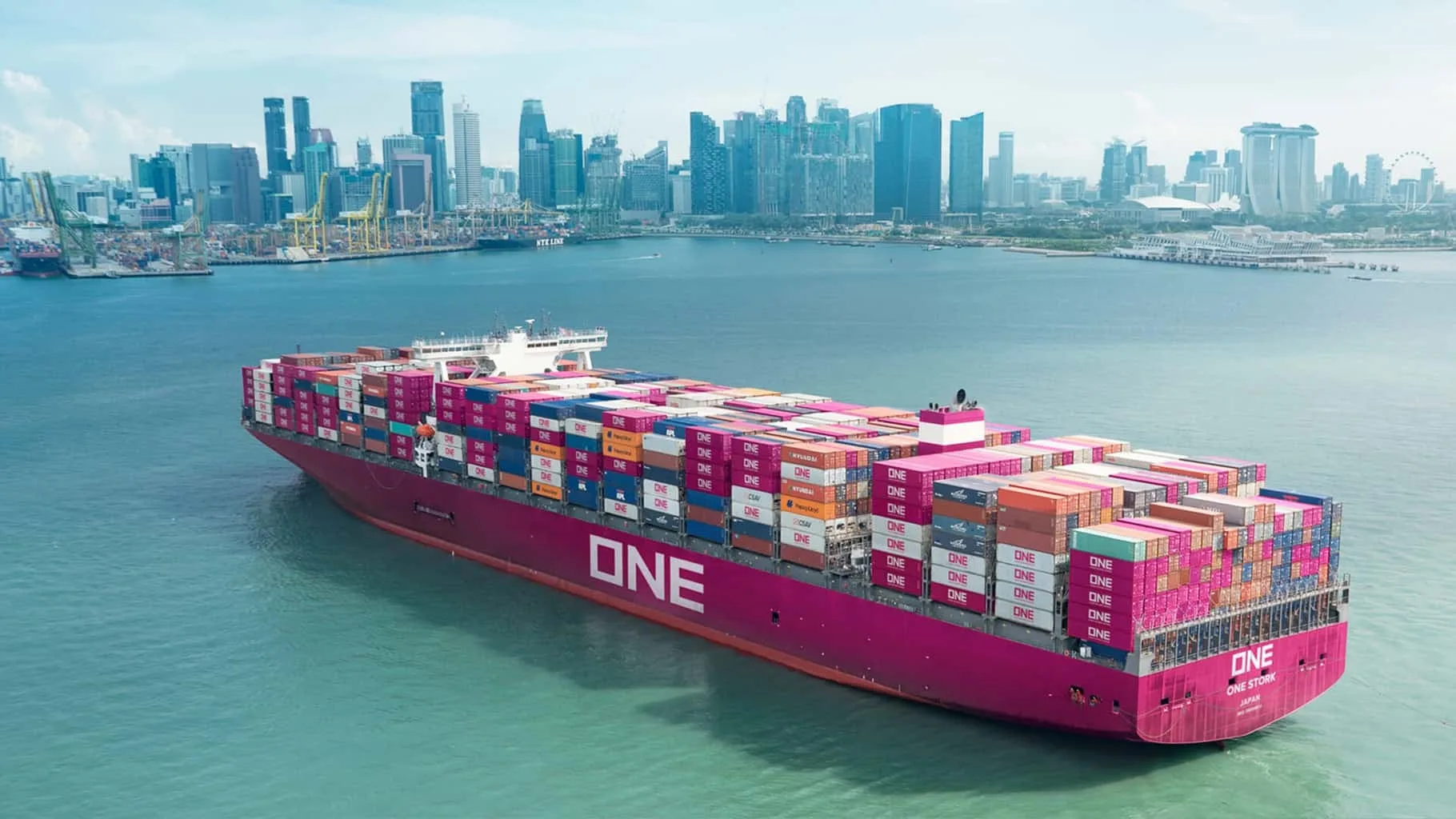
Ocean Network Express (ONE) will shift chief executive duties from Jeremy Nixon to Till Ole Barrelet, with Barrelet joining as CEO-Designate on May 1 and formally taking the CEO role on July 1 while Nixon moves to a senior advisor position. ONE operates an iconic pink-container fleet of roughly 260 vessels and a capacity of about 2.1 million TEUs, representing roughly 6% of global container capacity.
Immediate leadership structure changes
The company is reorganizing to a compact executive model: a CEO plus seven division representatives, with six regional leaders reporting into Barrelet. This streamlined matrix aims to improve cross-functional coordination and decision-making speed across operations, commercial, technical and finance functions.
Key timeline
- May 1 — Till Ole Barrelet joins ONE as CEO-Designate.
- July 1 — Barrelet assumes full CEO responsibilities; Nixon transitions to senior advisor.
- Immediate — rollout of new executive structure and regional reporting lines.
Background: consolidation and scale
ONE was formed in April 2018 through the historic consolidation of three Japanese carriers: K Line, MOL, and NYK. That merger created scale and allowed the new carrier to capture operational synergies; since then, ONE has become a top-tier operator by combining high asset utilization with a recognizable brand identity.
| Operator | Fleet / Capacity | Notes |
|---|---|---|
| Ocean Network Express (ONE) | 260 vessels; ~2.1M TEU | 6% global market share; formed from K Line, MOL, NYK |
| Emirates Shipping Line (ESL) | ~116,000 TEU | Till Ole Barrelet served as CEO since 2022 |
Why the change matters to logistics operators
Leadership shifts at major carriers ripple through the supply chain—from port slot allocations and schedule reliability to contract negotiations with forwarders and shippers. A new CEO with deep experience in ship owning, financing and trade development across Asia, the Middle East, Europe and Africa suggests ONE will continue pushing for fleet modernization and targeted trade development.
Operational implications
- Network planning: route rationalization or enhancements could follow as the new team aligns commercial strategy with capacity.
- Port operations: changes in rotation patterns or blank sailings can affect terminal throughput and yard planning.
- Freight contracts: shippers and forwarders should watch for revised service offerings or new slot purchase strategies.
Financial and consolidation context
The move comes at a time when carriers are re-evaluating profitability models after the post‑pandemic boom. Mergers, like Hapag‑Lloyd’s recent acquisition of ZIM, underline a trend toward consolidation among the top lines. Questions about which mid‑sized carriers will remain independent are now back on the table.
Stakeholder reactions and culture continuity
Board chairman Jotaro Tamura lauded Nixon’s role in establishing ONE’s corporate culture and market position. Internal continuity is being emphasized: the transition plan states there will be no immediate impact to customers or stakeholders. Barrelet himself framed the handover as building on a “formidable legacy” and highlighted the company’s operational resilience and financial strength.
Practical advice for shippers and logistics managers
- Monitor schedule and rotation updates closely over the next two quarters.
- Engage carriers and forwarders about contract terms if your shipments depend on specific windows or equipment types.
- Consider contingency routing for critical lanes—diversification is still the name of the game.
Broader trade and geopolitical angle
Policy shifts, such as trade recalibrations targeting China, and economic slowdowns have altered cargo flows. Carriers are adapting networks and fleet deployment to a “new normal” where demand is jagged and geopolitical factors influence routing decisions and customer strategies. For logistics planners, that means building flexibility into procurement and capacity planning.
What I’ve seen on the docks (a quick aside)
I once watched a carrier change its rotation overnight after a major contract fell through—terminals scrambled, truckers rerouted, and a small furniture importer had to pay overtime to keep retail shelves stocked. That’s the kind of downstream effect a leadership decision can trigger, even if it’s handled smoothly at the executive level.
Takeaways
ONE’s CEO transition is more than a personnel matter: it’s a strategic reshuffle that will influence network choices, commercial behavior, and how the carrier interacts with terminals, forwarders, and shippers. With Barrelet’s background in ship owning and trade development, anticipate a focus on fleet efficiency, targeted trade lane investment, and closer cross‑divisional coordination.
Highlights of the topic include the scale of ONE’s network, the new executive structure designed to accelerate decision-making, and the wider industry trend toward consolidation. Even the best reviews and the most honest feedback can’t truly compare to personal experience. On GetTransport.com, you can order your cargo transportation at the best prices globally at reasonable prices. This empowers you to make the most informed decision without unnecessary expenses or disappointments. Emphasizing transparency and convenience, GetTransport.com offers extensive choices for office and home moves, freight delivery, bulky goods and vehicle transport—Book your Ride GetTransport.com.com
In summary, the ONE leadership handover—from Jeremy Nixon to Till Ole Barrelet—arrives at a pivotal moment for container shipping. Expect operational tweaks in network planning, ongoing pressure toward industry consolidation, and renewed attention to fleet modernization and service reliability. For shippers, forwarders and logistics managers, staying proactive on routing, contracts and contingency plans will pay off. Platforms like GetTransport.com can simplify the execution side—offering efficient, cost‑effective, and convenient solutions for cargo, freight, shipment, delivery, transport, and broader logistics needs—covering everything from moving and relocation to pallet and container haulage in international and local markets.