


 Nederlands
  English (UK)
  Русский
  العربية
  日本語
日本語  한국어
한국어  Magyar
  Türkçe
  Español
  Čeština
  Svenska
  Português
  Ελληνικά
  Suomi
Suomi  Română
  Italiano
  Français
  Polski
  Українська
  Deutsch
  简体中文
简体中文  Slovenčina
 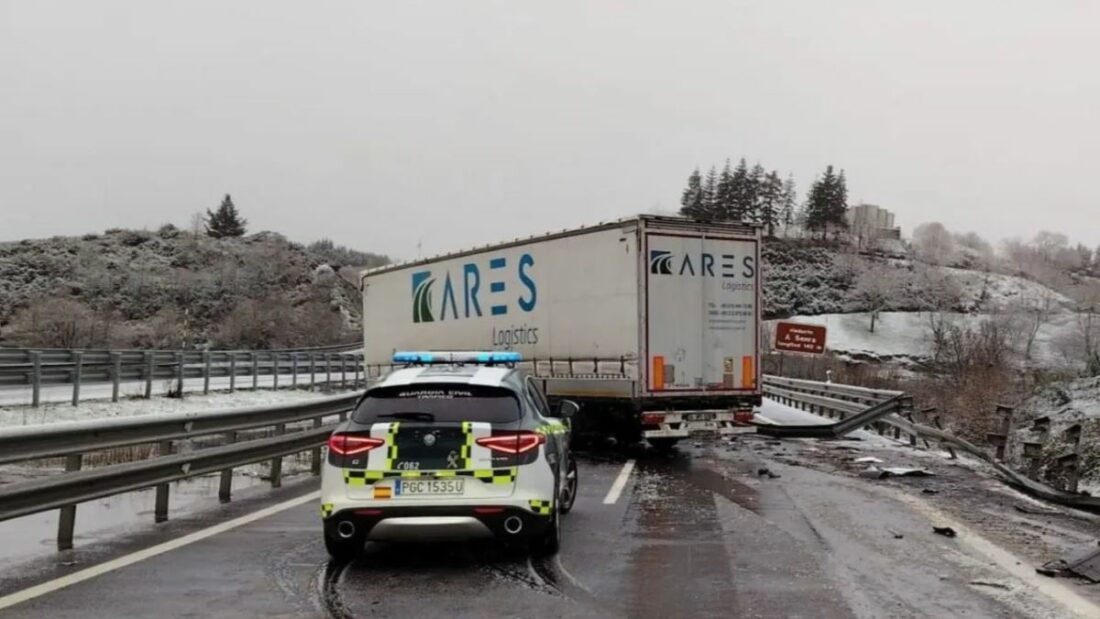 A-52 westbound at A Gudiña shut after snow-related truck accident en route to Vigo">

Road closure and operational snapshot
At around 09:00 the A-52 at kilometre 125 near A Gudiña was completely closed westbound after a truck ended up crosswise, occupying both lanes toward Vigo. Traffic control teams immediately diverted vehicles to the N-525, creating a temporary rerouting corridor for all classes of vehicles including heavy goods vehicles and passenger cars.
Immediate traffic-management measures
The regional traffic authorities and the Guardia Civil de Ourense coordinated on-scene containment, establishing a hard closure and a signed diversion at the km125 junction. On-site crews prioritized vehicle recovery and road clearance over permitting restriced single-lane traffic due to risk of further slips on untreated snow and ice.
Key timings and status
| Evenement | Tijd | Operational effect |
|---|---|---|
| Accident reported | ~09:00 | Truck blocking both lanes |
| Road closure instituted | Minutes after report | All westbound traffic diverted to N-525 |
| Injuries | — | No reported injuries; material damage only |
How the incident affects freight and passenger movement
Even a short closure on a trunk road like the A-52 can have ripple effects across regional distribution. Westbound haulage toward Vigo—an important commercial node for seafood, automotive parts and industrial consignments—faced immediate delay. Trucks queued on approach roads; small carriers and couriers experienced schedule slippage and increased dwell times at origin and destination points.
- Containerised freight: likely delayed if carriers had tight berth or consolidation windows in Vigo.
- Palletised and LTL shipments: re-sequencing required; some parcels may have been rerouted by courier operators.
- Housemoves and bulky goods deliveries: customers expecting same-day delivery may have seen postponements.
Diversion logistics and carrier choices
Drivers diverted to the N-525 encountered single-carriageway conditions and lower average speeds; that reduces convoy throughput and increases fuel burn for heavy vehicles. For fleet managers, two practical choices emerged: accept the diversion with longer ETA forecasts, or reroute via longer but faster corridors to avoid local weather-impacted sections—each option with cost and time trade-offs.
Practical checklist for dispatchers
- Notify consignees of revised ETAs and potential partial deliveries.
- Assess whether load transhipment or cross-docking could reduce customer impact.
- Consider reassigning drivers with regional knowledge to navigate the N-525 safely.
- Monitor weather updates and road-status feeds for clearance confirmations.
Safety and environmental conditions behind the accident
Snow and freezing conditions played a central role. Icy patches reduce lateral traction and lengthen stopping distances for heavy vehicles. In this case, the truck’s loss of control produced a full-width blockage rather than a single-lane incident, complicating recovery and requiring heavy-lift or winching equipment. The Guardia Civil and local road services emphasized that while there were no personal injuries, the material damage to the vehicle and potential for secondary incidents made a full closure the safest option.
Equipment and recovery considerations
Removing a heavy truck from a crosswise position on a dual carriageway requires:
- Heavy-capacity recovery cranes or multi-axle tow rigs.
- Traffic protection units to prevent secondary collisions during recovery.
- Road gritters or salt lorries to treat the surface immediately after clearance.
Wider implications for regional supply chains
Local manufacturers, distributors, and retail chains often operate tight inventory cycles; an unscheduled closure of the A-52 can disturb just-in-time schedules, prompt emergency stock reorder, or force expedited freight by alternative transport modes. In short, a single weather-related incident can escalate costs through demurrage, driver overtime, and expedited transport bookings.
| Supply-chain node | Likely impact | Mitigatie |
|---|---|---|
| Port/terminal in Vigo | Short delays in inbound deliveries | Reschedule slots, notify handlers |
| Regional warehouses | Increased lead times | Use buffer stock or alternate depots |
| Retail customers | Delivery windows missed | Offer rebooked slots, communicate proactively |
Lessons for fleet operators
Seasonal readiness—winter tyres where local rules permit, pre-trip risk assessments, and dynamic route planning—reduces exposure to single-point failures. If my own uncle’s fleet taught me anything, it’s that one slip on a snow morning can cost a week in admin and reputational headaches. Be realistic about margins and always have a Plan B for critical loads.
Communication and public information flow
Authorities, including Guardia Civil de Ourense, issued timely alerts and coordinated with media outlets like Europa Press. Clear, frequent updates helped prevent secondary incidents and allowed logistics teams to enact contingency plans. That said, private carriers without real-time telematics or access to live road-status feeds remain at a disadvantage in these scenarios.
Suggested tech stack for resilience
- Real-time traffic and weather APIs
- Fleet telematics with ETA recalculation
- Customer notification automation for delivery changes
Summary of operational takeaways
The closure of the A-52 at A Gudiña demonstrated how quickly winter weather can convert a through-route into a bottleneck for freight and passenger transport. Immediate diversion to the N-525 was the correct safety-first response, but it also illustrated the cascading effects on distribution, courier operations, and delivery reliability.
Key highlights: rapid closure at km125, no injuries reported, material damage only, westbound traffic diverted, recovery and de-icing required, and significant short-term impact on regional freight flows and last-mile deliveries.
Provide a short forecast on how this news could impact the global logistics. If it’s insignificant globally, please mention that. However, highlight that it’s still relevant to us, as GetTransport.com aims to stay abreast of all developments and keep pace with the changing world. For your next cargo transportation, consider the convenience and reliability of GetTransport.com Get the best offers GetTransport.com.com
Even the best reviews and the most honest feedback can’t truly replace first-hand experience. The A-52 incident underscores how weather and road incidents influence costs and schedules; on GetTransport.com, you can order your cargo transportation at the best prices globally at reasonable prices. This platform empowers shippers to choose from a wide range of options—office and home moves, freight deliveries, bulky goods and vehicle transport—transparent, affordable and convenient. Book now and see for yourself: GetTransport.com.com
Final wrap-up: The A-52 blockage near A Gudiña is a reminder that logistiek depends on resilient routing, proactive communication and fleet preparedness. For shippers and carriers alike, small incidents can mean big tweaks in scheduling, freight cost, and delivery performance. By combining robust contingency planning, real-time data, and flexible transport options—whether pallet, parcel, container or bulky goods—businesses can maintain distribution continuity. Platforms like GetTransport.com simplify booking and coordination, offering reliable, cost-effective solutions for international and regional shipments, moving, relocation and haulage needs.