


 Nederlands
  English (UK)
  Русский
  العربية
  日本語
日本語  한국어
한국어  Magyar
  Türkçe
  Español
  Čeština
  Svenska
  Português
  Ελληνικά
  Suomi
Suomi  Română
  Italiano
  Français
  Polski
  Українська
  Deutsch
  简体中文
简体中文  Slovenčina
  7 Steps to Design a Logistics Network – A Practical Guide">

Begin met een concrete aanbeveling: definieer serviceverwachtingen en breng de vraag in kaart voordat u een modus kiest. Definieer dienstverleningsniveaus voor every regio en klantsegment, en stel vervolgens verwachtingen vast voor transit tijden en vulpercentages. Ze zouden moeten zijn designed to be bekwaam van het voldoen aan de vraag met minimale inefficiënties. Overweeg de vraag per postcodegebied en groepeer volumes in several regionale clusters. Deze eerste stap helpt lower kosten door de modaliteitenmix af te stemmen op de daadwerkelijke prestaties van het vervoer. Deze gids beschrijft zeven concrete stappen voor het ontwerpen van een logistiek netwerk.
Ontwerp vervolgens de knooppunt lay-out: plaats 3–5 regionale hubs en 2–3 lokale depots per hub om te dekken every belangrijke markt. Gebruik een datagestuurd model om definiëren capaciteit, knelpunten observeren en blootleggen. inefficiënties langs inkomende en uitgaande rijstroken. Stem flows op elkaar af om te verminderen transit tijden en stel invoerbuffers in om piekvolumes te verwerken. Met cross-docking en mode mixoptimalisatie, kunt u bereiken lower voorraadniveaus en snellere aanvulling, wat van invloed is op several productfamilies parallel.
Vergelijk bij de keuze van de modus de opties voor lucht, vrachtwagen, spoor en overzee voor elke route. Stel een basismix samen om aan de expectations terwijl de kosten beheersbaar blijven. Overweeg grensoverschrijdend transit beperkingen en douanetijden; bank 2–3 scalability scenario's om de groeiende vraag te behandelen van several procent per jaar; zorg ervoor dat de technologie dynamische herroutering ondersteunt.
Model het netwerk met een lichtgewicht optimalisatie of heuristiek: kies de knooppuntrollen, voorraadstrategieën en modusallocatie die de totale kostprijs minimaliseren onder servicebeperkingen. Gebruik een planningshorizon van 2 tot 4 weken en simuleer. every verstoringsscenario: havencongestie, uitvaltijd van faciliteiten of vermindering van de capaciteit van vervoerders. Dit helpt je manage risico en doel verminderde inefficiëntie om aan te pakken in de ontwerpfase.
Bereid een gefaseerde implementatie voor: pilot in twee regio's, bewaak gedefinieerde KPI's en pas het netwerk binnen 60 dagen aan. Definieer de expectations voor servicelevels en doelstellingen om improve service; houd leverbetrouwbaarheid en orderafhandeling bij, en transit variantie. Ze zouden moeten bekwaam het voldoen aan de vraag met een kleinere activa-footprint en een strakkere voorraad.
Implementeer ten slotte een governance-cadans: evalueer het netwerk elk kwartaal, actualiseer de vraagprognoses elke maand en pas het hub-and-spoke ontwerp aan naarmate de volumes toenemen. Het resultaat moet een netwerk zijn dat: designed schaalbaar is, duidelijke kostentrajecten biedt en bekwaam van aanpassen als klant expectations evolueren. Met gedisciplineerde tracking zul je improve service en tegelijkertijd de totale kosten te verlagen en lower Vaste activa in de loop der tijd.
Concrete acties om een schaalbaar, betrouwbaar distributiesysteem vorm te geven
Breng binnen 48 uur uw huidige logistieke netwerk in kaart via een gelaagde modellering van processen op verschillende niveaus om knelpunten en capaciteitstekorten te identificeren. Leg gegevens vast over voorraad, voorraadkosten en verzonden volumes per herkomst en bestemming, en definieer beoogde serviceniveaus. Deze basislijn informeert beslissingen en ondersteunt snelle afstemming tussen teams.
- Creëer een centrale data-backbone door WMS, TMS, ERP en leveranciersfeeds aan elkaar te koppelen in één datamodel. Definieer een cross-functionele managerrol en stel nachtelijke dataverversingen in met 15-minuten alerts voor uitzonderingen. Het resultaat is snellere, consistente beslissingen en minder handmatige reconciliaties.
- Bouw een netwerkmodel met meerdere niveaus dat de herkomst-bestemmingstromen, regionale hubs, cross-dockingbanen en last-mile-opties vastlegt. Gebruik modellering om de kosten per service te vergelijken over de niveaus heen en om vast te stellen waar de transportcapaciteit moet worden verschoven. Meestal vermindert het centraliseren van de inventaris in strategische hubs de afhandelingsstappen met behoud van de service.
- Breng fulfillment-opties in kaart per productfamilie en seizoen. Stem inventarisplaatsing af op vraagsignalen over fulfillment centers en vervoerders heen; stel beleid op dat tekorten minimaliseert en opslagkosten verlaagt. Overweeg veiligheidsvoorraad aan de bron versus regionale hubs en hoe dit de doorlooptijden beïnvloedt.
- Voer geconsolideerde projecten uit om gecentraliseerde versus gedecentraliseerde opzetten te testen; kwantificeer het resultaat in serviceniveaus en kosten per order. Pas opkomende technologieën toe, zoals vraagvoorspelling en routeoptimalisatie, om behoeften te voorspellen en vervoerders te selecteren. Betrek de manager bij regelmatige beoordelingen om ervoor te zorgen dat beslissingen in lijn blijven met de strategie.
- Implementeer een pilot met Fareye real-time zichtbaarheid om verscheepte goederen van oorsprong tot klant te volgen; integreer waar mogelijk IoT-sensoren om temperatuur, vochtigheid en transittijden te monitoren. Gebruik de pilot om de nauwkeurigheid van de inventaris te valideren en de afhandeling van uitzonderingen te verbeteren.
- Bewaak de prestaties continu met dashboards die significante veranderingen in het percentage op tijd, de ordercyclustijd en de uitleveringsgraad benadrukken. Plan regelmatige beoordelingen in om bestelpunten, veiligheidsvoorraadniveaus en de mix van vervoerders aan te passen op basis van waargenomen resultaten en externe factoren.
- Schaal succesvolle patronen op en standaardiseer ze over verschillende sites met een governance playbook. Zorg ervoor dat het model flexibel blijft om opkomende signalen van vraag op te vangen en capaciteit naar behoefte te herverdelen. Deze aanpak wordt robuuster naarmate u schaalt, en u volgt ook de voorraad, doorlooptijden voor fulfillment en voorraadkosten terwijl u uitbreidt naar nieuwe regio's of productlijnen.
Stap 1: Definieer serviceniveaus, vraagpatronen en voorraaddoelstellingen
Definieer welke serviceniveaus u aanbiedt en hoe deze zich verhouden tot de voorraaddoelen in uw centra. Stel een basisleveringsgraad vast: 95% voor de meeste artikelen, 99% voor cruciale SKU's, met een plan om binnen 24-48 uur te reageren op uitzonderingen. Vertaal deze doelstellingen in budgetbeslissingen en in maatstaven voor klanttevredenheid.
- Servicelevels per artikelgroep en segment
Wijs doelstellingen toe per SKU-familie en klantsegment. Voorbeeld doelstellingen: hoge prioriteit items 99% vulling, gemiddelde prioriteit 95%, lage prioriteit 90%. Neem OTIF-statistieken en backorder tolerantie mee. Gebruik een platform om de prestaties van de verschillende centra wekelijks te monitoren en de voorraadverdeling dienovereenkomstig aan te passen. Dit zorgt ervoor dat hun centra zijn afgestemd op de verwachtingen van de klant en verhoogt de klanttevredenheid.
- Vraagpatronen en nauwkeurigheid van voorspellingen
Aggregate demand by week for each SKU and classify into base, seasonal, and promotional components. Build a thorough forecast that captures seasonality and trend. Track forecast error (MAPE or RMSE) and adjust targets monthly. Promotions and events are likely to drive demand variability, so include contingency adjustments. A data-driven forecast reduces stockouts significantly and enables replenishment to happen efficiently; you can respond quickly to shifts, becoming more responsive to changing demand and budget.
- Inventory targets and replenishment rules
Set stock targets by center: allocate safety stock to cover lead time variability and transport disruptions. ROP = LeadTimeDemand + SafetyStock; compute safety stock using Z-score for the desired service level (e.g., Z=1.65 for 95%). Example: lead time 4 days, daily demand 60 units, σDL 40 units, SS ≈ 66 units; ROP ≈ 240 + 66 = 306 units. Ensure stock is available where demand is highest; use rail where feasible to reduce transit time and boost delivery reliability. Include some buffer for spikes and cross-center transfers to keep service levels high.
- Implementation checks and performance reviews
Run quarterly audits to verify targets against actuals. Compare budget, stock turns, and customer satisfaction metrics. If performance diverges, adjust demand planning inputs and reallocate resources across centers. The result is a platform that supports proactive responses and efficient stock management.
Step 2: Map the current network: nodes, flows, and bottlenecks

Begin with mapping the current network: identify nodes, flows, and bottlenecks. Collect outputs from each node, categorize by mode (international, air, sea, road, rail, inland, and warehousing). Build a node list with capacity, processing times, and current utilization levels. For each flow, track volume, value, lead times, and delays. Use a simple data template: node_id, location, capacity, current_throughput, lead_time, delays, supplier, known_bottleneck. Apply a measure that differentiates actual vs planned performance; keep the metric updated monthly. Determine the most affecting bottlenecks by calculating impact = delay_time x frequency. Then identify which nodes or links limit speed: common bottlenecks include information gaps, capacity shortages, lengthy customs cycles, congested hinterland routes, and limited multimodal options. Map not only physical connections but information flows: order signals, shipment status, exception alerts, and settlement data. Use a geographic view to see where outputs align with demand, and flag gaps where capacity does not meet meeting demand. Look at levels of service across supplier networks: supplier nodes, production sites, distribution centers, and last-mile partners. Many networks reveal delays at ports, inland transshipment hubs, and cross-docking points; mark these on a visual map and assign a responsible owner. For technological readiness, note the tools used to collect data: ERP, WMS, TMS, geolocation, and IoT sensors; evaluate how often data is refreshed and how quickly it reflects real-time events. In an applied approach, start with a standard framework that can be used across specific product families and international routes; this ensures consistent measurement and easier comparison. After you define the current landscape, set baseline metrics: cycle time, on-time in-full rate, and freight cost per unit. Then determine where to focus improvement efforts and what outputs are needed to sustain resilience.
Step 3: Evaluate topology options: hub-and-spoke, direct shipping, and cross-docking
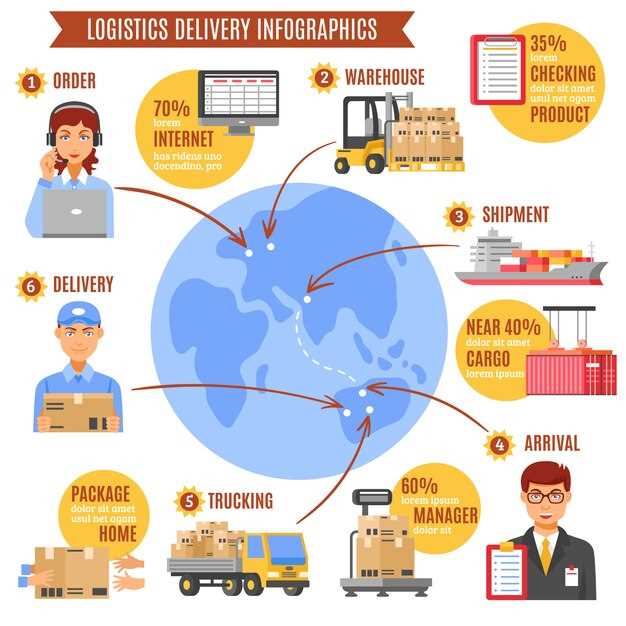
Adopt hub-and-spoke as the baseline topology for a resilient regional network; implement a central hub that aggregates inbound from manufacturers and distributes to consumer channels. This platform allows pooling shipments across modes (truck, rail, parcel) and reduces handling, improving service levels for the consumer. Plan a phased rollout with backup facilities to maintain continuity during regional disruptions.
Direct shipping works best for a lean SKU set with high demand and strict consumer delivery windows. Implement direct-to-customer shipments from manufacturer to the last mile, or via a strategic network of regional carriers. Expect cycle-time reductions of 1–3 days on long-haul routes and lower inbound handling, but higher outbound miles and unit transport costs (roughly 5–10%), unless you consolidate effectively. This topology also provides flexibility to respond to campaigns and changes in demand without the burden of a central hub, and it scales well for projects that prioritize speed to consumer.
Cross-docking reduces inventory and handling by eliminating storage in transit when inbound and outbound flows align on a predictable schedule. With solid IT and automation, you can conduct real-time scheduling to move products from receiving to shipping in the same day. Across typical portfolios, inventory holdings can drop by 60–70% versus traditional warehousing, and inbound-to-outbound lead times can improve by 40–60%, significantly boosting service velocity while cutting capital tied to stock. However, cross-docking demands reliable suppliers and frequent, synchronized shipments from manufacturers.
How to compare options: define a common set of criteria–service level, landed cost, inventory turns, and resilience to fluctuating demand–and run scenario analyses. Analyze the impact of each topology on your technology stack and measurement framework, including TMS, WMS, and OMS integrations. Conduct pilots that track measurable outcomes such as on-time delivery, damage rate, and days of inventory. Use the results to decide whether to implement the same topology across regions or tailor a mix by market, considering consumer expectations and regional constraints. For other regions with different demand patterns, a mixed topology may be optimal. This analytics-driven approach helps you balance the flexibility of direct shipments with the efficiency of hub-and-spoke or cross-dock configurations, delivering a resilient design that scales with projects and change in market conditions.
Step 4: Model costs, service levels, and risk under multiple scenarios
Build a multi-scenario cost and service model that aligns with your goals and provides informed choices. The allyn framework guides you to map fixed and variable costs across rail, road, sea, and air; capture service levels such as on-time delivery, fill rate, and damage-free performance; and quantify risk under different demand and disruption patterns.
Define at least three scenarios: baseline, demand surge, and supply disruption. For each, specify probabilities and compute costs for transport, warehousing, handling, and packaging. Track service levels and risk impacts: on-time rate, order accuracy, inventory availability, and speed-to-market.
Data inputs include cost by mode (rail, road, air, sea), transit times, holding costs, and expediting options. Frequently refresh inputs and maintain visibility across suppliers, carriers, and warehouses. Ensure the model can adapt when a key parameter changes; this requires cross-functional data ownership and clear governance.
Modeling approaches include Monte Carlo simulations and scenario trees; run 1,000+ iterations to generate expected costs, service gaps, and risk measures. Present results as ranges and probabilities to support informed decisions, not a single point estimate. Capture some results for each scenario and compare them against your goals to identify the next best option.
Determine the optimal mix of modes to meet the next goal while keeping service levels above target and limiting downside. Use sensitivity analysis to see which inputs move results most, and build in flexibility in contracts and capacity commitments. Provide actionable recommendations and the next steps for pilot and scale.
Implementation: deploy a lightweight dashboard that tracks cost per unit, on-time performance, inventory visibility, and capacity utilization by scenario. Review monthly, adjust probabilities, and streamline logistic operations to maintain seamless execution across rail, road, and other modes. This approach provides allies a clear path to improving results and keeping goods flowing smoothly.
Step 5: Develop an implementation plan with milestones, owners, and KPIs
Set the implementation plan around three workstreams: technology integration, service design, and change management, while maintaining flexibility to adapt to changing demands and dependencies.
Develop a milestone cascade with named owners and KPIs linked to analytics outputs. For each milestone, specify the owner, a target date, and the data you will use to evaluate progress.
Establish a centralized governance model with a global program office, regional leads, and a cross-functional steering committee that meets weekly; outline clear escalation paths and decision rights.
Create a communication plan that keeps customer teams aligned and provides regular updates to stakeholders. Note how you will capture feedback and translate it into actionable changes in the plan.
Getting the technology together requires validating interfaces between ERP, TMS, and WMS; while you build, maintain a living backlog, and by creating dashboards that ship real-time insights to managers and operators. Note how you will optimize processes and capture lessons learned to refine the rollout in international services.
| Milestone | Beschrijving | Owner | Timeline | KPIs | Data sources | Status |
|---|---|---|---|---|---|---|
| Milestone 1: Finalize baseline design and budget approval | Consolidate transport flows, carrier mix, and service levels; validate with international routes; align with customer requirements. | Program Manager | Week 2 | Approved budget; Baseline cost per unit; Baseline service levels defined | ERP, TMS, WMS, carrier agreements | Gepland |
| Milestone 2: Select and test technology stack | Prototype centralized analytics dashboard; test integration with TMS/ERP; set data governance. | IT Lead | Week 4 | Connectivity test success rate; Data latency; UAT score | API logs, test cases, user feedback | Gepland |
| Milestone 3: Create carrying and routing strategy | Define carrying lanes, service frequencies, carrier partners; align with customer service goals. | Network Planning Lead | Week 6 | Routing cost per mile; On-time delivery rate; Number of service levels defined | TMS, WMS, carrier scorecards | Gepland |
| Milestone 4: Pilot phase in key region(s) | Run pilot with selected carriers; collect analytics on service levels and costs; adjust plan. | Regional Ops Lead | Week 8–10 | Pilot cost vs baseline; Shipment accuracy; Customer feedback on pilot | Operations reports, feedback forms | Gepland |
| Milestone 5: Scale implementation and monitor performance | Roll out across all regions; establish automated dashboards; start continuous improvement loop. | Program Manager | Week 12+ | On-time shipping rate; Order cycle time; Deployment coverage; Analytics uptime | ERP, WMS, TMS, BI tools | Gepland |