


 Português
  English (UK)
  Русский
  العربية
  日本語
日本語  한국어
한국어  Magyar
  Türkçe
  Español
  Čeština
  Svenska
  Ελληνικά
  Suomi
Suomi  Nederlands
  Română
  Italiano
  Français
  Polski
  Українська
  Deutsch
  简体中文
简体中文  Slovenčina
 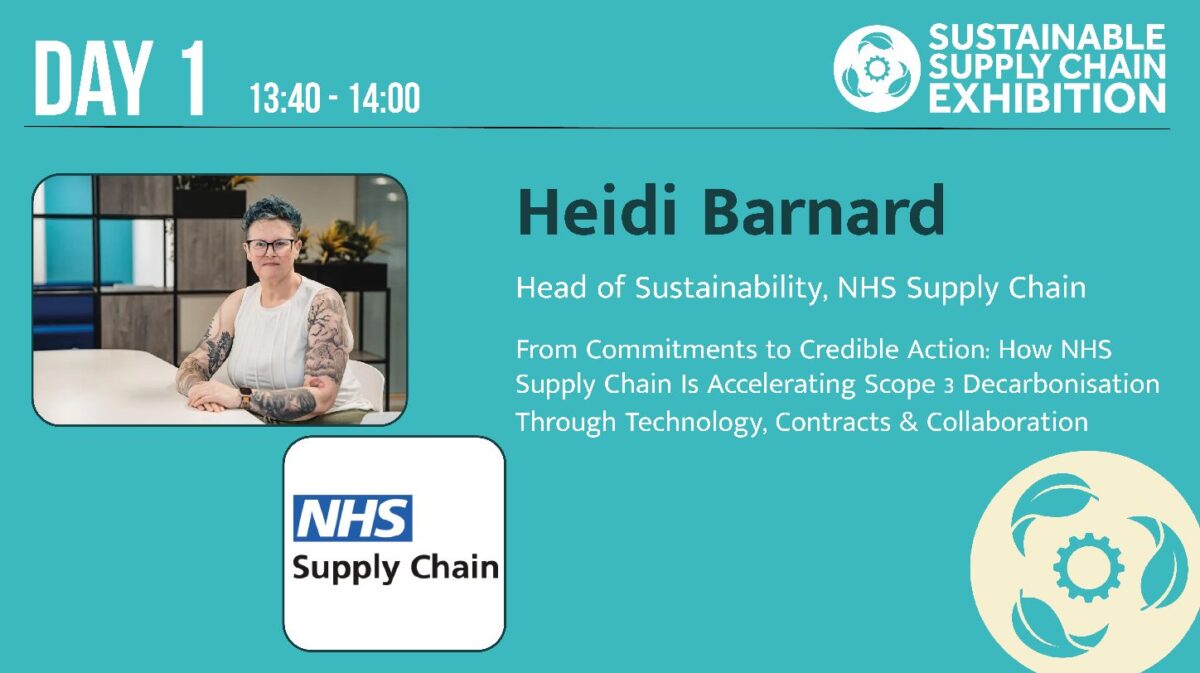 How NHS Supply Chain is turning Scope 3 commitments into operational decarbonisation">

Scope 3 roadmap and procurement levers in practice
NHS Supply Chain has signalled a clear pathway to achieve Net Zero across its supply chain by 2045, embedding stronger supplier requirements, carbon reduction plans and social value weightings directly into procurement contracts. That shift is already influencing tender documentation, logistics KPIs and 3PL performance clauses—meaning transport teams must now account for supplier-level emissions alongside traditional cost and service metrics.
Key contract and operational changes
Three practical moves are driving change: tighter disclosure and transparency requirements from suppliers, integration of Net Zero e Social Value into procurement scoring, and the adoption of digital emissions tools for reporting. These changes don’t just live on paper; they alter how carriers bid, how routes are planned and how pallets and containers are consolidated across complex, multi-tier supply chains.
Why logistics teams should care
For transport managers and 3PLs, the implication is straightforward: procurement is moving emissions into the operational domain. Route optimisation, backhauling, lifecycle analysis of packaging and digital reporting are becoming part of contract compliance. In short, decarbonisation is now a line-item in tender evaluation and day-to-day operations—so if you think it’s just about swapping fuels, think again; it’s about behaviour change, data and systems integration.
Technology, collaboration and verification: what’s actually working
When you peel back the buzzwords, three technology areas are getting real traction: digital emissions reporting, route optimisation e lifecycle insights. Combined with sustained supplier engagement and contract clauses that require verification, these tools help suppliers measure, reduce and prove carbon reductions across multiple tiers.
- Digital reporting streamlines supplier submissions and centralises emissions data for procurement and logistics teams.
- Route optimisation reduces miles and idle time, cutting both fuel use and costs—an operational win‑win.
- Lifecycle insights highlight hot spots like packaging or long-distance haulage that offer outsized reduction potential.
Table: Areas of most immediate logistics impact
| Initiative | Logistics impact | Expected benefit |
|---|---|---|
| Supplier carbon disclosure | More data collection from carriers and sub-contractors | Improved transparency and benchmarking |
| Procurement weighting for social value | Contract awards factor in delivery practices and working conditions | Long-term sector uplift and sustainable supplier base |
| Route and load optimisation tools | Changes in scheduling and consolidation | Lower fuel use, fewer vehicles in transit |
3PLs, suppliers and operationalising Net Zero
Embedding decarbonisation into contracts forces 3PLs to translate strategy into operations. That means changes to fleet mix, driver training, route schedules, packaging decisions and traceability programs. Contracts now often include specific disclosure timelines and performance metrics—so logistics providers that can demonstrate reliable emissions data, verified reductions and scalable solutions will be at the front of the queue when tenders are awarded.
Supplier engagement and capacity building
Beyond legal obligations, NHS Supply Chain is investing in systemic support: upskilling suppliers, mentoring on green procurement practices and creating incentives for low-carbon innovations. It’s the classic carrot-and-stick approach: tougher requirements plus help in meeting them. For smaller suppliers and regional carriers, this can be a steep climb, which is why collaborative initiatives are essential to avoid inadvertently shrinking the supplier pool.
Practical implications for freight and last-mile operations
On the ground, expect to see increased emphasis on consolidation, more rigorous packaging standards to avoid wasted space, and wider adoption of telematics and emission-monitoring devices. Last-mile and fulfilment operations—particularly in health care—will need to balance speed with carbon efficiency, a tricky balancing act where smart scheduling and multi-drop runs will pay dividends.
- Consolidation and pallet optimisation reduce the number of trips.
- Transit packaging choices influence both cost and carbon footprint.
- AI-driven planning tools can help identify decarbonisation opportunities in complex routings.
Real-world note (a quick anecdote)
I once watched a regional carrier halve its weekly runs simply by introducing a two-hour consolidation window—nothing dramatic, but it moved the needle. Small operational nudges like that often add up far quicker than headline technology investments.
Stakeholder communication and verifying claims
Transparency is the name of the game. Procurement teams are asking for carbon reduction plans, but they also need third-party verification and lifecycle evidence. For logistics partners, this means investing in consistent measurement methodologies and being prepared for audits. Vague pledges won’t cut it anymore; verifiable, traceable data will.
Lista de verificação para equipas de logística
- Map Scope 3 hotspots in your freight and supplier network.
- Introduce standardised emissions reporting formats for suppliers.
- Incentivise consolidation and low-carbon modal shifts where possible.
- Test route optimisation and packaging changes before full roll‑out.
Takeaway: the NHS approach reframes supplier relationships—contracts now carry operational obligations, and logistics players must adapt or risk exclusion from future work.
The Sustainable Supply Chain Exhibition at NEC Birmingham on 18–19 March 2026 will showcase many of these themes, with sessions on digitising warehouse workflows, AI as a decarbonisation tool and packaging strategies that balance cost, compliance and carbon. Attendees will find case studies and practical guidance that logistics teams can apply immediately.
Highlights: the emphasis on supplier disclosure, procurement scoring with social value, and technology that enables measurable change. Even the best reviews and the most honest feedback can’t truly compare to personal experience—seeing the tech live on the floor, talking to 3PLs and suppliers, and watching a proof-of-concept run is worth its weight in gold. On GetTransport.com, you can order your cargo transportation at the best prices globally at reasonable prices. This empowers you to make the most informed decision without unnecessary expenses or disappointments. The platform’s transparency and convenience mean you can shortlist carriers that already meet disclosure needs, compare haulage and courier options, and plan bulky or international moves with confidence. Start planning your next delivery and secure your cargo with GetTransport.com. Book now GetTransport.com.com
In summary, NHS Supply Chain’s move to accelerate Escopo 3 decarbonisation blends procurement pressure, technology rollout and supplier collaboration to reshape logistics behaviour. Freight and transport functions will feel the impact in tender requirements, operational KPIs and daily dispatch decisions. For teams managing shipments, parcels, pallets, containers or bulky goods during a housemove, relocation or routine distribution, the message is clear: align procurement, operations and data to deliver lower-carbon outcomes. Reliable shipping, forwarding and haulage partners that can demonstrate verified reductions will be favoured, and platforms like GetTransport.com simplify finding cost-effective, global options for courier, moving and international freight needs—making it easier to manage transport, logistics, delivery and dispatch without losing sight of service.