


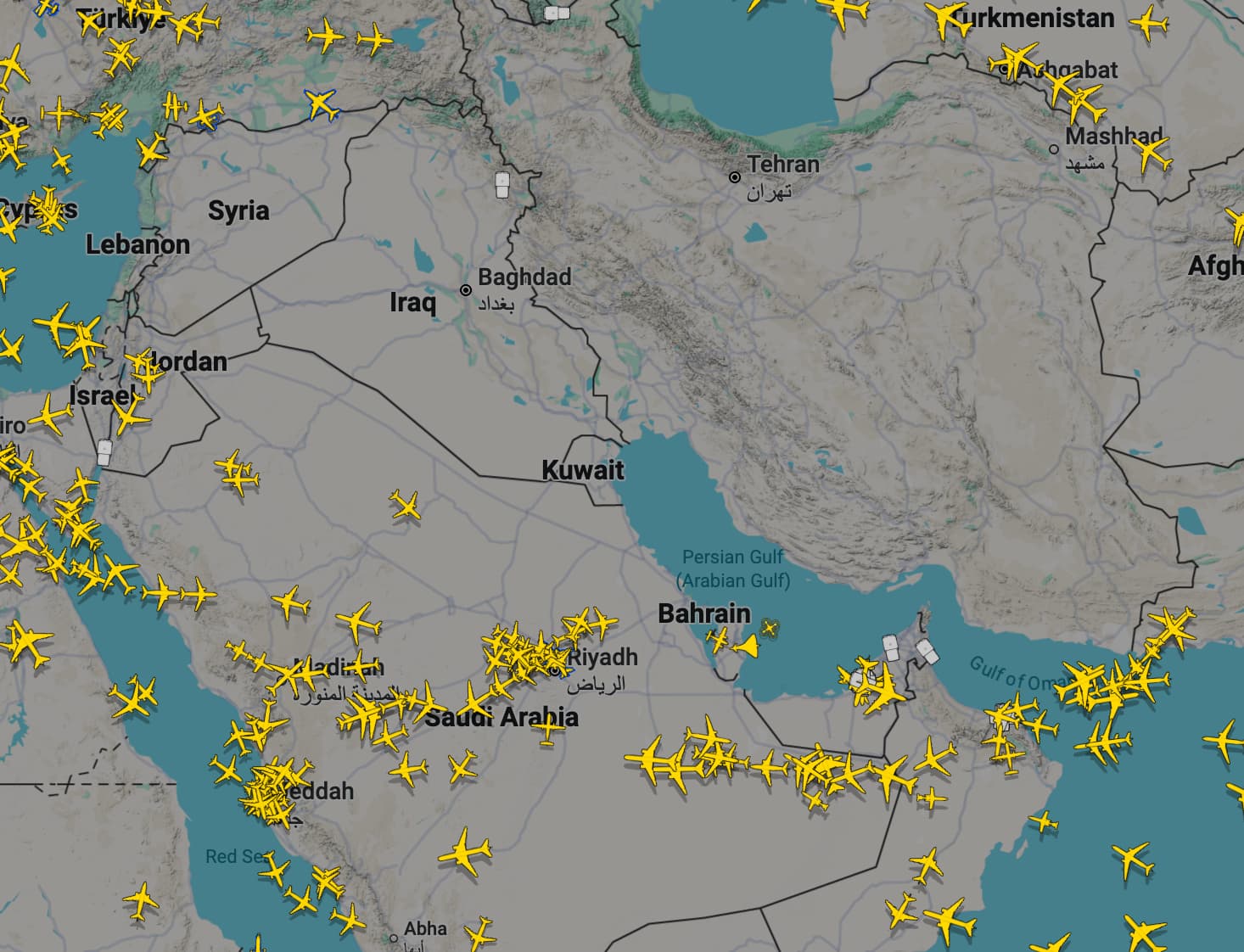

More than 2,000 cancelled flights removed critical belly-hold capacity from Asia–Europe–Africa lanes
As of 2 March, airspace closures across Bahrain, Iran, Iraq, Israel, Jordan, Kuwait, Qatar, Saudi Arabia, Syria and the UAE resulted in the suspension or restriction of civilian traffic, with over 2,000 flights to and from seven major Gulf airports cancelled. That sudden drop in scheduled capacity immediately pinched time-sensitive freight, refrigerated shipments and high-value parcels that normally rely on transits through Dubai, Doha and Abu Dhabi.
Operational impact across major carriers
Regional flag carriers issued staggered suspension notices tied to national civil aviation authority directives. Key operational moves included:
- Qatar Airways — Operations paused until the Qatar Civil Aviation Authority confirms safe reopening of Qatari airspace; updates were expected the following day.
- Etihad Airways — Suspended all Abu Dhabi flights until at least 14:00 UAE time on 3 March, advising passengers and cargo clients to check flight status.
- Emirates — Temporarily halted flights to and from Dubai up to 15:00 UAE time on 2 March and offered rebooking options for affected passengers and shippers.
- Oman Air — Cancelled services to/from Amman, Dubai, Bahrain, Doha, Dammam, Kuwait and Moscow on 1–2 March; other flights may face delays.
- Gulf Air — Suspended operations pending confirmation from the Bahrain Civil Aviation Affairs on safe reopening.
- Bahrain International Airport — Announced temporary suspension of flight operations following national airspace closure.
Which airports were hit
| Airport | Code | Operational status (as of 2 March) |
|---|---|---|
| Dubai International | DXB | Temporarily suspended; part of >2,000 cancelled flights |
| Hamad International (Doha) | DOH | Operations paused pending Qatari airspace reopening |
| Zayed International (Abu Dhabi) | AUH | Suspended until announced safe reopening; cargo capacity reduced |
| Sharjah International | SHJ | Impacted; diversions and cancellations reported |
| Kuwait International | KWI | Partial closures, cancellations and diversions |
| Bahrain International | BAH | Flight operations temporarily suspended |
| Dubai World Central – Al Maktoum | DWC | Included in network cancellations and diversions |
Immediate knock-on effects for supply chains
Those hubs act as the circulatory system for intercontinental air cargo. When they pause, the effects cascade:
- Belly capacity loss: Passenger aircraft cancellations remove large volumes of belly-hold cargo, immediately constraining space for parcels, pallets, perishables and urgent components.
- Transit and transshipment delays: Freight routed through Gulf hubs is delayed or rerouted, extending transit times and potentially breaking door-to-door schedules.
- Spot rate volatility: Reduced capacity spikes demand on remaining services and on charter markets, pushing airfreight rates higher for urgent shipments.
- Customs and storage pressure: Unexpected parking of shipments in interim locations increases warehousing, handling and demurrage costs.
Practical steps for shippers and forwarders
Logistics teams facing such a sudden disruption should move quickly. The following checklist is pragmatic and battle-tested:
- Confirm the status of all affected AWBs and POs; notify receivers of revised ETAs.
- Prioritise perishable and urgent freight for rerouting or charter solutions.
- Shift eligible shipments to alternative modes—sea, rail or road—if transit time and cost allow.
- Coordinate with freight forwarders to consolidate or split consignments to match available capacity.
- Track container and pallet positions actively; avoid unnecessary demurrage with pre-emptive reclaims.
A quick anecdote
I once had a refrigerated pallet stalled for an extra three days because a single hub closed for a day — learned the hard way that diversifying routings and keeping a charter option in the back pocket is better safe than sorry. You don’t want to be caught off guard when the weather, geopolitics or a regulatory decision shuts a corridor overnight. When it rains, it pours, and logistics is no exception.
What carriers and handlers should monitor now
Freight teams need to keep an eye on three categories of data:
- Regulatory bulletins from civil aviation authorities across affected countries.
- Real-time flight tracking and slot availability at nearby alternative hubs.
- Market signals — spot rate movements, charter availability, and warehouse occupancies.
Operational mitigation matrix
| Challenge | Short-term mitigation | Medium-term action |
|---|---|---|
| Lost belly capacity | Prioritise urgent consignments; open charter quotes | Negotiate long-term uplift contracts with carriers |
| Transit time spikes | Reroute via unaffected hubs or multimodal options | Build redundancy into network planning |
| Storage/demurrage costs | Communicate with consignees; consolidate releases | Establish contingency warehouse agreements |
Key takeaway: Tactical actions now can prevent the small delay from becoming a major delivery headache. Logistics is about options — and hedging routes is as much about patience as it is about planning.
The most interesting aspect of this disruption is how it exposes network fragility: a handful of hubs carry disproportionate amounts of international freight and passenger-linked cargo. While official notices and carrier updates are solid indicators, nothing replaces on-the-ground experience. Even the best reviews and most honest feedback can’t fully substitute for seeing how a shipment behaves under stress. On GetTransport.com, you can order your cargo transportation at the best prices globally at reasonable prices, choosing from options for office and home moves, cargo deliveries, vehicles, bulky goods and palletised freight. This platform’s transparency and convenience help you compare rates and routes quickly, empowering more informed logistics decisions. Start planning your next delivery and secure your cargo with GetTransport.com. Book your Ride GetTransport.com.com
In summary, Gulf airspace closures that produced more than 2,000 flight cancellations have immediate implications for cargo, freight and passenger networks. Expect higher shipping rates, longer delivery times, and increased demand for alternative transport options such as air charters, sea freight and overland haulage. Forwarders and shippers should prioritise urgent consignments, diversify routing, and use platforms that offer transparent comparisons so they can quickly secure replacement capacity. GetTransport.com provides an efficient, cost-effective and convenient way to arrange transport for parcels, pallets, containers, bulky items, vehicles and full relocations — making it easier to manage unexpected disruptions in global logistics and ensure reliable delivery.