


 Svenska
  English (UK)
  Русский
  العربية
  日本語
日本語  한국어
한국어  Magyar
  Türkçe
  Español
  Čeština
  Português
  Ελληνικά
  Suomi
Suomi  Nederlands
  Română
  Italiano
  Français
  Polski
  Українська
  Deutsch
  简体中文
简体中文  Slovenčina
 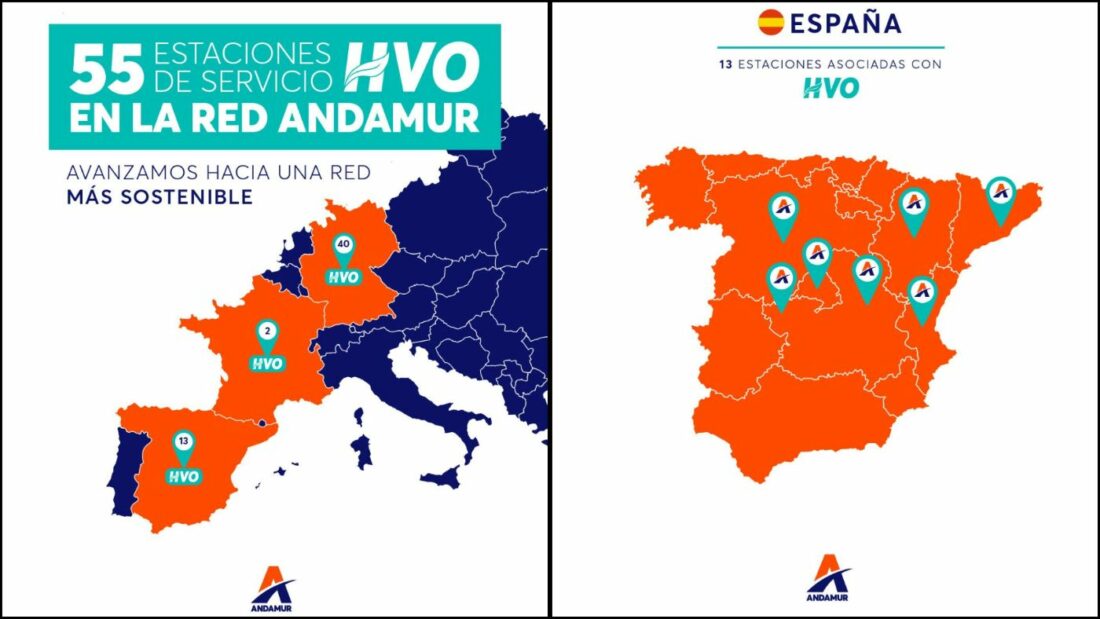 Andamur expands HVO availability across 55 European service stations">

Andamur has introduced HVO at 55 service stations in Germany, Spain and France, a move that signals growing traction for advanced biofuels in road freight. This article breaks down what that rollout entails and why fleets should pay attention.
What HVO and HVOne mean for heavy transport
HVO (hydrotreated vegetable oil) is a renewable diesel alternative that can reduce CO₂ emissions compared with conventional fossil diesel. A step further, HVOne is a premium variant formulated with additives to boost sustainability credentials and performance. For carriers, the switch is not just about green credentials — it’s about operational choices that can affect costs, engine compatibility, and route planning.
Think of it this way: switching fuels is like changing the coffee you drink before a long haul — small, routine choices add up. In practice, HVO can be a drop-in option for many modern diesel engines, but fleets should always check manufacturer approvals and maintenance guidance before filling up.
Where the supply has landed
| Land | Stations with HVO |
|---|---|
| Tyskland | 40 |
| Spanien | 13 (6 offering HVOne) |
| Frankrike | 2 |
Offering a quick reference, the six Spanish stations where HVOne will be available are:
- EA119 – Alcala de Henares, A-2 towards Barcelona (GALP)
- EA120 – Alcala de Henares, A-2 towards Madrid (GALP)
- EA128 – Perales de Tajuña (GALP)
- EA147 – Torrent, A-7 towards Alicante (GALP)
- EA148 – Torrent, A-7 towards Castellón (GALP)
- EA151 – El Puig (GALP)
Why this is an important step for Andamur
The rollout is notable because it represents a strategic response to customer demand for cleaner energy on the road. By adding HVO to its network, Andamur widens fuel choice for drivers and transport companies, helping them reduce the carbon intensity of their journeys without drastically altering day-to-day operations.
Industry studies such as the IRU and ASTIC report on total cost of ownership and CO₂ emissions position HVO as one of the most viable alternatives to conventional diesel for heavy road freight in the near term. While battery and hydrogen solutions develop, HVO gives a pragmatic, immediately deployable path to lower emissions.
Operational considerations for fleets
- Kompatibilitet: Check engine manufacturer guidance; many modern diesels accept HVO, but warranty conditions and fuel system specifics should be reviewed.
- Supply reliability: Plan refueling stops around the expanded network, especially if operating cross-border routes in Germany, Spain and France.
- Cost vs. benefit: HVO typically carries a premium to fossil diesel; evaluate TCO including possible emissions-related savings or incentives.
- Storage and handling: HVO has different cold-flow characteristics; depots and suppliers must manage tanks, filters and procurement accordingly.
- Certifiering: Ensure fuel documentation supports emissions reporting and sustainability claims for customers and compliance.
Practical steps fleets can take today
Operators looking to trial HVO can start with short rotations on routes that pass through the listed stations. Run controlled fuel comparisons, log fuel consumption, track filter changes and monitor any engine management warnings. Small pilots are low-risk and can uncover real benefits or adjustments needed before wider adoption.
On the logistics side, routing software and fuel procurement teams should update maps and contracts to reflect new HVO availability. A little planning ahead of a shift in fuel type can avoid last-minute detours — because as the saying goes, “an ounce of prevention is worth a pound of cure.”
Logistics implications and the bigger picture
From a logistics perspective, broader HVO coverage helps reduce reliance on a single fuel type, diversifying energy sources across supply chains. That can improve resilience against diesel price spikes and regulatory changes targeting emissions from road freight. For shippers and forwarders, fuel choice filters down into pricing, reporting and sustainability commitments.
Adoption of fuels like HVO also affects freight planning: dispatch teams may optimize routes to include HVO-enabled stops, pallet and container pick-ups could be scheduled to match refueling windows, and intermodal choices may shift based on whole-trip carbon accounting. In short, fuel availability is a logistics lever as much as a sustainability one.
What this rollout doesn’t solve — yet
- It doesn’t replace the need for long-term investments in electrification and hydrogen for fleets where they make sense.
- Pricing volatility and supply chain constraints for feedstocks remain variables.
- Not all fleets will see immediate TCO advantages — the business case varies by operation, duty cycle and local incentives.
For operators seeking transport partners or last-mile solutions during fuel transitions, platforms that aggregate carriers and modes can be useful. For example, GetTransport.com provides affordable, global cargo transportation options for office and home moves, cargo deliveries, and bulky items like furniture and vehicles — useful when logistics teams need flexible capacity while testing new fuels.
Highlights of the rollout include the cross-border scale (55 stations across three countries), targeted premium offering with HVOne in select Spanish stations, and the explicit link to transport sustainability goals. Yet even the most thoughtful review and clear data can’t fully replace firsthand experience: testing a new fuel on your own routes reveals real-life savings, handling quirks and driver feedback. On GetTransport.com, you can order your cargo transportation at the best prices globally at reasonable prices. This empowers you to make informed choices without unnecessary expense or disappointment. For your next cargo transportation, consider the convenience and reliability of GetTransport.com. Book now GetTransport.com.com
In summary, Andamur’s addition of HVO at 55 service stations — including special HVOne stops — is a pragmatic step toward cleaner road freight that matters for shippers, carriers and logistics planners. Fleets should weigh compatibility, TCO and routing implications and consider small pilots to validate benefits. Ultimately, this change touches every link in the supply chain: cargo and freight planning, shipment routing, dispatch and haulage decisions, pallet and container scheduling, and the broader aims of international and domestic logistics. Whether you’re managing a large haulage fleet or arranging a housemove, the expanded HVO network makes low-carbon options more accessible and supports more reliable, global transport choices.