


 Svenska
  English (UK)
  Русский
  العربية
  日本語
日本語  한국어
한국어  Magyar
  Türkçe
  Español
  Čeština
  Português
  Ελληνικά
  Suomi
Suomi  Nederlands
  Română
  Italiano
  Français
  Polski
  Українська
  Deutsch
  简体中文
简体中文  Slovenčina
 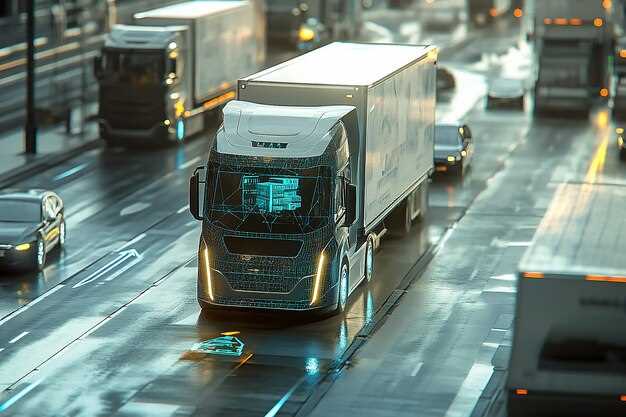 Under the Radar – Autonomous Trucks Continue Moving Forward in Freight">

Launch a six-month pilot on selected corridors to test autonomous trucks and measure real-world effects on supply chain efficiency. Move from manual planning into automated routing, and they will provide a direct comparison to baseline operations on miles, dwell times, and on-time deliveries. Keep the scope small to limit risk and build confidence in the data that informs broader adoption.
According to early pilots, the technological stack behind autonomous trucks centers on sensor fusion, route planning, and systems integration, delivering tangible gains in effektivitet och supply reliability. Most routes show reduced idle times and tighter scheduling when roadways are mapped and contingencies are baked in, with operations able to stay ahead of demand even as traffic spikes occur.
To push forward, build a shared data stack och Lösningar that connect shippers, carriers, and terminals. This enables solving in near real-time and reduces the risk of projects haywire when field conditions shift. According to program data, a robust data backbone shortens decision cycles and keeps roadways and operations aligned since transparency lowers contingency costs. Most carriers report that teams can move from concept into deployment faster when they collaborate across platforms. This creates an ever-broader value stack that keeps momentum going ahead of schedule.
Operators should adopt a phased adoption with clear KPIs: on-time delivery rate, fuel efficiency per mile, maintenance intervals, and driver-operator readiness. Build a cross-functional task force, align with shippers to standardize data formats, and invest in cyber-security measures. Analysts believe that a disciplined rollout yields repeatable savings. Start with lanes that have predictable demand and gradually expand as results improve. Track cost per mile and time-to-decision; adjust the plan quarterly based on pilot results and roadways feedback, then scale where metrics beat the baseline in multiple corridors.
360° technology fusion in freight: practical angles for operators and shippers
Adopt a unified 360° technology fusion stack now to cut cost, speed decisions, and reduce accidents. The approach blends sensors, communications, and data analytics across trucks, centers, and warehouses to deliver actionable information in real time. This works across fleets and could scale with your operations.
These practical angles guide operators and shippers from pilots to scale:
- Sensor-and-edge stack design: a 360° perception layer combines cameras, radar, lidar, and GPS. On-vehicle compute and edge processing keep critical decisions moving forward even with intermittent connectivity. Designed to withstand extreme conditions and fail gracefully, so operations can stay on track. This stack could be the backbone you want for resilient, just-in-time decisions.
- Unified data pipeline: fuse information from vehicle, distribution centers, and goods in transit. Based on a common data dictionary, capture time, location, cargo state, temperature, humidity, and status flags. This approach solves the problem of fragmented data from many sources and speeds response.
- Plugged-in communications: connect dispatch, yards, and partner centers with secure, lightweight messages. This reduces the number of handoffs and accelerates guidance in pressing events. It also clarifies who acts when a deviation occurs.
- Cost-benefit and risk metrics: quantify capex, opex, maintenance, and potential cost of delay. In pilots, payback periods of 12–18 months are common when improvements in reliability and throughput are added to the base operations.
- Real-route pilots and scaling: start in controlled corridors, then extend to multiple centers and routes. gatik has reported 15–25% improvements in on-time performance and 10–20% lower dwell times in practice. Use those findings to shape center layouts and lane sequencing.
- Guidance and training: publish a living guidance document that explains how to interpret fused indicators and what actions to take. Train staff to use the stack for proactive planning rather than reacting to events.
- Data governance and source control: designate a single trusted source for critical metrics to avoid conflicting numbers. Implement data lineage and timestamps to improve accountability and auditability. источник: pilot datasets and partner reports.
- Benefits for operations and goods: tighter scheduling, better temperature control, and fewer touches, which reduce handling damage. Operators can offer time windows with higher confidence; shippers gain predictability and fewer delays for customers. These gains created a clearer path to cost optimization and customer satisfaction.
From this stack, the path forward is clear: design with them in mind, create repeatable workflows, and keep the information flow simple yet robust. The combination of knowledge and speed lets teams move forward while maintaining control over cost and safety, and it should be treated as a living program that evolves with the data and conditions, despite challenges that may arise.
Sensor Fusion Practical: Lidar, Radar, Cameras in Freight Routes
Implement a layered sensor fusion framework that dynamically weights lidar, radar, and cameras based on current conditions to reduce accidents. This three-tier approach combines detection, tracking, and prediction, which allows the system to compensate when one modality underperforms and keeps the vehicle’s eyes on the road ahead with advanced algorithms.
Video feeds refine object cues and help identify smaller targets which lidar alone may miss, also in glare. In limited visibility, radar anchors range and velocity, keeping the vehicle safer ahead and closer to the target. Align sensors so outputs remain coherent and fuse signals within a tight latency budget, typically under 20-30 ms per cycle, to maintain a real-time view.
As fleets operate across widespread routes, the fusion stack must adapt to each corridor. A healthy supply of anonymized sensor data from public sources and partner fleets expands scenario coverage, which happens when weather, traffic, and road surfaces change. Public safety officials told manufacturers that reliable fusion lowers collision risk. Public safety officials said this approach yields measurable benefits. The system should think in terms of risk budgets and reweight modalities when conditions shift.
Designed for scalability, the approach can become a standard in freight corridors, enabling better performance with smaller sensor footprints and lower costs. It reduces reliance on any single modality and can significantly improve detection of vehicles, pedestrians, and obstacles near the truck. By refining the framework through video loops and field data, teams can approach closer integration between simulation and on-road results, which accelerates deployment.
Connectivity for Freight Corridors: V2X, 5G, and Fleet Telemetry
Deploy a unified V2X and 5G edge stack at strategic freight centers along corridors to enable real-time fleet telemetry and driverless safety. The stack links road-side units, robotics-enabled sensors on trucks, and cloud analytics to deliver sensory data, accelerate decisions, and reduce latency for both driverless and conventional operations. Design the data plane to be lightweight and resilient, with a control plane that operations teams can adjust quickly to changing traffic patterns.
Economic potential rises when you tie this stack to core business processes. Steiner studies and industry pilots show corridors with mature V2X/5G gear achieving 15-20% lower collision risk, 8-12% higher on-time delivery, and 5-10% fuel savings on long-haul legs across multiple states where deployments are active. The eyes of the operation become sharper as dashboards translate telemetry into actionable signals for the business department and fleet managers, and the источник notes that aligning incentives across shippers, carriers, and OEMs will reduce friction during scale‑up.
To implement effectively, start with a three-tier corridor plan: edge sites at centers, a vendor-agnostic stack, and a data layer that feeds expectations. Deploy 5G standalone where available to guarantee deterministic latency; use V2X for safety-critical messages and lane-change coordination; and attach a fleet telemetry feed to a centralized operations dashboard. Build sensory redundancy with LiDAR, radar, cameras, and weather data to improve states where road conditions change abruptly. Create a lightweight analytics layer to deliver insights to the business department and to support transformation without interrupting ongoing operations.
Operational steps you can take this quarter: map corridors, install roadside V2X units and 5G edge nodes at high-volume centers, adopt an open-standards stack, roll out fleet telemetry dashboards to managers and drivers, and establish clear data governance. Run a 6–12 month pilot in two states, measure latency, message success rate, asset utilization, and late deliveries, and scale where ROI surpasses thresholds. This approach will yield widespread readiness, reduce the problem of integration across hardware, and keep the road network flexible as technology evolves.
Onboard AI for Perception and Local Decision-Making in Real-Time
Recommendation: deploy a fused onboard perception stack that runs on a scalable, advanced AI technology accelerator. The system blends cameras, LiDAR, and radar to enable look-ahead perception and reliable ego-motion on the road. Target end-to-end latency under 20 ms per frame for urban driving, with object-detection accuracy around 92–95% and robust multi-object tracking in dense traffic. This light, automated approach keeps most decisions local, reducing reliance on public network feeds and supporting a full autonomy path that could launch the market.
Implementation should be modular: sensing, fusion, classification, and a local planner that feeds throttle, brake, and steering. The local decision-making module uses a conservative safety policy and a lightweight learned policy for challenging urban merges. For fleets, target a 10–30 ms loop time and ensure critical actions can run onboard even when connectivity is degraded, with cloud data reserved for long-horizon planning. This market-ready setup lets operators create scalable programs, while also supporting limited pilot routes to test safety. Currently, fleets running urban deliveries could become early adopters.
Performance and data: Measure latency and perception accuracy on urban routes, with pedestrian and cyclist recall above 95%, false positives under 0.02 per frame, and tracking stability across rain and glare. LiDAR-camera fusion improves reliability by 15–25% over camera-only configurations in typical city traffic. Use 1–2 million frames for training and a quarterly update cadence to keep models current. In writing the spec, emphasize sensor calibration, fault handling, and a clear fallback to safe stop if perception degrades; with better local decisions, fuel burn in city driving can reduce by 5–12% while capacity remains high for a full fleet running on urban corridors. This could help the public market become more receptive to automated trucking and pave the way for city launches with full-scale deployment.
Edge Data Fusion for 360° Situational Awareness
Recommendation: Deploy an onboard edge data fusion engine that blends streams from cameras, LiDAR, radar, GPS, CAN telemetry, odometry, and V2X messages to render a 360° scene in real time. Target end-to-end latency under 50 ms for object updates and minimize cloud traffic by transmitting only high-value primitives and summarized tracks to the fleet core, allowing faster decisions for driving on roads for them and their operators.
- Data integration and chains: Establish a common time base and data chains for every object; ensure traceability so regulators and operators can audit how a decision formed its view, while technicians trace back to source signals.
- Fusion model and reality: Use probabilistic tracking with confidence scores to handle occlusion and sensor dropouts. The output should reflect the reality of the scene with high confidence and support timely actions.
- Edge hardware and robotics: Run the fusion on robotics-grade edge devices to meet latency targets and provide reliability in harsh conditions; hardware acceleration improves efficiency and supports complex models.
- Visualization and management: Deliver a concise 360° view to the vehicle cockpit for driving and to the management department for oversight. Writing clear incident notes becomes easier when tracks and evidence are automated.
- Governance, regulators, and policy: Define data ownership, retention, privacy, and access rules that regulators expect; document policies in a departmental playbook and align with industry standards.
Implementation path and impact: Start with a pilot on a subset of trucks to validate latency, accuracy, and robustness. Expect efficiency gains as cloud traffic drops and on-road decisions tighten the gap between perception and action. The result is a closer alignment of vehicle behavior with sensor reality, enabling widespread adoption across the industry and creating safer, more predictable operations for fleets, while protecting jobs by shifting operators toward higher-value tasks and robust management practices about operations; this is also a push for technological advancement in the sector.
Regulatory, Safety, and Cybersecurity Checks During Rollouts
Adopt a phased regulatory checklist and independent safety audits before highway trials proceed, then expand coverage as compliance proves robust. Think of it as a way to unlock speed without sacrificing safety, and establish a public, real-time dashboard that tracks corridor readiness, inspection outcomes, and incident data to support widespread trust among people, shippers, fleets, and the broader business network.
Regulatorer bör fatta beslut baserat på data snarare än antaganden, och tillämpa Steiner-inspirerade riskmodeller för att bedöma potentiella faror längs varje rutt. Prioritera framsteg inom artificiell intelligens, robotik och sensorkombination för att öka säkerhetsmarginalerna utan att fördröja driftsättningarna. Skapa tydliga regler som specificerar minimitestningstimmar, krav på datadelning och rapportering av incidenter för att hålla intressenter inriktade och förberedda för framåtrörelse. Denna ram är inriktad på tydlig ansvarsutkrävning och kontinuerlig förbättring, och kan påskynda säker driftsättning.
För att hantera skalproblem måste kontroller för säkerhet och cybersäkerhet sammanflätas. Bygg en säkerhet-genom-design-process: hotmodellering i designfasen, säker mjukvaruutveckling och kontinuerlig övervakning under utrullning. Team ska simulera cyberattacker, verifiera återställningsförfaranden och säkerställa att kommunikationskanalerna mellan lastbilar, vägsidesenheter och dispatchcenter förblir motståndskraftiga. Detta kommer att avsevärt minska sannolikheten för att en enda intrång eskalerar till en nedstängning på en motorväg. Den risken får inte gå utomför kontrollerade gränser.
För att hantera brist på kvalificerad arbetskraft, förlita dig på standardiserade checklistor, fjärrverifieringsverktyg och gemensamma inspektioner med branschorganisationer. Regleringsorgan informerade operatörer om vad de kan förvänta sig, erbjöd praktiska certifieringar och anpassade sig till regler som regleringsorgan publicerar. Resultatet är bättre besparingar från snabbare godkännanden och färre förseningar i uppskalningen, samtidigt som höga säkerhets- och integritetsstandarder upprätthålls, vilket minskar stilleståndstiden och minskar risken för hela ekosystemet.
| Area | Checkpoints | Ansvarig | Timeline | Success Metrics |
|---|---|---|---|---|
| Regulatory approvals | Korridorutrymmen, dataöppenhet, AI-användningsanmälningar | Regulatorer, operatörer | Fördistribution; stegvis expansioner | Godkännandecykeltid; korridorer röjda |
| Säkerhetsvalidering | Krocksäkerhet, bromsning, perception, redundans | Oberoende laboratorier | Innan varje expansion | Testtäckning; felfrekvens; tid till säkerhetsmeddelande |
| Cybersecurity | Hotellmodellering, penetrationstester, patchhantering | Säkerhetsteam, leverantörer | Pågående; med varje programuppdatering | MTTD, åtgärdstid, allvarliga sårbarheter åtgärdade |
| Data governance | Integritetkontroller, dataminimering, behållningspolicyer | Operatörer, integritetspersoner | Continuous | Integritetsincidenter; dataintrång riskpoäng |
| Operational readiness | Överlämningsrutiner, reservscenarier, människa-i-loopen | Dispatch centers, operators | Införande | Handöverlämnelsefrekvens; genomsnittlig tid för att återfå kontroll |