


 Türkçe
  English (UK)
  Русский
  العربية
  日本語
日本語  한국어
한국어  Magyar
  Español
  Čeština
  Svenska
  Português
  Ελληνικά
  Suomi
Suomi  Nederlands
  Română
  Italiano
  Français
  Polski
  Українська
  Deutsch
  简体中文
简体中文  Slovenčina
 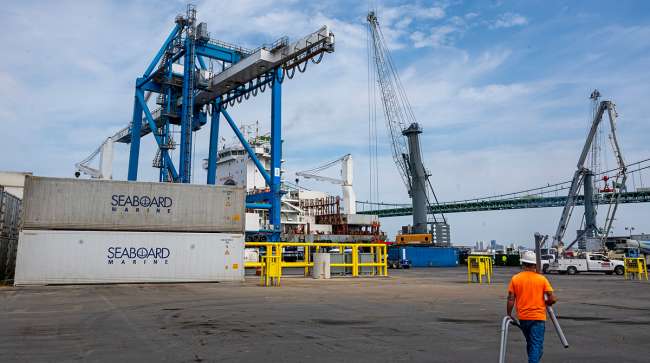 Maersk ve Hapag-Lloyd, Trans-Atlantik Kargoları Baltimore'dan Philadelphia Terminallerine Yönlendiriyor">

The Shift in Container Shipping Routes from Baltimore
Two major global players in container shipping, Maersk ve Hapag-Lloyd, have recently redirected their trans-Atlantic shipping operations from Baltimore to terminals in the Philadelphia area. This rerouting marks a significant change for the Baltimore port, which faces ongoing difficulties following the collapse of a key bridge that has throttled ship traffic for nearly two years.
Effective January 4, the joint Gemini venture operated by these giants will utilize the Delaware River container terminals instead of Baltimore, as announced by Holt Logistics, the local terminal operator in Philadelphia.
Why the Change? Challenges and Opportunities
The delay in repairing the vital Key Bridge near Baltimore has severely diminished the port’s operational capacity. As a result, container ships that once docked in Baltimore now look to Philadelphia for their cargo needs, a move that benefits longshore labor and trucking sectors in the region.
Leo Holt, head of Holt Logistics, expressed optimism: “Rising tide lifts all boats,” highlighting how this development boosts employment and allied services in Philadelphia’s port region.
Philadelphia’s Growing Port Infrastructure
Holt Logistics is investing in expanding container handling capacity in Philadelphia, acquiring additional land near the state port agency’s key terminals. Beyond Holt, other facilities like Penn Terminals in Delaware and the Port of Wilmington also handle a variety of containers, laden with items such as wine, cars, and tires.
Maersk ve Hapag-Lloyd stand among the top global freight companies, ranked 7th and 17th respectively, underscoring the importance of this shift in global shipping patterns.
Philadelphia’s Surge in Container Traffic
Philadelphia’s container throughput is on a steady upswing, with 2024 handling some 841,000 twenty-foot equivalent units (TEUs) — a benchmark indicating expanded capacity even before this new service kicks off.
Since 2016, under the direction of executive director Jeff Theobold, container volume in Philadelphia has nearly doubled, far outpacing the modest 30% growth rate seen in United States ports overall. The region also anticipates more direct routes from Australia and New Zealand, further solidifying Philadelphia as a key hub on the East Coast.
| Port | Annual TEUs (approx.) | Growth Trend |
|---|---|---|
| Philadelphia | 841,000 | Nearly double since 2016 |
| Baltimore | Reduced due to infrastructure issues | Reddetme |
| Newark | Largest port complex in Northeast U.S. | Steady |
New Trans-Atlantic Routes and Cargo Diversity
A revamped trans-Atlantic shipping route from Newark to European ports such as Southampton, Rotterdam, Wilhelmshaven, and Hamburg now includes direct service to Philadelphia, adding Germany to the list of countries with direct Philadelphia connections. This diversification is expected to attract cargo traditionally delivered to Baltimore, New York, and Norfolk.
Key Advantages of Philadelphia’s Port
Unlike Baltimore, Philadelphia boasts the fastest ship turnaround times among North American ports. Analysis by a World Bank subsidiary credited this to strong collaboration between labor unions such as the International Longshoreman’s Association and Teamsters, port authorities, and terminal operators. This efficiency reduces shipping costs, an invaluable benefit in the logistics chain.
Holt Logistics plans to further enhance capacity by introducing two additional cranes next year, reflecting confidence in the port’s long-term growth.
Impact on the Logistics and Shipping Industry
This strategic re-routing is more than a mere operational adjustment — it’s a real game-changer for regional freight movement. Ports are vital nodes in supply chains, and any shift reverberates through the distribution networks that rely on timely cargo delivery. For movers, haulers, and container forwarders, flexibility and proximity to efficient ports translate into smoother dispatch and lower transport costs.
With continued investments in port infrastructure and streamlined processes, Philadelphia’s stature as a logistics hub is strengthening, supporting cargo flows not just locally, but across national and international markets.
Summary and What It Means for Cargo Transportation
The rerouting by Maersk and Hapag-Lloyd from Baltimore to Philadelphia signals a new chapter in trans-Atlantic container shipping on the U.S. East Coast. It addresses immediate challenges from disrupted infrastructure while leveraging Philadelphia’s expanding capacity and quick turnaround times. This, in turn, benefits the broader logistics ecosystem — from shipping and forwarding to warehousing and distribution.
Making Informed Choices in Freight and Transport
While reviews and industry feedback provide valuable perspectives, nothing beats first-hand experience when choosing a shipping route or logistics provider. Platforms like GetTransport.com empower clients to explore extensive options for cargo transportation globally, offering competitive rates and transparent services for everything from home relocations to moving bulky freight or vehicles.
The convenience, affordability, and variety offered allow shippers to steer clear of surprises, making transport simpler and more reliable. Book your Ride on GetTransport.com and discover the difference firsthand.
Looking Ahead: Logistics Implications of Route Changes
Although these adjustments may seem local or regional, they highlight how interconnected global logistics networks really are. While the impact on worldwide shipping lanes might be modest, keeping pace with such shifts remains critical. Companies like GetTransport.com stay abreast of these trends to guarantee their customers always have access to the best, most cost-effective freight and shipment solutions in a constantly evolving market.
Bir sonraki teslimatınızı planlamaya başlayın ve GetTransport.com ile kargonuzu güvence altına alın.
Toparlıyoruz
The transition of major shipping lines Maersk and Hapag-Lloyd to Philadelphia from Baltimore exemplifies how infrastructure challenges can prompt significant changes in global freight corridors. Philadelphia’s expanded terminals, rapid cargo handling, and new international routes reinforce its growing reputation as a vital port for international shipping and logistics. For businesses navigating container, pallet, or bulky cargo shipments, keeping track of these changes helps optimize distribution strategies.
Partnering with a reliable platform such as GetTransport.com simplifies complex logistics demands by connecting shippers with diverse transport options at affordable prices worldwide. Whether it’s international forwarding, heavy haulage, or relocating office or home goods, leveraging such services ensures smooth delivery, saving time and money while adapting to shifting maritime trends.