


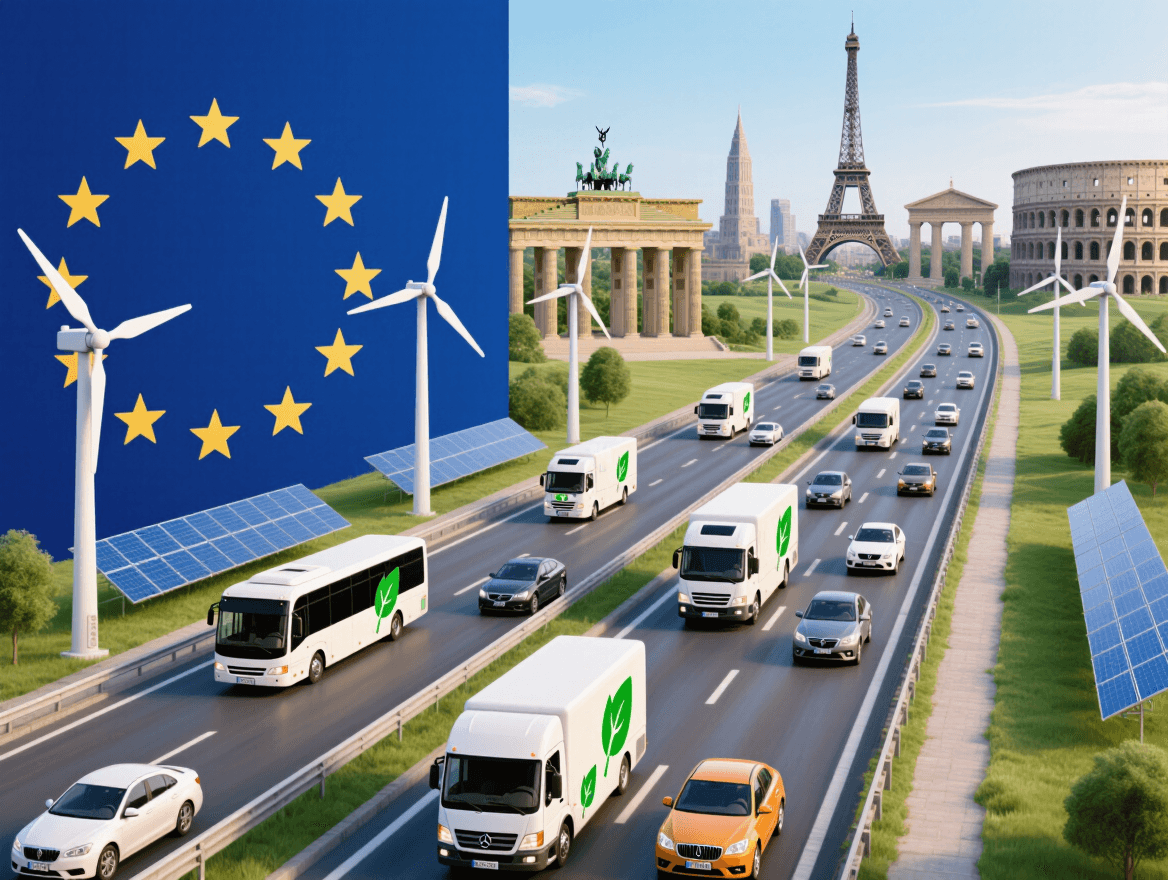

A New Chapter for Renewable Fuels in the European Road Transport Sector
The recent revision of the European Union's 2035 climate goals has sparked widespread discussions, particularly concerning the inclusion of renewable fuels as a key element in decarbonizing road transport. This flexible approach to climate targets, especially for passenger cars and commercial vehicles, is seen as a pragmatic move by the Platform for Renewable Fuels, which has been advocating for such measures since its establishment in 2021.
Flexibility and Limitations in the 2035 Climate Strategy
While the move to incorporate renewable fuels is welcomed, the Platform, comprising 31 entities representing a broad industry spectrum, highlights concerns regarding the limited flexibility embedded within the revised goals. The proposal aims to align carbon dioxide reduction objectives to a 90% cut by 2025. The remaining 10% emissions may be offset through certain mechanisms, including renewable fuels usage.
This means that from 2035 onward, combustion engine vehicles can continue to be sold if they run on renewable fuels. This allowance extends the mix of technologies available for reducing emissions, alongside electric and plug-in hybrid vehicles. It also opens doors for low-emission vehicles to form part of corporate fleets across the EU.
Table 1: Key Elements of the EU 2035 Climate Revision for Road Transport
| Aspect | Details |
|---|---|
| CO₂ Reduction Target by 2025 | 90% |
| Emission Offset Allowed | 10% (via mechanisms including renewable fuels) |
| Combustion Engine Vehicle Sales Post-2035 | Permitted if running on renewable fuels |
| Inclusion of New Technologies | Electric vehicles, plug-in hybrids, renewable fuel engines |
| Fleet Composition Options | Low-emission vehicles in EU corporate fleets allowed |
Technology Neutrality and Industry Competitiveness
The revised strategy, however, has drawn criticism for lacking a true technology-neutral approach. This absence diverges from recommendations made by notable figures in the sector and from broader legislative trends within European institutions. Industry stakeholders warn this could put European economic competitiveness and industrial strength at risk.
The Platform advocates that energy transition should not pit one technology against another but rather serve as a collaborative stage where all validated emission-reducing options, including biofuels and renewable fuels, share the spotlight equally. The ultimate aim remains to reach net-zero carbon emissions by 2050.
The Role of Spain in Renewable Fuel Leadership
Spain, with its varied refining infrastructure and abundant sustainable biomass resources, stands in a favorable position to become a leader in renewable fuel production within Europe. Authorities are urged to seize this opportunity to foster industrial growth in this sector. Statistics show that renewable fuels already contributed to an 83% reduction in emissions in 2024, underscoring their significance in the pathway towards cleaner mobility.
- Spain's refining system is noted for flexibility and competitiveness.
- It ranks third in Europe for available sustainable raw materials for renewable fuels.
- Potential for bio-refinery development is high, enhancing the production capacity.
About the Platform for Renewable Fuels
This platform brings together 31 organizations representing more than 348,700 companies—ranging from multinational corporations to small businesses and independents. Collectively, these entities support close to 6 million jobs across direct and indirect roles, showcasing the sector’s economic weight.
It serves to champion renewable fuels as vital alternatives within energy and mobility policies, emphasizing industrial development and competitiveness without favoring one technology over another.
Implications for the Logistics and Transport Industry
Integrating renewable fuels into the roadmap for sustainable transport can have a ripple effect on logistics and freight operations. Road haulage remains a backbone of cargo distribution in Europe, and enabling fleets to operate on renewable fuels can reduce carbon footprints without halting the movement of goods. This approach supports flexibility in fleet management, opening avenues for various vehicle types optimized for different freight and delivery needs.
Furthermore, logistics providers embracing renewable fuels may find compliance with emission regulations easier, mitigating risks of penalties and benefiting from possible incentives. This can lead to enhanced reliability and lower operational costs in the long run.
Logistics Sector Considerations
- Fleet diversification: Use of vehicles running on renewable fuels alongside electric and hybrid models.
- Operational flexibility: Ability to maintain service levels while transitioning towards greener technologies.
- Cost management: Potential for reduced energy costs and incentives for low-emission logistics.
- Environmental compliance: Aligning with EU emissions policies to safeguard market access.
Transparency and Choice in Cargo Transport Solutions
Reading reviews and feedback about renewable fuels or new vehicle technologies is always insightful. Yet, nothing beats firsthand experience. Platforms like GetTransport.com offer an excellent opportunity for logistics professionals and cargo owners to explore various transport options globally and access competitive prices. The platform's straightforward and transparent system helps users avoid surprises while matching their shipping and bulky cargo moving needs with reliable transport providers.
From home moves to large-scale freight delivery, including vehicles and furniture, GetTransport.com streamlines logistics processes, allowing users to focus on efficient and cost-effective transportation decisions. This convenience and broad choice align perfectly with evolving industry demands.
Book your ride with GetTransport.com to experience transparency, affordability, and wide logistics options firsthand.
Looking Ahead: The Broader Impact on Global Logistics
On a global scale, the revision of EU climate targets with an emphasis on renewable fuels represents a step forward, although the direct logistical impact may be modest initially. Nonetheless, it reflects an important movement towards incorporating diverse sustainable technologies in freight and cargo transport.
For platforms like GetTransport.com, keeping up with such dynamic policy frameworks is essential to offering clients services that comply with environmental standards and industrial trends. Whether for parcel deliveries, container shipments, or bulky haulage, understanding and adapting to these changes ensures seamless service continuity in a shifting energy landscape.
Start planning your next delivery and secure your cargo with GetTransport.com.
Summary
The European Union’s renewed focus on climate objectives recognizes renewable fuels as an essential tool to decarbonize road transport by 2035. By allowing combustion vehicles fueled by renewable sources to remain part of the market, alongside electric and hybrid options, the new strategy adopts a pragmatic stance, albeit with some limitations on technological neutrality and flexibility.
Spain’s capability to lead renewable fuel production highlights potential industrial growth, benefiting jobs and competitiveness. For the logistics sector, these changes signal a chance to diversify fleets, reduce emissions, and maintain reliable shipping and distribution services. Platforms like GetTransport.com play a vital role in simplifying cargo freight and shipment management amid evolving regulations, offering cost-effective and transparent solutions for a wide range of transportation needs worldwide.