


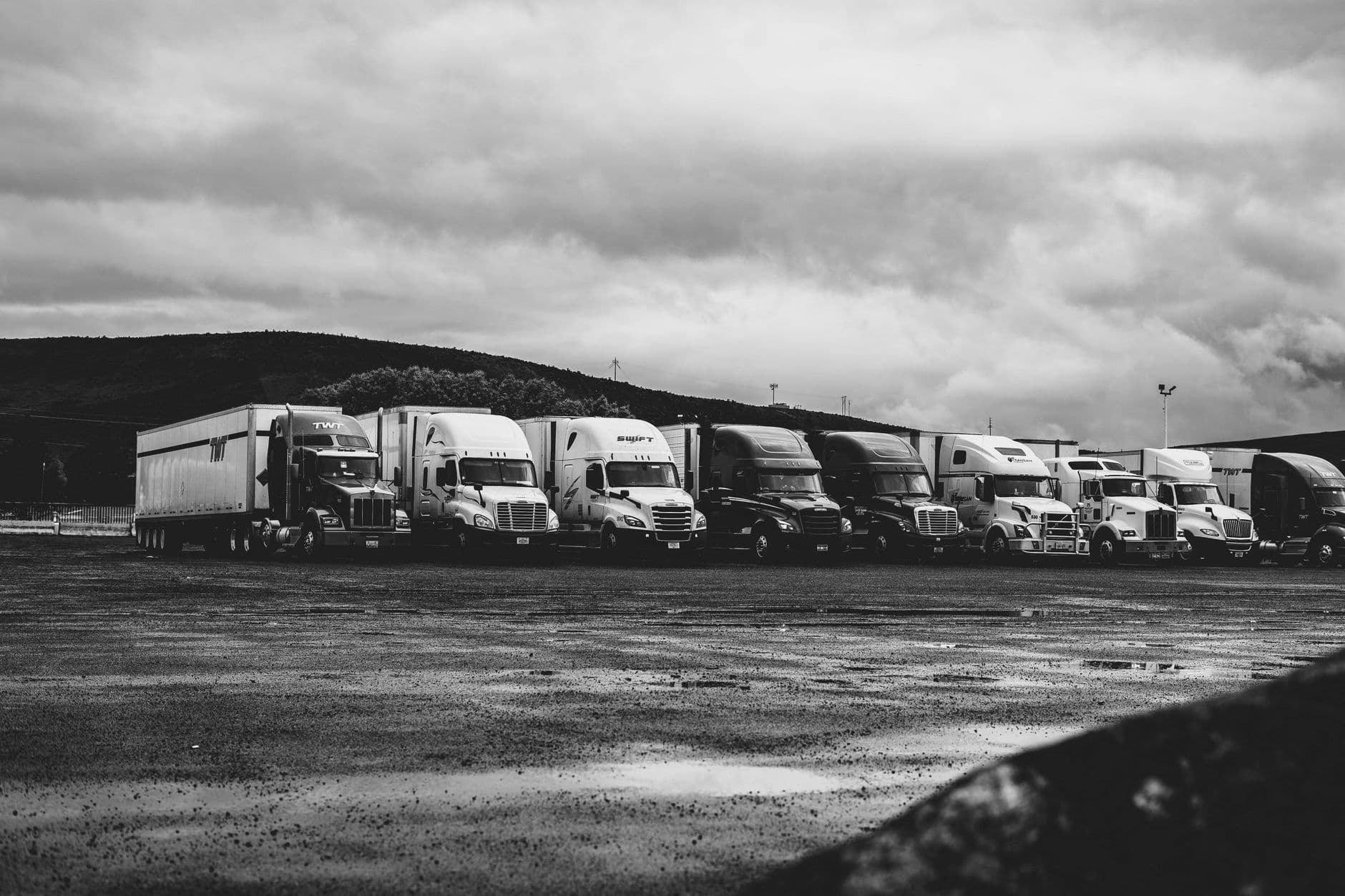

The phrase "biggest trucking company" hides a trap, and we walk clients through it often. Rank carriers by revenue and the list is topped by UPS and FedEx, companies most people think of as parcel networks rather than trucking firms. Rank them by the size of the road fleet and a different name, Knight-Swift, runs the largest standalone truckload operation. Rank by earnings per tractor and the asset-light intermodal and brokerage players pull ahead. At GetTransport.com we place freight with carriers across all of these models, so we read the ranking as a guide to who has capacity, who has network reach, and who is really a trucking company at all. Here is the 2026 picture, built from company results and the Transport Topics for-hire rankings, and why the measure you pick changes the leader.
The ranking, by revenue and by fleet
The table below lists the largest for-hire carriers by 2024 revenue, using company results and Transport Topics data, with a note on fleet where it tells a different story. We flag which entries are integrators, because their revenue reflects a parcel and logistics empire rather than pure trucking.
| Rank by revenue | Company (country) | Model | Revenue (2025 where reported) and fleet note |
|---|---|---|---|
| 1 | UPS (USA) | Integrator (parcel plus freight) | about USD 88.7 billion (2025); more than 125,000 vehicles |
| 2 | FedEx (USA) | Integrator (parcel, LTL, freight) | about USD 87.9 billion (fiscal 2025); one of the largest fleets in North America |
| 3 | J.B. Hunt (USA) | Intermodal, dedicated, brokerage | about USD 12.0 billion (2025); 122,000+ intermodal containers, roughly 6,500 tractors |
| 4 | XPO (USA) | Less-than-truckload plus brokerage | about USD 8.1 billion (2024) |
| 5 | Knight-Swift (USA) | Truckload (largest road fleet) | about USD 7.47 billion (2025); more than 25,000 tractors and 93,000 trailers |
| 6 | Old Dominion (USA) | Less-than-truckload | about USD 5.8 billion |
| 7 | Schneider National (USA) | Truckload, intermodal, logistics | about USD 5.3 billion |
| 8 | Werner Enterprises (USA) | Truckload, dedicated | about USD 3.0 billion |
Notice the pattern. The revenue rank and the fleet rank do not line up. Knight-Swift runs a far larger tractor fleet than J.B. Hunt or XPO, yet earns less than either, because intermodal, less-than-truckload and brokerage generate revenue that does not scale one-for-one with the number of trucks a company owns.
UPS and FedEx, revenue giants that are really parcel networks
UPS and FedEx sit at the top of any revenue-based list of trucking companies, and both belong there in one sense, because they operate enormous road fleets. UPS alone runs more than 125,000 vehicles. But their revenue, about USD 88.7 billion for UPS in 2025 and USD 87.9 billion for FedEx in its 2025 fiscal year, comes from an integrated parcel, air and logistics business, not from selling truck capacity to other shippers. Their trucks mostly move their own parcels through their own networks.
For a shipper trying to book road freight, that distinction is the whole point. When you need a full truckload or a dedicated fleet, UPS and FedEx are rarely the answer, even though they dwarf every dedicated carrier on revenue. We treat them as parcel and express partners and look elsewhere for line-haul truck capacity, which is why the revenue leaderboard can be misleading if you read it as a list of trucking suppliers.
Knight-Swift, the biggest truckload fleet
Among companies whose core business is selling truck capacity, Knight-Swift runs the largest fleet, with more than 25,000 tractors and over 93,000 trailers after years of merging truckload carriers. Its revenue of about USD 7.47 billion in 2025 puts it below J.B. Hunt and XPO on money, but no dedicated truckload operator moves more trucks. When we need scaled full-truckload capacity across the United States, this is the tier of carrier we work with.
The scale cuts two ways for a shipper. A large truckload fleet gives you surge capacity and geographic coverage, so a carrier can usually find a truck when a lane tightens. It also tends to mean a more standardized service, which is fine for straightforward freight and less flexible for unusual requirements. We match the carrier tier to the cargo, using the big fleets for volume lanes and smaller specialists where a shipment needs hand-holding, the same way we think about brand support when we look at the largest truck manufacturers behind those fleets.
J.B. Hunt, XPO and the asset-light premium
J.B. Hunt earns about USD 12.0 billion, more than any dedicated carrier on the list, yet operates only around 6,500 tractors of its own. Its scale lives in intermodal, where it runs more than 122,000 containers that ride the railroads rather than the highway, plus a large brokerage arm that arranges freight on other carriers' trucks. XPO, at about USD 8.1 billion, is now built around less-than-truckload and brokerage after spinning off its other units.
The lesson for a shipper is that revenue measures a company's total logistics reach, not its highway capacity. A brokerage dollar and an intermodal dollar count the same as a line-haul dollar on the income statement, but they represent very different things when you need a truck at a dock tomorrow morning. We read these companies as networks first and fleets second, and we choose among them based on whether a shipment wants intermodal economics, brokered flexibility, or owned-fleet control.
Why "world's biggest" is mostly a United States story
One honest caveat runs through this whole ranking. The largest asset-based trucking companies by revenue are overwhelmingly American, and that is not because the United States moves the most road freight. It is because US carriers are consolidated into large public companies, while road freight in Europe, Latin America and much of Asia is far more fragmented, spread across thousands of small operators. In those markets the coordinating role often sits with freight forwarders and logistics groups that subcontract the actual trucking rather than owning giant fleets themselves. The Transport Topics global ranking shows the same shape, with the top revenue spots held by integrators like UPS and FedEx, joined by Amazon, while the largest dedicated for-hire carriers below them are almost all American.
So a global list of "biggest trucking companies" tilts toward the US by the structure of the industry, not by where the trucks run. When we arrange road freight outside North America, we frequently work through a forwarder that aggregates capacity from many local carriers, which is a different model from booking a single mega-fleet. That is why we read this ranking alongside the way capacity is organized in the top freight carriers for interstate shipping.
What carrier size changes for your freight
Read as an operating guide, the ranking shapes several choices we make when placing a load:
- We separate integrators from dedicated carriers, using UPS and FedEx for parcel and express rather than for line-haul truckload capacity.
- We turn to the largest truckload fleets, led by Knight-Swift, when a client needs scaled coverage and surge capacity on volume lanes.
- We read high revenue at J.B. Hunt or XPO as network reach across intermodal and brokerage, not as owned-truck capacity.
- We expect fragmentation outside the United States, working through forwarders that aggregate many local carriers rather than one mega-fleet.
- We match carrier tier to cargo, using big fleets for standard volume freight and smaller specialists where a shipment needs flexibility.
None of this substitutes for a rate and a booking on your specific lane. But it explains why the biggest name on a revenue chart may be the wrong carrier for your truck, and why we look past the headline number to the model underneath.
Frequently asked questions
What is the biggest trucking company in the world in 2026?
By revenue, UPS leads at about USD 88.7 billion in 2025, with FedEx close behind at about USD 87.9 billion, but both are integrated parcel and logistics networks rather than pure trucking suppliers. Among dedicated carriers, J.B. Hunt earns the most at about USD 12.0 billion, while Knight-Swift runs the largest road fleet with more than 25,000 tractors.
Why does the revenue leader differ from the largest fleet?
Because revenue includes intermodal, less-than-truckload and brokerage, which earn money without scaling one-for-one with owned trucks. J.B. Hunt out-earns Knight-Swift despite running far fewer tractors, because much of its business rides the railroads or moves on other carriers' trucks through its brokerage.
Why are the biggest trucking companies mostly American?
Because US road freight is consolidated into large public carriers, while Europe, Latin America and much of Asia stay fragmented across many small operators coordinated by freight forwarders. The ranking reflects that corporate structure rather than where the most trucks actually run.