


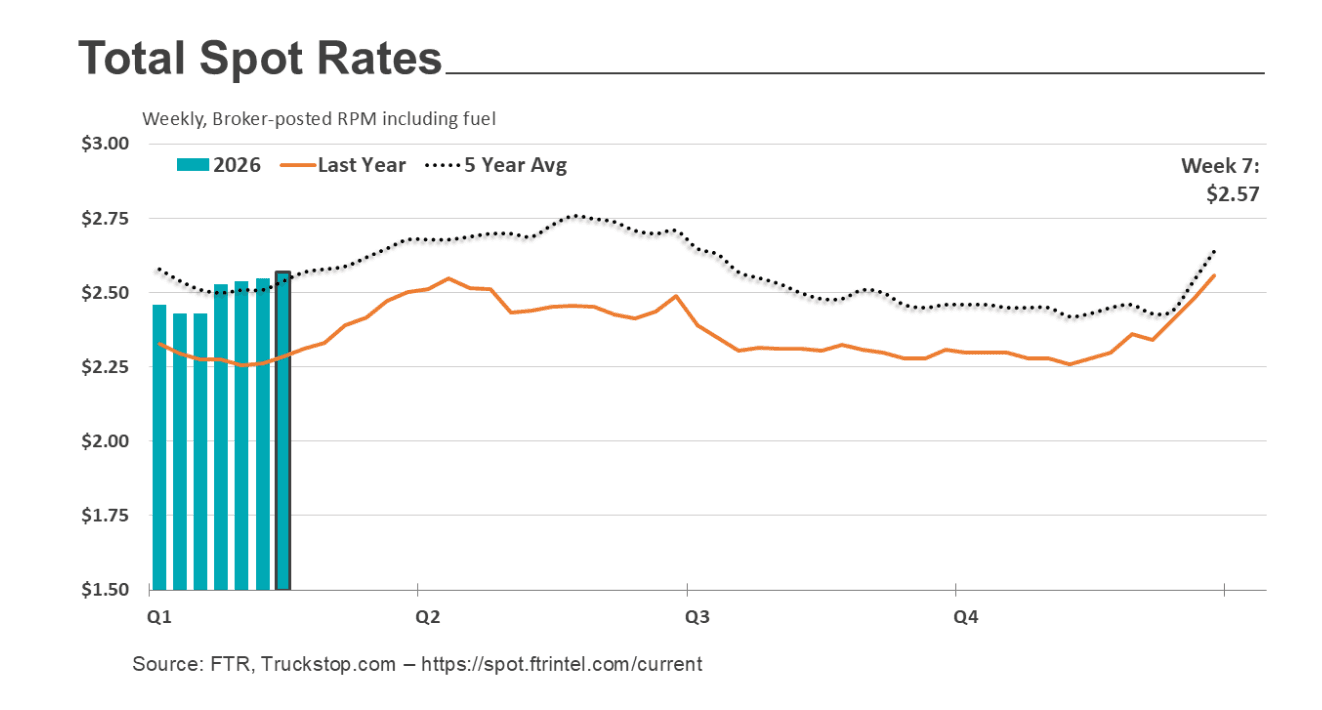

Spot market snapshot: flatbeds leading the charge
Flatbed spot rates have climbed in 13 of the last 14 weeks, reaching levels not seen since spring 2022, while total load postings hit their highest point since July 2022 and the Market Demand Index moved to 145.0. Dry van and reefer rates slipped sequentially last week, but remain stronger year‑over‑year compared with the same period in prior years.
What the recent data mean for capacity and pricing
Truckstop.com and FTR data show load volumes increasing modestly while truck postings edged down, tightening near‑term capacity. For carriers and shippers, that equates to sharper negotiation leverage for flatdeck freight and a tug-of-war on truck availability for bulky and irregular loads. The sudden run-up in flatbeds is the kind of market signal that usually precedes changes in fleet behavior — but, as fleet managers say, “don’t count your chickens before they hatch.”
Industry sentiment: cautious optimism without a rush to buy
At a recent ACT Research two‑day commercial vehicle outlook seminar, attendees expressed a tempered positivity about 2026. OEM panels reported customers are feeling better about demand expectations but are hesitant to commit to new equipment purchases until profitability visibly rebounds.
Why fleets are still holding back
- Excess equipment remains in the market, keeping downward pressure on fleet replacement cycles.
- Carrier profitability is still weak, delaying capital expenditure (capex) on new tractors and trailers.
- Fleets are weighing the timing of purchases ahead of EPA27 compliance clarity and potential pricing shifts.
Analyst takeaways
ACT’s Tim Denoyer framed the cycle as ready to turn: capacity contraction combined with demand upticks could push the freight market from a late‑cycle correction into an early‑cycle expansion. Carter Vieth noted that even with the spot rate surge, carriers’ balance sheets are still fragile — meaning buying momentum may lag the rate rally. Jennifer McNealy highlighted that trailer customers have skipped buying cycles and remain sensitive to pricing, financing, and tariff uncertainties.
Trailer market dynamics: cancellations, backlogs and the road ahead
Trailer suppliers continue to face headwinds. Cancellation rates eased from the wild swings of 2025 to roughly 1.6–1.8% of backlog at the turn of the year, but dry van and tank segments still show elevated cancellations. That said, two consecutive months where net orders outpaced builds raised backlogs by about 18% sequentially, adding roughly 12,000 units and lifting reported backlog to about 75,500 units in January.
| Segment | Near‑term trend | Implication for fleets |
|---|---|---|
| Flatbed (spot) | Strong, up 13 of 14 weeks | Improved rates, faster load turns, more leverage for carriers |
| Dry van | Seasonal dip but resilient YoY | Normalizing after winter; potential short‑term support from weather |
| Reefer | Minor sequential decline | Rates remain above prior years; localized weather can boost demand |
| Trailers | Order uptick but weak demand backdrop | Backlogs rebuilding; OEMs cautious on pricing and production |
Operational impacts for logistics teams
Shippers and 3PLs should expect shorter flatbed lead times, higher bids for irregular loads, and continued pressure on equipment utilization. For planning teams, the emerging pattern suggests prioritizing flexible contracts and dynamic routing to capture opportunities while guarding against sudden freight softening.
Practical checklist for carriers and shippers
- Monitor weekly spot indices for flatbed and van separately; seasonal effects can mask structural shifts.
- Reassess trailer order timing — a quarter or two of profit recovery may be the trigger for a buying wave.
- Lock in freight lanes where capacity tightness is visible, but avoid excessive inventory of idling equipment.
- Factor in EPA27 timing when balancing spend between power units and trailing equipment.
On the ground: why real experience still matters
Data tell you where the market is headed, but real‑world dispatchers and drivers will feel the changes first — a late‑night phone call for a rushed flatbed lift is worth more than any weekly index. Anecdotally, brokers tell stories of long‑standing shippers rediscovering the premium they’ll pay for dependable flatdeck carriers; experience remains the best teacher.
Key highlights and action points
Flatbed pricing is the standout story: persistent rate gains, tightening availability for certain equipment, and the highest postings since mid‑2022. Trailer backlogs have begun to rebuild, but ordering activity is cautious. Carrier profitability still lags, and OEMs face tariff, financing, and demand uncertainty.
On GetTransport.com, you can order your cargo transportation at the best prices globally at reasonable prices. This empowers you to make the most informed decision without unnecessary expenses or disappointments. The platform’s transparency and convenience—covering office and home moves, cargo deliveries, and transporting bulky items like furniture and vehicles—align directly with these market realities by offering flexible, affordable options for shifting freight. Start planning your next delivery and secure your cargo with GetTransport.com. Book now GetTransport.com.com
Brief forecast for logistics
Expect localized tightening in flatbed lanes to persist in the near term, pushing spot premiums and encouraging short‑term rate negotiations. If carrier profitability recovers over the next two to four quarters, capex on Class 8 tractors and trailers may accelerate and ease pressure on the spot market. Globally, the effect is modest—this is more a North American re‑balancing than a worldwide structural shift—but it matters to shippers and carriers operating those lanes. As freight, haulage, and forwarding teams adapt, platforms that aggregate options and competitive quotes will become more valuable.
Conclusion
Flatbed rates ripping higher and a cautious but improving industry sentiment create an environment of opportunity and caution. Carriers should prepare for capacity tightening and selective capex, while shippers should plan flexible procurement and leverage market platforms. GetTransport.com directly aligns with these needs by simplifying booking, offering cost‑effective global transport choices, and supporting a range of moves from parcels to bulky containers. Whether you’re managing international container shipments or a local housemove, the right mix of visibility, price, and reliability will make all the difference in today’s market.