


 Українська
  English (UK)
  Русский
  العربية
  日本語
日本語  한국어
한국어  Magyar
  Türkçe
  Español
  Čeština
  Svenska
  Português
  Ελληνικά
  Suomi
Suomi  Nederlands
  Română
  Italiano
  Français
  Polski
  Deutsch
  简体中文
简体中文  Slovenčina
  Winter Storm Fern's Widespread Outages and the Ripple Effects on Freight Networks">

This piece reveals how Winter Storm Fern knocked out electricity, grounded flights and rattled freight corridors across the Southeast and into the Northeast.
Storm summary: snow, ice and a logistics headache
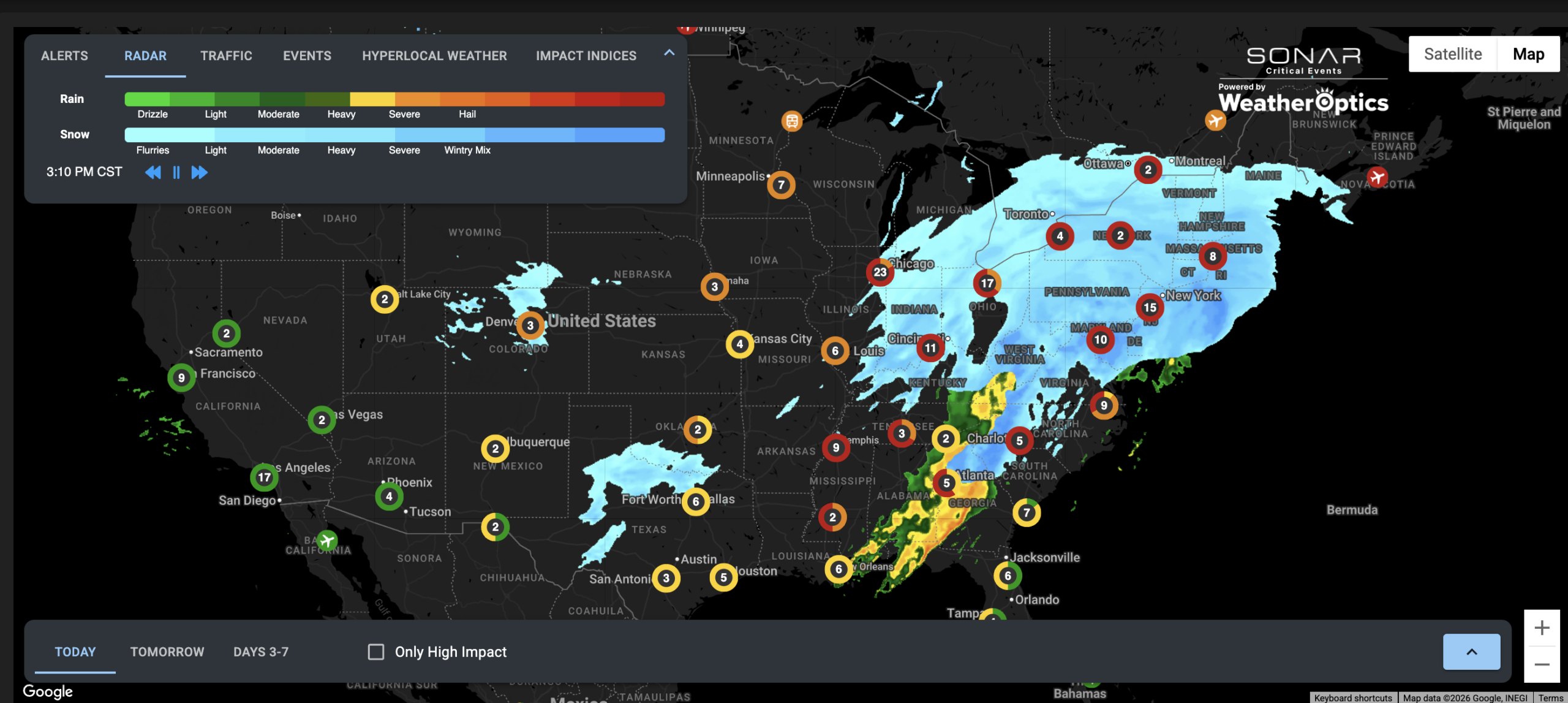
Winter Storm Fern swept from the Lower Midwest into the Northeast, leaving pockets of heavy snow and widespread ice. Measured snowfall reached as high as 13 inches in parts of Indiana and topped 11 inches in Illinois and Ohio, while Arkansas saw over 8 inches. Ice storm warnings stretched from Texas through Tennessee and Georgia and into the Carolinas, creating treacherous conditions for both people and supply chains.
More than 14,000 flights were cancelled, with major New York area airports — John F. Kennedy International, LaGuardia and Newark Liberty — closed alongside Ronald Reagan Washington National, Baltimore/Washington International Thurgood Marshall and Philadelphia International. Atlanta, Charlotte and Dallas–Fort Worth remained open but faced heavy delays and the threat of ground stops.
Power cuts and where they're worst
At peak impact, over 1 million customers were without power across Tennessee, Mississippi, Louisiana, Georgia and Texas. Those outages complicate recovery: traffic lights fail, warehouses operate on backup generators or halt completely, refrigerated freight loses temperature control, and local dispatch centres struggle to communicate.
Immediate effects on transportation nodes
Port terminals in New York and New Jersey closed during the storm, and major freight hubs — Louisville, Cincinnati and Memphis — reported disruptions. Passenger rail services like Amtrak paused operations through Monday, and the big freight railroads BNSF, CSX and Norfolk Southern activated winter action plans to safeguard their networks.
| Asset | Статус | Primary Impact |
|---|---|---|
| Major airports (NYC, D.C., Philadelphia) | Closed or heavily delayed | Mass flight cancellations, diverted shipments |
| Ports (NY/NJ) | Closed | Container and lorry delays, yard access limited |
| Freight hubs (Louisville, Cincinnati, Memphis) | Порушено | Longer transit times, re-routing |
| Railways (BNSF, CSX, Norfolk Southern) | Winter plans activated | Operational slowdowns, atypical routings |
Why delays could outlast the snow
Cleanup in the Southeast often lags behind colder regions because storm response resources are scarcer and temperatures may stay below freezing for days. That combination means melting during daylight and refreeze at night can create persistent black ice – the silent travel killer. As Renny Vandewege, General Manager of Weather and Climate Intelligence at DTN, observed, the pace of recovery depends not just on snow removal crews but on Mother Nature warming things up.
Practical fallout for logistics: where roads and bridges are prioritised, secondary routes and local deliveries can sit idle for days. For refrigerated shipments, extended power outages translate quickly into spoilage risk unless alternative power or expedited rerouting can be arranged.
Rail, road and air: how carriers are adapting
Rail carriers warned customers to expect longer transit times and nonstandard routings; BNSF specifically noted shipments may pass through unfamiliar interchanges. Trucking fleets and LTL carriers tend to implement SOPs when forecasts look dicey — throttling schedules, rerouting around high-risk corridors and staging equipment in safer zones.
- Rerouting: Carriers used alternate corridors to bypass closed hubs, adding miles and time but keeping freight moving.
- Staging and consolidation: Shippers delayed pickups to consolidate loads and minimise wasted runs into closed terminals.
- Temperature control contingencies: Perishable freight was prioritised for power-stable locations or expedited lanes.
- Комунікація: Real-time tracking and proactive customer notifications kept delivery expectations aligned.
Practical checklist for shippers and carriers
When winter weather threatens, the following actions matter most:
- Review and enact contingency SOPs based on forecast impacts.
- Prioritise critical and perishable shipments for early movement.
- Confirm availability of fuel and generators for cold chain continuity.
- Plan alternative pickup/drop-off points if primary terminals are closed.
- Keep communication lines open with hauliers, drivers and customers.
It's one thing to read the numbers and another to live through them. I once had a house move stalled for three days because a regional route froze overnight – lesson learned: always have a backup plan and a warm cuppa on standby.
What this means for logistics planning
For most global supply chains, the storm’s disruptions are regionally significant but not catastrophic on a worldwide scale. However, local shippers, carriers and 3PLs will feel immediate pain — delays, higher spot rates, and the need to reallocate equipment. The knock-on effect can push delivery windows, create congestion at alternate hubs, and increase warehousing dwell times.
Short-term forecasting and flexible execution are gold right now. Companies that maintain agile routing, diversified carrier relationships and clear contingency SOPs will navigate the disruption faster and with less cost.
Provide a short forecast on how this news might affect global logistics. If it's insignificant globally, please mention that. However, highlight that it's still relevant to us, as GetTransport.com aims to stay abreast of all developments and keep pace with the changing world. Start planning your next delivery and secure your cargo with GetTransport.com. Book your Ride GetTransport.com.com
Key takeaways: Winter Storm Fern brought heavy snow, ice and power outages that translated into mass flight cancellations, closed port terminals and rail disruptions. Cleanup in the Southeast will likely be slower due to limited resources and persistent sub-freezing temperatures at night, which risks refreezing and black ice. Carriers and shippers should expect reroutes, longer transit times and elevated service costs whilst contingency plans are in effect.
In short, this weather event is a timely reminder that resilience matters. From вантаж і вантажоперевезення routing to last-mile доставка, every link in the логістика chain must be ready to adapt. Platforms that offer flexible, affordable, global solutions for office and home moves, cargo deliveries and transport of bulky items like furniture and vehicles can ease the burden. For readers looking to simplify dispatch, booking and haulage planning in storm-prone regions, GetTransport.com provides a transparent, cost-effective option for reliable shipping, forwarding and relocation services, covering everything from parcels and pallets to containers and bulky international shipments. GetTransport.com makes it easier to secure couriers, arrange inland distribution and keep your supply chain moving even when weather tries to throw a spanner in the works.