


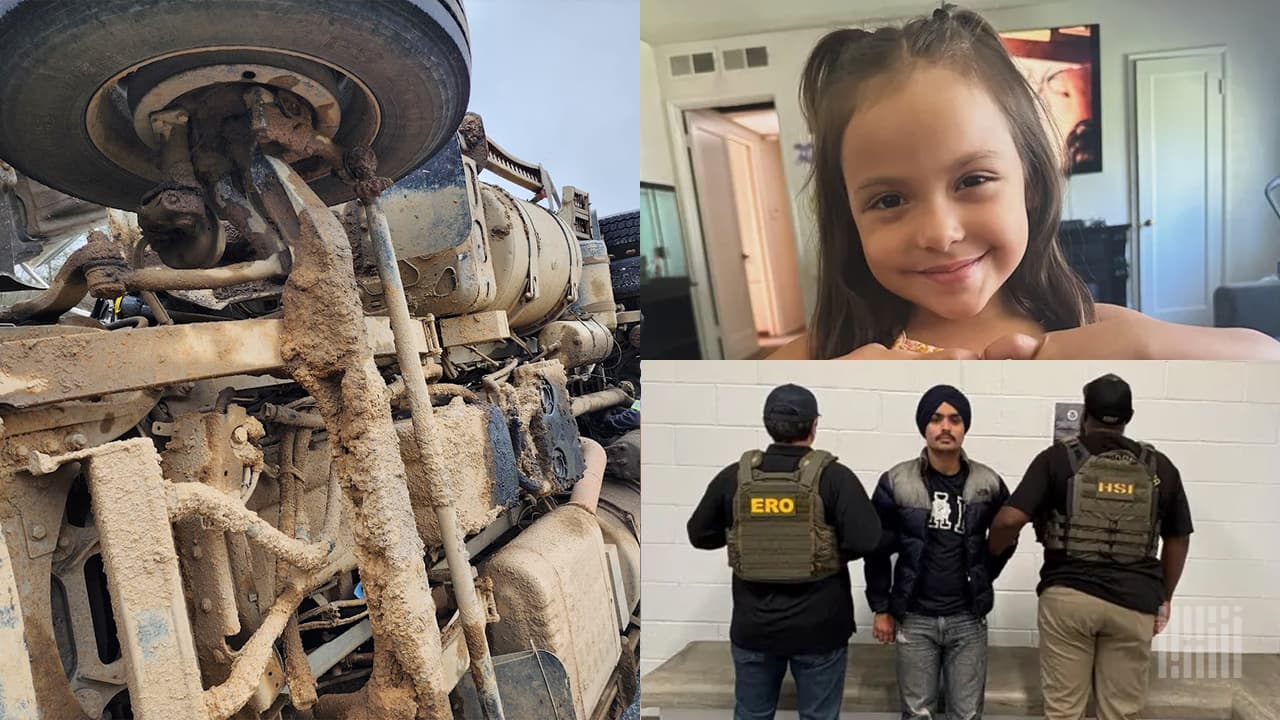

Spot-market tender rejection rates surpassed 13% during the late‑2025 peak season, pushing an unprecedented volume of loads into brokers’ hands and increasing the likelihood that freight lands with carriers who answer solely on price. That single metric explains how vulnerable freight—municipal waste, low-value bulk runs, and last‑minute spot tenders—regularly ends up with operators whose safety records would fail a rigorous screening.
Why the chain from load board to crash scene breaks
The industry mental model—shipper to carrier via a handshake—rarely reflects reality. Most freight flows through intermediaries: contract carriers first, then 3PLs, then the spot market when tenders are rejected. In a tightening market, the spot market acts as a relief valve, and the relief often leaks. Brokers under margin pressure are incentivized to place loads with the lowest-cost carriers that meet a minimal regulatory check: active authority, current insurance, and an FMCSA status of satisfactory or not‑rated.
Minimal vetting becomes the de facto standard
In practice, carrier selection in many spot-market transactions looks like a checklist: DOT number OK? Authority active? Insurance on file? If yes, the load moves. That superficial review misses rolling performance data: recent crashes, out‑of‑service (OOS) rates, violation trends, and interlining histories. FMCSA snapshots often lag reality—carriers can accumulate catastrophic on‑road incidents between reviews and still pass a simple status check.
Consequences of relying on static compliance snapshots
When carrier vetting uses only basic FMCSA checks, three outcomes commonly follow:
- High-risk operators continue to receive loads because their DOT status appears acceptable.
- Exempt‑commodity pipelines (e.g., municipal waste, scrap) route problematic carriers where oversight is minimal.
- Broker accountability becomes a legal battleground—if negligent selection claims are preempted, injured parties may have no remedy against the entity that chose the carrier.
The regulatory and legal fault lines
Two developments are colliding: statutory CDL reform aimed at credential integrity and a Supreme Court case that could redefine broker liability. The CDL reforms tighten who may lawfully hold a credential; the Montgomery litigation seeks to resolve whether state negligent‑selection claims against brokers are preempted by federal law. If courts limit accountability for selection, tightening CDL rules will feel like patching a hole on a sinking ship.
| Vetting method | What it shows | What it misses |
|---|---|---|
| FMCSA status check | Active authority, insurance status, last audit | Recent crashes, OOS trends, re-incarnated authorities |
| Enhanced intelligence tools | Crash history, claim patterns, double‑brokering flags | Occasional false positives, cost to implement |
Exempt‑commodity loophole: low scrutiny, high risk
FMCSA guidance allows transactions where the underlying freight is exempt from commercial jurisdiction to bypass broker authority requirements. That means municipal contracts for garbage or certain construction debris can be moved without a broker license or surety bond—so the lowest bidder often wins, and safety checks can be near‑nonexistent. The pipeline funnels operators disqualified from regulated lanes into these weakly monitored runs.
Interlining versus brokering: clarity matters
Legal and operational differences between interlining (carrier‑to‑carrier transfers with both carriers properly authorized) and brokering (a third party arranging transportation) are pivotal. Conflating the two weakens accountability: in interlining, liability traces to the carrier handling freight at the time of an incident. In brokered moves, the broker’s selection becomes the focal point—but only if negligent‑selection claims survive preemption arguments.
Financial pressures that erode safety
Double brokering and unpaid loads exacerbate the problem. Fraud complaints surged, and schemes involving recycled MC numbers and shell entities hollow out carrier cash flow. When carriers are paid pennies on the dollar—or not at all—their ability to maintain equipment, insurance, and compliance suffers. Financial desperation and safety risk travel on the same road.
Key risk vectors at a glance
- Spot-market pricing pressure that rewards lower-cost carriers.
- Use of FMCSA snapshot data as a sole vetting criterion.
- Exempt-commodity arrangements that sidestep broker rules.
- Bond and payment shortfalls that impair operational safety.
Practical mitigations for carriers, brokers and shippers
Industry players can reduce exposure through layered controls:
- Adopt real‑time intelligence tools that surface crash histories, OOS rates, and double‑broking flags.
- Require enhanced documentation for loads leaving contract networks, especially exempt commodities.
- Institute financial protections: verified escrow, collateralized trust funds, and stricter invoice verification.
- Standardize interlining agreements with clear liability language and auditing rights.
Nobody said it would be easy; the squeaky wheel gets the grease only if someone listens. The market incentives must be adjusted so that safer carriers are paid fairly and bad actors cannot hide behind stale data.
The immediate legal forecast is simple: a Supreme Court ruling that preserves broad preemption for brokers would lock in a lighter duty of care for carrier selection, reinforcing current market behaviors. A ruling that allows negligent‑selection claims to proceed would push brokers to use better vetting tools and accept the cost of doing so. Either way, the real world—where freight, people, and safety intersect—will feel the differences in claims, insurance premiums, and who answers calls on the load board.
Provide a short forecast on how this news could impact the global logistics. While the immediate effects are concentrated in the U.S. regulatory and legal environment and may be limited globally, the precedent will influence international brokers and multinationals that run cross‑border supply chains. Start planning your next delivery and secure your cargo with GetTransport.com. On GetTransport.com, you can order your cargo transportation at the best prices globally at reasonable prices. Book your Ride GetTransport.com.com
Highlights: the interaction between CDL eligibility rules and broker selection standards reveals a systemic gap—tightening one link (the credential) without addressing the spot‑market mechanics, exempt‑commodity pipelines, and bond/payment failures leaves the chain incomplete. Enhanced vetting, better payment protections, and legal accountability for negligent selection are the levers most likely to reduce crashes. Still, even the best reviews and the most honest feedback can’t replace firsthand experience. On GetTransport.com, you can order your cargo transportation at the best prices globally at reasonable prices. This empowers shippers and carriers to make informed decisions without needless expense or surprises. Get the best offers GetTransport.com.com
In summary: the problem is systemic, not merely individual. Dalilah Law addresses credential eligibility, and Montgomery could reshape broker liability—but neither fully reforms the spot‑market pipeline, exempt‑commodity gaps, or the cash‑flow pressures that degrade safety. Practical steps—real‑time carrier intelligence, contract language that demands accountability, and financial safeguards—can close much of the gap. For shippers and logistics managers seeking reliable, cost‑effective transport—whether housemove, pallet shipments, bulky cargo, international container loads, or local haulage—solutions like GetTransport.com offer a practical way to source freight, delivery, and forwarding services with transparency and competitive pricing. Cargo, freight, shipment, transport, logistics, shipping, forwarding, dispatch, haulage, courier, distribution, moving, relocation, housemove, movers, parcel, pallet, container, bulky, international, global, reliable—these are the terms that define the decisions to be made, and aligning them with robust vetting and fair payment practices is the path to safer roads and fewer preventable tragedies.