




When I benchmark a shipper's truckload book at the start of a year, the first thing I hunt for is which direction the surprises are running. For three years straight, they ran in the buyer's favor. The freight recession that stretched from 2023 through 2025 left the market oversupplied, carriers hungry, and shippers holding the leverage in every renewal. FreightWaves That era is closing. In the last two bid cycles I've run for clients, the give-backs got thinner, incumbents pushed for mid-single-digit increases instead of quietly renewing flat, and two small carriers I'd used for years simply stopped answering tenders. The 2026 market is turning. Shippers who wait for that turn to show up in their landed cost are already behind.
So treat what follows as a rate-defense playbook rather than a forecast. My aim is to teach you to read the signals I read, then act on them before the market makes the decision for you.
The recession is over, and the bids already prove it
Contract linehaul rates climbed about 9% over the past year, moving from roughly $2.00 to around $2.18 per mile through May 2026. RXO That is not a spike. It is a grind, and the forecast has contract rates continuing to rise into the back half of the year, peaking near 5.5% year over year in the fourth quarter of 2026. RXO A grind is actually harder to defend against than a spike, because it never triggers the alarm bells that get a procurement team to move.
The spot market is where the real story sits. RXO's Curve forecast had Q1 2026 spot rates running up 18.7% year over year, the strongest reading since 2022, with tender rejection rates back at levels last seen that same year. RXO When rejections climb, carriers are turning down cheap freight because they have better options. That is pricing power moving back across the table, away from the shipper.
Read the market before you touch a rate
The single clearest signal I watch flipped this year: spot rates crossed above contract rates for the first time since 2022. RXO That crossover matters because of what it tends to precede. When spot sits above contract, carriers have every incentive to walk away from routing guides and chase the open market, and history says contract rates follow spot upward at the next bid. If you understand nothing else about the mechanics here, understand that one relationship. I walk clients through it in detail in our explainer on how to compare spot versus contract rates and read market trends, because getting the read wrong by even a quarter can cost you a full bid cycle.
For texture, national dry-van spot averages have been running near $1.92 per mile, with contract rates typically sitting 15% to 30% above spot across freight types. RXO When that gap compresses, or inverts the way it has this year, your routing guide is about to get tested by every carrier on it.
| Signal | 2023–2025 (recession) | 2026 (the turn) |
|---|---|---|
| Contract linehaul, per mile | ~$2.00 | ~$2.18 (+9% through May) |
| Spot vs. contract | Spot below contract | Spot above contract (first since 2022) |
| Contract forecast, YoY | Flat to down | Peak near +5.5% in Q4 |
| Tender rejections | Low, buyer-friendly | Highest since 2022 |
| Non-domiciled CDLs losing renewal (5-yr drawdown) | — | ~194,000 of ~200,000 |
| Drayage / intermodal | Soft | Tightening from July |
Regulation is draining capacity faster than demand is adding it
Here is what makes this cycle different from the demand-driven crunches most of us remember. A large share of the tightening in 2026 is coming from the supply side, and specifically from regulation squeezing small carriers out of the market. C.H. Robinson Four enforcement fronts are doing the work at once:
- Roadside enforcement of English-Language Proficiency requirements, which now carries an out-of-service consequence.
- The non-domiciled CDL rule, effective March 16, 2026, under which FMCSA estimates roughly 194,000 of about 200,000 current non-domiciled CDL holders will become ineligible to renew as their licenses expire over the next five years, a rolling drawdown of capacity rather than an overnight cut. FMCSA
- A crackdown on non-compliant electronic logging device providers.
- Forced attrition among driver-training schools, with close to 3,000 CDL training providers pulled from the federal registry and thousands more put on notice. FMCSA
The ELP piece alone is material. More than 9,000 drivers faced enforcement actions tied to English-language proficiency over the year, and a single three-day sweep across 26 states put nearly 500 drivers out of service. FMCSA I am not going to re-explain the rule here, because we already have a full carrier guide on it. If you buy transportation, the relevant point is downstream: every one of these fronts removes trucks that were, until recently, competing for your freight and holding your rates down. Our FMCSA English-Language Proficiency carrier guide for 2026 lays out exactly which carriers in your base are exposed.
A legal current is pushing the same direction. The closely watched broker-liability case Montgomery v. Caribe Transport has left freight brokers exposed to lawsuits over the carriers they select, so brokers are steering loads toward larger, better-insured fleets and away from the small operators who used to soak up overflow at a discount. FreightWaves That quietly accelerates the same consolidation the safety rules are already forcing, and it thins out the low-cost capacity that used to backstop a shipper's routing guide.
Demand-driven crunches ease when freight cools. This one won't, at least not on the same timeline, because the trucks are gone regardless of what happens to volumes. That asymmetry is the whole reason I'm telling clients to defend rates now instead of hoping for a soft landing.
Bid timing: why I told a client in June to lock early
In June I had a mid-market shipper sitting on a routing guide that expired in September. The instinct in the room was to wait, run the bid late, and hope for one more round of soft pricing. I pushed back hard. My read was that second-half demand recovery, layered on top of the regulatory capacity drain, would tighten the market through exactly the window they wanted to bid into. Locking a 24-month contract at a modest increase in early summer beats bidding into a rising, thin market in the fourth quarter. The math is not complicated: a 4% increase you control today is cheaper than the 8% to 10% the market hands you when rejections are high and your incumbents know it.
The general rule I work from: when spot is above contract and capacity is exiting for structural reasons, you lock length and you lock it early. You are buying certainty, and certainty is on sale relative to what volatility will cost you later.
Clean tenders win rate that price alone can't
Rate is only half of what you pay. The other half is friction, and friction is where sloppy shippers quietly bleed money in a tight market. When capacity is short, carriers ration their trucks toward the accounts that are easy to haul. Accurate weights and dimensions, honest commodity descriptions, tight appointment windows, fast detention pay: these are what earn you priority when a driver has three loads to choose from and can only take one.
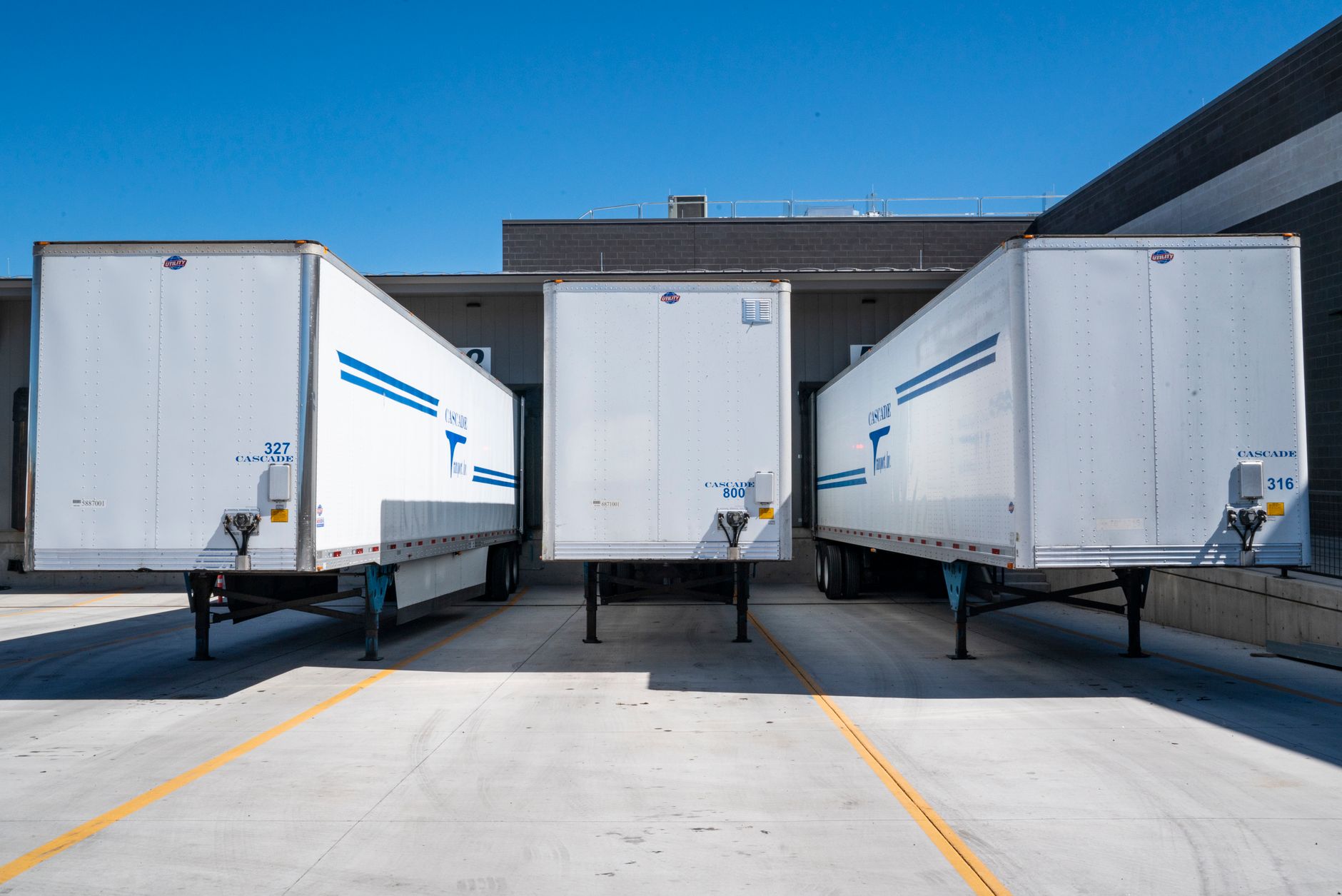
The tender-accuracy point is sharpest in LTL, where a wrong weight or a bad class triggers reclass and reweigh charges that land weeks later on an invoice you can't easily dispute. With the freight classification system itself being overhauled this year, clean data at the moment of tender is worth more than it has been in a decade. I walk shippers through the mechanics in our guide to the 2026 NMFC freight-classification reform, and the short version is this: the shipper with the cleaner data pays the lower all-in rate, full stop.
Diversify the base before a small carrier fails on you
The two carriers that stopped answering my tenders this year were both small fleets, and that is not a coincidence. Regulation is hitting the smallest operators hardest, and a single-source dependency on a fragile 15-truck fleet is a risk that used to be invisible and is now live. I map every client's book by carrier concentration, and any lane that leans more than about 40% on one small carrier goes on a watch list.
Diversification is not the same as running a huge, unmanaged carrier list. It means building genuine partnerships with a handful of financially sound carriers who will prioritize your freight, then keeping enough breadth that no single failure strands a lane. I would rather have eight carriers who take my calls than forty who don't remember my name.
Dedicated versus brokerage on your critical lanes
For the lanes that cannot fail, the plant that runs out of components, the customer whose service level is written into a contract, I push clients to weigh dedicated capacity against brokerage rather than defaulting to either. Dedicated fleets cost more per mile and lock you into committed volume, but in a market where rejections are at multi-year highs, guaranteed trucks on a critical lane can be cheaper than the spot-market scramble when your routing guide fails. Brokerage keeps you flexible and covers the lanes where variability is tolerable. The honest answer is usually a blend, sized to how much a missed pickup actually costs you.
Hedge your drayage exposure ahead of peak
If you move containers, the intermodal side of your network is the one I'd worry about first. ITS Logistics flagged that ocean and rail container drayage markets were positioned to tighten as soon as July, when peak season begins, with downstream price surges building into the 2026 peak. ITS Logistics Import volumes were already climbing, with U.S. containerized imports around 2.4 million TEUs in a single recent month, up about 9% month over month. ITS Logistics More boxes off the water plus fewer trucks to move them inland is a straightforward recipe for a drayage squeeze.
Hedging here means getting your peak drayage volume under some form of commitment before the surge, not after. If you're not sure how the inland container move actually works or where the cost stacks up, our explainer on what drayage is is the place to start before you negotiate. The shippers who wait until the port is congested to think about drayage are the ones paying accessorials by the day.
What's on my own action list
If you run a truckload book of any size, here is what I'd be doing over the next ninety days, in the order I'd do it. Pull your carrier concentration report first and flag every lane that depends on a single small fleet, because that is the exposure that can hurt you fastest. Then move up any bid that expires in the second half of the year and lock length while spot sits above contract. Audit your tender data next, because clean weights and clear commodity descriptions buy you priority that no rate negotiation can. Finally, if you touch containers, get your peak drayage volume committed now rather than in the middle of July. I've watched too many buyers treat a tightening market as something to react to. The ones who defended their rates this cycle are the ones who read the crossover early and moved while the moving was still cheap. That's the whole game in 2026, and the clock is already running.