




Deploy a pilot in a single facility in the north to reduce congestion and deliver assistance effectively; you will see improved throughput and a substantial shift in operations as robots become integrated with existing workflows, supporting them and other staff.
Joseph Couto shows that robotics adoption is expanding across logistics networks, with italy leading pilots in mid-size facilities. In controlled trials, autonomous mobile robots cut congestion by 28-42% in inbound docks and significantly increased throughput in order-picking corridors.
Moreover, teams report that robotic fleets provide steady assistance to human workers, taking over repetitive motions and enabling staff to focus on accuracy and exceptions. The collaboration drives a measurable improvement in order accuracy and worker safety, with incident rates dropping in facilities that adopt coordinated automation.
To deploy effectively, begin with automating inbound docks and high-congestion zones, then expanding to main aisles as you accumulate data. Select modular, navigation-capable robots and connect them to your warehouse management system. When asked by executives for ROI, the data show a payback of 12-18 months and a sustained lift in throughput. This setup reduces manual labor, improves accuracy, and prepares the network for broader expansion.
Moreover, governance should track key metrics such as cycle time, congestion index, and robot utilization to ensure the value remains substantial. As demand grows, the model can become widely adopted across italy and beyond, with autonomous fleets that support them and raise customer satisfaction.
AMR Logistics Insights
Deploy a targeted pilot: assign three AMRs to pharmaceutical order picking and replenishment in the high-value zone to maximize efficiency within 60 days, with a requirement map for routing, payload, and human-robot interaction safety.
Our analysis identifies three drivers of AMR success: demand variability in ecommerce orders, space constraints in storage aisles, and the need for traceability of pharmaceutical items. Each driver shapes how AMRs operate: dynamic routing, safe proximity to workers, and reliable docking at stations.
What to measure to prove value: cycle time, travel distance, pick accuracy, and maintenance downtime. Because these indicators translate directly to throughput and cost, track them against a baseline weekly. The list below pairs capabilities with concrete metrics.
The list below supports a phased approach to implementation, focusing on what matters most for a measurable improvement in logistic performance.
Intelligent navigation and obstacle avoidance amplify throughput, while safe docking and battery management ensure high availability during peak periods. AMRs must operate with clear task assignments and real-time re-planning to adapt to layout changes.
| Focus area | Key requirement | Baseline | Target | Timeline |
|---|---|---|---|---|
| Inbound/picks in pharmaceuticals | Dynamic routing, payload 15–35 kg, safe stop near operators | 120 picks/hour | 180 picks/hour | 90 days |
| Replenishment and order consolidation | Docking station reliability, error rate < 0.5% | 4 dock errors/week | <0.2% | 60 days |
| Pallet and case handling | SLAM-based navigation, shelf-level positioning | 95% on-time | 99% on-time | 120 days |
Purchases and scaling should align with ROI. After validating the pilot, extend AMR coverage to other logistic zones and broaden into non-pharmaceuticals categories where item movements suit autonomous handling. This advancement hinges on building internal expertise–train operators to program routes, monitor battery health, and tune task assignments–so the AMR fleet can effectively handle peak periods and maintain high accuracy, even when aisle layouts change. AMRs must comply with safety rules and maintain battery readiness.
Criteria for selecting AMR suppliers and service partners
Begin with a formal proof‑of‑concept plan, requiring a site survey, task profiles, and a 90‑day pilot that includes clear milestones, measurable KPIs, and the ability to scale across multiple deployments.
Assess the supplier's technology portfolio and expansion capabilities: compare platforms that rely on lidar-based navigation, multi‑sensor fusion, and modular payloads; verify that they can handle your space constraints, load ranges, and multiple task streams while you are expanding deployment across sites.
Demand validated performance data from at least two reference deployments in similar environments; require uptime targets in the 99.5–99.9% range, MTTR under 4 hours, and clear metrics on docking accuracy, navigation reliability, and task completion rate, plus a public roadmap detailing developments and improvements achieved in recent years.
Examine service quality and support, including on‑site response times, spare‑parts availability, remote diagnostics, and training programs; ensure the partner has a regional network that matches your expansion plans and can deliver within your capital and space constraints.
Assess safety, security, and data practices: confirm adherence to industry standards, safety certifications, and cyber hygiene; verify that integration approaches enable speak with engineers about guardrails and failover strategies, and that data handling aligns with your privacy requirements while you manage mission-critical tasks.
Consider market coverage and partnerships, especially if you operate across latin markets; verify local service capabilities, currency and tax considerations, and the ability to expand with regional customers; ensure the strategy aligns with your expansion goals and that they can deliver on a scalable deployment roadmap leveraging their global network.
Use a structured list or scorecard to compare candidates: task‑fit, portfolio breadth, service coverage, data protection, and risk management; weight factors such as deployment readiness, capital efficiency, and space utilization; request a trial, check references, and speak with customers in cosmetics or other sensitive sectors to understand benefits in handling varied SKUs and changes in load, while the partner speaks transparently about capabilities and limitations.
Understanding SLAs and response times for robot downtimes
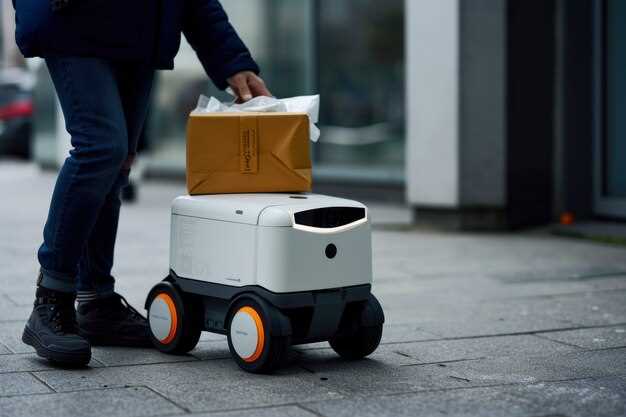
Implement four SLA tiers for robot downtimes with explicit targets: Critical downtime requires acknowledgment within 5 minutes, initial remediation or rerouting within 15–30 minutes, and full restoration within 60 minutes. High priority targets: acknowledge within 10 minutes and repair within 1–2 hours. Medium: ack within 30 minutes and fix within 4–8 hours. Low: ack within 2 hours and resolve within 24 hours. Tie these terms to the demand profile of your operations and set a clear escalation path. Use a digital monitoring dashboard to track adherence across major regions and during peak cycles.
Define terms in plain language and bind them to measurable metrics: time-to-acknowledge (TTA), time-to-repair (TTR), and uptime rate. Document escalation steps, third-party support SLAs, and credits for missed targets. For automated vehicles and robotics fleets, treat downtime as an ecosystem event rather than a single component failure.
Monitoring and capture: instrument cylindrical actuators and other components with edge sensors and a centralized log. Capture failure codes, start and stop times, affected zones, and root-cause data. Track rate of recurring failures in bottleneck regions to guide maintenance prioritization and spare-part planning.
Operational strategies during surging demand and obstacles: maintain a stock of spare parts and spare cylindrical components; run parallel tasks on multiple vehicles; re-route workflows to other lines. Coordinate with otto support networks to shorten regional response times. This keeps food logistics moving, even when a line stalls, and helps quantify the impact on them and drive SLA refinements.
Innovation and transformation: use digital twins and simulation to test downtime scenarios; train operators; preserve substantial reserves of parts; schedule proactive checks on major lines. By pairing monitoring with proactive maintenance, the rate of downtime declines and recovery times improve. The approach supports transforming warehouses into autonomous hubs that sustain service across regions and demand profiles.
Practical maintenance plans: preventive checks and spare parts inventory
Start by implementing a unified preventive checks calendar that runs simultaneous tasks across bots, sensors, conveyors, and docking stations during low congestion hours throughout the facility. Assign owners for each asset family and log outcomes in a shared system so professionals can review trends among warehouses and adjust schedules. To enable faster decisions, teams rely on this data.
Map checks to zone density and footprint: high-density aisles get weekly visual inspections and monthly vibration checks, mid-density areas receive checks every two weeks, and low-density zones go monthly. Schedule these during shift changes to minimize congestion and simultaneous disruption throughout the site.
Spare parts inventory plan: categorize items into three tiers: critical items (drive motors, gearboxes, encoders) kept for a 30-day usage buffer; standard items (sensors, cables, wheels) for 45 days; long lead items (specialized PCBs) for 60 days. Set reorders when stock falls to 25% of tier sizing and maintain minimum stock equal to 1.5x average daily usage for critical items. This aligns with the requirement to meet bot uptime across peak periods and reduces capital tied up in slow-moving stock.
Control and learning: deploy MTBF and MTTR dashboards and review simultaneous downtime events to identify root cause patterns. Use predicted signals from motor heat, belt wear, and encoder drift to adjust preventive windows. Stay informed with news from suppliers and advances in the technologies that support bots.
People and governance: professionals from maintenance, operations, IT, and logistics meet weekly to review KPIs and update the plan. Ensure shared data access across warehouses and avoid duplicate orders. Use standardized maintenance checklists to raise consistency and meet the requirement.
Transformation and partnerships: transforming how bots operate relies on reliable spares and knowledge sharing; maintain a footprint of capital and assets; supplier relationships with companys should offer fast lead times and after-sales support. Using this approach, warehouses can scale the bot fleet, reduce congestion, and meet service levels.
OTA updates, cybersecurity, and risk mitigation practices
Implement signed OTA updates with hardware-backed attestation and staged rollouts, starting with non-critical payloads in test bays and expanding to all fleets within 90 days. This reduces exposure and moves operations towards safer operations with rapid rollback if anomalies are detected.
Adopt a governance model that keeps control tight while enabling speed: verify signatures, enforce secure boot, and use mutual TLS for all device-to-update-server traffic. Pair this with a software bill of materials (SBOM) to track components, so teams can prioritize fixes across diverse types of payloads and goods across sectors and processes.
- Secure update process: require cryptographic signing, enforce code integrity checks on boot, and isolate update channels from operational data streams to lower cross-contamination risk.
- Rollout strategy: pilot updates on 10-15% of platforms, then scale to 50% before full deployment; monitor performance deviations and increase rollback readiness.
- Supply chain discipline: mandate pre-approval from manufacturers and suppliers, hold vendors to secure development practices, and share vulnerability data across partners to enhance detection and response.
- Security controls: deploy zero-trust network access, device attestation, encryption at rest, centralized logging; implement anomaly detection on control commands and payload transfers.
- Regional considerations: in asia and brazil markets, align with local regulations and standards; consider regional firmware signatures and update certificates; dematic deployments in asia illustrate that a combined hardware-software approach increases resilience.
Cross-cutting practices to sustain risk management include incident response playbooks, regular tabletop exercises, and unified dashboards that track investments in cybersecurity across sectors. Shared lessons from mergers between automation integrators and cloud platforms help standardize risk metrics and accelerate adoption of secure OTA practices. Operators should expect a steady increase in automated maintenance capabilities as these practices mature, with a growing emphasis on lower downtime and higher assurance of payload integrity. These approaches were refined through pilots, and they are designed to support operators as the ecosystem shifts towards more automated and interconnected warehouses.
Measuring ROI and value of continuous support programs

Implement a strict ROI model that ties continuous support program metrics to tangible savings within 90 days. Define baseline metrics for task completion time, dwell time, mispicks, and deliveries per shift, and track improvements using data from domestic warehouses, retail operations, and e-commerce fulfillment centers in an evolving environment.
Value emerges when outcomes map to three drivers: labor efficiency, capacity utilization, and service reliability. For a typical 12-week pilot, expect labor-hour reductions of 15–25%, fewer mispicks by 30–50%, and a rise in on-time deliveries of 6–12 percentage points, with payback under 9 months when the program includes updating navigation and route planning, transforming how goods move.
Build dashboards that show performance by site type (domestic warehouses, retail distribution centers, e-commerce hubs) and by robot family. Among pilots, measure time-to-resolution for issues, number of retries per task, and operator satisfaction. Use a monthly review cadence to decide where to scale and where to adjust contracts with partners such as freightamigo or other integrators. joseph notes that ROI focus must stay on value streams rather than hardware counts; this must be grounded in practical gains.
Cost structure covers licenses, remote diagnostics, and field visits. Tie total program cost to incremental savings from reduced headcount, fewer escalations, and higher throughput. A 12- to 18-month horizon typically shows net value in the 1.3x–2.0x range, depending on site density, product mix, and whether the program touches domestic warehouses and other logistics nodes throughout the network.
Market signals from unctad show the e-commerce boom and the need for capable automation in warehouses and retail fulfillment. Manufacturers and retailers among the largest beneficiaries were those who pursued mergers or data-sharing collaborations, unlocking boosted deliveries and faster cycles from receiving to shipping, aided by improved navigation, transforming domestic warehouses.
Action list for teams: map tasks to value, designate a pilot scope, capture baseline, implement continuous support, and set monthly reviews. Document lessons learned in a shared knowledge base, helping ops teams throughout domestic warehouses and freight networks. Rely on a platform like freightamigo for routing and navigation optimization, and ensure the data feed remains clean and secure.