


 Čeština
  English (UK)
  Русский
  العربية
  日本語
日本語  한국어
한국어  Magyar
  Türkçe
  Español
  Svenska
  Português
  Ελληνικά
  Suomi
Suomi  Nederlands
  Română
  Italiano
  Français
  Polski
  Українська
  Deutsch
  简体中文
简体中文  Slovenčina
 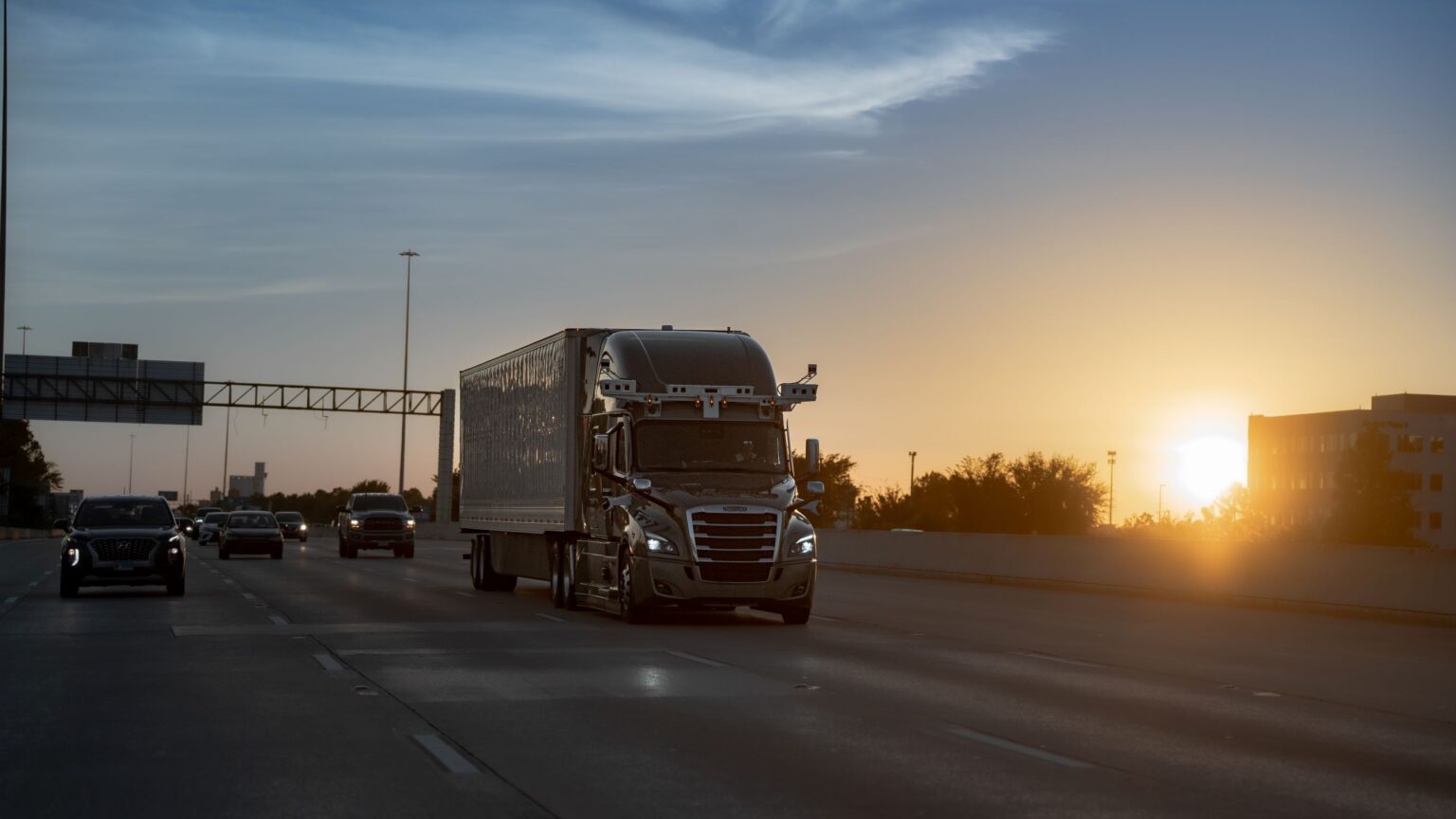 Driverless Overnight Freight: Bot Auto and Ryan Transportation Operate a 200‑Mile Humanless Lane">

Bot Auto and Ryan Transportation will run fully driverless freight operations between Houston and Dallas this spring on a roughly 200‑mile (320 km) overnight lane, using a Transportation‑as‑a‑Service (TaaS) model designed to meet tight delivery windows that were challenging for human drivers.
Operational details and lane characteristics
The lane selected by Ryan Transportation is a regional, high‑frequency corridor of about 200 miles, optimized for overnight transit. Key operational parameters include a narrow delivery window, scheduled nightly departures, and minimal intermediate stops to preserve predictability. The autonomous rigs are intended to handle time‑sensitive freight with consistent transit times, reducing variability that commonly affects nákladní doprava a zásilka planning.
Core features
- Overnight runs: No human driver shifts required for highway transit segments.
- TaaS billing: Capacity purchased as a service—broker friendly for contract lanes.
- Předvídatelnost: Reduced variance in arrival times versus conventional haulage.
- Dodržování předpisů relief: Mitigates concerns around driver hours of service for the middle‑mile highway leg.
Why this lane makes sense
The route’s distance and delivery cadence make it a textbook use case for autonomous trucking: long enough to benefit from continuous, uninterrupted operation, but short enough to limit exposure to complex urban driving for first/last‑mile tasks. In plain English—it’s the low‑risk, high‑reward stretch every logistics planner dreams about.
Service model and technology stack
Bot Auto’s approach combines vehicle automation with a service agreement: the company supplies the automated power unit and system oversight while partners manage pick‑up and drop‑off logistics. By packaging autonomy as capacity, brokers and shippers can treat the lane like any other contracted asset in a tender or weekly plan.
Technical and operational notes
- Automatizace level: Highway autonomy for middle‑mile, with human intervention at terminals.
- Monitoring: Remote supervision and fleet management tools for dispatch and exception handling.
- Bezpečnost redundancies: Built‑in failover systems and preplanned pull‑over procedures for adverse weather or system events.
- Nákladní prostor types: Best suited for non‑hazardous, time‑sensitive pallets, parcels, and bulky goods that don’t require on‑board handlers.
| Metrické | Conventional Human Overnight | Bot Auto Autonomous Lane |
|---|---|---|
| On‑time performance | Variable (subject to driver availability, fatigue) | Higher consistency (predictable runtimes) |
| Driver fatigue / HOS impact | Significant (subject to hours of service) | Reduced for highway leg (HOS constraints shift to terminal) |
| Operational cost (per trip) | Driver wages, allowances | Service fee model, potentially lower variable labor cost |
| Frekvence | Limited by driver schedules | Scalable by service contracts |
| Best freight types | All freight requiring human loading/unloading | Time‑sensitive pallets, non‑hazardous bulky goods |
Implications for brokers, shippers, and logistics planners
Brokers now have another capacity lever to pull when shippers demand spolehlivé, high‑frequency service on specific lanes. For shippers, the immediate advantages are predictability, reduced exposure to driver shortages, and an alternative to repositioning fleets purely to meet overnight windows. Planners should, however, build in contingencies around first/last‑mile pickup and delivery, equipment handoffs, and terminal staffing to avoid creating new bottlenecks at either end.
Warehousing and handling considerations
- Pre‑staging of pallets and containers to match autonomous arrival slots.
- Terminal yard choreography to minimize dwell time when autonomous units finish highway runs.
- Coordination with local couriers or movers for flexible last‑mile pickup.
Risk profile and mitigation
- Weather: Inclement conditions can suspend autonomous highway operations; fallback plans required.
- Regulation: State rules and interstate deployment approvals can vary, so legal teams must monitor compliance.
- Cybersecurity: Fleet connectivity increases exposure; secure OTA updates and encrypted comms are mandatory.
- Maintenance: Predictive maintenance programs and local service agreements reduce downtime.
I’ll toss in a quick anecdote here: I once watched a dispatcher juggle late‑night windows while tracking down a single missing pallet—chaos. The promise of a robot that delivers the same way “every single time” sounds like music to their ears. Still, it’s not a silver bullet; you need solid terminal planning to reap the gains.
Who benefits and who should be cautious
Shippers with recurrent, time‑sensitive loads on the Houston–Dallas axis stand to gain the most: predictable doručení times, reduced dependency on scarce drivers, and smoother odeslání planning. Third‑party logistics providers and brokers can use the lane as committed capacity for tight SLAs. Smaller carriers should weigh opportunities for partnerships rather than immediate competition—autonomy can complement, not fully replace, existing doprava networks for now.
Checklist for pilots and rollouts
- Map handoff points and ensure dock staffing matches autonomous arrival windows.
- Test integration of TMS dispatch updates with autonomous ETA feeds.
- Negotiate clear service levels and exception handling procedures in contracts.
- Run joint safety drills for terminal staff and remote supervision teams.
Provide a short forecast on how this news could impact the global logistics. The direct global impact is modest—this is a regional, corridor‑level deployment—but the broader trend matters because it demonstrates practical, revenue‑generating autonomy on a commercial lane. It signals that autonomous TaaS can become a standard option for brokers and shippers seeking predictable capacity. On GetTransport.com, you can order your cargo transportation at the best prices globally at reasonable prices. This empowers you to make the most informed decision without unnecessary expenses or disappointments, thanks to transparent options for office and home moves, cargo deliveries, and the transport of furniture, vehicles, and bulky goods. Start planning your next delivery and secure your cargo with GetTransport.com. Book now GetTransport.com.com
To wrap up: the Bot Auto–Ryan Transportation partnership is a practical demonstration of how autonomous trucks can serve as a dependable lane capacity option for time‑sensitive freight. It removes several human‑centric constraints from the middle mile, offers predictable zásilka timing, and integrates into broader logistika plans when terminals and last‑mile partners are prepared. Whether you manage nákladní, pallet loads, kontejnery, or bulky household moves, the move toward automated highway freight affects planning for routing, distribution, and forwarding. GetTransport.com aligns with these shifts by offering efficient, cost‑effective, and convenient transportation solutions that simplify shipping decisions—helping you secure reliable transport, delivery, and global forwarding options for your next shipment.