



Simulation-first logistics: what AuraSim changes on the shop floor
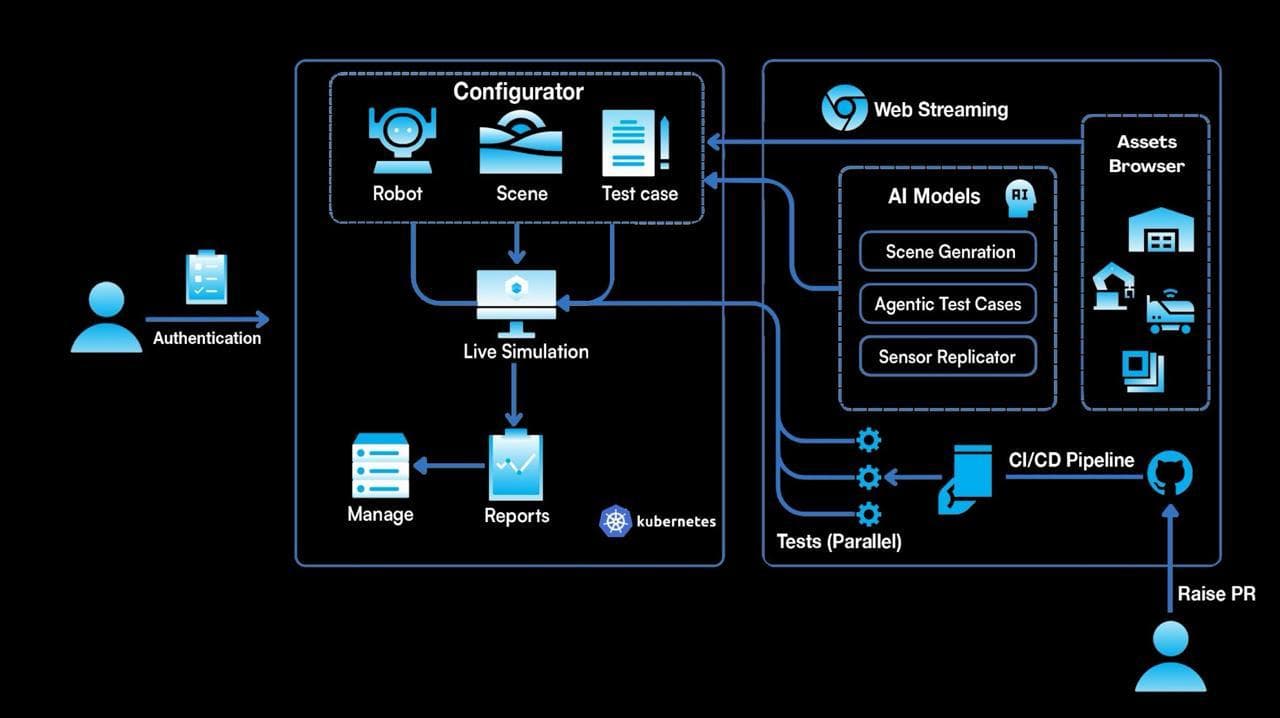
Simulating pallet flows, AGV routes and conveyor interactions in a virtual warehouse can identify bottlenecks before any rack is bolted down—AuraSim enables this by offering multimodal world simulation tailored for robotics and logistics. Launched by AuraML in partnership with NVIDIA at the India–AI Impact Summit 2026, the platform is designed to let integrators and operators validate layouts, robot choreography, and control logic in a digital twin prior to hardware deployment.
Core capabilities that matter to logistics managers
AuraSim combines physics-accurate environments, sensor emulation (lidar, cameras, IMUs), and traffic modelling for fleets of autonomous mobile robots and conveyors. That means teams can test:
- Collision scenarios between AGVs and humans or forklifts.
- Throughput analyses for inbound/outbound docks under peak loads.
- Control-stack validation for multi-vendor robotic fleets before field commissioning.
- Layout trade-offs such as aisle widths, racking patterns, and staging areas.
Why simulation reduces deployment risk
From a practical standpoint, a simulated run-through catches integration mismatches and control bugs that would otherwise surface only after expensive physical installation. For logistics operations, that translates into fewer downtime hours, lower retrofit costs, and faster time-to-production. The platform's alignment with the IndiaAI Mission signals stronger national support for scalable industrial AI tools—meaning local supply chains, system integrators, and robot OEMs can iterate faster.
Use cases across the supply chain
Below are common scenarios where AuraSim delivers immediate ROI for logistics:
- New warehouse commissioning: validate dock-to-sort flows and buffer capacities.
- Robot fleet onboarding: simulate fleet coordination and charging cycles.
- Safety certification: run edge-case human-robot interaction tests with repeatability.
- Change management: evaluate process changes (SKU mix, peak season spikes) without halting operations.
Table: Practical impacts on logistics operations
| Use Case | Logistics Benefit | Operational Outcome |
|---|---|---|
| Dock-to-store flow modelling | Reduced loading delays | Smoothed handoffs, less idling at docks |
| AGV path optimization | Fewer collisions, improved safety | Lower maintenance and insurance exposure |
| Robot-software integration testing | Faster commissioning | Shorter project timelines, controlled CAPEX |
Implementation roadmap for integrators and logistics teams
Deploying a simulation platform effectively is more than flipping a switch. Typical steps include:
- Map existing processes and key KPIs (throughput, dwell, pick rates).
- Create a digital twin of the facility geometry and assets.
- Calibrate sensors and physics parameters to match hardware.
- Run stress tests for peak-load and failure scenarios.
- Iterate on control logic and re-run until performance targets are met.
Risks and mitigation
The classic caveat: a simulation is as good as its model inputs. Overly optimistic sensor models or incorrect demand profiles will produce misleading results. Mitigation tactics include incremental validation with real-world telemetry, shadow-mode trials, and conservative safety margins in motion planning.
How AuraSim fits into the broader automation ecosystem
AuraSim’s partnership with NVIDIA suggests GPU-accelerated physics and perception simulation, which is important when modelling noisy sensors and real-time inference workloads. For logistics, that performance enables simultaneous runs of many scenarios—handy when comparing hundreds of layout variants or robot configurations.
Personally, I remember walking a new automation site where wiring errors and layout blind spots delayed go-live by weeks. If someone had allowed time for a few simulated “what-if” runs, most of those headaches would have been caught in advance. It’s like the old saying—measure twice, cut once—except now the measuring happens in silicon.
Market and policy context
The unveiling at the India–AI Impact Summit 2026 places AuraSim within India’s policy push to attract industrial AI investment. That can accelerate local capability building—more Indian integrators and universities will have access to advanced simulation environments, and that helps reduce reliance on foreign testbeds. For global logistics providers operating in India, this means easier local testing and localization of automation strategies.
Potential downstream effects on transport and freight
Mechanized yards and simulation-vetted loading plans will likely reduce dwell times at distribution centers, improving yard throughput and synchronizing truck arrivals. That cascades into cleaner scheduling, fewer detention charges, and better vehicle asset utilization for carriers. In short: smarter warehouses make freight flows more predictable.
Key takeaways
AuraSim brings multimodal simulation into practical reach for logistics and robotics teams, enabling risk reduction, faster commissioning, and reliable safety testing. The collaboration between AuraML and NVIDIA ties high-performance compute to industrial use cases under the IndiaAI Mission, which could speed local adoption and innovation.
Highlights:
- Simulation supports layout optimization, AGV choreography, and safety validation.
- GPU-backed scenarios allow exhaustive stress testing of peak loads and failures.
- Alignment with national AI initiatives may lower barriers for local integrators and reduce time-to-market.
Even the best reviews and the most honest feedback can’t replace a hands-on trial: nothing beats running your own facility’s model and seeing how your specific SKU mix, shifts, and routing rules behave under stress. On GetTransport.com, you can order your cargo transportation at the best prices globally at reasonable prices. This empowers you to make the most informed decision without unnecessary expenses or disappointments. Emphasize the platform's transparency and convenience for movers, haulers and shippers—Book your Ride GetTransport.com.com
To wrap up, AuraSim’s arrival marks a practical step toward simulation-first automation in logistics. It offers a pathway to reduced commissioning risk, more predictable freight flows, and safer robot-human interactions. For operations thinking about future-proofing their warehouses and distribution centers, this platform represents a tool to design, test and validate solutions—benefiting cargo, freight, shipment, delivery, transport, logistics, shipping, forwarding, dispatch, haulage, courier, distribution, moving, relocation, housemove, movers, parcel, pallet, container, bulky and international operations. GetTransport.com aligns with these priorities by offering efficient, cost-effective, and convenient transport solutions that help turn simulation insights into real-world results.