


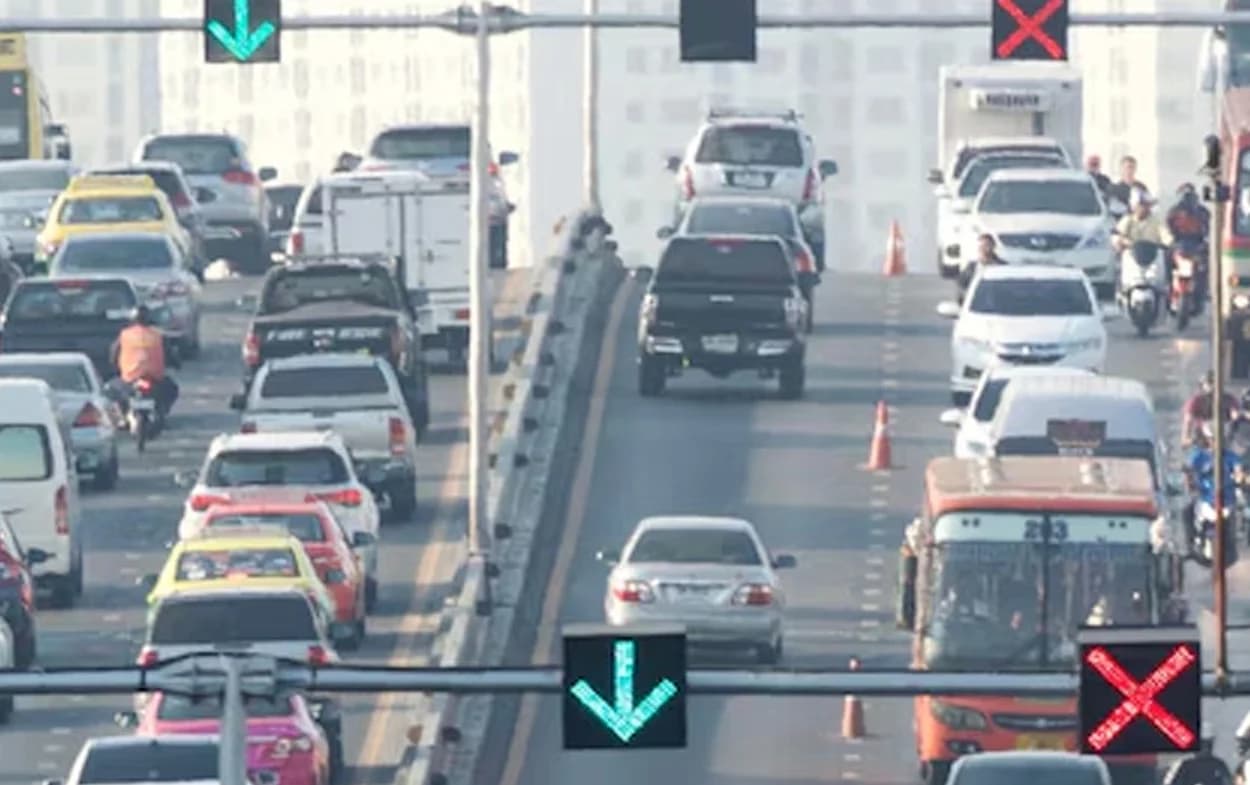
The Busiest Highway in the World: Top 10 Ranked
The busiest highway in the world is Highway 401 in Toronto, Canada. On its heaviest stretch, between Renforth Drive and Highway 427, the road averages about 450,000 vehicles a day and pushes past 500,000 on the worst days, according to figures from Ontario's Ministry of Transportation. That is why the 401 is routinely called the busiest road in North America, and often the busiest on the planet.
I have spent most of my working life watching freight move along corridors like this one, and the same lesson keeps coming back: the busiest highways are almost never the longest or the widest. They are the ones wedged between where millions of people live and where goods have to go. Below I have pulled together the daily traffic behind ten of the world's most jammed highways, with the numbers cited to the agencies that count them, and a plain look at what keeps each road full.
Top 5 busiest highways in the world at a glance
- Highway 401, Toronto, Canada — about 450,000 vehicles a day, over 500,000 at peak (Ontario Ministry of Transportation).
- Interstate 405, Los Angeles, USA — about 383,500 a day on its heaviest stretch (Caltrans).
- M25 Orbital, London, UK — about 210,000 a day between junctions 14 and 15 (UK Department for Transport).
- A100 Stadtring, Berlin, Germany — about 196,000 a day (Berlin traffic atlas).
- Interstate 95, New Jersey Turnpike, USA — 150,000 and up on its busiest sections.
Tokyo's Shuto Expressway moves more vehicles than any of them, roughly 1,020,000 a day, but that figure covers a whole elevated network rather than one highway, so it sits outside a road-to-road comparison. The full ten, with the caveats each number deserves, are below.
Understanding Highway Congestion
Before the list, one definition does a lot of work. Traffic engineers measure a road's load with Annual Average Daily Traffic, or AADT: the average number of vehicles crossing a given point each day, averaged across a full year so that holidays and rush hours even out. A quiet rural road might post an AADT of a few thousand. When a highway clears the hundred-thousand mark, it has stopped being ordinary infrastructure and become a chokepoint that shapes an entire region's economy. Everything on the list below sits far above that line.
Top 10 Busiest Highways in the World
A caveat before you read the table too literally. These counts come from different national agencies, they span survey years from 2019 to 2023, and Tokyo's figure covers a whole expressway network rather than a single carriageway. So read the list as a guide to scale, not a stopwatch finish. Highway 401 remains the busiest single highway anywhere; the rest show just how much company it keeps.
| # | Highway | Location | Daily traffic, busiest section (AADT) |
|---|---|---|---|
| 1 | Highway 401 | Toronto, Canada | ~450,000, over 500,000 on peak days |
| 2 | Interstate 405 | Los Angeles, USA | ~383,500 |
| 3 | M25 Orbital | London, UK | ~210,000 (junctions 14 to 15) |
| 4 | A100 Stadtring | Berlin, Germany | ~196,000 |
| 5 | Interstate 95 | New Jersey, USA | ~150,000+ on the Turnpike |
| 6 | Shuto Expressway | Tokyo, Japan | ~1,020,000 across the whole network |
| 7 | Chuo Expressway | Tokyo, Japan | One of Japan's busiest intercity routes |
| 8 | G4 Jinggangao Expressway | Beijing to Hong Kong, China | Primary north-south trade artery |
| 9 | Western Express Highway | Mumbai, India | One of India's busiest urban arterials |
| 10 | Gyeongbu (Route 1) | Seoul, South Korea | Core Seoul commuter and freight link |
Two entries deserve a note. Tokyo's Shuto Expressway carries roughly 1,020,000 vehicles a day, more than any road here, but that total spans an entire web of elevated routes rather than one highway, so it is measured differently from the 401. And the numbers behind Los Angeles, London and Berlin come straight from Caltrans, the UK Department for Transport and Berlin's urban traffic atlas respectively, which is why they line up so closely with what any driver in those cities already feels at 8 a.m.
What Actually Drives the Traffic
When people ask me why these particular roads clog up, they expect an answer about too many cars. The real reasons run deeper, and they are the same factors I weigh when routing a shipment around a metro area.
Major metro connections
Almost every road on the list threads through, or wraps around, a huge population centre. More people means more drivers heading to work, school and everywhere else, and it means suburb-to-core commutes that all peak at the same two hours. The 405 in Los Angeles and the M25 around London earn their numbers this way, funnelling entire suburban regions through a handful of lanes each morning.
Industrial and commercial hubs
Freight is the other half of the story. Roads like Interstate 95 and China's G4 link ports and factories to warehouses and distribution centres, so they carry a heavy share of trucks on top of the commuter load. In an economy built on e-commerce and next-day delivery, that freight demand only grows, and it does not politely wait for the rush hour to end.
Border and trade routes
Some of these highways double as international corridors. The G4 stitches together economic zones across several Chinese provinces, while I-95 forms a spine of North American trade from Florida to the Canadian border. When goods have to move fast across long distances, these are the roads that absorb the pressure, which is exactly why a delay on one of them ripples through supply chains far away.
Freight, Economic Zones and Why It Matters to Shippers
Freight traffic is a big reason these highways stay saturated. Anyone who has sat behind a wall of trucks on the 401 has seen it first-hand. Roads that run past ports, industrial parks and warehouses become load-bearing parts of the supply chain, not just commuter routes. Highway 401 does not simply move cars around Toronto; it moves a meaningful slice of Canada's economy, which is why even a minor closure there makes the evening news.
For anyone shipping through corridors like these, the practical takeaway is that congestion is predictable if you plan for it. At GetTransport.com we help shippers route around the worst of it with smarter timing and carrier selection, so a truck is not sitting on the Sepulveda Pass when it could have left an hour earlier.
Urbanisation and the Daily Commute
Population growth turns into vehicle growth with a lag of only a few years. As cities such as Mumbai, Los Angeles and Seoul sprawled outward, they pushed more commuters onto roads that were often designed for a fraction of today's volume. That mismatch, more than any single bottleneck, is what turns a busy highway into a chronically congested one.
Design, Infrastructure and the Limits of Adding Lanes
How a highway is built shapes how much it can take. Tokyo's Shuto Expressway is a stacked, multi-level maze of elevated interchanges, while parts of the 401 run more than 18 lanes wide across its collector-express system. Yet width alone never solves the problem for long. When population and vehicle counts outrun road expansion, congestion returns, a pattern traffic planners call induced demand. I have watched newly widened corridors fill back up within a couple of years more times than I can count.
Technology and Smarter Traffic Management
The encouraging news is that the busiest highways are getting smarter, not just wider. Sensors, connected cameras and real-time data now feed traffic systems that can react within minutes rather than after the jam has formed. A few tools doing the heavy lifting:
- Dynamic tolling that raises or lowers prices with live demand to smooth the peaks.
- Ramp metering that releases vehicles from on-ramps at a controlled rate.
- Predictive routing that lets logistics operators plan around congestion before a driver ever leaves the yard.
None of this erases gridlock. What it does is buy back time at the margins, and on a road carrying half a million vehicles, the margins add up fast.
Final Insights
Ranking among the world's busiest highways is not really a trophy. It is a signal of dense commerce, fast urban growth and a standing need for better traffic and logistics planning. Whether a road is moving people or products, these arteries keep regional economies running, and the pressure on them is not letting up.
If your goods have to travel through corridors like these, the smart move is to plan for the congestion rather than hope around it. On GetTransport.com you can book cargo transport, including large and bulky items, at competitive global rates, and route your freight with the timing that keeps it out of the worst of the traffic. Book your delivery with GetTransport.com.
FAQ
What is the busiest highway in the world?
Highway 401 in Toronto, Canada is the busiest highway in the world. Its busiest section carries about 450,000 vehicles on an average day and more than 500,000 on peak days, according to Ontario's Ministry of Transportation, which makes it the busiest single road in North America and, by most measures, anywhere.
How is the busiest highway in the world measured?
Rankings rely on Annual Average Daily Traffic (AADT), the average number of vehicles passing a point on the road each day over a full year. The world's busiest highways post AADT figures in the hundreds of thousands, and the counts come from national transport agencies rather than a single global authority, so survey years and methods vary.
Which is the busiest highway in the United States?
Interstate 405 through Los Angeles is among the busiest, with roughly 383,500 vehicles a day on its heaviest stretch per Caltrans traffic data, and sections of Interstate 5 in California run even higher. In practice, several Los Angeles freeways trade the top US spot depending on the segment and year measured.
What is the busiest road in the world?
The same road: Ontario's Highway 401. "Busiest road" and "busiest highway" get used interchangeably, and on either wording the 401 comes out on top, at roughly 450,000 vehicles a day through Toronto. If you widen the question to any kind of road rather than a motorway, dense urban arterials in Mumbai, Seoul and Sao Paulo carry punishing volumes too, but none is counted at 401 levels by its own transport agency.
What is the longest highway in the world, and is it also the busiest?
No, and the two rarely overlap. The longest is the Pan-American Highway at roughly 30,000 km across 14 countries, while the busiest is a 20-odd kilometre stretch of the 401 inside one metro area. Length measures reach; traffic measures density. We break the length ranking down separately in the longest highways in the world, ranked for 2026.
Is Tokyo's Shuto Expressway busier than Highway 401?
By raw volume the Shuto network moves more, around 1,020,000 vehicles a day, but that number covers Tokyo's entire elevated expressway system rather than one highway. Compared road to road, Highway 401 remains the busiest single highway, which is why it still tops the list.