


 Deutsch
  English (UK)
  Русский
  العربية
  日本語
日本語  한국어
한국어  Magyar
  Türkçe
  Español
  Čeština
  Svenska
  Português
  Ελληνικά
  Suomi
Suomi  Nederlands
  Română
  Italiano
  Français
  Polski
  Українська
  简体中文
简体中文  Slovenčina
 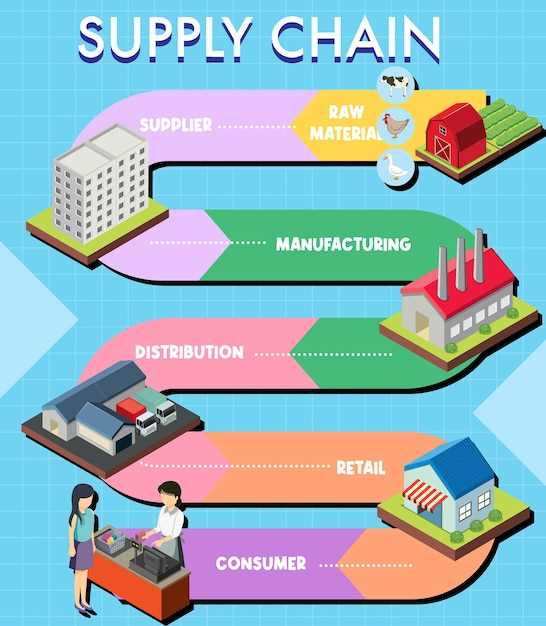 Die nächste Generation der Lieferkette – jünger, besser ausgebildet &">

Start with a data-driven, partner-first network that links generations, education, and frontline work in the workplace to shorten delivery times and reduce inventory levels within six months.
Use those data streams from each product and all partners to align inventory, delivery windows, and loyalty signals. In a 12-week pilot with five partners, on-time delivery rose by 9%, fill rate improved by 7%, and inventory carrying costs dropped 12% across multiple timeslots.
Zuerst, build a flexible planning horizon that shifts between forecast-driven and real-time replenishment as changes occur. Second, colocate analytics with procurement and logistics teams to curb lead times and bolster loyalty through reliable delivery windows. Third, run a 90-day pilot to quantify results, targeting a 10% reduction in stockouts and a 15% lift in order fill. Fourth, create transparent metrics and micro-credentials that reward teams and strengthen the workplace culture. These four ways will guide your rollout.
When a constraint appears, then reallocate resources quickly and re-run the forecast for the next window.
This approach, designed for younger generations and a diverse set of partners, helps develop a winning posture that benefits customers, teams, and the entire supply chain.
Track performance at peak times to capture real-world variability and continuously refine how those products are stocked, delivered, and supported by loyalty programs across the network.
Practical Trends for Aligning Education, Youth, and Diversity in the Supply Chain

Recommendation: Create a co-designed curriculum with local colleges and retailers that pairs coursework with paid internships in the field. Define your requirements for roles in retail, procurement, and last-mile logistics, and track progress with a simple analysis dashboard. This educational design keeps hands-on work in the field while you educate new talent and give diverse youth a chance to enter the space; it wont replace the value of on-site mentorship, but it expands access for trainees.
Leverage internet-enabled modules and hands-on projects to teach hard skills such as inventory control, demand planning, and supplier design. Deliver content in short, days-long rotations so trainees can see the thing in practice, not just in theory. The program educates participants in financial literacy and budgeting to align with your requirements and the means to measure impact.
Diversity and youth focus: Build mentorship networks across age groups and backgrounds. Create targeted scholarships for youth in areas weve identified as underserved. Use a structured interview rubric to assess traits and performance on real tasks. Track metrics such as applicant diversity, retention within 12 months, and progression into supervisory roles. The analysis will reveal which partnerships are most likely to deliver value.
Practical steps by area: in retail and e-commerce, co-locate learning centers with distribution hubs to minimize travel days. In manufacturing and design spaces, rotate interns through design, quality, and planning teams. In smaller regions, leverage online courses and mentor networks to extend space for growth. This approach leverages traits of youth and the energy of diverse teams.
Implementation plan: Establish a cross-functional team to manage the program; appoint a senior sponsor to ensure alignment with financial targets and your talent requirements. Roll out in phases: pilot in two areas, evaluate after 90 days, scale to five. Measure outcomes: time-to-fill for critical roles, retention rate, and cost per hire. The means to fund it include internal budgets and targeted grants; show return on investment from faster onboarding and higher productivity from employees educated through the program.
To sustain momentum, launch a community of practice online and offline: weekly syncs, quarterly showcases, and a shared repository of case studies. Keep content fresh by updating curricula as technology and consumer demand shift. After each intake, collect feedback from participants and partner firms to refine partnerships and investments. This approach keeps education aligned with real-world needs without dependence on a single vendor.
Onboarding for a Tech-Savvy Gen: Streamlined paths for early-career hires
Start with a two-week onboarding sprint that pairs every new hire with a dedicated onboarding buddy and a role-specific outcomes list, delivering clear expectations from day one and reducing time-to-value in the first days.
Create three tracks–product, data/analytics, and operations–while offering an entire baseline kit: accounts configured, single sign-on access, and security checklists. Use cross-team kickoff sessions so everyone meets their squad, understands how their work ties to common goals, and can contribute immediately.
With demand for talent at a high level and a growing cohort of retiring colleagues, prioritize fast yet thorough integration. This approach accelerates impact for the organization and creates a stable pipeline of capable, engaged contributors who can adapt to evolving priorities.
Evaluate candidates by outcomes and potential rather than grades alone: their degrees can inform context, but practical demonstrations win in the short term. Build micro-credentials that acknowledge hands-on progress, which helps interested hires prove their ability and accelerates progression toward ownership of meaningful jobs.
Assign mentors from diverse teams, schedule weekly check-ins, and provide a structured support network. Stillman emphasizes that consistent guidance shortens initial frictions, enhances security awareness, and boosts the chance of long-term success for the newcomer and for their teams.
Measure success with concrete metrics: days to first independent contribution, time-to-complete a baseline project, and 90-day retention of talent. Use these terms to refine onboarding: higher satisfaction, clearer accountability, and tangible benefits for the entire organization.
Critical Skills and Certifications: Which credentials drive performance in 2025+
Recommendation: focus on three credential tracks that tie directly to measurable outcomes in 2025, then tailor each track to your roles and teams to maximize impact going forward.
Why these three tracks matter: they cover core operations, digital decision-making, and security/risk–the trio most likely to improve response times, reduce costs, and boost career opportunities for younger, better‑educated generations entering the workforce. Employers increasingly value concrete credentials that translate into faster problem solving and better collaboration across cross‑functional teams.
- Track 1 – Core operations mastery (CPIM, CSCP, CLTD or equivalent): builds end‑to‑end visibility, inventory optimization, and logistics coordination. Typical time to credential: 6–12 months with online study options; cost per module/exam: roughly $300–$800. Impact: 15–25% improvements in planning accuracy and on‑time delivery rates; three to five new roles per year in mid‑market firms often show a 10–20% salary premium after certification.
- Track 2 – Digital analytics and cloud literacy (AWS/Azure/GCP credentials; data analytics with SQL, Python, Tableau/Tableau‑like tools): enables teams to convert data into actionable decisions, supporting online and offline programs. Time to credential: 3–9 months for fundamentals, 6–12 months for advanced specialties; cost range: $150–$600 per exam, plus course access. Likely outcomes include faster response to disruptions (including sailings or supply line shifts) and clearer cost‑to‑serve modeling.
- Track 3 – Security, risk, and resilience leadership (CISSP, CISM, ISO 27001 Lead Implementer, NIST‑based certifications): protects critical systems as digitization accelerates. Time to credential: 6–12 months; cost varies by vendor and scope. Employer demand is rising as security considerations become standard in supplier selection; plan for 20%+ improvements in risk assessment capability and incident response readiness.
Formats that work best: online bootcamps, employer‑funded programs, and 60–90 minute weekly cohorts. Having a clear study plan and peer study groups increases completion rates and accelerates commercial impact for their teams.
Three practical takeaways for 2025 implementation:
- Align credentials to three career paths: operations specialists, data/decision scientists, and security/risk leads–into their existing roles, not as distant goals.
- Set a tight pilot window: three to six months per track, with defined metrics such as cost reduction, inventory turns, or incident response time.
- Measure the ROI in real terms: track improvements in on‑time delivery, cycle times, and cross‑functional collaboration; report monthly to the employer and to their teams.
Practical steps to start now: identify which roles within your organization are most likely to benefit, select one credential from each track, and create a shared online learning calendar. If you’re interested in building a cohesive capability, involve three to five cross‑functional partners to reinforce accountability and ensure a quick response to problems as they arise.
Bottom line: these credentials provide a clear, actionable path into the careers of younger generations in today’s supply chains, offering tangible opportunity for teams and their employers alike. Weve seencredible gains when organizations standardize on a three‑tier approach that integrates online learning, real‑world projects, and targeted mentoring. By investing now in core operations, digital analytics, and security credentials, companies can reduce cost, improve resilience, and unlock new career trajectories for their people.
Upskilling Playbooks: Scalable training that fits multi-generational teams
Start with three modular playbooks: onboarding, core operations, and continuous improvement, each designed for scalable delivery across stores and chains. Use a mix of online course modules, in-store coaching, and on-the-job tasks to reach all generations in 30 days, so they can apply learning quickly. This approach provides teams with a clear chance to see impact fast and keeps motivation high.
Each playbook uses microlearning: 8-12 minute courses, short simulations, and practical checklists that fit the pace of busy teams, including shifts in retail. The delivery window stays compact and measurable, with completion within 30 days. The format respects the nature and diversity of the workforce, from younger to more experienced staff.
Content focus: core tasks such as forecast accuracy, replenishment, and delivery routing, plus store-floor execution. Use realistic scenarios across three processes to boost understanding, praktisch moves that reduce stockouts and shorten cycle times. The same training helps chains unify standards and focus on what moves the needle.
Multi-generational design: offer captions, transcripts, and audio options so male colleagues and others with different learning styles can progress at their own pace. Highlight understanding and practical application, not jargon.
Measurement: track three key metrics: course completion, knowledge checks, and on-the-floor changes in behavior. Use a simple dashboard to show progress for each team, including millennial learners.
Implementation tips: appoint a learning champion in each store, provide 1-2 hours weekly for training, and align with shift patterns so learning doesn’t disrupt delivery. Use a winning frame: celebrate small wins, provide feedback, and give teams a chance to share improvements.
Here is a practical blueprint to sustain momentum: create a renewal cycle every quarter, maintain a central library and local customization, and reuse content for ongoing updates across chains.
Vielfaltsinitiativen im Kern: Konkrete Programme, um die Repräsentation zu erweitern

Starten Sie ein 12-monatiges, unternehmensweites Diversity-Programm, das gezielte Ansprache, bezahlte Praktika und strukturierte Mentoring kombiniert, um die Repräsentation in den Kernbereichen zu erweitern. Berufe. Etablieren Sie eine funktionsübergreifende Governance mit dem Senior Management und robust systems, und extern partnersund veröffentlicht quartalsbezogene Daten zum Fortschritt. Dieser Ansatz stärkt die profession durch Erweiterung der Zugangspunkte und Schaffung einer nachhaltigen Talentpipeline.
Konkrete Programme include apprenticeship tracks in software, data analytics, and operations; paid internships for those completing a basic credential; four-week bootcamps; and partnerships with community colleges and universities, including HBCUs and regional tech institutes. Postings list clear Anforderungen dieser Wert demonstrierte Fhigkeiten und Potenzial und unterstetzte den bergang von Praktika zu Vollzeitstellen. Arbeitsplätze in the Feld. Ziel: Mindestens 30% Praktikanten in Vollzeitstellen innerhalb von sechs Monaten nach Abschluss des Programms übernehmen.
Messung und Governance rely on a veröffentlicht dashboard. Verfolge Eintrittsraten, time-anstellung, Umwandlung in Vollzeitstellen und Bindung nach Kohorten. Die analysis zeigt, welche Programme die stärksten Ergebnisse erzielen und wo zusätzliche Unterstützung erforderlich ist, insbesondere für Menschen mit unkonventionellen Hintergründen. Verfolgen Merkmale wie Belastbarkeit und Zusammenarbeit, um eine Übereinstimmung mit grundlegenden job Anforderungen.
Outreach und Partnerschaften target those in the Feld who are often overlooked. Unser Plan umfasst eine umfangreiche Öffentlichkeitsarbeit über die internet, Campusveranstaltungen, Branchen-Meetups und Gemeinschaftsorganisationen, unterstützt durch partners helfen, Kandidaten frühzeitig zu identifizieren. Durch publishing regelmäßige Updates und das Teilen von Erfolgsgeschichten demonstrieren wir loyalty bleiben wir unseren Werten treu und halten die Stakeholder engagiert. Kompromisse bei Token-Einstellung sollten ausgeschlossen werden; bring um vielfältiges Talent aus diesen Netzwerken zu gewinnen und unsere Repräsentation zu erweitern. Planen Sie acht Campusveranstaltungen pro Quartal und 20 Branchen-Meetups jährlich, um einen stetigen Fluss von Kandidaten aufrechtzuerhalten.
Supportmechanismen ein Sicherheitsnetz für Neueinsteiger schaffen: strukturierte Einarbeitung, Peer-Mentoren, Sponsoring für Beförderungen und Zugang zu Stipendien für Weiterbildung. Zeitgebundene Betreuung, individuelle Entwicklungspläne und herausfordernde Aufgaben anbieten, um grundlegende Feld skills; diese Schritte erhöhen das Engagement und loyalty. Onboarding-Budgets pro Einstellung können bis zu $2.000 pro Jahr für Schulungen und Zertifizierungen umfassen.
Implementierungsschritte für Manager und Teams betonen Sie praktische, zeitbezogene Aktionen: definieren Sie klar timeRahmen für die Vorauswahl von Kandidaten schaffen, Interview-Rubriken anpassen, um Verzerrungen zu reduzieren, diverse Interviewpanels fordern, Rekrutierungszeitpläne veröffentlichen und vierteljährliche Überprüfungen durchführen, um Fortschritte sicherzustellen. Sicherstellen systems verfolgen, woher Kandidaten kommen (partners, Praktika, Online-Kurse) und wie schnell sie in Arbeitsplätze in the Feld.
Dieser Ansatz kommt dem zugute. company by expanding the talent pool, Verbesserung der Repräsentation über Teams hinweg, wo Kunde demand ist am höchsten, und die Zusammenarbeit über geografische Regionen hinweg zu stärken. Das Programm stützt sich auf Unterstützung networks, analysis, und ein Bekenntnis zu Offenheit internet Kanäle, um mehr Kandidaten zu erreichen. Durch publishing Ergebnisse und die Aufrechterhaltung eines klaren Weges zur Entwicklung, das Unternehmen baut loyalty und aufrechterhält Schwung.
Digitale Werkzeuge, die neue Interessenten ansprechen: Plattformen und Arbeitsabläufe, die die Produktivität beschleunigen
Nehmen Sie eine vereinheitlichte Onboarding-Plattform an, die geführte Workflows, rollenbasierte Dashboards und Mikro-Lernen kombiniert, um die Einarbeitungszeit für neue Mitarbeiter in Pilotprojekten um 30–45% zu verkürzen. Verwenden Sie Vorlagen für das Onboarding von Lieferanten und Kunden und erzwingen Sie eine Automatisierung, die Aufgaben an die richtigen Verantwortlichen weiterleitet und Ausnahmen in Echtzeit anzeigt. Dieser Ansatz treibt konsistente Prozesse für diejenigen voran, die den Bereich betreten, und verwandelt die Aktivität der ersten Woche in ein messbares Ergebnis.
Wählen Sie Plattformen, die einen einzigen Bereich für die Zusammenarbeit über Teams, Kunden und Lieferanten bieten. Argentus-inspirierte oder argentus-ähnliche Sourcing-Plattformen zeigen, wie die Inbetriebnahme mit dem Beschaffungswesen und den Kernaufgaben vor Ort zusammenhängt. Legen Sie eine einheitliche Kontenstruktur fest, stellen Sie SSO sicher und aktivieren Sie Dashboards, die den Aufgabenstatus und die Kosten widerspiegeln.
Designworkflows, die skaliert werden: automatisierte Taskrunner, Genehmigungsweiterleitung und Echtzeit-Dashboards. Erstellen Sie einen sechs-Wochen-Onboarding-Plan mit kleinen, verdaulichen Modulen, die Compliance-Prüfungen, Produktgrundlagen und grundlegende Lieferanteninteraktionen abdecken. Erstellen Sie Vorlagen für diese Prozesse, die neue Mitarbeiter wiederholt ausführen, und stellen Sie sicher, dass Daten in das ERP oder CRM fließen, damit Informationen an die richtigen Stellen gelangen.
Messen Sie den Fortschritt anhand der Zeit bis zur Kompetenz, der Aufgabenabschlussrate, der Fehlerrate und der Kosten pro Einarbeitung. Verwenden Sie ein Metriken-Bundle wie die Anzahl der Tage bis zur ersten Bestellung und verfolgen Sie monatliche Trendlinien. Überwachen Sie Änderungen nach Kohorten – Millennials und andere diverse Gruppen – und berichten Sie über die wahrscheinliche Auswirkung auf den Kundenservice und diejenigen Positionen, die am schwierigsten zu besetzen sind.
Für Personen, die in den Bereich einsteigen, fördern benutzerfreundliche mobile Schnittstellen, schnelle Suchfunktionen und kurze Lernmodule interessierte Lernende. Bieten Sie vielfältige Inhalte, soziale Lernfunktionen und eine klare Progression, um sie zu beschäftigen. Wenn sie Veränderungen sehen, bleiben die Beteiligten wahrscheinlich in der Rolle und tragen zu einer erfolgreichen Lösung bei.
Implementierungsschritte: Abgleich der Onboarding-Reise, Auswahl einer Plattform mit starken API-Verbindungen, Durchführung eines Pilotprojekts mit einer kleinen Gruppe, Feedback einholen und dann schrittweise hochskalieren. Stellen Sie Kostenkontrollen, Governance und Datenschutz sicher und weisen Sie Verantwortliche für jede Workflow-Phase zu, damit nichts durchrutscht. Automatisierung verpasst keine kritischen Schritte, da Checklisten und Benachrichtigungen eine konsistente Ausführung erzwingen, und ein enger Feedback-Kreislauf mit den Außenteams hält das Glied mit den Geschäftszielen aufrecht.