



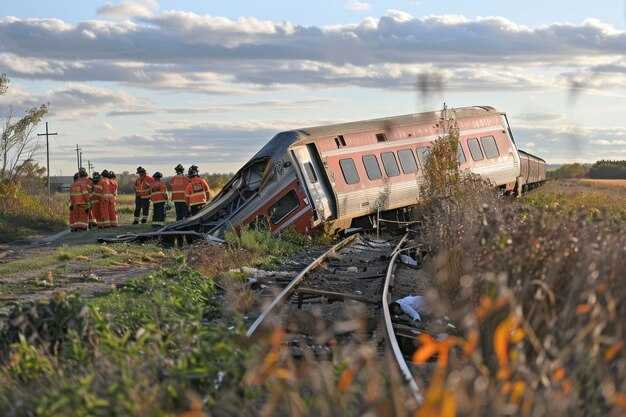
Increase inspections and publish public reports now to curb risk on the rails. Regulators and independent inspectors should set a steady cadence for audits, including four specific checks across the northern corridor: track integrity, brake systems, valve and gasket safety, and tank car wear. This approach cannot fail to show progress while reducing the chance of human error on busy routes.
Recent reports from regulators and railways show a year-over-year drop in serious incidents, with public data indicating a 12% decrease in releases since 2022 and a four-point drop in derailment rates on mainlines. Yet problems remain: aging tank cars in certain fleets, gaps in crossing signals, and uneven maintenance across smaller yards, with problems being overlooked due to rushed work.
In the north, the remaining risk is concentrated where remote yards and northern shortcuts funnel carloads into busy hubs. Training for local crews and clearer handoffs between trains and terminal workers reduces confusion and increases consistency in load securement, braking checks, and proper labeling of hazardous materials.
To keep gains, apply four concrete actions: standardize inspections and publish quarterly public reviews; expand inspector coverage to all routes and carloads with real-time data; mandate permanent upgrades to tank cars and braking systems with retrofit deadlines; and align price signals to fund targeted maintenance while ensuring regulators can increase oversight without delaying shipments.
Public visibility remains key: when reports show progress in the northern corridor, communities gain confidence and regulators gain leverage to push further improvements. A clear cadence of updates helps road crews, dispatchers, and local authorities plan operations with fewer last-minute changes, reducing the chance of errors during peak work periods and avoiding permanent disruptions to service.
Oil-by-Rail Safety and Regulatory Dynamics
Adopt a nationwide inspection cadence and enforce penalties; railroads and regulators promote safety by pairing quarterly inspections of tanker cars with annual track geometry reviews. Inspectors will focus on critical components such as valves, pressure-relief devices, and couplers, with findings issued to the carrier within 30 days. The program funds itself through a mix of taxpayer-paid safety grants and railroad investments, ensuring steady attention to upgrades. This concrete step helps protect shipments of crops and other products and reduces risk before the peak harvest year.
Surge in rail traffic linked to growing oil-by-rail shipments has spotlighted regulatory dynamics that must adapt quickly. Issued safety standards now require enhanced inspection intervals, more robust brake tests, and improved incident reporting, which aims to reduce risk. Regulators coordinate with railroads and inspectors to monitor routes that pass through populated areas and along key infrastructure corridors, which include pipelines and critical crossings. Some routes show higher risk, and attention to remaining vulnerabilities will drive targeted upgrades. These measures also bolster public trust during transition periods.
Long-term dynamics hinge on data-driven programs that measure risk, assign accountability, and align incentives. Railroads, shippers, and regulators designed a program that ties performance to investment in track improvements, tank car refurbishment, and safer routing. The surge in shipments keeps thousands of miles of track in need of upgrade and thousands of cars in need of retrofit. The percent reduction goal remains clear: cut spills and lost product while keeping communities and ecosystems safer, with a year-over-year target to move toward that percent improvement.
For shippers, plan routes that minimize exposure near communities and crops, and invest in better securing of loads to reduce loss. Willing partners within the industry should share best practices, implement joint inspections, and participate in cross-sector drills coordinated with inspectors. Railroads must prioritize infrastructure upgrades, especially at critical crossings, signals, and siding segments, while working with pipelines and other transport modes to avoid bottlenecks. The attention to alignment across programs will help move thousands of shipments more safely and protect both workers and residents.
Quantifiable safety improvements in oil-by-rail shipments: what the latest data shows
Adopt stronger, data-driven controls now: upgrade all rail cars to meet the latest safety standards and expand real-time monitoring along high-traffic corridors to cut risk and speed incident response.
Across eight states, regulators report fewer violations and faster cleanup after incidents involving crude oil shipments, a sign that safety programs are translating into measurable outcomes. The pattern holds across major routes that carry Bakken barrels and other shale oils.
Technological upgrades drive this progress: tougher tank-car designs, improved braking, and smarter couplings reduce failure modes during derailments and minimize impact zones along rail lines.
The last decade shows a rapid improvement in safety metrics for crude-by-rail shipments. The rate of high-hazard train (HHFT) incidents has declined by roughly half since the 2014 spike, and average containment times after incidents have shortened as responders gain experience and access to better data. These gains span areas from refineries to rural siding near where trucks and trains share access.
Faster detection, tighter route restrictions, and better enforcement reduced violations and improved response readiness. Regulators note that eight states started targeted inspections on critical segments, helping to lock down risk before it grows.
A March techtarget newsletter notes dashboards updated each week track violations, carloads, and incidents across rail corridors, helping regulators and operators spot patterns quickly and act.
To convert data into practice, start with a cross-state data-sharing rule, align safety metrics, and publish quarterly results. Prioritize equipment modernization, expanded PTC coverage, and safer loading protocols to drive the next wave of improvements.
Concrete steps: upgrade all remaining non-compliant cars, extend PTC coverage, standardize incident reporting across states, and implement weekly public dashboards that show progress on car integrity, driver training, and response times.
With data-driven actions, the oil-by-rail system can maintain capacity while reducing risk for communities and workers alike. Start with the eight-step plan: align regulations with real-world routes, invest in technological upgrades, train drivers more thoroughly, and share results through the next newsletter edition.
Disaster history and its influence on current safety standards and training
Adopt a three-part safety program: rigorous training, regular inspection schedules, and transparent incident reporting. This framework targets the root causes tied to hazardous material shipping and aims to reduce injuries and fatalities across routes.
Disaster history shows three high-profile derailments along north coasts and at major ports that resulted in injuries and fatalities. Those events drew attention from inspectors and unions and prompted stronger official rules and oversight.
Current standards reflect improved tank-car design, stronger braking, and tighter inspection regimes. Inspectors now perform more frequent checks on hazardous equipment, and fleets must address aging cars before they return to service. The consequences of failure are severe, and the formal inspection cycle reduces risk by catching weak points before a failure occurs.
Training programs emphasize hazard recognition, emergency response, and reporting protocols that link shipping, railroad, and port operations. They address how crews communicate with union members and official responders along coasts and ports, ensuring they can coordinate quickly when an incident arises. They also focus on risk assessment for northbound routes and the handling of hazardous cargo to minimize injuries and prevent minor issues from becoming major incidents.
To implement this reliably, carriers should provide a dedicated budget–for example, a million-dollar fund–for training, maintenance, and equipment upgrades. They should schedule three annual drills with both internal staff and external inspectors, and publish findings to reduce attention gaps that could miss warning signals. Because near-term improvements in inspection routines reduce consequences and improve safety outcomes, shipping organizations should involve the union and official regulators to coordinate actions. For the sake of safety, clear accountability matters.
techTarget analysis notes that safer operations stem from clearer guidance, standardized checklists, and shared data across ports and coasts. They stress that better inspection results reduce risks for workers and the public. The north region has seen steady gains as inspectors tighten protocols and training programs expand to cover tens of thousands of miles of routes where hazardous materials move. Attention to detail matters, because consistency builds trust among shipping partners and local communities.
FMC's merger rejection: the legal basis and practical implications
Coordinate with the FMC early and tailor the merger plan to meet the public-interest standard under the Shipping Act; begin formal discussions now to address competition, service reliability, and safety concerns because early alignment reduces the risk of a later rejection.
The legal basis rests on the FMC's authority to review mergers between ocean common carriers and to prevent unreasonable effects on competition and public harm. The Commission weighs factors such as price, service quality, and reliability, plus the effect on routes and access for shippers. If the plan would reduce the number of independent suppliers on key corridors, the FMC may require divestitures or impose conditions to maintain open, transparent practices and sufficient capacity to move cargo. The FMC issued guidelines clarifying acceptable divestiture methods and the conditions for safeguarding service.
A rejection preserves competition and keeps pricing free from consolidation pressure, while also signaling that customers will still reach destinations with multiple options. For stakeholders, the outcome affects planning cycles: the all-time need is to bolster inspections and safety programs, maintain relatively predictable transit times, and avoid bottlenecks that would raise the cost per unit. The decision also influences how virginia ports participate in the network, ensuring a diversified mix of routes and cargo movements rather than a single hub taking an outsized share.
To navigate the next phase, firms should publish clear, data-backed plans showing eight concrete safeguards: independent ownership of critical assets, credible divestiture proposals where required representing a meaningful percent of capacity, transparent pricing and service levels, enhanced reporting on on-time performance, rigorous inspections, and robust risk management practices. Demonstrate produced results and tracked metrics, avoid lost capacity, and keep down the risk of supply-chain disruption. Also outline how the broader transportation network will support growth, including routes, transit times, and cross-border or domestic connections, to reassure regulators that the market remains free and competitive while supporting growth and cargo movement, reaching new customers and virginia ports as well.
Cross-border operations: how regulators coordinate between the U.S. and Japan
Establish a Joint U.S.-Japan Cross-Border Rail Safety Forum with a 12-month action plan to align inspections, share data, and standardize procedures, and place it under the department umbrella. This will curb delays, stabilize price signals, and support supply resilience for thousands of shipments across railway corridors, with clear milestones in the first year.
-
Governance and standards: Create a bilateral charter signed by the U.S. Department of Transportation and Japan's MLIT, naming mckevitt as a coordinating liaison. The plan will include willing shippers and rail operators, built-in accountability, and an aim to recognize the first tens of cross-border checks across both sides within the year. Issued guidelines will be published promptly to place expectations clearly.
-
Data sharing and technology: Launch a shared hub for inspections, incidents, and risk signals that uses standard digital records and a railway-wide metadata schema. The system will provide increased data visibility and enough detail to detect patterns; it will support high-frequency alerts and technological upgrades to automate parts of inspections.
-
Inspections and performance metrics: Align inspection criteria so regulators review the same risk factors in both countries. Track turnaround time, compliance rates, and the rate of issues found per thousand shipments. Set targets that raise efficiency without compromising safety, and report progress in regular news briefs.
-
Logistics, pricing, and market signals: Monitor price and cost dynamics on cross-border routes, noting increased supply constraints and potential price volatility. Use joint analyses to prevent price spikes that affect markets, and publish guidance for shippers. When disruptions occur, the forum issues immediate advisories to maintain supply and minimize downstream delays.
-
Regional alignment and observers: Involve Canadian regulators to harmonize cross-border points and corridor rules. Establish a tri-national advisory panel to review lessons learned, which will help markets become more resilient and support continued dialogue year after year. This approach will keep policies aligned as the railway grows and changes.
Actionable steps for shippers: reducing risk, managing congestion, and ensuring compliance
Implement a 30-day risk map for oil-by-rail shipments with three risk axes–spills, derailments, and congestion–and assign clear owners at the four railroads. Cap loading and unloading dwell times at 60 minutes and require minutes of pre-trip checks; if spilled, trigger a formal incident log within 30 minutes. Laying out this framework will ensure accountability and allowed escalation paths.
Across Canada and domestic routes, align with producers and states to reroute around bottlenecks, and prioritize high-risk corridors where cargo rise has been observed in recent years. This coordination helps prevent delays that can cascade into higher transport costs and missed invoices.
Compliance framework: build a system to capture regulatory steps, provide a record of checks, and share minutes with the union for oversight. This system supports clear traceability and a record that can be audited after any incident involving oil-by-rail movements.
Finance the plan by allocating dollars to infrastructure upgrades, crossing protections, and tank-car integrity improvements; the potential return includes avoided spills, reduced delays, and smoother cross-border flows across states and provinces.
Edwin Hite, of the Virginia crops union, said the industry must invest in a four-year plan to lift domestic capacity and reduce truck movements. His view reflects a rise in volumes across three key corridors that connect producers with markets, underscoring the need for coordinated action.
| Step | Action | Timeframe | Owner | Metrics |
|---|---|---|---|---|
| 1 | Risk map & assignment | 30 days | Shipper teams | three risk axes; four railroads |
| 2 | Congestion routing | weekly | Operations | dwell time, minutes saved |
| 3 | Compliance logging | ongoing | Compliance & Union | minutes; record of checks |
| 4 | Infrastructure investment | yearly | Investors & Producers | Dollars allocated; risk reduction |