


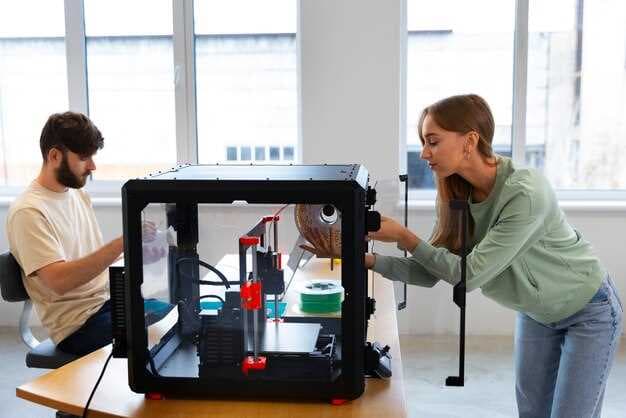

Adopt LFAM on the production floor to scale from prototypes to series, and begin with a defined source of material data and a process window for large-format systems. This also reduces changeover time and ensures consistent output across dozens of parts per batch. Experts point to a compact collections of validated polymers and a controlled trial plan as the fastest path to production readiness.
Define the approach by a milestone-driven plan. Start with a pilot run on representative geometry, then widen the set to a collections of parts. The detail in toolpath optimization, orientation, and interlayer cooling drives acceptance criteria. tailor printing parameters for each part family to minimize post-processing and maximize throughput.
In this field, melted thermoplastics are extruded to create fused layers. The factors that govern part performance include melt rate, nozzle diameter, layer height, and bed temperature. Each factor interacts with part geometry and cooling; document results and adjust design rules accordingly. Learning embedded in design guides accelerates iteration.
On the room floor, set up dedicated LFAM cells with dust control and a 5S-style layout. Connect the line to a source of real-time data via a MES and a data-collection system that tracks cycle time, material usage, and defect types. A clear milestone notebook keeps teams aligned and responses timely, not reactive.
Learning from early builds creates an evolution of capabilities. Operators log parameter sets, surface finish measurements, and dimensional checks to build a refined playbook. This exciting progress marks a milestone for internal production, enabling fabricating large assemblies with predictable tolerances and repeatable performance.
Computers and Electronics
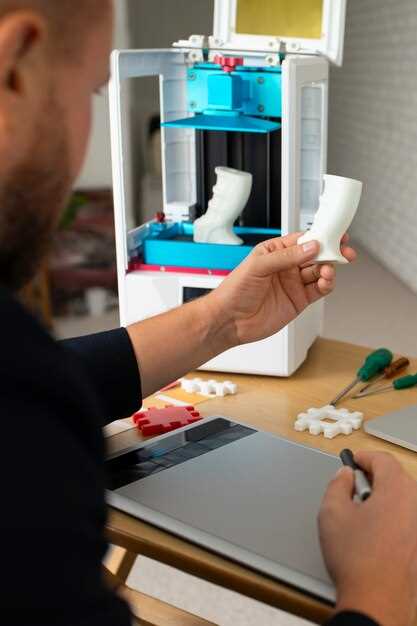
Start with a high-performance filament for electronics enclosures: acrylonitrile butadiene styrene (ABS) or PC-ABS deliver heat resistance and impact strength for LFAM platforms. Calibrate for the large space and set strict dimensional checks to prevent size drift across the finished panels. Validate a small test print first, then scale to production-ready components.
Among consumer electronics, earbuds housings and handheld shells illustrate how you can combine mechanical mounts, EMI shielding, and cooling channels in a single print. Choose filaments with low moisture uptake and use an enclosed chamber to reduce warp on large parts; thus ensuring youve consistent fits for mounting boards and cables. Print mounting bosses and connector clips with deliberate clearance so youve predictable assembly with boards and cables.
Trends show theyre leaning toward modular, serviceable designs and data-traceable production, a shift that benefits LFAM's large build space. Among hobbyists, prototypes start with affordable filaments and gradually scale to industrial runs. initially, test on miniature parts to dial tolerances and validate fit before committing to full-size panels. Consider space and size constraints when planning tool paths and orientation to minimize support material and post-processing time.
Finished parts demand robust post-processing: sanding, acetone smoothing for ABS, or vapor smoothing for PC-ABS, and a protective coating to improve abrasion resistance and EMI performance. For implants or medical electronics, select biocompatible or sterilizable filaments and document traceability. Your team can utilize in-house test rigs to validate insulation, heat dissipation, and connector reliability before production. Thus you shorten ramp-up time and reduce field failures, ensuring finished products meet spec.
Material Qualification and Certification for LFAM Production
Adopt a formal material qualification plan that integrates COA-driven identity with performance validation on representative part geometries. Establish a two-tier method: (1) material identity and traceability, (2) performance demonstration on prototypes that reflect real loads. Build the plan so in-house benches feed rapid feedback while external labs back formal certification when customers or regulators require it.
Structure the scope to cover polymer and ceramic feeds, as LFAM uses large masses. For each material, collect COAs and assemble them into material collections catalogs. Maintain identity by batch and supplier names; create domain-specific test suites and categorize by kind (polymer, ceramic, composite) and application domain (aerospace, automotive, medical). This approach enables personalization of test plans and a united workforce that can scale across growing project sets. A growing need to align with sector standards drives process alignment. If pellets are converted to filaments, record the converted material path.
The spectrum of tests spans mechanical performance under static and dynamic loads, thermal stability, and environmental exposure. Include stress and aging times to capture long-term response. Measure impact resistance, surface finish, and dimensional stability. For biocompatible materials intended for implant or organ models, add cytotoxicity and extractables screening. The scope of tests depends on the material and its domain; personalization reduces over-testing and speeds development.
Certification requires traceability across the workflow: material names, supplier, lot numbers, and conversion history. In LFAM, in-house testing demonstrates capability to link material data with print and post-processing results, while independent labs verify conformance to standards. Train the workforce on data capture and safety to support this work.
Documentation and data management: store in a centralized database with a set of metrics; enable reproducibility by recording COAs, printer settings, material batch, and post-process steps. This fosters united collaboration across teams and collections of materials, supports identity governance, and ensures readiness for audits.
Typically, begin with a core set of 3-5 materials commonly used in your domain; build a loop of test results; update method and acceptance criteria; re-qualification on material changes or process upgrades. This approach reduces risk and accelerates scale-up from prototyping to production for LFAM lines.
| Stage | Focus | Methods | Acceptance Criteria | Typical Times |
|---|---|---|---|---|
| Material Identity & Traceability | Identity, COA, and batch lineage | COA review, batch numbers, material names, suppliers, collections cataloging | COA matches material; full traceability across print, post-process, and records | 1–2 weeks |
| Mechanical Property Qualification | Strength, stiffness, fatigue potential | Printed coupons; UTM tests (tensile, flexure, impact); stress-life checks | Properties meet design targets within tolerance | 2–4 weeks |
| Thermal & Aging Stability | Thermal behavior and long-term performance | DSC/TGA, HDT/CTE checks, accelerated aging | Thermal transitions consistent with data sheet; minimal property loss after aging | 2–6 weeks |
| Chemical Compatibility & Biocompatibility | Chemical resistance; biocompatibility where required | Chemical tests, ISO 10993 if applicable, cytotoxicity screens | Pass thresholds for intended exposure; biocompatibility proven for domain | 3–6 weeks |
| Processability & Dimensional Stability | Printability and part accuracy | Print coupons; measure flow, shrinkage, anisotropy; validate process window | Dimensional tolerances met; consistent surface quality | 1–3 weeks |
Build Orientation and Toolpath Tuning for Mechanical Performance

Orient the primary load path along the X-axis and keep the part’s longest dimension parallel to the bed. Use a layer height of 0.4–0.6 mm for speed on large parts, but drop to 0.25–0.35 mm in regions where strength matters; print with 3–4 solid perimeters and 20–40% infill in a gyroid or concentric pattern so the shell and infill share load along the same direction. Align infill along the anticipated bending or tension path to reduce inter-layer shear and improve durability. This approach aligns with machining principles for predictable results in industrial production.
Toolpath tuning should minimize frequent starts and stops. Employ consistent raster angles, switching between 0 and 90 degrees every layer to reduce anisotropy, and place the seam in a low-stress zone away from high-load features. For critical joints, use a higher extrusion multiplier on perimeters to guarantee a tight bond and consider a slight overlap between shells. Maintain a focused approach and aim to place the seam at the least-stressed region. Use a measured, repeatable process and employ testing to verify.
Material and process notes: styrene-based polymers respond to heat with noticeable shrinkage; keep bed temperature stable and monitor cooling to avoid warping. Where feasible, use post-process annealing or smoothing to alleviate residual stresses, especially for large panels used in machinery housings or fixtures. For firearms components or other regulated parts, apply strict testing and compliance steps to protect safety. For various purposes, keep tests representative and document results.
Designers should run test coupons oriented like final parts to capture real performance. Focus on torque and bending tests to evaluate inter-layer strength; record results for each orientation and path; use these results to pick a final build orientation for production and to guide future designs. The tested data helps creators and adopters compare alternatives and accelerate experiments toward custom-fit, durable outcomes.
In LFAM workflows that aim for sustainable manufacturing, store digital models in computers and reuse successful toolpaths across printing and similar parts; leverage historical data to speed up design cycles, especially when addressing niche applications where designs differ from mass-market items. Printing data from every tested case should be archived and published for public review to help adopters avoid overfitting to a single build layout.
Keep a disciplined tuning loop: iterate orientation and toolpaths with quick coupons, measure, and compare; this patient process resembles a heron stalking water edges–calm, precise, and data-driven–accelerating learning for durable LFAM parts.
Surface Finishing and Post-Processing for Functional Parts
Start with a two-step workflow: remove supports and deburr with a wire brush, then apply controlled surface refinement to reach reliable functional specs. For global, large-format parts, target Ra values of 6–12 μm on exposed mating surfaces, while interior channels can sit around 8–16 μm after finishing. Stage one eliminates visible layer lines and sharp edges; stage two uses bead blasting with 50–100 μm media to create uniform texture and improve repeatability across whole assemblies. Use a dedicated container for blasting and ensure proper containment of dust and media to keep conditions clean enough for surgery-grade cleanliness when required. After smoothing, prepare for coating with a uniform film by delivering spray droplets in a fine, even pattern to avoid runs and ensure coverage down to the last corner.
Choose a coating strategy that mirrors the function of the part and the operating environment, then verify integration with other parts and actuators. For wear resistance and chemical compatibility on functional faces, apply a 0.05–0.15 mm film of polyurethane or a UV-curable resin; thicker sections may reach 0.10–0.25 mm. Curing can be accelerated with gentle heat (50–60°C) to shorten handling times, but monitor against warping and internal stresses. Unlike single-step coatings, a layered approach–primer, topcoat, and occasional fill–improves durability across growing load cycles and supports long-term performance in actuators and joints.
Implement robust process control to replicate results across niches and ensure scalable integration with manufacturing lines. Document each run in a container-labeled card, capture surface metrics (Ra, Rz), coating thickness, and cure temperature, then compare against a baseline to confirm rates and repeatability. For critical dimensions, run post-processing in parallel with assembly to shorten the total lead time and avoid bottlenecks; this approach accelerates throughput without sacrificing quality. In practice, post-processing can dramatically improve part performance into real service conditions, enabling whole assemblies to meet tight tolerances while maintaining compatibility with other materials and finishes in the final product.
In-Line Metrology and Quality Assurance for Large-Format Builds
Recommendation: implement a closed-loop, in-line metrology workflow anchored to a fixed fiducial grid and powered by a compact heron-class laser line scanner. run scans at defined milestones and after material changes to prevent drift from propagating into the final part. maintain a live color deviation map as an illustration on the control console to steer corrections in real time, keeping the build within target tolerances.
These steps apply to general and non-industrial applications alike, relying on direct geometry checks rather than post-process inspection alone. the overall aim is to capture dimensional changes caused by LFAM, including bed sag, thermal effects, and surface finish interactions on steels, and to curb them early in the workflow.
- Establish a global coordinate frame with fixed reference fiducials on the build platform and a calibration artifact tray. this lets us compare as-built data to nominal CAD in real time and stores a traceable record for each milestone.
- Adopt a light-based, laser-assisted approach to minimize contact on sensitive surfaces; supplement with a structured-light phase for complex contours. before scanning, use swabs to clean surfaces and reduce reading noise from particulates.
- Capture data at milestones (e.g., after 10% increments, mid-build, post-cooling) and compare against a tolerance map. compute RMS deviation and maximum deviation for each large feature, then prompt targeted adjustments in the next build window.
- Integrate inspection data into a digital twin and present a live dashboard with heat maps. this visualization helps operators prioritize work on the largest deviations while staying within schedule milestones.
- For holes, bosses, and critical surfaces, employ orthopedic guides and probing jigs to align geometry consistently. these guides reduce drift during long runs and support repeatability across shifts.
- Maintain a log of calibration, probe health, and consumables (laser heads, swabs, reference plates) to support supply chain audits and global site harmonization.
Data and measurement practices
- Data model: record milestone time, feature ID, measured value, tolerance band, and pass/fail status for each scan.
- Deviation visualization: use a color-coded illustration to show XY and Z deviations; keep red zones under 1.0 mm for long spans, and green zones under 0.3 mm where precision is critical.
- Calibration cadence: re-calibrate after material changes, toolpath updates, or every 2–4 hours of continuous build activity, whichever occurs first.
- Quality log: track repairs, reprints, and milestone improvements; use the data to drive a caracol-style improvement loop across sites and teams.
Implementation tips
- Begin with a pilot on a large build plate to validate tolerances and stop criteria before scaling to full production.
- Keep the readings lightweight and fast to avoid bottlenecks; a 1–2 second per feature scan cycle works well for most LFAM lines.
- Use a combination of contact probes on critical edges and non-contact lasers for surfaces with glare or texture variation; this balances accuracy and throughput.
- Document improvements at each milestone to build a transparent history that guides future builds and supplier interactions in the global supply chain.
Lifecycle Costing: Throughput, Downtime, and Maintenance for LFAM
Start with a single, data-driven lifecycle model that ties throughput to downtime and maintenance costs. Like surgeons rely on precise tools, your LFAM setup requires a calibrated mechanical frame and stable process. Create a file that captures capex amortization, energy use, material waste, labor for build and post-processing, and downtime impact for every LFAM run, so you can compare scenarios and outsourcing options.
Key levers and concrete targets help you turn this into action:
- Throughput planning and optimization
- Define lot sizes for large-format parts to minimize the number of builds per job; aim for 2-4 parts per run when possible, to reduce setup time and waiting between cycles.
- Measure cycle times (build, cooling, post-processing) and track variance; target a 5-10% improvement quarterly through process tweaks and tool changes.
- Use a color strategy to flag bottlenecks in the file that tracks job progress; prioritize those items to reach a target single-digit wait time between steps.
- Consider design-for-manufacturability to reduce fill weight and support structures, which fills time with productive output rather than rework.
- Downtime reduction and reliability
- Schedule preventive maintenance by subsystem (mechanical frame and drive, extrusion head, heater/cooler, and cooling water).
- Maintain a spares kit with common mechanical parts and nozzles to cut MTTR; target 1-4 hours for repair on typical components.
- Install remote diagnostics and alerts to catch wear signals before a failure; this extremely reduces unplanned outages.
- Plan outages during low-demand windows and stack activities (calibration, cleaning) to convert downtime into productive work with post-processing steps ready.
- Maintenance strategy and workload balance
- Map maintenance tasks to a general schedule by subsystem; allocate 10-20% of maintenance time to calibration and alignment to maintain part accuracy.
- Tailor maintenance intervals to material use; carbon-filled composites and high-temperature thermoplastics wear components faster, so adjust intervals accordingly.
- Keep a detailed maintenance log in a single file; include part numbers, frame references, precise torque values, and observed wear to improve future planning.
- Post-processing and workflow efficiency
- Group post-processing tasks by part family to reduce changeover time; automation of support removal and surface finishing can cut waiting time by 30-50% in busy lines.
- Track labor hours per job and align with outsourcing options for non-core finishing steps; a well-chosen outsourcing partner can lower total cost for complex tasks while preserving quality.
- Maintain color consistency and surface quality with standardized jigs and fixtures; this minimizes rework and speeds final assembly.
- Document each post-processing stage in the file, including fixtures, temperatures, and dwell times; this detailed traceability helps in audits and future process optimization.
- Cost modeling and decision support
- Build scenarios for in-house vs outsourcing trade-offs; include energy, material waste, labor, and downtime costs; you can show that a game-changer decision can reduce cost per part by a two-digit percent range in the long run.
- Incorporate depreciation of LFAM assets and the impact of different usage profiles; consider a single, flexible platform mix to maximize utilization across teams, including design studios and research centers in homes of innovation.
- Use a post-processor to standardize data exports; youll export to a common format to support audits and file sharing with suppliers and customers.
- Data governance and measurement
- Define a minimal data schema for the LFAM line: job ID, part size, build time, material, energy, waste, downtime, spare parts, and maintenance events; keep the file compact but detailed, enabling procurement and maintenance teams to act on them quickly.
- Publish a monthly heading for KPIs and a quarterly deep-dive to verify targets; ensure the team uses the same definitions across general and specialized lines.
- Continuously refine the model with new data from real runs, not estimates; this makes the cost picture extremely reliable and actionable.
In a representative case from a large-format line, a carbon-frame printer reduced idle time and improved part consistency, demonstrating the interplay of structural design, post-processing alignment, and data-driven decisions.
This approach yields an actionable framework to reach cost targets without sacrificing throughput. It supports tailor-made plans for different LFAM configurations, including color outcomes and material mixes, while preserving a stable, repeatable process that serves both core production and outsourcing as needed. The result is a game-changer for lifecycle costing in LFAM, with predictable throughput, reduced waiting, and proactive maintenance that protects frame integrity and long-term performance.