



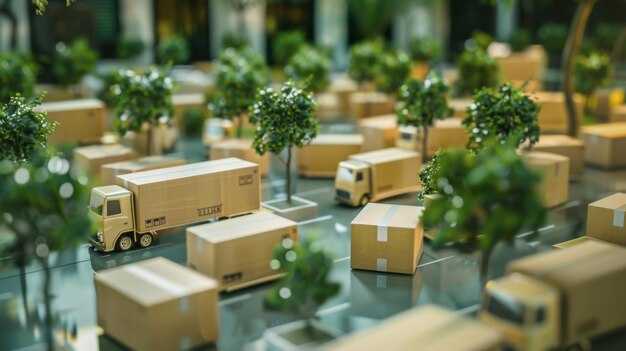
Begin a 12-week packaging optimization pilot to cut waste and move toward lighter, recyclable materials in the netherlands. Before the test, establish a baseline by measuring current packaging grams per meal and the average box depth. Daily metrics track weight, volume, and damage rate, helping maintain product quality while trimming packaging by 15-20% and reducing shipping weight by 8-12%. This concrete starting point partners with production teams and logistics to deliver measurable savings.
Move quickly to establish a partnership with packaging suppliers and production teams, including packaging engineers and frontline operators. An interview with site managers in the netherlands base helps gather input on container fit, refills, and closed-loop recycling.
Design and testing plan: test five packaging variants, including corrugates, bags, and insulation, and use rapid simulations to estimate weight, cube, and sustainability. This integral process keeps mealtimes fresh by ensuring product integrity during transit and reduces damage rates while increasing material efficiency for each order.
Roll out changes in two to three distribution centers with clear SOPs, and set daily targets for carton utilization and fill rate. Ensure packaging modifications align with storage and production rhythms, and plan for mealtimes peaks when orders spike.
Build a transparent partnership with a shared dashboard that tracks cost, weight, and waste reductions, including a quarterly interview with operators and suppliers. By sharing data with partners, HelloFresh can keep production aligned with sustainability goals while expanding the reach of smarter solutions.
HelloFresh Packaging and Shipping Plan
Create a data-driven packaging and shipping plan that reduces cycle time by 12–15%, trims packaging waste by 8%, and increases order accuracy to 99.8%. hellofresh will anchor this plan by aligning supply and demand, standardizing packaging specs, and enforcing compliance across all fulfillment centers, based on quarterly targets and an 8-week implementation cycle.
Key aspects include packaging sizing to reduce weight, using less packaging material, accurate labeling, and route optimization to minimize transit time. The framework includes best-in-class standards, providing cross-functional visibility, and including compliance checks at every site to ensure quality and safety.
Include a three-phased rollout: standardize packaging templates and labeling, implement a data integration layer to pull from WMS, TMS, and supplier feeds for real-time visibility, and deploy a scoring system to track facility performance. Implementing these steps in two pilot hubs, then quickly scaling to all networks, will minimize disruption and accelerate value realization.
Data-driven decisions rely on accurate inputs such as cycle counts, route choices, supply risk indicators, packaging weight and waste, and order-level accuracy. Track metrics on a monthly basis: cycle time, route efficiency, supply reliability, packaging density, waste reduction, per-parcel cost, and customer satisfaction, and adjust targets to keep value increasing.
Value and compliance: the plan yields lower landed costs, reduced carbon impact, and higher customer trust through consistent packing quality. By basing changes on forecasted demand and providing real-time visibility, hellofresh improves on-time delivery and strengthens supply resilience while maintaining best-in-class compliance across regions.
Packaging footprint assessment: measure materials, weight, and waste by SKU
Implement a SKU-level packaging footprint dashboard that captures materials, weight, and waste by SKU, and link it to transit routes and packaging components for a complete integral view. Use mono-solutions data models to keep data consistent across planning, procurement, and logistics, so teams can act quickly and clearly, make faster decisions, and achieve better results.
Map every meal SKU to its packaging envelope: carton size, film type and thickness, inserts, and insulation. Record materials in grams and convert totals to tonnes per month; aim for less waste, and track returns and damaged packaging as a percentage of received materials. Set a short-term target of 10% packaging weight reduction within 6 months and a continued plan to reach 30% by 2 years. Capture transit metrics like distance and mode to see how packaging choices perform in transit.
Leverage a consolidated data flow: ERP feeds SKU packaging data, WMS captures case-level movement, and supplier files provide material specs. Build a simple, easily accessible dashboard showing tonnes by SKU, packaging type, and brands. In the netherlands, pilot a regional packaging hub to reduce transit distances and improve overall efficiency, then scale to other markets as results prove.
Assess environmental impact: quantify electricity used in packaging lines and waste diverted from landfill. Apply data to decisions, including material substitutions, such as switching to mono-material packaging that improves recyclability. Use a continued improvement loop: collect feedback from brands and operations, adjust packaging designs, and re-measure. Keep teams aligned with a culture of reduction and support across functions.
Translate packaging footprint results into concrete actions for procurement and brands: substitute materials, reduce film thickness, or adopt lighter cartons. Run a 90-day pilot in the netherlands to prove feasibility without compromising meal quality or transit times. Track results in tonnes, waste reduction, and improved electricity use on packaging lines; share scalable wins with brands to strengthen culture and resilience during pandemic-related disruptions.
Materials redesign: switch to recyclable, curbside-friendly packaging options

Switch to 100% curbside-recyclable packaging for all meals shipments. Use a 3-step approach that keeps freshness very high while cutting waste and improving returns on packaging investments. This shift supports city programs and offers a cleaner recycling stream for households.
Here is how to adjust your packaging design to enable a positive impact on meals and curbside recycling in city markets. Start with a 3-step plan and test a pilot in select neighborhoods, followed by full rollout in the next phase.
- Outer cartons: standardize on uncoated corrugated fiberboard; remove mixed-material layers; print with water-based inks for easy separation at recycling facilities
- Inner protection: replace plastic liners with paper sleeves or breathable inserts; minimize tapes and metal fasteners to reduce contamination
- Labels and seals: choose removable labels and low-adhesion tapes that come off cleanly in curbside streams
Impact on operations: lighter boxes enable faster loading and reduce shipping energy; fresher meals reach customers more reliably in city markets; fewer return shipments lower handling costs and waste streams.
- Measure the packing weight reduction after each design change
- Track recycling rates for pilot regions using standard curbside guidelines
- Solicit feedback from customers on packaging usability and freshness perception
Supplier alignment: establish packaging standards, audits, and performance KPIs
Implement a unified packaging standard across all suppliers within 90 days, pairing a binding specification with a shared bill of materials that defines box dimensions, corrugated grade, and labeling. This basis ensures compliance and protects health and meal safety in transit, while keeping boxes recyclable wherever feasible and reducing chain variability across orders. That clarity helps teams act quickly and prevents misalignment downstream.
Adopt a three-tier audits program: self-assessments quarterly, remote data reviews monthly, and on-site audits annually. Each cycle collects packaging test results, material composition, recyclability status, and change logs tied to orders. Use a formal scorecard that rates material compliance, box integrity, labeling accuracy, and responsiveness, and allows corrective actions with fixed timelines to avoid production blockers.
Define KPIs that are measurable and auditable every month: compliance rate with packaging standards; share of recyclable materials in total packaging; boxes per order; packaging weight per meal; damage and returns rate; lead time to implement packaging changes; cost impact per order; and waste per 1,000 units. Track three-month trends and highlight major improvements that move the baseline toward lighter, safer, and more scalable packaging. The KPI set forms an integral part of production planning, procurement, and logistics decisions.
In practice, pandemic disruptions show the need for clear alignment. Jasper, representing partner organizations, introduced this framework; a dooijeweert-based supplier piloted the three-tier audits and packaging changes, delivering a drop in waste by 18% and a 9% cut in packaging weight within six months. The results, and a 12-point rise in recyclables, illustrate the impact on cost, speed, and sustainability, and confirm the approach as a scalable cornerstone for the chain.
Together, we extend the standard to all suppliers within six months, integrate packaging data into the ERP, and train procurement and warehouse teams on the KPI dashboard. Schedule quarterly reviews with the supplier base, maintain a joint improvement plan, and keep packaging in recyclable, health-compliant boxes to maximize compliance and reduce blockers while protecting each order.
Logistics optimization: route efficiency, pallet packing, and load consolidation

Prioritize route optimization to cut miles and emissions by 15% within six months using data-driven routing that accounts for traffic, delivery windows, and vehicle capacity. This reduces idle time, increasing on-time performance for customers. Among your options, such dynamic routing with real-time data provides the strongest returns here.
To improve pallet packing, standardize pallet sizes and use portioned SKU groups that fit along the pallet footprint. Here, test a baseline such as 40x48 inch pallets with a typical 16–24 item load and aim to raise pallet utilization from 65% to 85% across e-commerce shipments.
Load consolidation clusters multiple orders onto fewer shipments along the same routes. This practice reduces shipments by roughly 20% on steady periods, including packaging waste, disposal costs, and usage of packaging materials.
To sustain progress, the system developed a dashboard that constantly tracks results: route distance, pallet utilization, and load factor. Your data power the system to compare what you find on each route across regions, guiding continued optimization and scalable learning for your operation.
Circularity and reuse: take-back programs, refill systems, and returnable packaging
Launch a unified take-back program across all markets within six months, supported by a single cross-functional team and a dedicated director to drive accountability, with tonnes recovered from packaging streams. hellofresh will set targets aligned to our packaging footprint and report progress to stakeholders in quarterly reviews. This program leverages e-commerce returns, providing a seamless path for customers while maintaining freshness. This approach has worked in pilots and can be scaled.
Move to refill systems and returnable packaging to reduce virgin material use while preserving freshness. Standardize container geometry to support multiple reuse cycles, and provide clear usage instructions so customers participate without friction. The same approach moves packaging through supply routes, increasing reuse rates while lowering waste.
Operational blueprint: involved the logistics team, started pilots in two markets, and set a return-and-reuse loop that operates across carriers. Returns are cleaned, inspected, and reinjected into circulation, ensuring the integrity of each cycle. Customers participate themselves by scanning a code and following simple prompts.
Metrics drive decisions: track tonnes diverted, return rate, cycle life, and usage per order; measure freshness retention, speed of the loop, and cost per cycle. Data flows through dashboards to guide procurement and packaging design decisions, enabling rapid iteration and visibility for the director and the single team.
Implementation plan: at this moment, the director aligns procurement with packaging suppliers; the team started with a two-market pilot and will move to all orders. Under a shared governance framework, we lock in needed investments in cleaning, inspection, data capture, and customer communications to keep the engines of the circularity move running smoothly.
| Program element | Impact | Next steps |
|---|---|---|
| Take-back program | Reduces virgin packaging use; tonnes diverted; strengthens brand trust | Expand drop-off network; appoint director; set monthly targets |
| Refill systems | Lower material needs; maintains freshness across cycles | Test in two markets; implement cleaning and refilling protocol |
| Returnable design | Standardized sizes; easier to reuse; reduces waste | Redesign packaging; pilot washing lines; scale to all orders |