


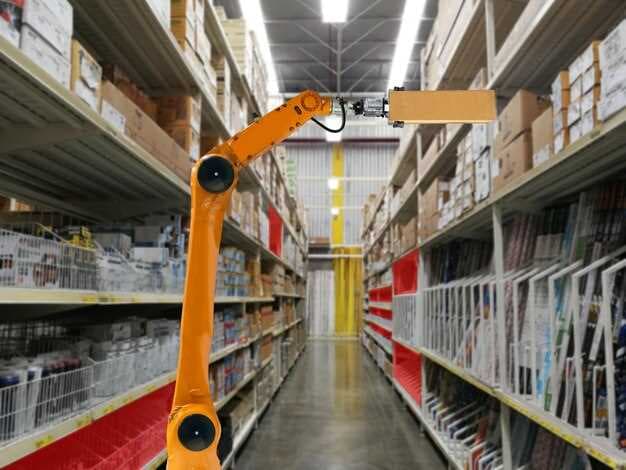

Start with a phased plan: deploy automation in a single zone to handle a high-volume order flow, then scale to additional areas. This approach easily demonstrates gains within the year and provides a solid investment for the customer. Design around their various products, from small components to large pallets, so the system handles diverse SKUs and delivers consistent results, integrating into existing processes.
Automation reduces injuries by shifting repetitive lifting away from people, while enhanced accuracy and stable cycle times boost throughput. Use analytics to monitor metrics–order accuracy, cycle duration, and picking pace–and apply a driven, data-led approach to set targets for the next quarter. These improvements translate into more reliable deliveries and higher customer satisfaction.
Across facilities, examples of automation components streamline flow: conveyors move goods into deeper zones, automated storage and retrieval systems (AS/RS) store and retrieve SKUs, AGVs or autonomous mobile robots handle picking and replenishment, sorters route items to packing lines, and palletizers prepare loads for outbound deliveries.
To maximize return, run a 12-week pilot in one zone: install 2-4 robotic pickers, a compact sorter, and a WMS integration. Track labor-hour reductions of 30-40%, throughput gains of 20-50%, and on-time deliveries rising by 10-20%. Use the results to justify the investment and plan the next-year expansions across your customer base.
Automation is playing a growing role in handling diverse deliveries to help teams reduce manual tasks, keeping operations consistent. With the right analytics, you optimize space, reduce injuries, and support numerous deliveries per day, improving customer satisfaction.
Practical Overview of Automated Warehousing Systems
Begin with a 90-day pilot of modular automation in a defined area to validate throughput, accuracy, and space utilization, then expand based on measured gains.
Choose options that match workload: AS/RS elevates pallet handling for heavy items; conveyors and sorting modules streamline work flows; mobile robots can serve as a network that complements human labor. The system incorporates clear interfaces with your WMS, ERP, and TMS to minimize handoffs and errors, while maintaining simple operator interactions and robust safety checks. The network requires reliable data flows and disciplined governance to prevent bottlenecks.
Costs vary with configuration and facility size. Investing in automation requires planning across hardware, software, integration, and change management. Typical ranges: hardware and installation per pallet position often sits in the $100k–$250k band, while a full facility installation may run from $500k to several million depending on pallet density and throughput goals. Software licenses, control systems, and integration typically add another 15%–30% of upfront costs, and annual maintenance generally runs 5%–10% of the initial investment. These figures vary by vendor, geography, and service level.
Labor-intensive picking and put-away tasks shrink as automation handles repetitive motions, with early adopters reporting throughput gains of 2× to 4× and error reductions in the 30%–70% range. In practice, automation layers enable operators to switch to value-added tasks such as exception resolution, replenishment planning, and quality checks, improving worker engagement and job satisfaction while efficiently scaling work volumes.
Security and risk controls must run in parallel with hardware deployment. Implement access controls, video analytics, and tamper-resistant cabinets; segment the network to protect WMS data and prevent ransomware exposure; enable audit trails for every move of a pallet or carton; and set automatic alerts for out-of-pattern events or mechanical faults. These measures help maintain operations during varying demand and protect heavy investments in automation.
Design for scale by prioritizing space efficiency and pallet compatibility. Verify pallet dimensions, load weights, and aisle widths; choose racking and automation that maximize space without creating bottlenecks; plan for future growth by reserving zones for additional AS/RS lanes, pick modules, or shuttle systems; and ensure maintenance access and energy supply are straightforward to sustain long, heavy-duty cycles. A well-planned layout accelerates implementation and reduces downtime during transitions.
For customers, these systems deliver faster order fulfillment, higher accuracy, and transparent tracking across the network. Use insights from real-time throughput, pick accuracy, dwell times, and maintenance cycles to guide ongoing investing decisions. With numerous options, you can tailor automation to varying demand, enabling a smoother supply chain while protecting space and boosting security. Each pallet move becomes more predictable, and the resulting improvements in service levels enhance customer satisfaction and loyalty.
Definition and core components of automated warehousing systems
Begin with a clear task map to determine which processes to automate first, then select an integrated core that can scale as needs grow. An automated warehousing system is an integrated set of devices and software that automates storage, processing, and packing, linking robotics, conveyors, sensors, and control software to improve accuracy and throughput in order fulfilment. It stores goods and moves them through a defined flow with fewer manual touches, about capacity and utilization, and enables informed decisions to optimize space and labor. This automation scope should be limited to tasks that add value, automating only high-impact operations. This approach consolidates data from multiple sources and becomes a foundation for future improvements.
Core components span hardware, software, and integration layers. The solution‑based design focuses on reliability, safety, and scalability. WMS and WCS integrate data and devices to synchronize actions across the network. Key elements include:
- Automated storage and retrieval systems (AS/RS) to maximize vertical space and reduce walk times
- Automated conveyors and sortation modules to move items between zones with fewer touches
- Autonomous mobile robots (AMRs) and robotic pickers to handle tasks on the floor with adaptive routes
- Automated packing stations and palletizing or case‑packing cells to streamline processing
- Sorting, packing, and labeling modules to route orders to correct destinations
- Control systems: PLCs, motion controllers, and fleet management for real‑time decisioning
- Software layers: Warehouse Management System (WMS) and Warehouse Control System (WCS) that orchestrate tasks and drive devices
- Data and connectivity: gateways, IoT sensors, RFID, barcodes, cameras, and edge devices for visibility
- Interfaces and integration: APIs and middleware to connect ERP, sales systems, and e‑commerce queues
When implemented well, these components reduce errors, shorten processing times, and support scalable growth. A typical installation integrates these layers so that tasks such as receiving, put‑away, replenishment, order picking, packing, and shipping flow automatically. This results in higher accuracy, with common facilities reaching near 99.9% in order accuracy in routine operations. The model based on data and proven layouts becomes a blueprint for future guides to automation.
Costs and ROI hinge on footprint, density, and chosen solutions. Informed decisions should consider installation work, required power and network upgrades, safety compliance, and training. Typical cost breakdowns place equipment and robotics at the core, software licenses next, and installation and integration as the enabling layer. In practice, a facility based on AMRs and AS/RS often realizes faster payback when volumes exceed a few thousand lines per day, and when the store is organized for batch and wave picking rather than single‑item picking. Adapting the approach to scale can reduce total costs per unit by 20–40% over five years with higher throughput and reduced labor.
Real‑world examples show how players like amazon combine AMRs, AS/RS, and advanced sortation with a modern WMS to achieve high throughput. Such setups guide future decisions by emphasizing data interoperability, safety, and modular growth. For teams building their automation guides, begin with a phased installation that prioritizes accuracy and safety, then expand with additional devices and processing nodes as demand grows.
Key technologies powering automation: robotics, conveyors, sensors, and software
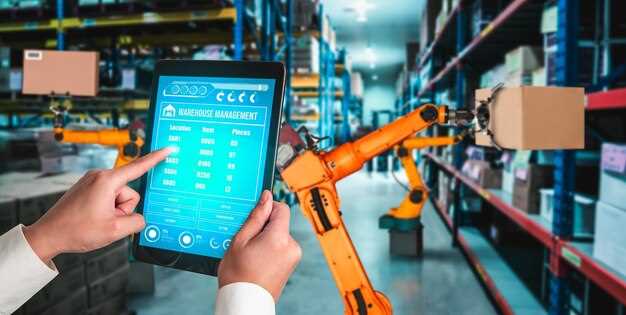
Deploy an integrated automation stack: modular robotics, scalable conveyors, and a central software platform powered by technology to meet current demands and fulfill orders efficiently.
Robotics power retrieval and picking tasks with precise grip and repeatable motion. Choose cobots for flexible workflows while safety interlocks protect staff. Use grippers capable of handling heavy loads and enable customization with quick-change tooling to support different SKUs. Typical reach ranges from 0.8 to 3.0 m and payloads from 2 to 25 kg cover most orders. Regularly inspect drive components and actuators to prevent downtime. Integrate vision or tactile scans to confirm placements and connect with conveyors to transfer items between stations, minimizing delays and keeping tasks aligned with the workflows.
Conveyors move items across zones and form the backbone of throughput. Use modular belts or roller systems that support adjustable width and zone-based sortation. Set speeds from 0.3 to 2.0 m/s to align with pick rates and robot reach, enabling smooth handoffs between stations and reliable service to fulfill orders, which streamlines processes. Integrate with sensors and WMS to track item position, reduce travel time, and minimize bottlenecks. A well-chosen conveyor width and layout directly impact overall throughput and labor efficiency.
Sensors provide the eyes and accuracy for automated systems. Deploy 2D/3D cameras or laser scanners for item recognition, RFID gates for identity checks, and barcode scans at key handoffs. Sensor data feeds real-time visibility for workflows and allows you to calculate optimal routes across zones. Use error-detection to minimize misloads and improve retrieval accuracy; calibrate sensors to handle dust and lighting changes to maintain performance today and into the coming quarters. On-time data improves route tracking and minimizing delays in packing and shipping.
Software ties robotics, conveyors, and sensors into a cohesive system. An integrated platform, connecting WMS, WCS, and ERP with APIs, coordinates tasks, tracks orders, and optimizes workflows. Use dashboards to monitor throughput, dwell times, and service levels, and enable customization of rules for different SKUs. The software should calculate bottleneck data, cue automation actions, and offer API access for updates, while maintaining data integrity across the stack. This offering delivers predictable throughput, lowers labor costs, and accelerates fulfillment.
For implementation, run a 90‑day pilot in a single zone with 2–4 robotic arms, 1–2 conveyor lines, and sensors at key handoffs. Define KPIs: hourly throughput, order accuracy, and dwell time. Expect a 15–35% rise in pick rate and a 10–25% reduction in labor hours during the pilot. Use a phased rollout and maintain a unified data model to learn from each stage. Map current workflows, identify the highest-impact tasks, and design the automation to cover those steps first, then expand to additional zones as demands grow.
Impact on warehouse workflows: from receiving to shipping
Begin with automated receiving and dock-to-aisle routing: install dock-door scanners and RFID tags on pallets, deploy infrared sensors to validate conditions, and feed data into a centralized system to track items and trigger immediate storage decisions. This setup make the first mile of the workflow efficient from the start.
Aim for predictive put-away: use the WMS to allocate storage locations as items are scanned, which reduces travel time by up to 30–40% and surfaces insights for replenishment and purchasing decisions. beyond speed, you gain accuracy and visibility across the process.
Equipment mix includes automated storage and retrieval systems, conveyors, and mobile robots. These diverse options keep density high and flow smooth, while deployment continues to advance alongside their control systems, enabling faster replenishment and fewer handling errors.
Picking and packing use automated pickers, sorters, and voice- or light-guided systems to handle diverse SKUs quickly. Track and verify item, quantity, lot/batch, and expiration, with automated alerts if a mismatch occurs. If conditions cannot be corrected at the source, the system triggers a fallback path to maintain security and accuracy.
Shipping and outbound sequencing automate packing, labeling, and carrier coordination. Use docking optimization and real-time tracking to balance loads and reduce dwell time; this approach often yields higher on-time shipments and better security at the dock.
Learn from amazon that streams orders to automated lines: rapid rerouting based on live tracking and predictive insights. This continues to evolve, with deployment decisions guided by demand forecasts and purchasing plans. Rapidly adjusting alongside their teams helps mitigate bottlenecks before they impact service levels.
In practice, start with a focused pilot across receiving, put-away, and a small set of SKUs, then scale. Define a clear KPI set for cycle time, order accuracy, and storage utilization, and use insights from the pilot to justify purchasing decisions and plan for scalable integration with suppliers and carriers.
Tracking performance: KPIs, data capture, and visibility

Implement a real-time KPI dashboard that tracks throughput, accuracy, and cycle times across picking, packing, and shipping. Capture data at the source–scanners, RFID readers, and dock receipts–and feed a centralized data layer that updates every 15 minutes to keep teams aligned on current conditions.
Choose a compact set of metrics that reflect day-to-day actions: cycle time by zone, put-away accuracy, pick rate, and dock-to-dispatch time. Track accuracy at item and carton levels, and monitor device and system uptime. Use stage-by-stage indicators to reveal bottlenecks before they ripple through the operation.
Translate visibility into swift responses: when a KPI crosses a threshold, trigger predefined actions such as re-allocating resources, expediting tasks, or rerouting work to preserve the schedule. Build clear dashboards for supervisors and frontline staff, so teams can act without delay.
Use data trends to plan capacity and validate investments in equipment and layouts. In a mid-size warehouse, a 6-week rollout of improved data capture reduced cycle time by 12–18% and raised item-level accuracy toward 99.2%. The gains came from tightening put-away paths, balancing workload across zones, and enabling faster execution by frontline staff.
Real-world deployment: choosing suppliers, scaling from pilot to full rollout
Choose a supplier that delivers end-to-end support, scalable modules, and clear ROI dashboards, then run a staged pilot with defined go/no-go milestones and explicit success criteria.
Choose suppliers that provide reliability, easy integration with WMS/ERP, robust SLAs, ongoing support, and customization options. Ensure available integration adapters for scanners and conveyors; verify safety certifications and cobot compatibility; check spare-parts availability and quick on-site service; assess training programs for operators and maintenance; aim for an ideal fit that handles your most demanding workflows and consider a diverse set of reference sites to validate performance.
Design the pilot around 2–4 representative workflows and 1–3 cobots, with 8–12 weeks duration; set targets: throughput gains of 15–40%, picking accuracy improvement of 50–90%, and cycle-time reductions of 10–25%. Use scanners to reduce manual entries; collect data on injuries risk and ergonomic impacts; require ongoing safety checks. Capture baseline data before automation to enable reliable comparison.
Plan the scale: after pilot success, deploy in phases by zone or function, adding 5–15 units per iteration and mapping to demand signals; align with available warehouse space and power/wiring; use modular purchasing to add modules, conveyors, and software seats without disruptive downtime; build a training cascade for them and shift supervisors; ensure integration with existing workflows.
Alongside hardware, address ongoing change management and consider diverse supplier portfolios to match environments. Some vendors offer remote monitoring and predictive maintenance, which helps identify issues before they trigger downtime. Build a risk register to capture suppliers' delivery risks and spare-parts lead times, and update SOPs as the automation continues to evolve alongside the operation.
Analytics and decision logic: build a cross-functional team to analyze data from pilots, including demand trends, unit throughput, labor savings, and error rates; use a simple scoring model to compare suppliers on criteria that matter most to your operation; quantify benefits and costs, and re-run the ROI analysis after each scale step. Identify which paths deliver the most value and where customization adds the most impact.
| Stage | Key Metrics | Actions | Data Needed |
|---|---|---|---|
| Pilot design | Throughput, accuracy, injuries risk, uptime | Define workflows, select cobots, set targets, install scanners | Baseline data, cycle times, incident log |
| Supplier evaluation | Availability, integration ease, support, customization | Scorecards, reference checks, site visits | SLA documents, product roadmaps, case studies |
| Rollout planning | ROI, payback, capacity gained | Phase-in plan, training schedule, change management | Cost estimates, demand forecast, staffing plan |
| Scale execution | Unit performance, safety, downtime | Incremental deployment, monitor, adjust | Operational data, incident reports, maintenance logs |