


 English (UK)
  Русский
  العربية
  日本語
日本語  한국어
한국어  Magyar
  Türkçe
  Español
  Čeština
  Svenska
  Português
  Ελληνικά
  Suomi
Suomi  Nederlands
  Română
  Italiano
  Français
  Polski
  Українська
  Deutsch
  简体中文
简体中文  Slovenčina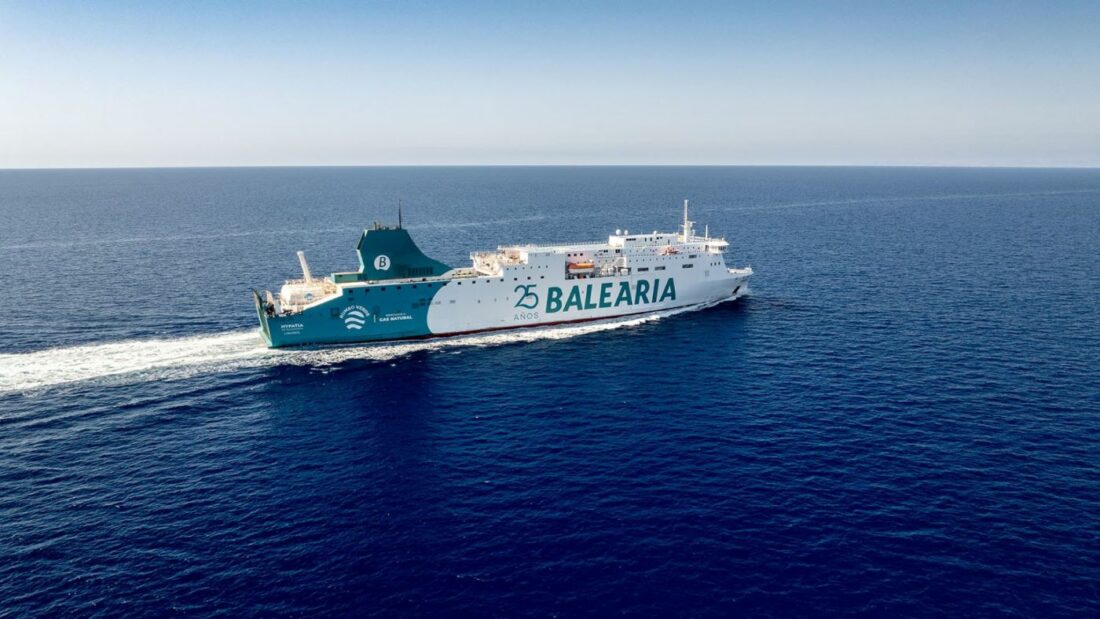

This piece examines the request by Baleària, through Interferry, to keep the EU Emissions Trading System (EU ETS) surrender requirement for ferries frozen at 70% and the wider consequences for maritime and land logistics.
What Baleària and Interferry are asking for
Baleària, acting within the framework of the ferry operators’ association Interferry, has called for an immediate halt to the progressive increase of the EU ETS obligation for ferry operators. The specific demand is to maintain the obligation to surrender emission allowances at 70% for the year 2025, and to prevent the planned rise to 100% in 2026 until conditions change.
The request is rooted in two main concerns: the delayed inclusion of road transport in a parallel mechanism to the ETS, and the lack of a transparent, equitable model for reinvesting revenues generated by the system into maritime decarbonization.
Core demands from ferry operators
- Keep the 2025 surrender rate at 70% and suspend the 2026 increase to 100%.
- Delay further tightening until road transport is included in an equivalent carbon-pricing scheme.
- Establish a clear redistribution mechanism so ETS proceeds support maritime decarbonization directly.
Why the 70% freeze matters
At first glance, a percentage sounds dry—yet when you translate it into ticket prices, freight rates and modal choices, the impact becomes tangible. Ferries carry roughly 400 million passengers and 200 million vehicles/units of cargo annually across EU waters; they act as a pressure valve for road networks. An abrupt cost increase risks pushing freight back onto already congested highways.
| Issue | Impact on Ferries | Logistics Implication |
|---|---|---|
| ETS surrender rate rise (70% → 100%) | Higher compliance costs for operators | Possible fare and freight rate increases; modal shift to road |
| Road transport exclusion/delay | Uneven competitive landscape | Distorted transport choices; logistics planning uncertainty |
| Unclear fund redistribution | Little targeted support for vessel decarbonization | Slower uptake of green fuels and retrofit investments |
Practical risks to supply chains
- Increased unit cost for roll-on/roll-off shipments that rely on ferries.
- Higher probability of congestion and delays on road corridors if freight shifts modes.
- Budgetary uncertainty for carriers planning vessel upgrades, fuel conversions or electrification.
Policy timing and the road-to-sea parity debate
Interferry accepted the idea of EU ETS inclusion on the understanding that a similar rule for road transport would follow quickly. That expectation has been postponed, however, leaving ferry operators feeling unfairly singled out for immediate costs. The Council of the European Union’s recent decision to defer road inclusion—combined with a delay by the International Maritime Organization (IMO) on a global greenhouse gas pricing mechanism—creates a patchwork regulatory environment.
In short: ferries are paying into a system that lacks parallel treatment on roads and clear rules for reinvestment of proceeds, which raises competitive and climate-policy fairness questions.
IMO delay and funding uncertainty
The IMO postponed adoption of a global greenhouse gas pricing mechanism for at least 12 months from October 2025. That international framework was expected to harmonize approaches and set guidelines for how funds from carbon pricing would be used. With the pause, regional schemes like the EU ETS carry an outsized burden of expectation without the global guardrails operators hoped for.
Consequences of the delay
- Fragmentation: different regions may pursue diverging mechanisms, complicating international route planning.
- Investment hesitation: shipowners may postpone expensive low-carbon investments until rules and funding availability are clearer.
- Short-sea shipping vulnerability: short-sea ferry and RoRo services are especially exposed due to tight margins.
I remember a shipment my company once rerouted because a ferry surcharge made road transport temporarily cheaper—only to encounter two days of traffic and higher handling costs. That experience taught me that headline policy shifts can ripple through pricing, scheduling and the very choice of transport mode. As the old saying goes, “pennies today can cost pounds tomorrow.”
How this ties back to logistics and commercial operations
For logistics managers, freight forwarders and shippers, the uncertainty around the ETS surrender rate and fund redistribution translates into planning risk. Will carriers pass costs directly to shippers? Will certain lanes become intermittently uncompetitive? These are immediate tactical questions; strategically, the sector needs clarity to decide between investing in greener vessels, changing pricing models or accepting modal shifts.
| Stakeholder | Main Concern | Decision Pressure |
|---|---|---|
| Shipowners | Cost recovery and investment incentives | When and how to retrofit or switch fuels |
| Shippers & Forwarders | Stable rates and reliable transit times | Contract durations and route selection |
| Road hauliers | Future inclusion in carbon pricing | Pricing models and fleet upgrades |
Short checklist for logistics teams
- Model cost scenarios with both 70% and 100% surrender rates.
- Assess modal risk for each major lane: ferry vs road substitution.
- Engage carriers about potential surcharges and fund usage transparency.
- Explore contract clauses to hedge sudden policy-driven cost changes.
Highlights: the core of this debate revolves around fairness, timing and transparency—fair competition between modes, synchronized inclusion of road transport, and a clear, accountable approach to reinvesting ETS revenues into maritime decarbonization.
The best reviews and most thorough studies can point you in the right direction, but nothing beats personal experience when deciding which transport option truly works for your supply chain. On GetTransport.com, you can order your cargo transportation at the best prices globally at reasonable prices, helping you avoid unnecessary spend and disappointment. This helps you test the real-world costs and benefits firsthand; GetTransport.com’s transparency, broad choice and convenience make it easier to compare options and make informed logistics decisions. Get the best offers GetTransport.com.com
In summary, Baleària and Interferry’s call to maintain the EU ETS ferry surrender rate at 70% highlights a short-sea shipping sector squeezed between ambition and clarity. The issues at stake—carbon pricing, equitable treatment of road transport, and transparent reinvestment of proceeds—directly affect cargo pricing, freight routing, shipment reliability and investment in low-carbon shipping. Logistics players should plan for volatility, stress-test contracts and consider options such as diversified routing, pallet consolidation and partnership with reliable platforms to manage dispatch, haulage and distribution. Ultimately, clear policy and transparent funding will foster cleaner shipping, smoother freight flows and more reliable delivery for international and domestic movers, couriers and shippers alike.